The primary reason for choosing this trip was the opportunity to visit Pompeii and Herculaneum. Both locations were inundated with volcanic eruptions when Mt. Vesuvius erupted in 79 AD, although they were affected differently.
Herculaneum
Erculaneum (in its Latin spelling) was a small Roman resort town on the coast of the Bay of Naples, populated mostly by wealthy merchants and the populations that supported their lifestyle. The volcanic flows were very hot pyroclastic gases and lava which blasted through the town in a matter of seconds. Because of the speed with which the town was buried, many artifacts and buildings were charred, but not incinerated. Also, in Herculaneum, the town was completely covered, leaving few traces, and later a new town was built over it, which limited excavation.
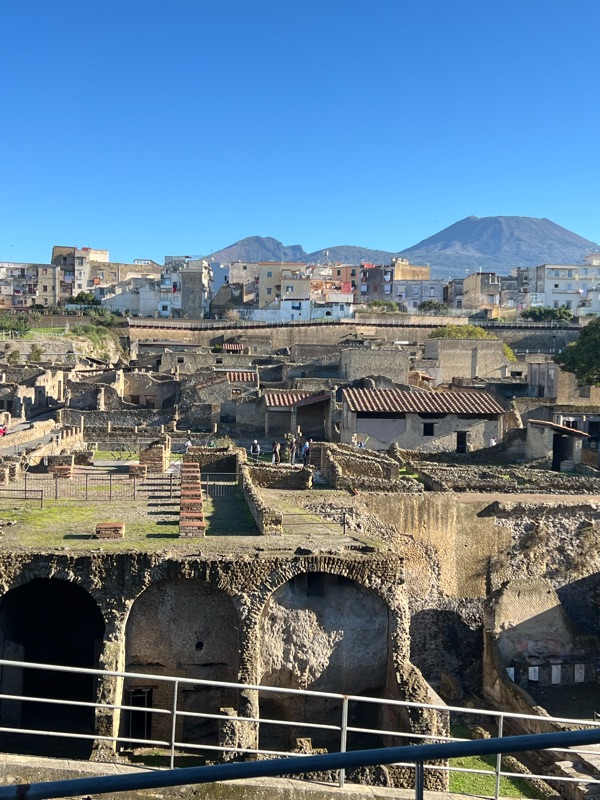
View of Herculaneum with the town of Ercolana in the background.
Many of the houses were two storey buildings, with a large atrium opening onto the street, usually with a pool and fountain, painted walls, mosaics and works of art prominently displayed and visible from the street to impress visitors with the wealth and status of the owners.
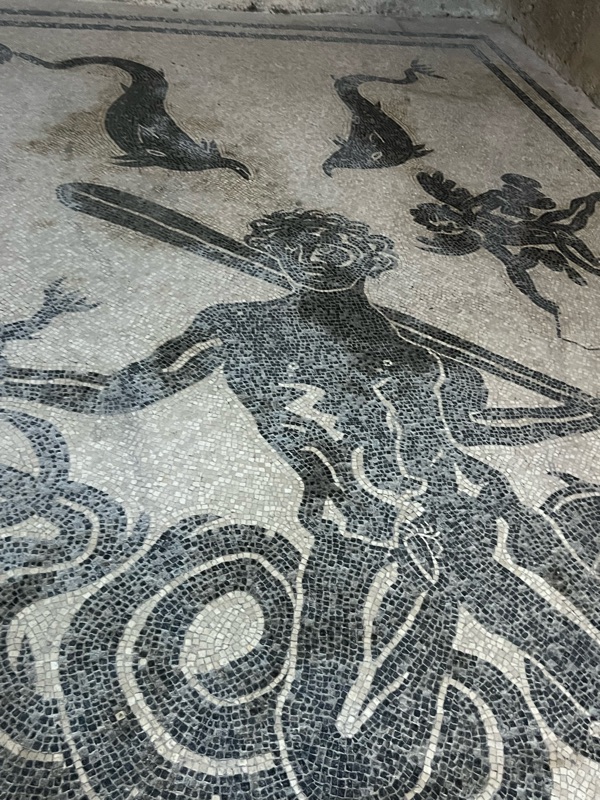
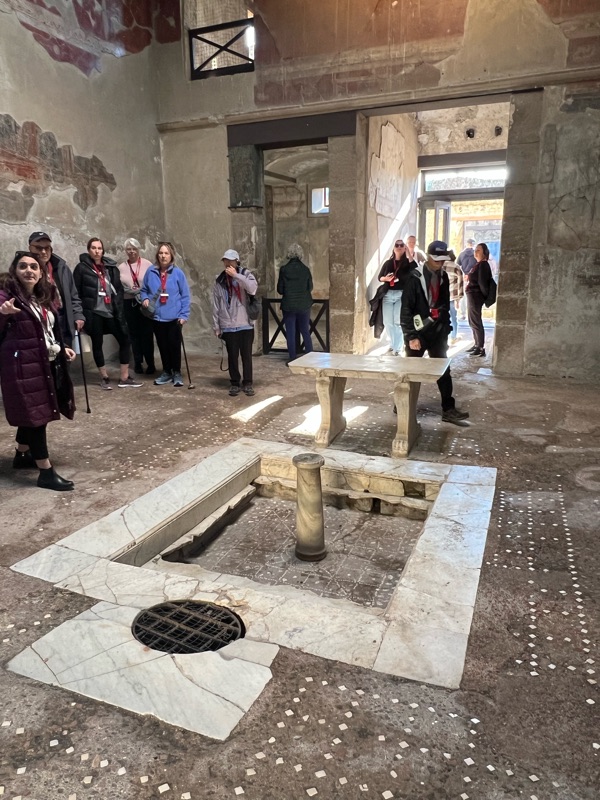
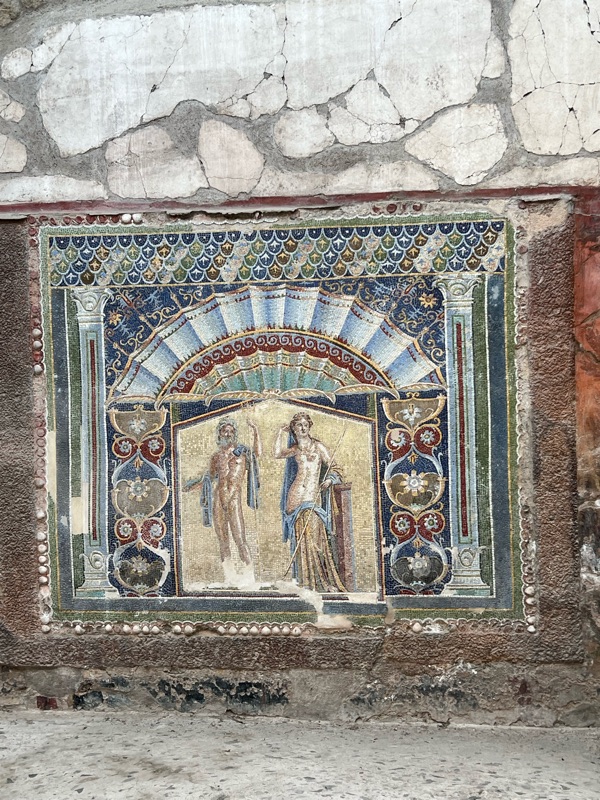
Gorgeous mosaic in atrium
One of the most striking sites was the beautifully preserved bath house, including a spectacular floor mosaic of Hercules (after whom the town was named). We also passed several “fast food”
Stalls nearby.
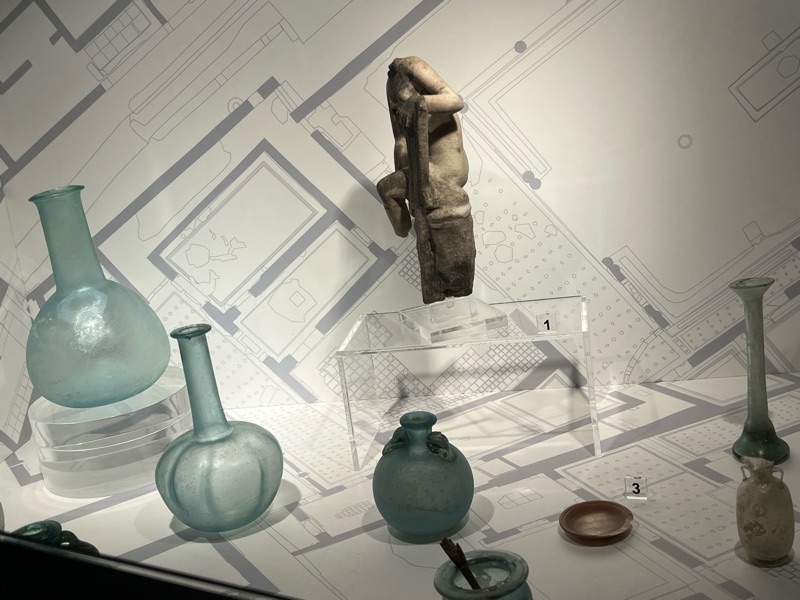
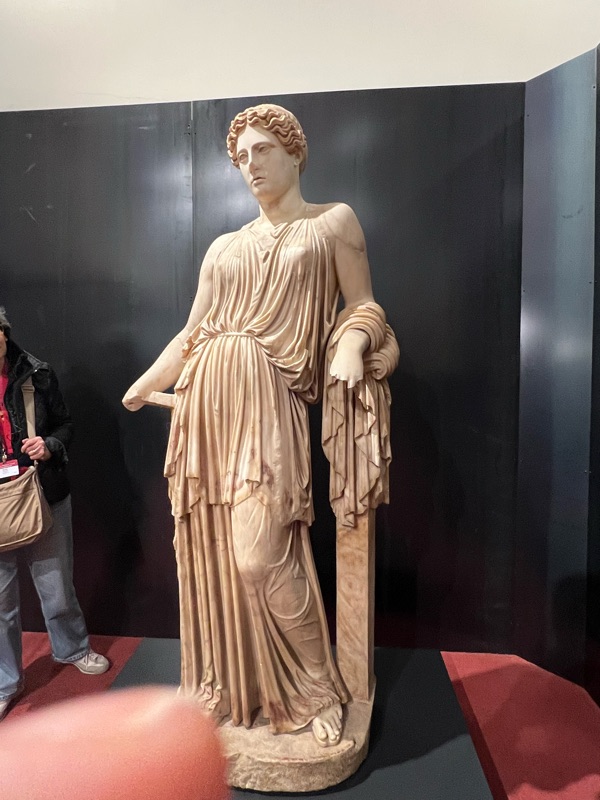
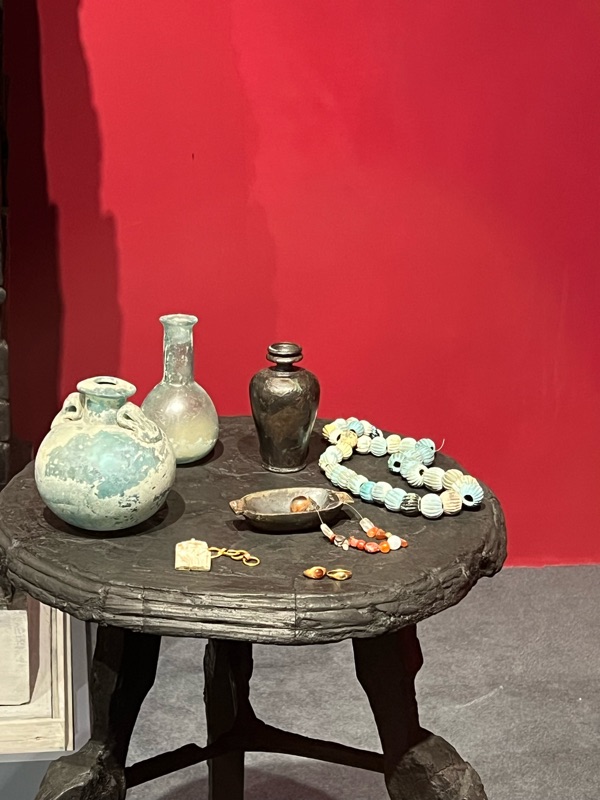
While most of the artifacts are preserved in the Naples Museum, quite a few were in a small museum on site, including finely crafted pottery and glassware, silver serving dishes and jewelry set with precious stones, as well as preserved wood. There were several impressive statues.
Pozzuoli
In Pozzuoli, about 30 miles west of Naples, we visited one of the largest surviving amphitheaters in Italy. The town was a popular Roman destination as it has a strategic view of the whole bay, as well as easy access to 2 or the 3 islands in the Bay of Maples - Ischia and Procida
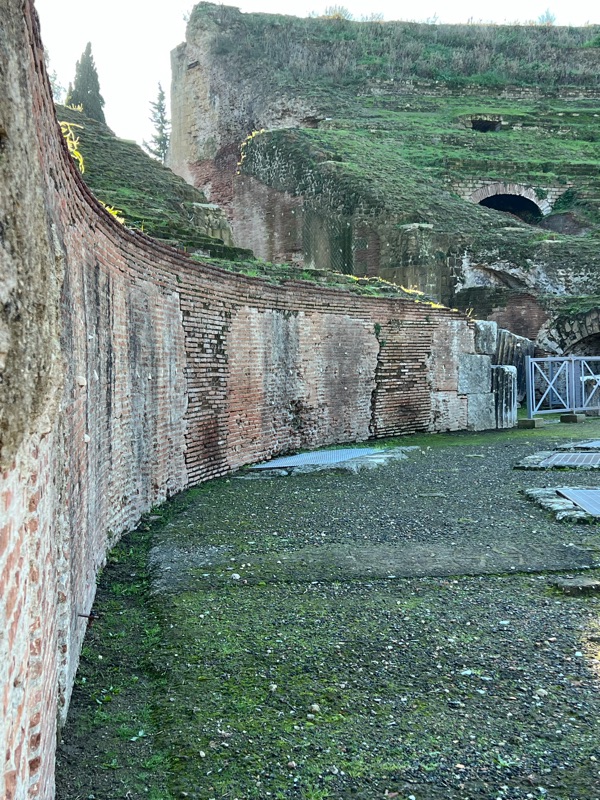
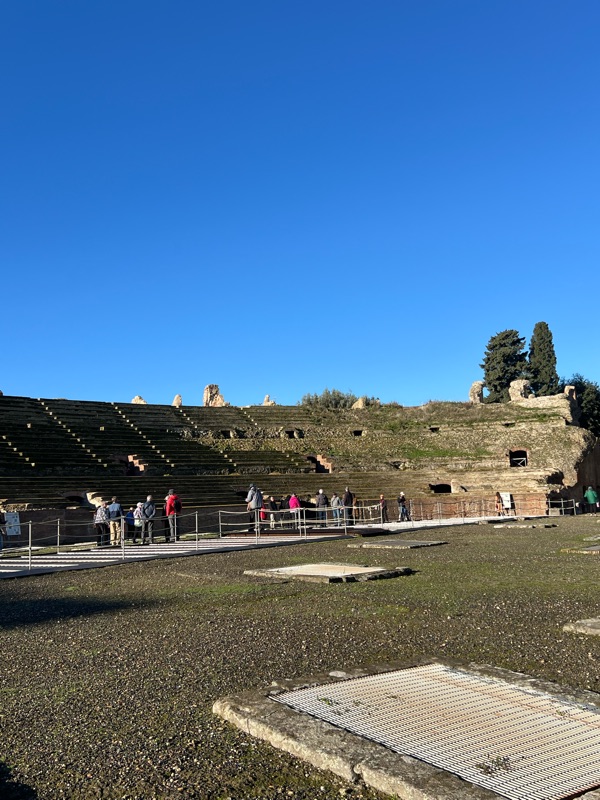
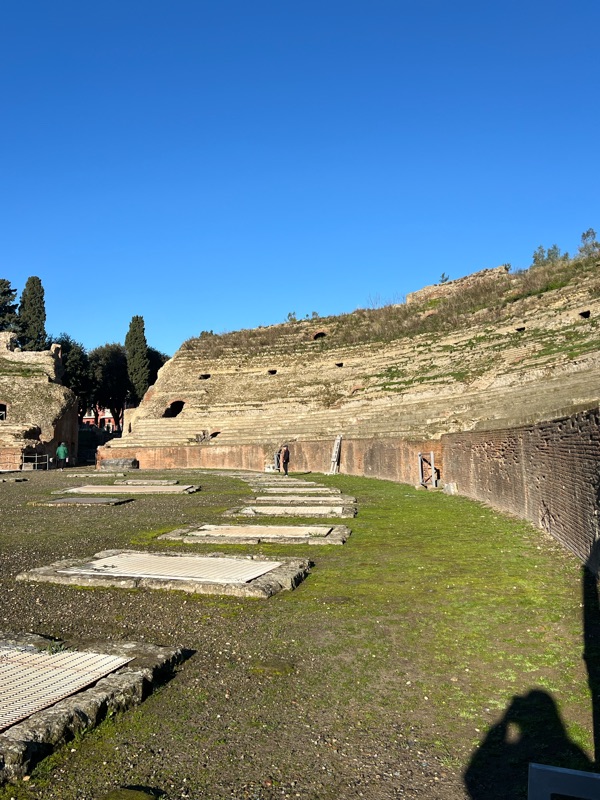
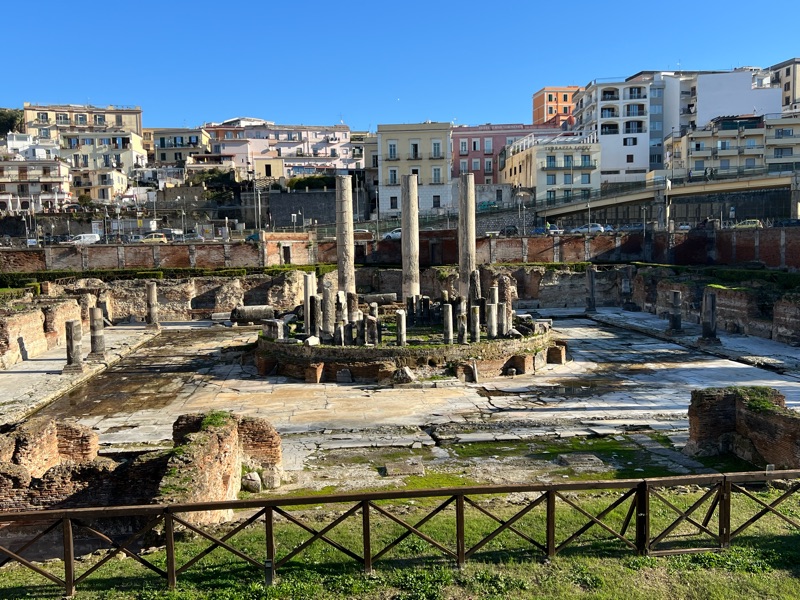
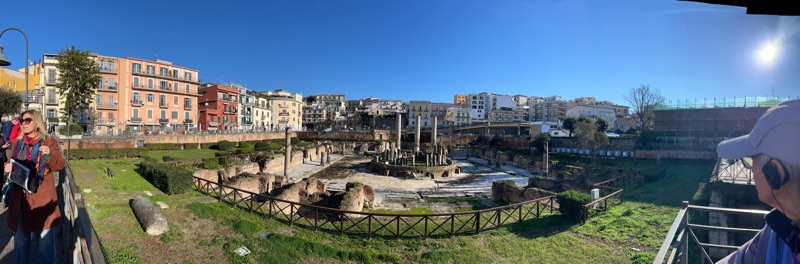
The other photo is of some temple ruins in downtown Pozzuoli right by what used to be the port.
Pompeii
Pompeii is a vast site, covering a huge area that is about 60% excavated. Our guide strongly focused on seeing some of the newest discoveries, including entering some areas that they had never been in before. Quite exciting!⁸
One of our favorite moments was when we saw a wall that was still being excavated. You could just see the lip of an amphora peering out from the pumice wall - we felt like we were on the edge of discovery.
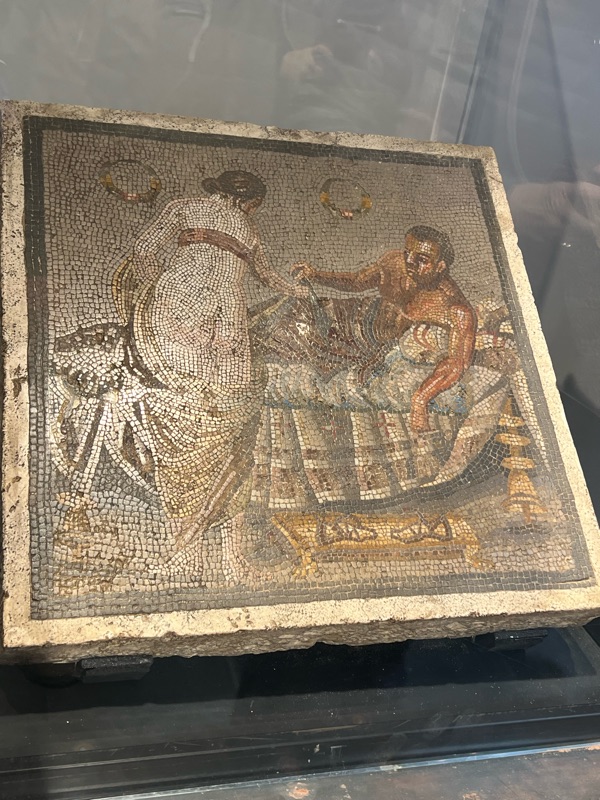
There were also lovely new mosaics that had just been added to the museum, which we enjoyed!
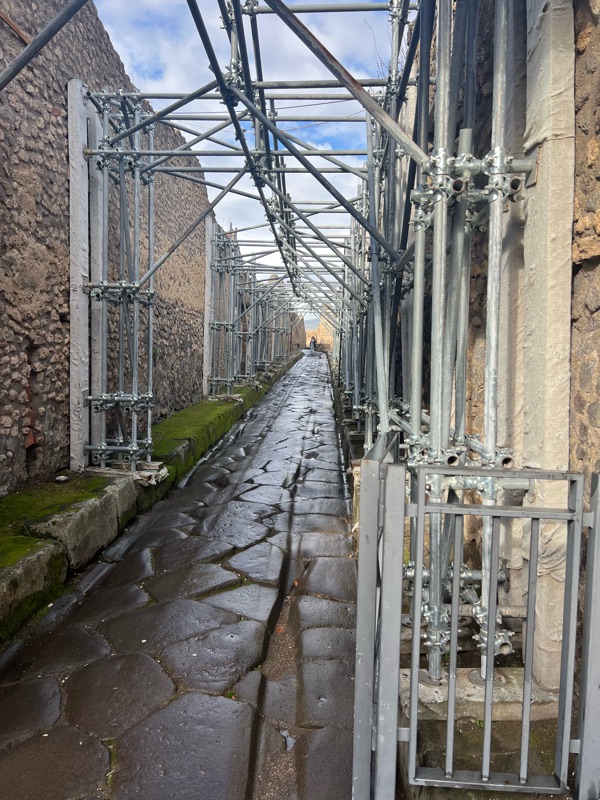
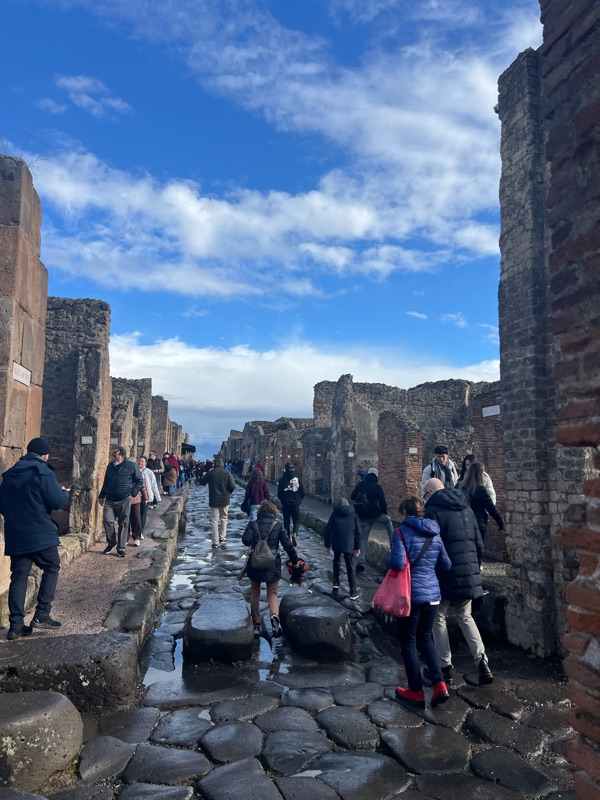
The large stone paved streets had raised side walks a foot or more above the street on either side, with occasional “crosswalks” of three large stepping stones. In many places you can see the ruts created by years of wagon traffic. (We related to the ruts, having spent a fair amount of time last summer seeking out wagon ruts on several of the trails used by settlers going west) The sidewalks were so much higher than the streets because the streets also served as sewers, carrying rain and waste water down to the sea.
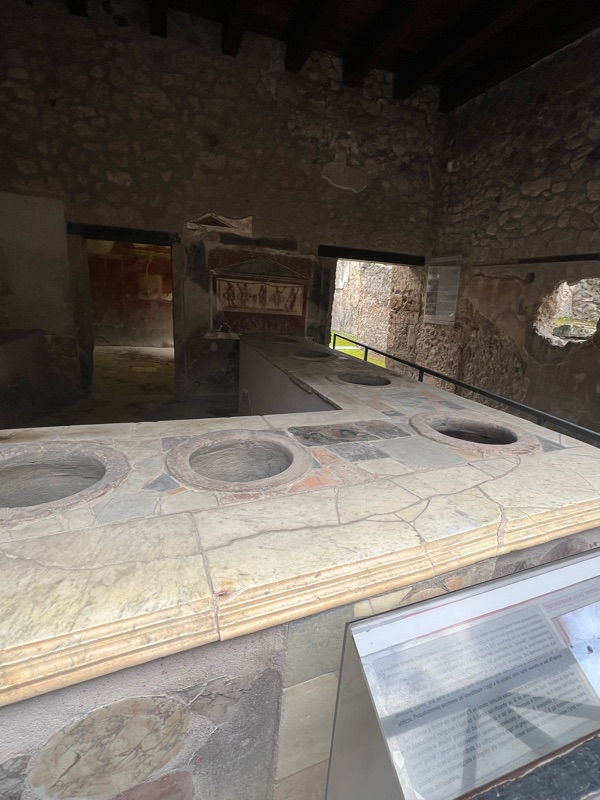
We have all heard about over the top Roman feasts, but here we saw something more realistic: a dining room with raised marble “shelves” that were covered with cushions, with a well in the center on which to platters of food were floated.
One of the most poignant aspects of the Pompeii site are the plaster casts of people who were overcome while fleeing the deluge of molten lava and pumice. The casts were made when excavators found hollow spaces in the otherwise solid pumice, and decided to fill the spaces with plaster and then excavated around it. The casts show the human costs of the disaster in a way that no artifacts can convey.
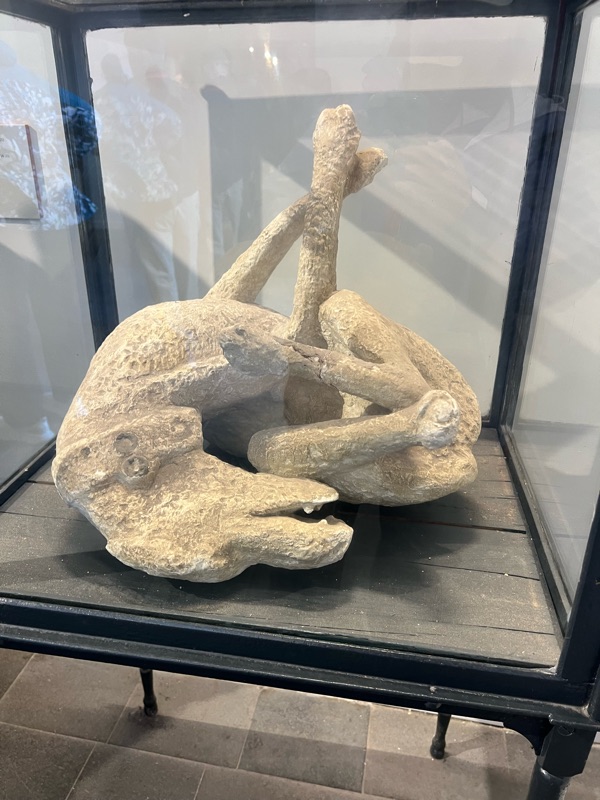
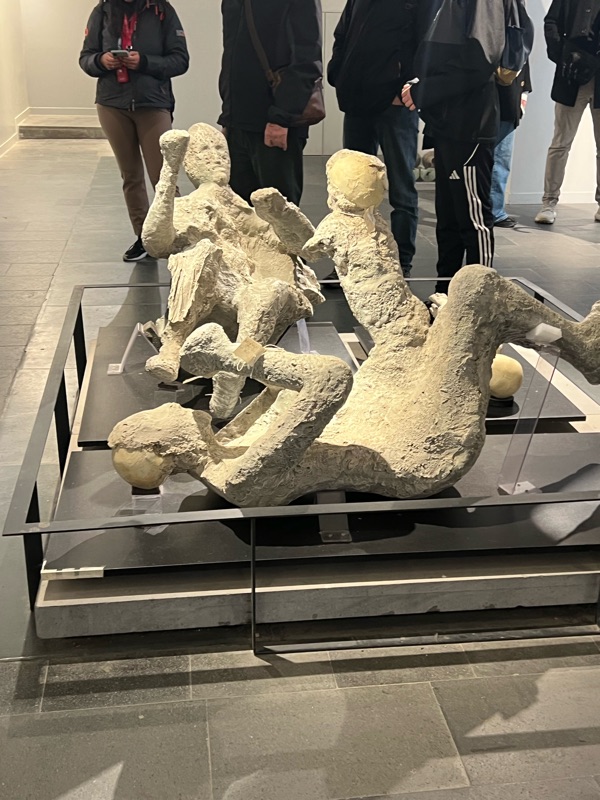
With a strong focus on the newly excavated sections, we were not able to see all of the most famous and extraordinary frescos and mosaics. We wished we had scheduled another day to explore on our own. Almost always we feel there is much more to see and do (and wonder at) on a return visit.



That ancient architecture is so interesting. Thanks
ReplyDeleteLove this! Reading this and feeling like quite the arm chair traveler.
ReplyDeleteMight I ask .. the statue of the woman .. towards the very top .. do you know if she was originally 'in color'? Just wondering ..