Uluru is the iconic Australian symbol of indigenous culture and history. The rock (second largest in the world) and ⅘ of it is under the surface of the earth. For more info, here is the Wikipedia page: https://share.google/93rFB1VeHclyuNKGd
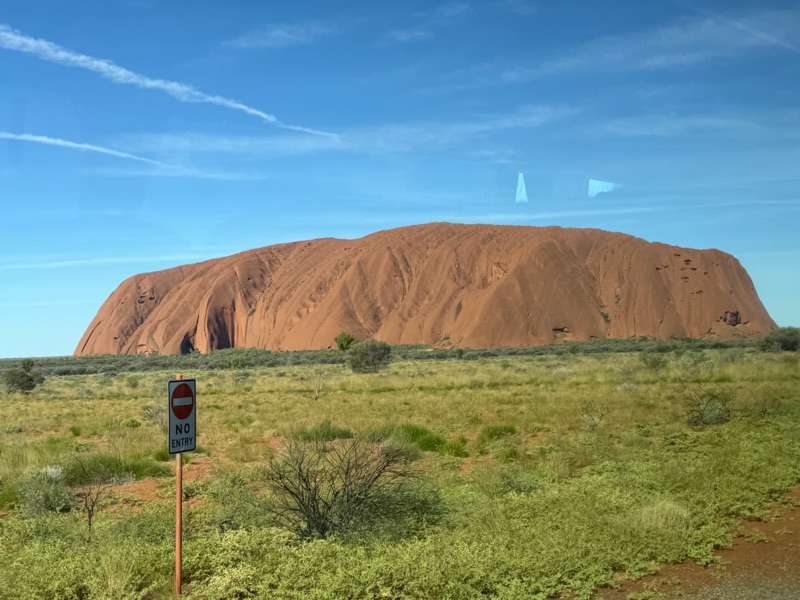
We were fortunate to have a charming and energetic guide/driver who told us some of the stories - explaining the difference between T’juka Par (the story) and Tjuka Richa (the physical evidence of the story - such as a curvy line in the rock marking where Kanda the snake god passed by). Whole stories were told using these physical markings on the rock as evidence for the story.
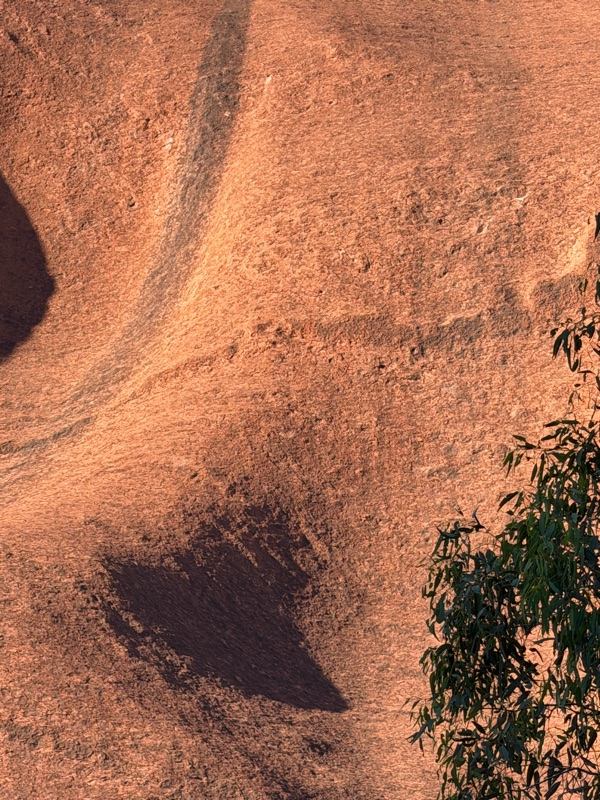
The serpents path
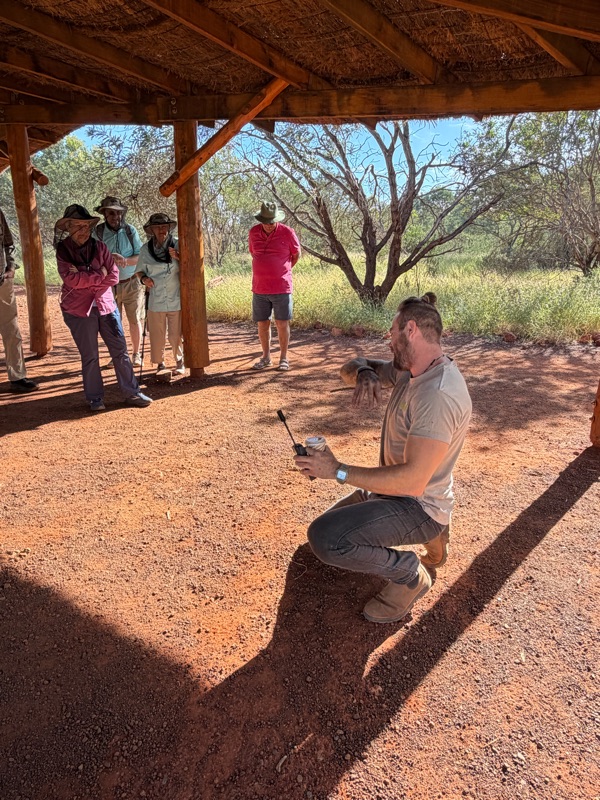
Jordan telling the story
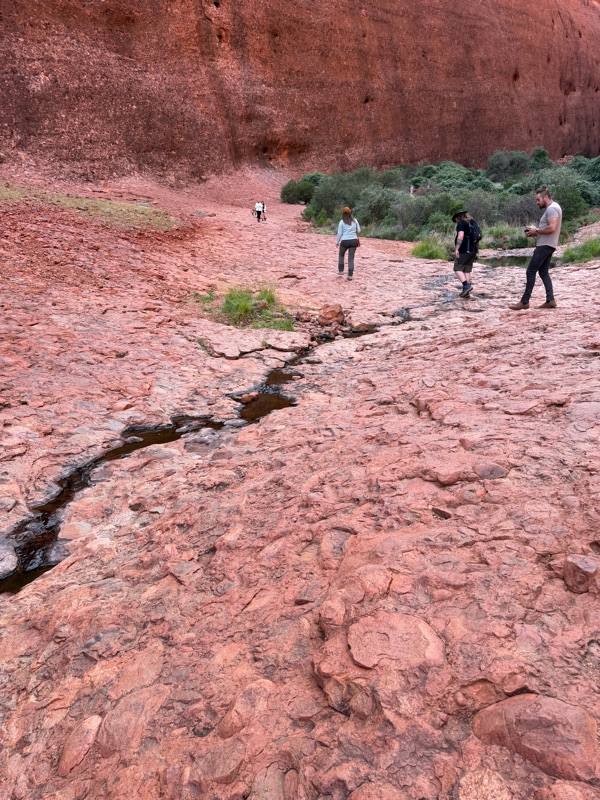
Since it had been raining here, as in Alice Springs, there was lots of water and greenery in the normally dry red center.
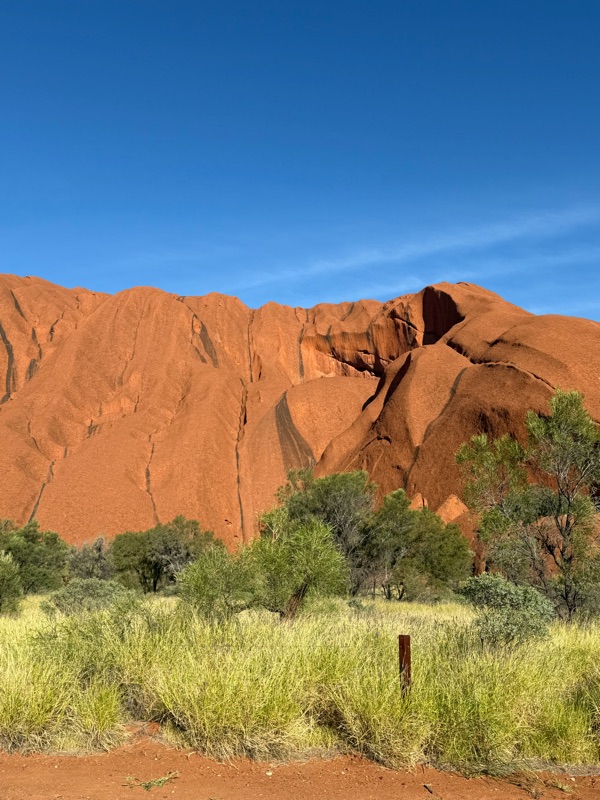
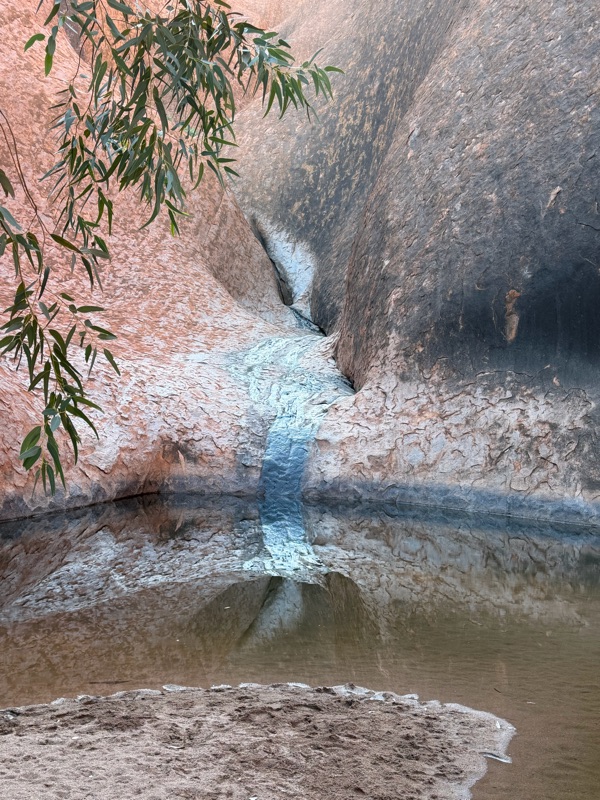
There was also a permanent water hole where the local people come
To teach their children about their history.
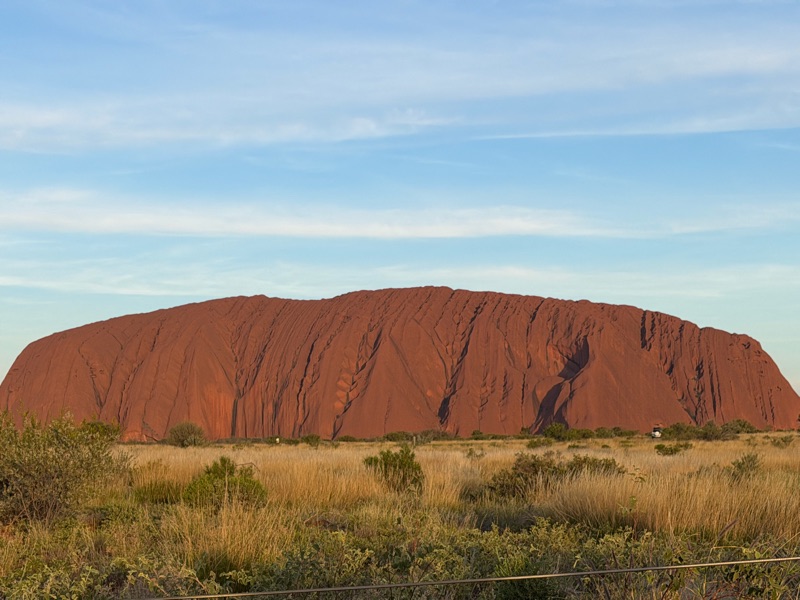
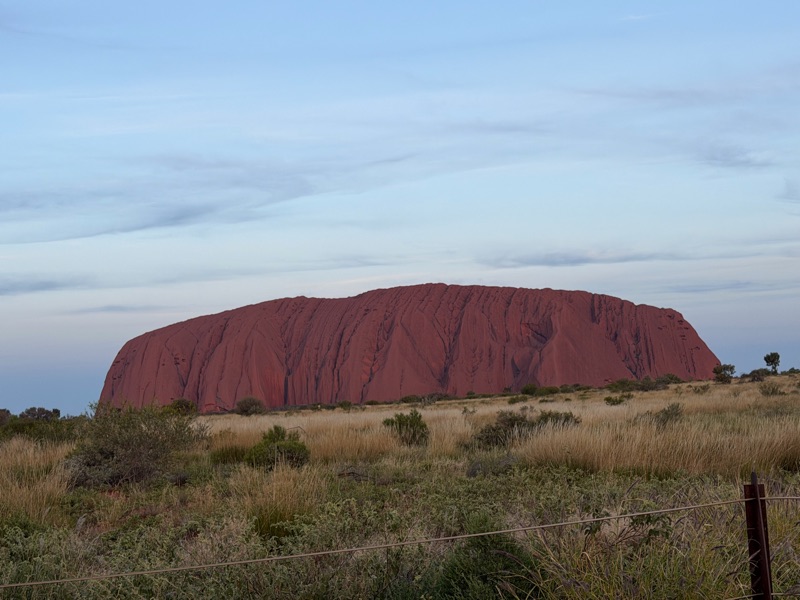
We spent a lot of time and effort seeing the sunrise and sunset - both with appropriate beverages and snacks supplied by our guides. We were trying to track changes in the colors of the rocks, with mixed success.
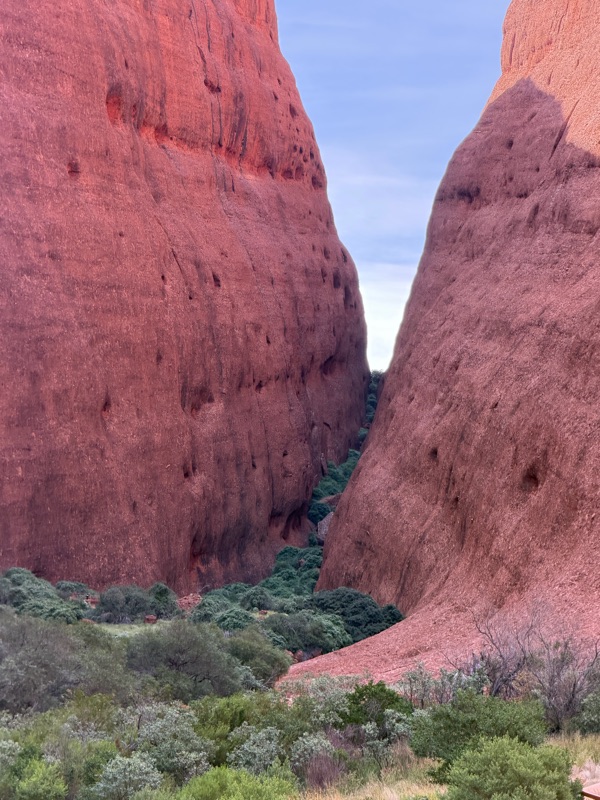
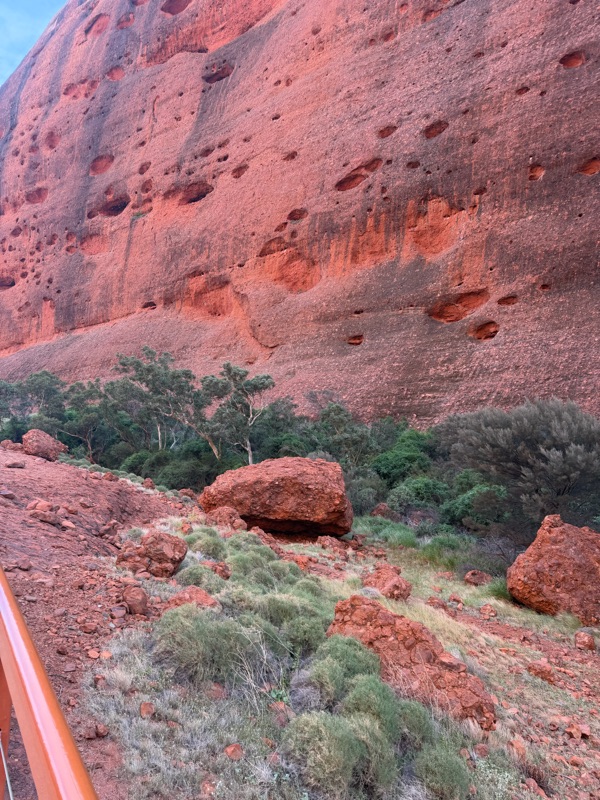
We also very much enjoyed seeing Kata T’juta - another large and important rock formation about 20 km away. We had a wonderful walk up the windy path to men’s ritual area.
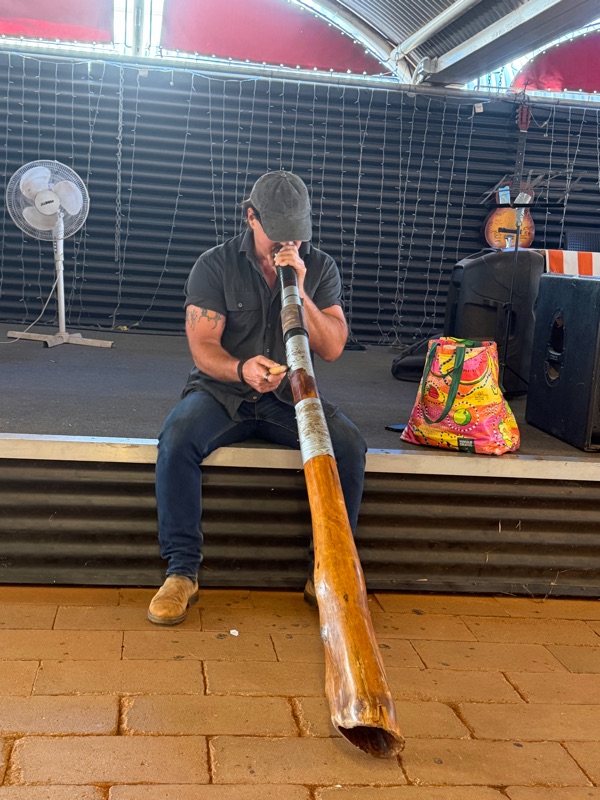
In the afternoon, our resort offered a variety of cultural activities. We visited an aboriginal art gallery and a few other shops, but the highlight was a Didgeridoo performance and lesson.
We really enjoyed the last few days of learning about the beliefs, practices and arts of some of the aboriginal groups in Central Australia.



That rock is much more massive than I originally thought. VERY interesting.
ReplyDelete