Today we delved into the history of Hobart and Tasmania, learning about the land, the people and the animals that make this island unique.
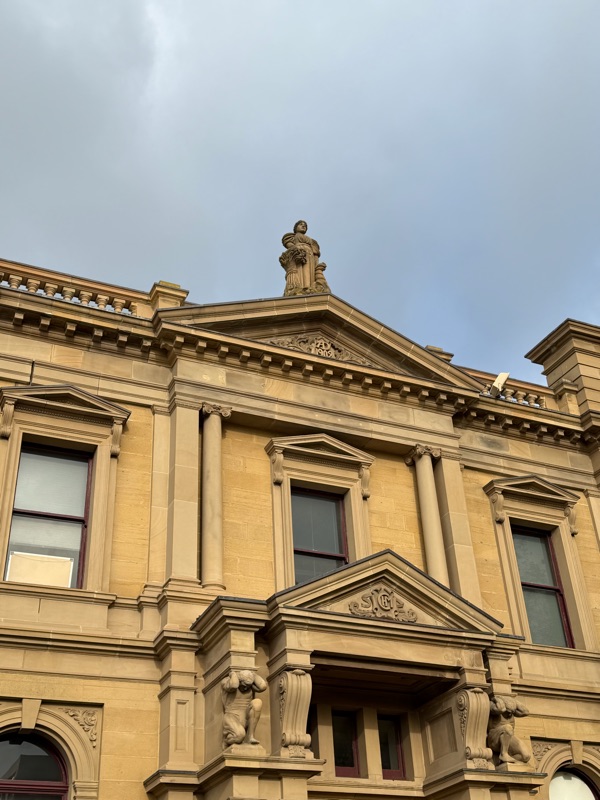
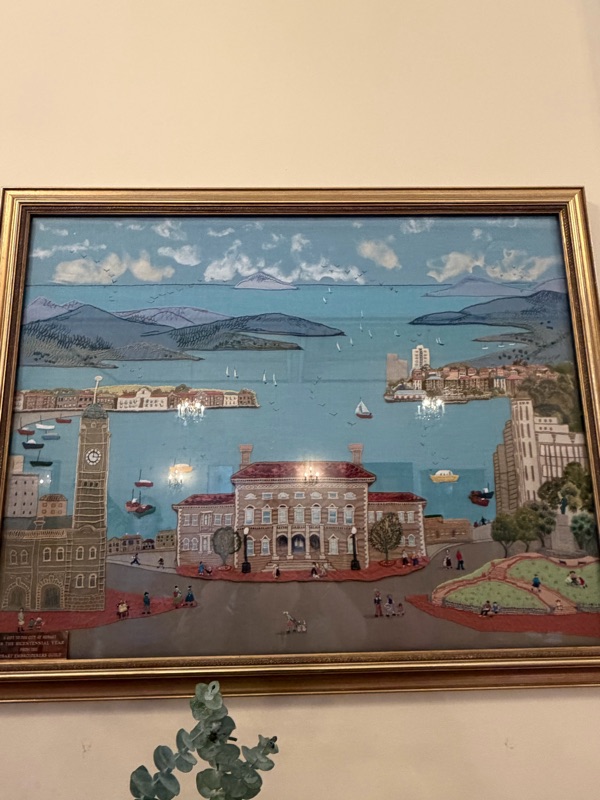
After a delicious breakfast at our hotel, we headed on a walking tour of downtown Hobart. The local guide identified many of the buildings we had been walking and driving past as significant in the early history of the city, including the governor's house, court house, customs house, etc. Along the way we learned quite a lot about the history of the British colony here and the importance of the labor provided by the population of convicts who had been sent on one way trips to the Australian penal colonies. We learned about the origin of many of the impressive buildings on the waterfront, and heard a lot about the convict labor system.
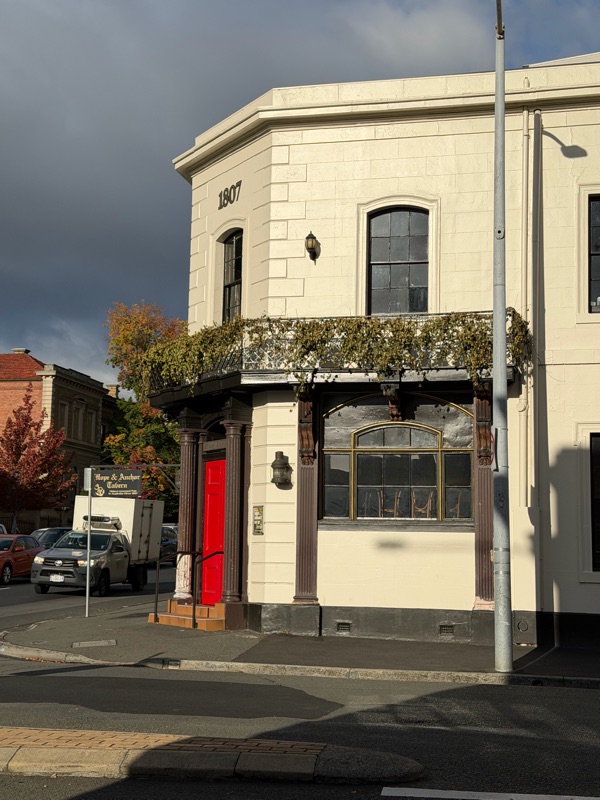
The oldest Tavern in Australia
After an hour or so, we were ready for a change. We got on a small tour bus and headed for Bonorong, an animal rescue and sanctuary about an hour from town. At Bororong, we had a brief tour where we learned about Tasmanian Devils as well as several kinds of rare and unusual Cockatoos. Most of the birds had been abandoned when their owners realized that the birds would outlive them - which is hard when the bird has a piercing call that can be heard 5 miles away!
After the tour, we continued to walk around, seeing the famous Kookabera (who sits in a gum tree), kangaroos, more Tasmanian Devils, (so named because of their horrific screeching, red eyes ears), spotted quolls, and many other birds. It was fun, but we were disappointed that we didn’t get a chance to feed the kangaroos with Roo Chow.
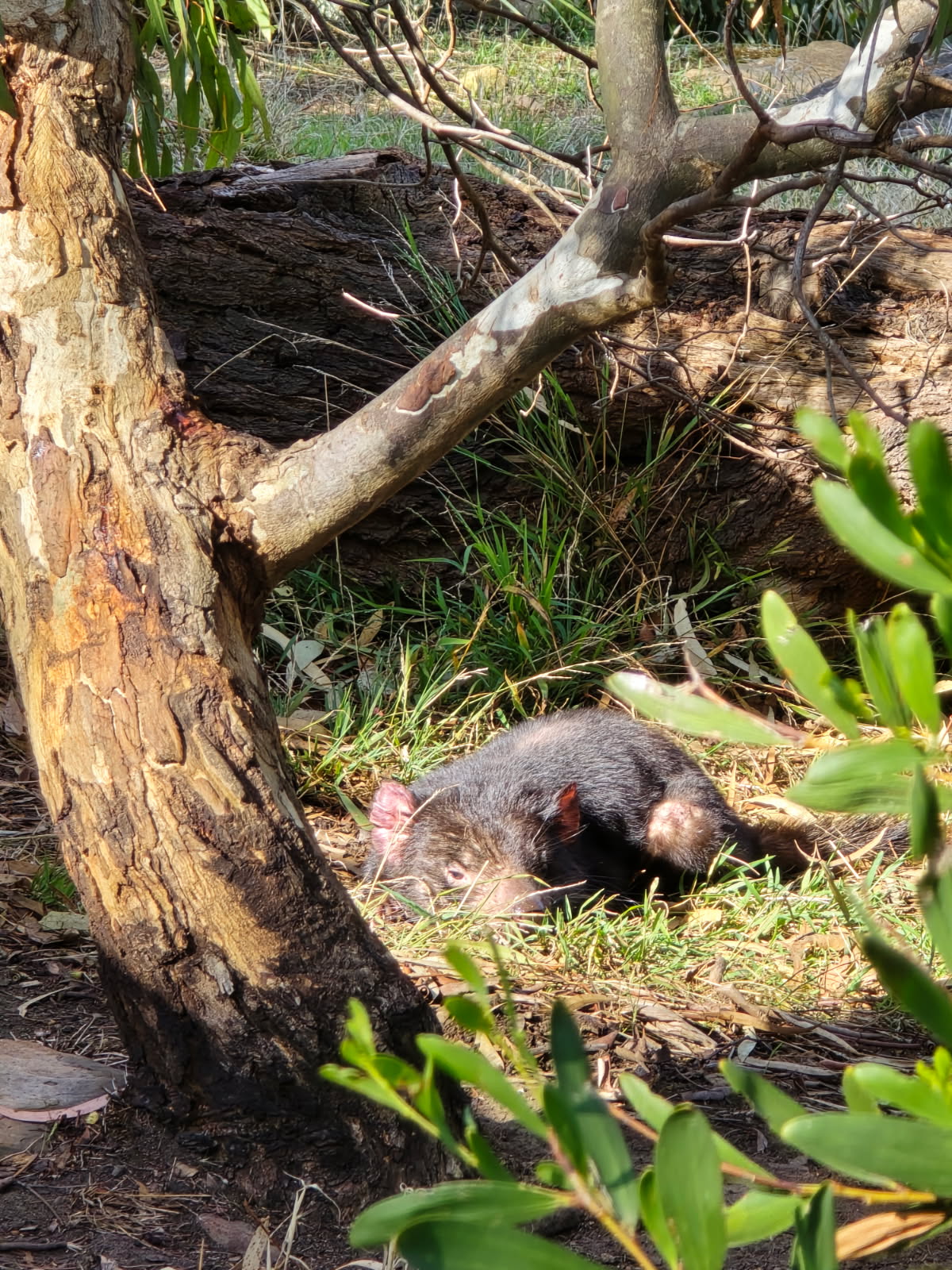
Tasmanian Devil
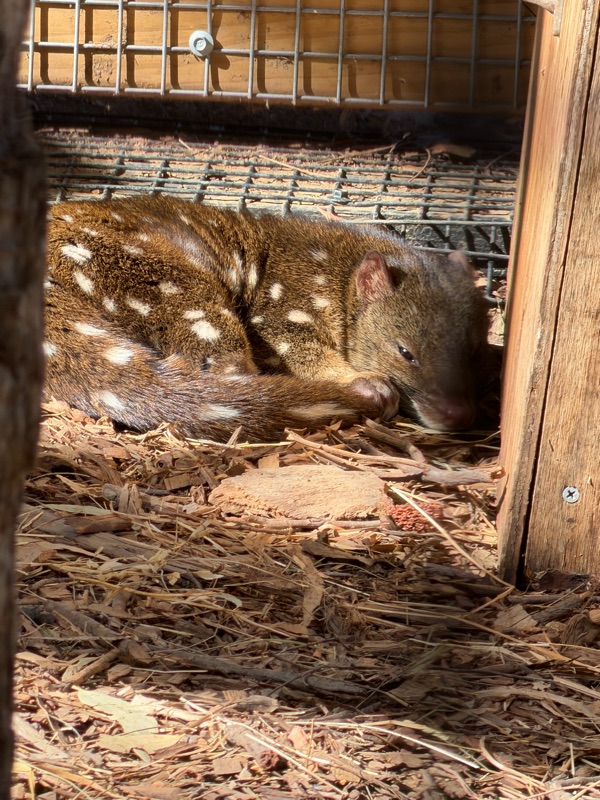
Spotted Quoll
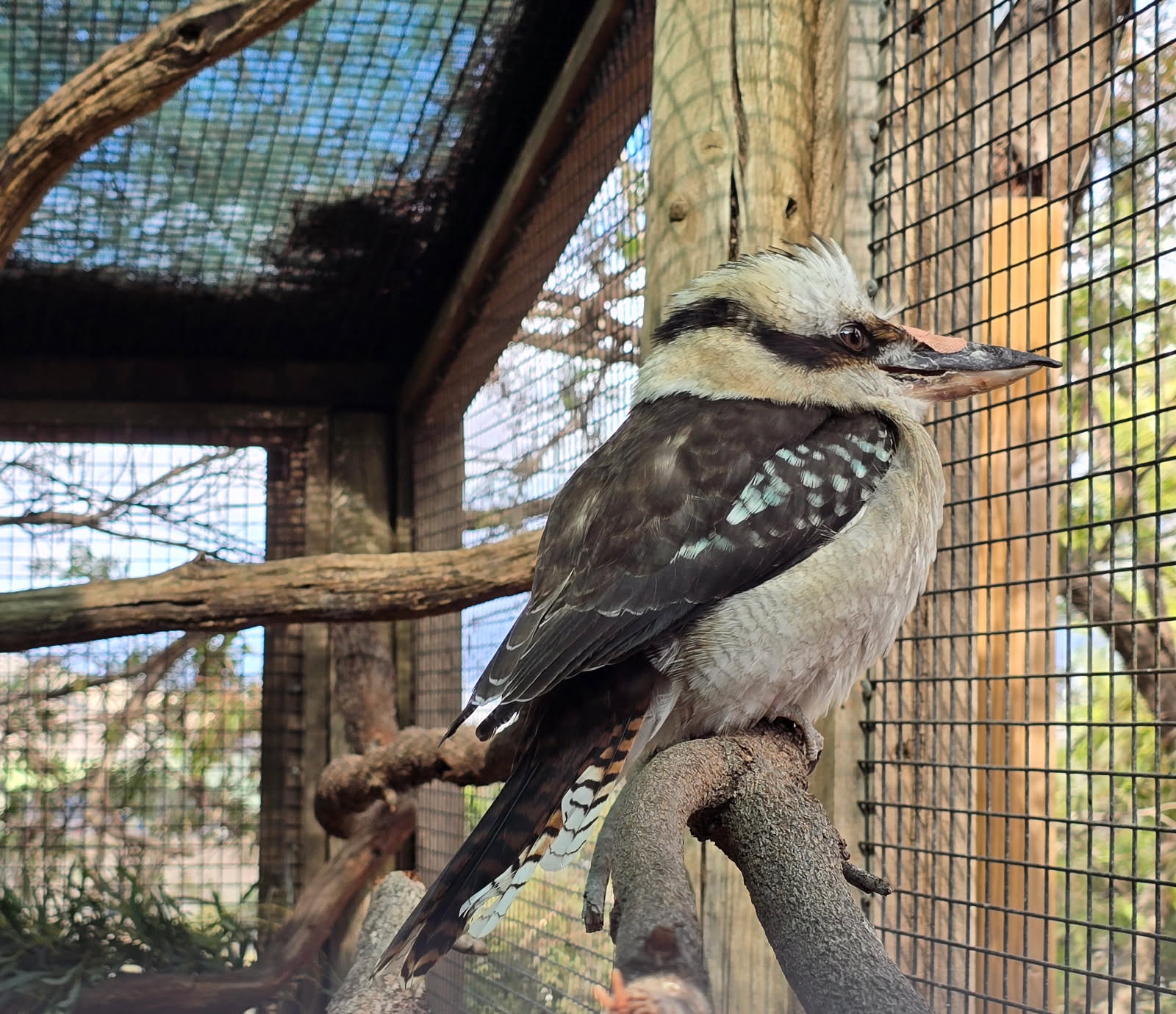
Kukabara on a gum tree
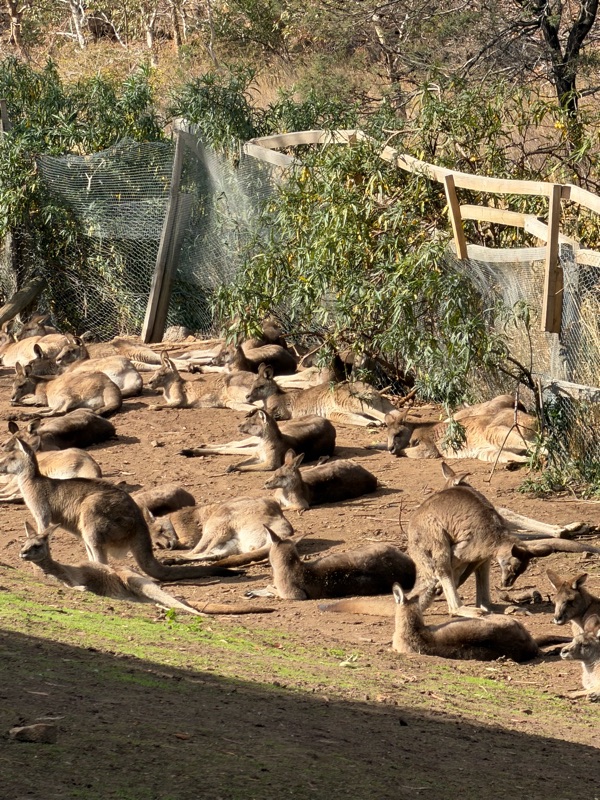
A mob of kangaroos
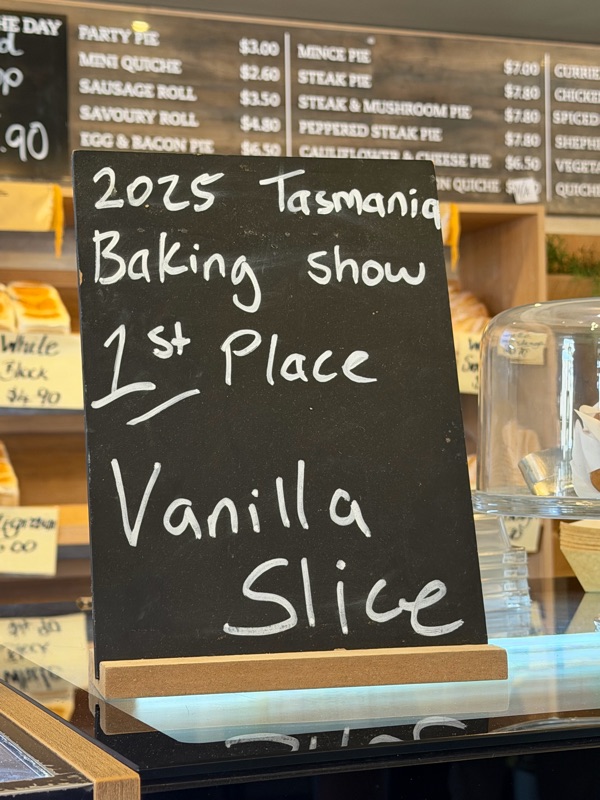
Next we headed for the rural village of Richmond. We stopped at the oldest bridge in Australia. Then we had a yummy lunch of single serving pies (lamb for Ruth, curried scallops for Cheryl) as well as very tasty pastries for dessert - locally famous vanilla custard napoleon and delightful blueberry concoction. Then we wandered around town, popping into shoppes until it was time to go, including a wood crafting business and many art and fabric handcraft shops.
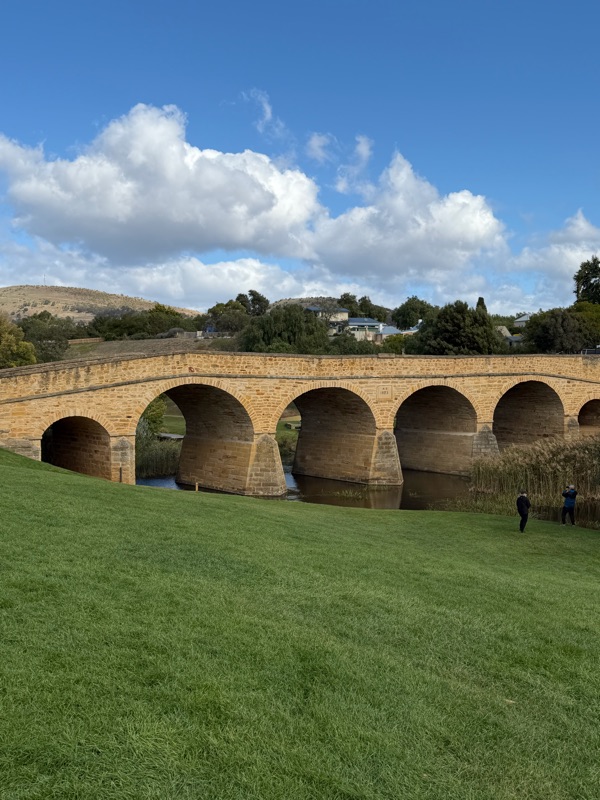
Richmond bridge
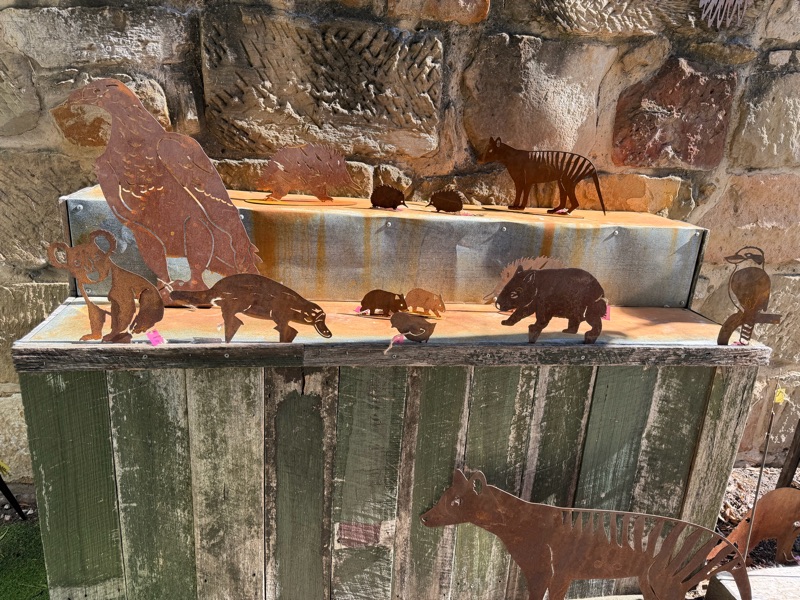
Local art
We got back to the hotel around 2, and after a brief pause, strolled over to the Tasmanian Museum and Art Gallery to learn more about the Aboriginal experience in Tasmania with Rod, our tour leader. The indigenous population had been completely isolated from other people since the end of the last Ice Age about 11,000 years ago. The arrival of the British government and settlers forced the indigenous population off of their land, over time leading to their eradication in Tasmania (from disease or other causes), wiping out the indigenous culture almost entirely. Some information of the culture is being recovered through archaeological findings, but it is significant that the determination of who is an aboriginal is made not by ancestry but by behavior. It was moving and sad to see the exhibits and gain some understanding of what has been lost.
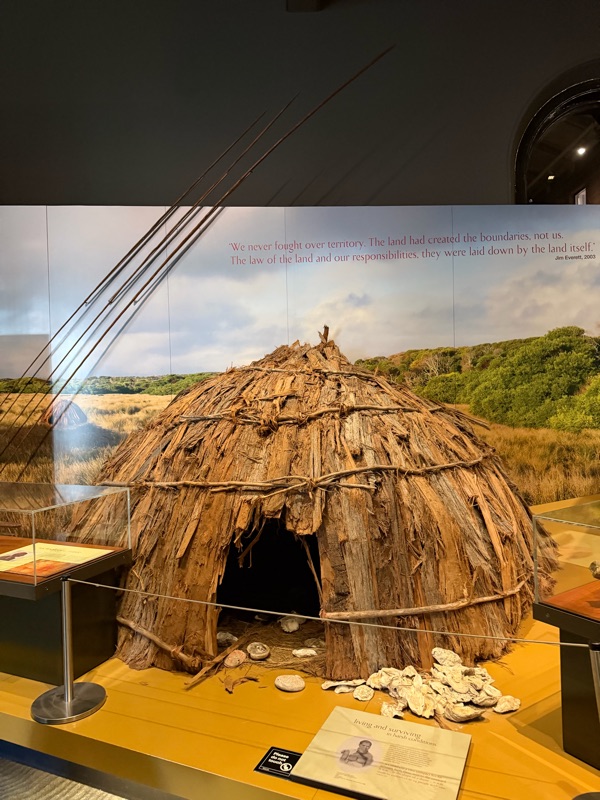
Example of indigenous structure
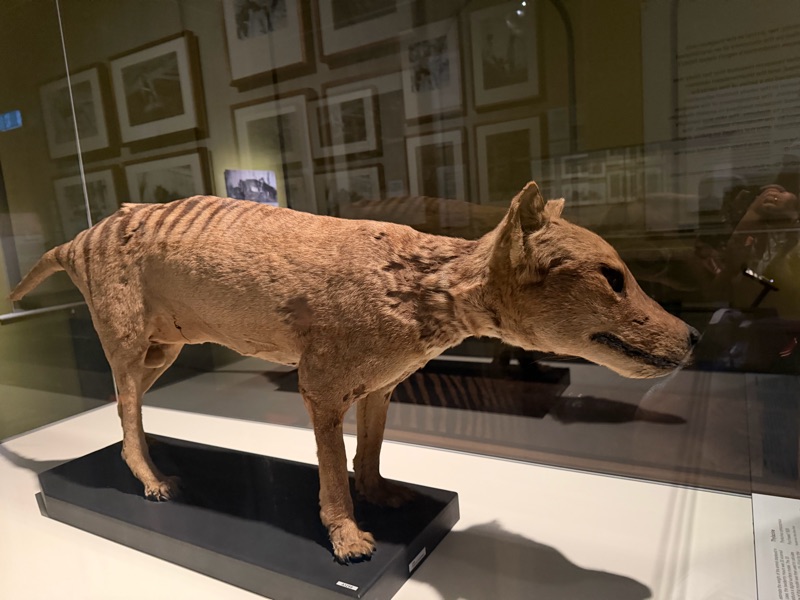
Extinct Tasmanian “tiger”
After the museum, we relaxed until dinner. We walked out to a pub nearby and had a lovely dinner in a convivial “quiz night” atmosphere. Then “home” to bed. Another busy day of wondering, learning and discovery.



The convict labor system — that does sound interesting! Regarding the abandoned birds with the 5-mile voice range: so much for peace and quiet!! VERY interesting information about the aborigines. You really are in another world!!
ReplyDeleteLove being on another adventure with my favorite wondering wanderers. ❤️ safe travels. Great updates !!
ReplyDeleteJackie G - I Wass pleased to see the tasmanian Devil - Did you hear them screech? Are they found anywhere else? Thanks again, you "wondering wanderers".💕😊☘️
ReplyDelete