Today we visited the National Park and World Heritage Site of Port Arthur, a secondary penal colony on the southernmost tip of Tasmania.
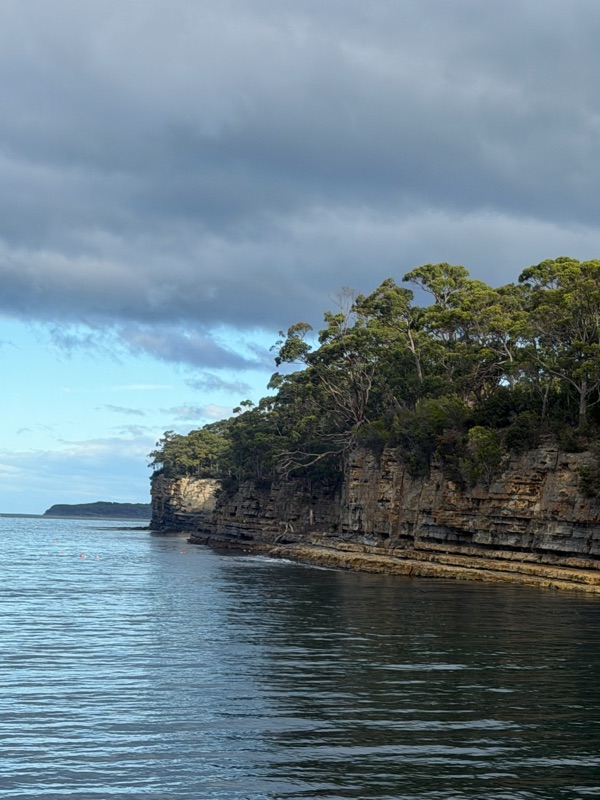
We left the hotel at 9 and drove past lovely scenery - rolling hills and numerous lakes - as we circled around Tiger Head Bay. We stopped along the way to visit the fascinating Tessellated Pavement State Reserve. The pavement is an extremely rare geological formation where sedimentary rock is cracked by incursion of salt water forming exact rectangles. Located as it was, with the waves splashing on the shore and amazingly tall eucalyptus trees in the woods behind, it was an amazing light. We loved the site and took lots of
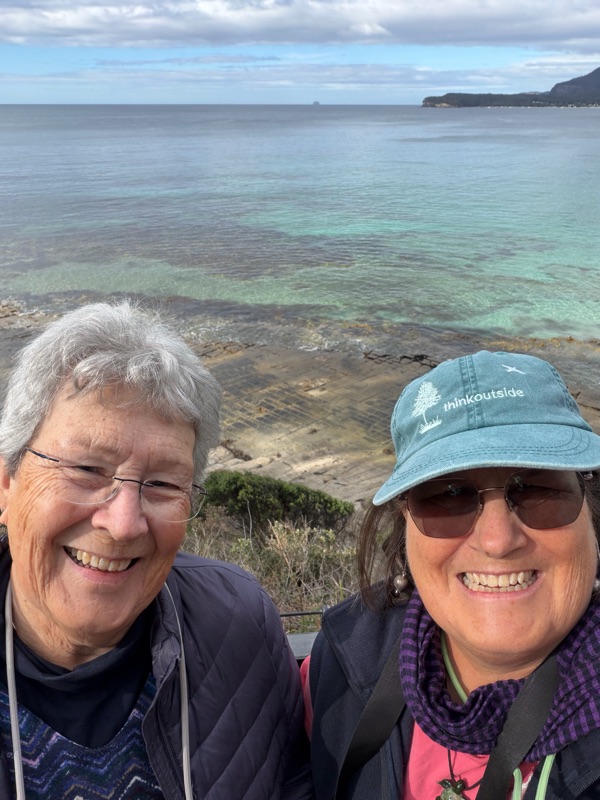
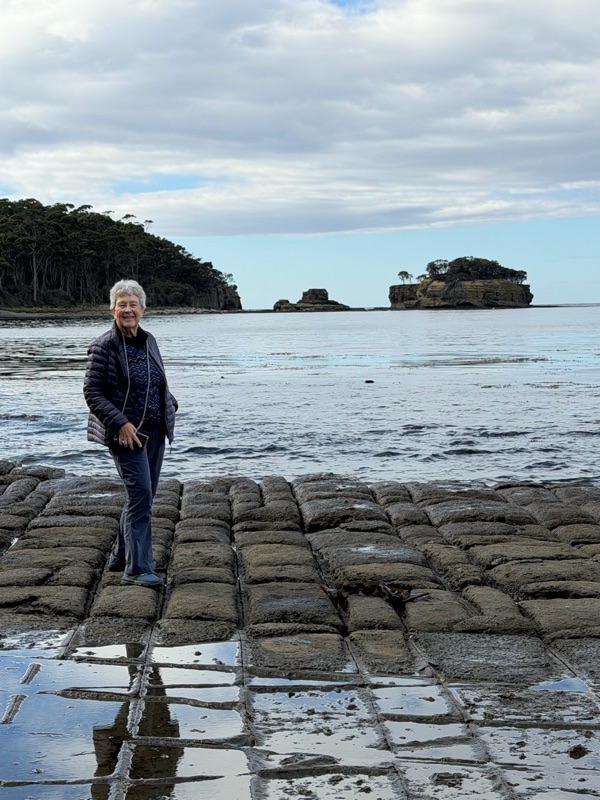
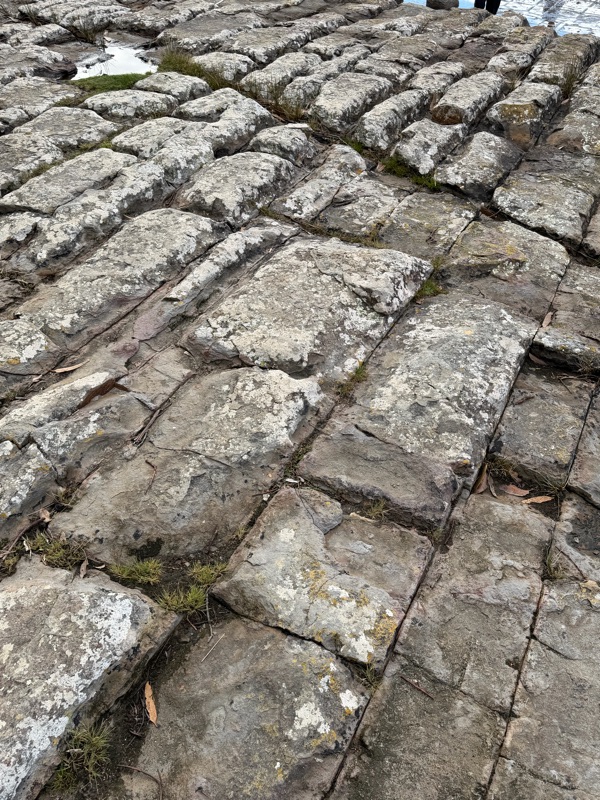
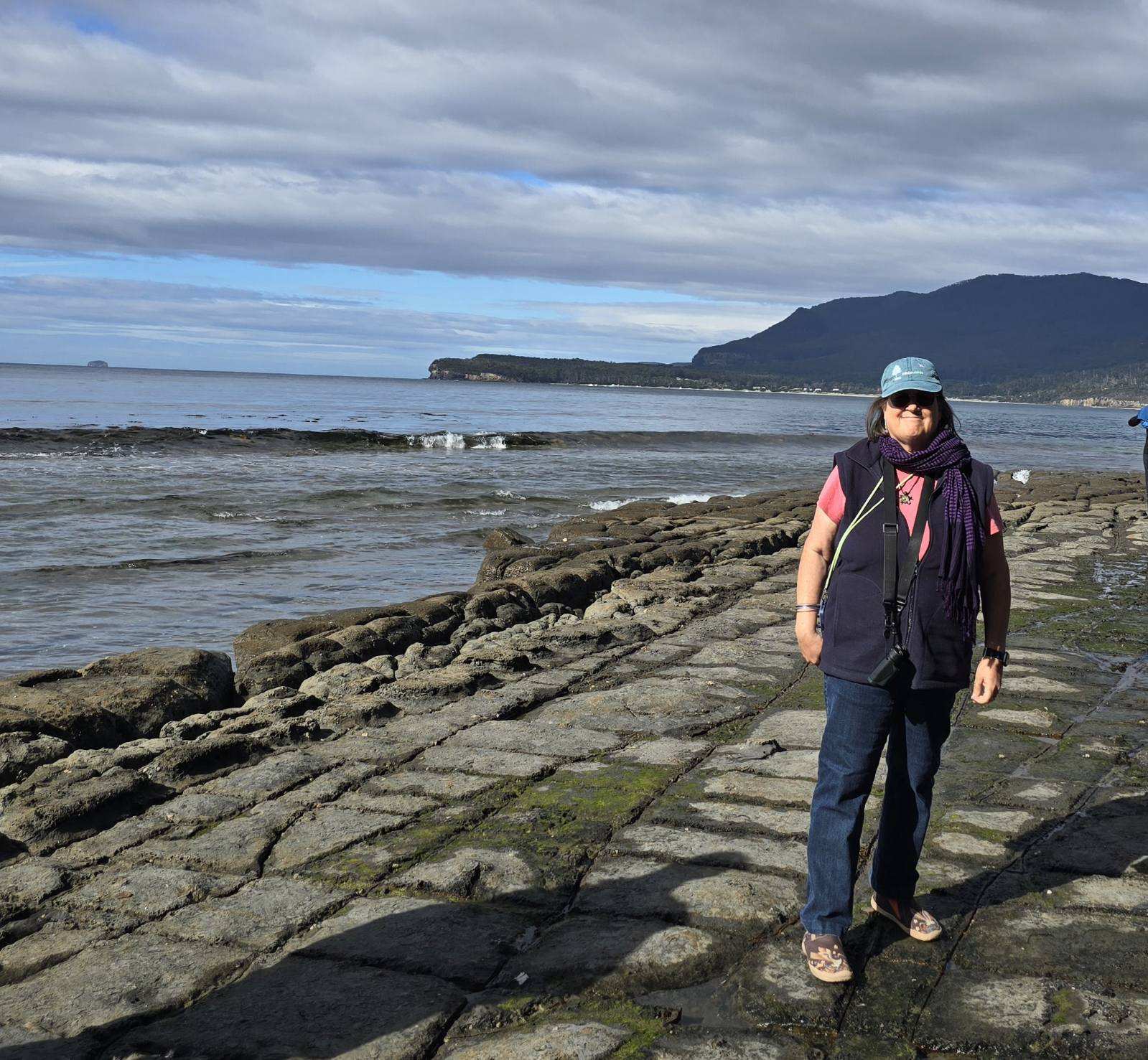
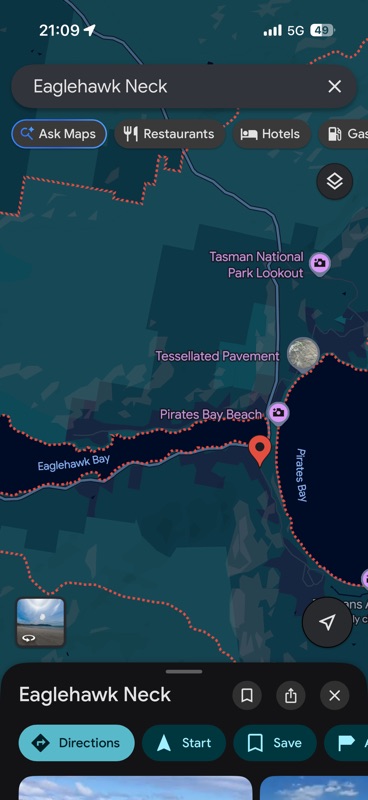
The tessalated pavement was near Eaglehawk Neck, a very narrow strip of land connecting the area around Port Arthur to the main body of Tasmania. This neck was used as a choke point to keep convicts from escaping from the penal colony. Starving dogs were posted close together all the way across the neck and into the water on either side to attack anyone who tried to escape. Only 12 people escaped the colony over its 47 year history.
In early 1800s, the British government started transporting convicted offenders to Australia as well as other colonies. Port Arthur was a high security penal colony for those who committed a second crime, either during or after they had served their sentences. It was designed to severely punish these repeat offenders.
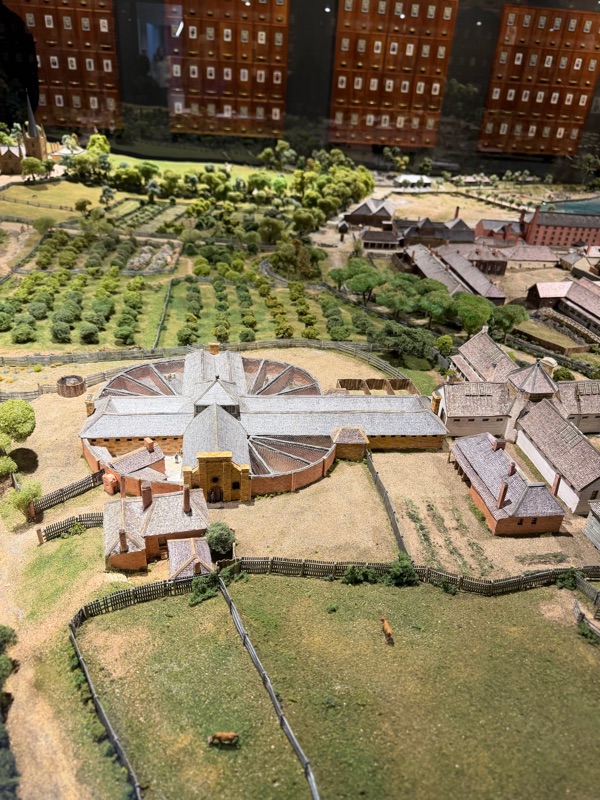
Model of the Separate Prison
We spent a good deal of time in the isolation building, called the Separate Prison, where prisoners were in solitary confinement. Even in the obligatory church services they were separated by doors on each side of their seats. Nor could they communicate with each other, and even the guards were silent.
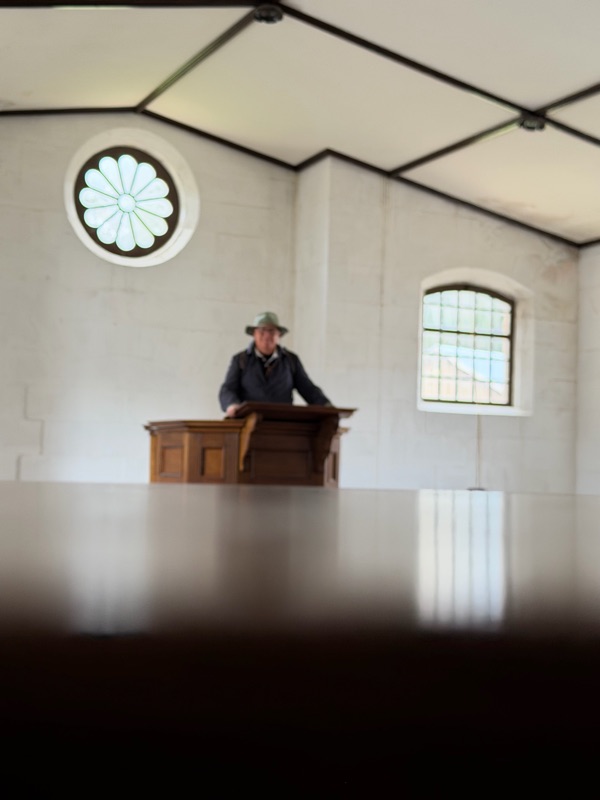
All the prisoner could see from the pew was the head of the preacher (Cheryl was standing in tiptoes to take this shot
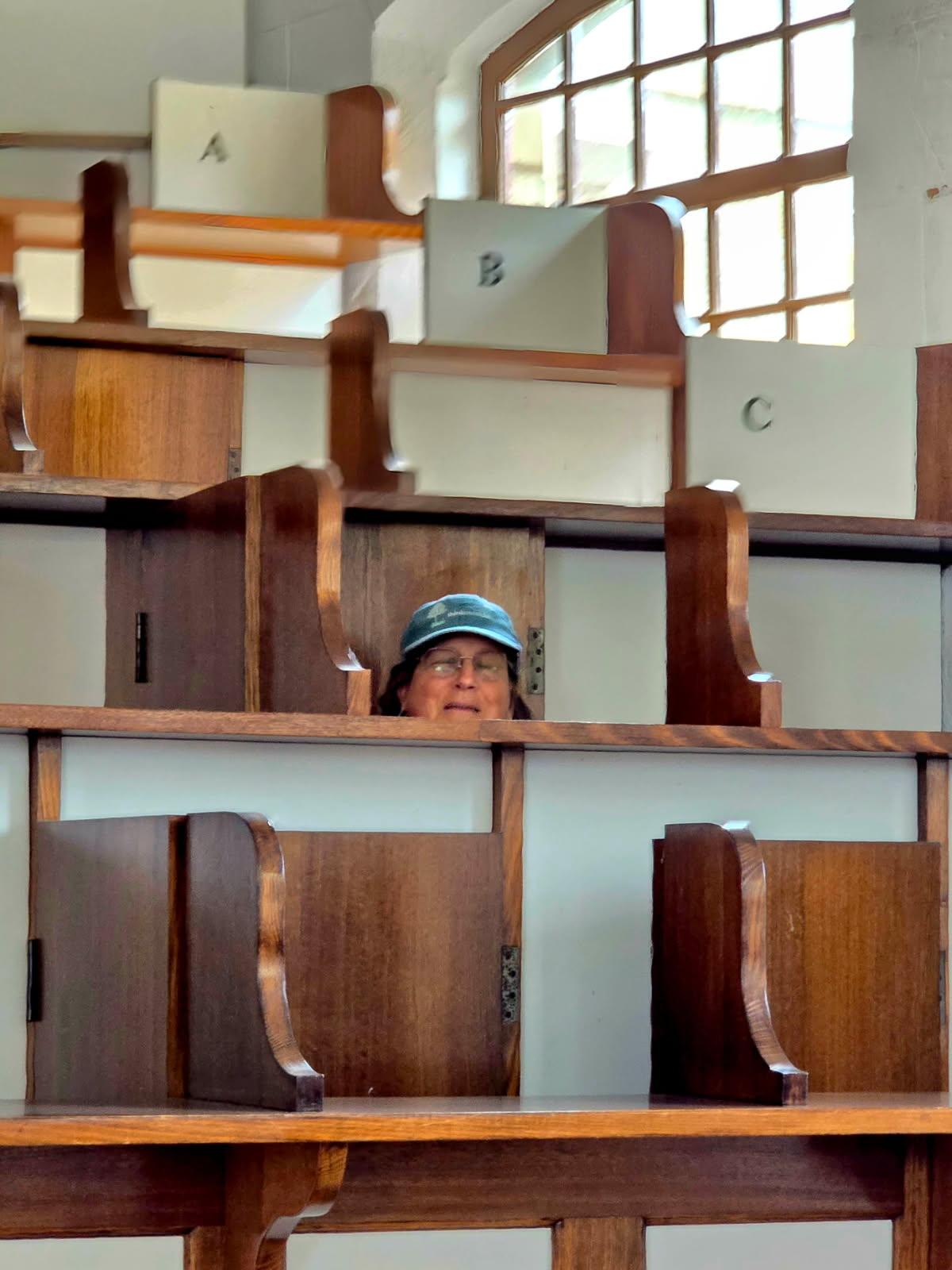
And this is what others could see of her!
Other than those in solitary confinement, Port Arthur was mostly a work camp. Men worked largely in logging and other forms of hard labor to bring resources to the colonial government. Eventually most completed their sentences and were released to return to civilian life as a settler. Over 7,000 male prisoners served time here.
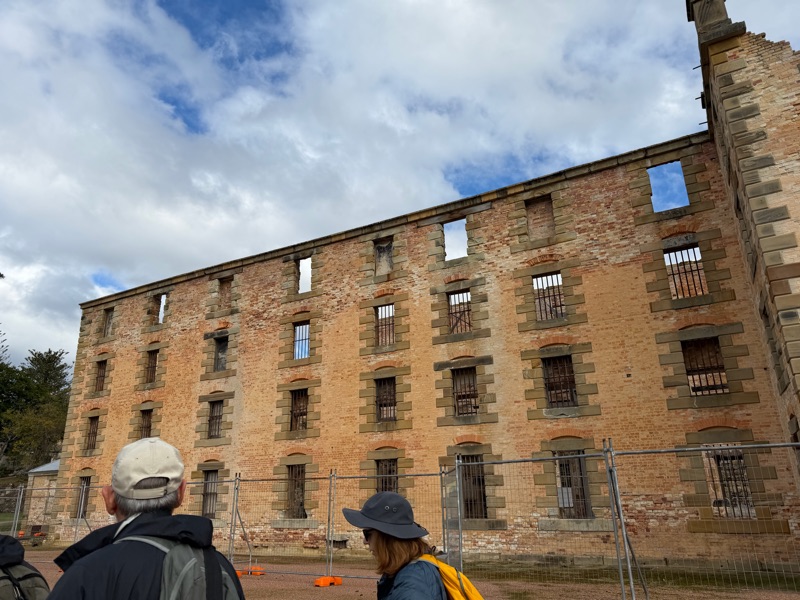
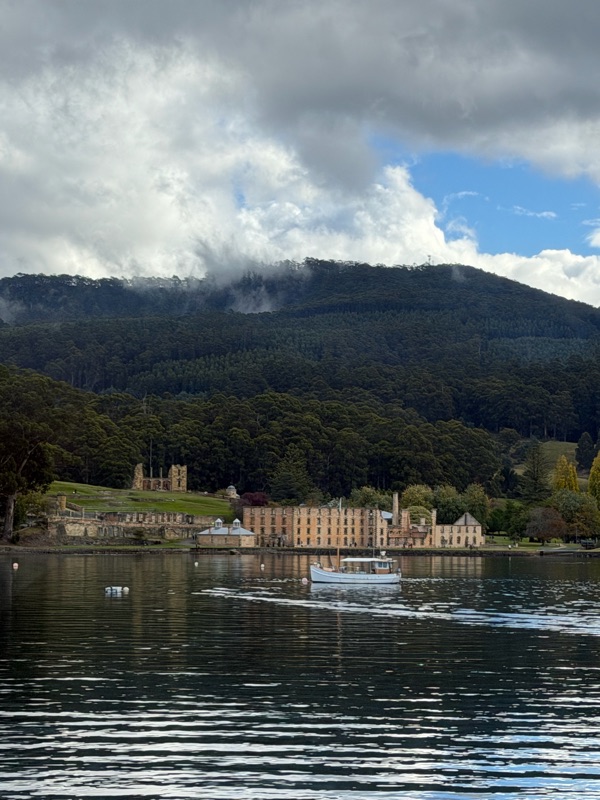
The main penitentiary building from the boat in the harbor
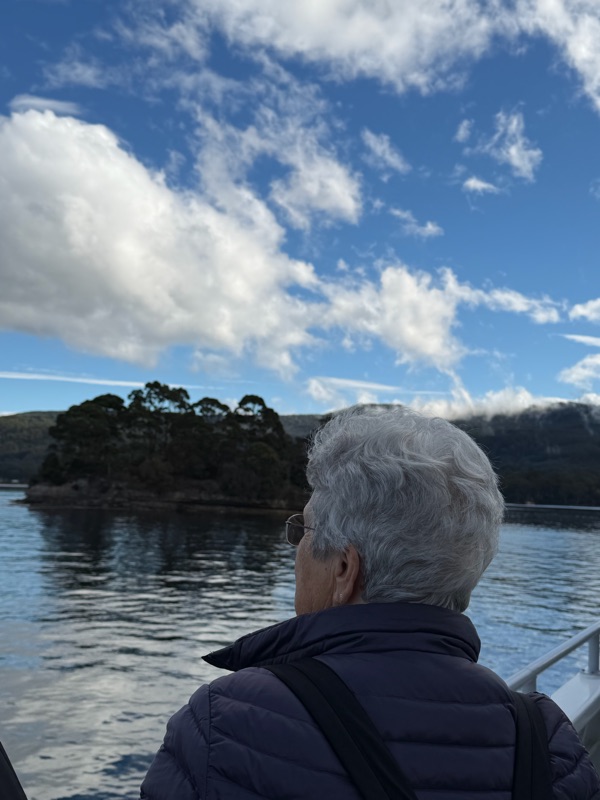
After touring the grounds, we had a 20 minute boat ride around the harbor to see the island where over 800 people were buried, as well as the area where a boys reform school operated.
On top of the tragedy of the penal colony itself, Port Arthur was also the site of the worst episode of gun violence by a single individual in Australian history. In 1996, a man opened fire and killed 35 people, injuring 23 more. Within 12 days the Australian government agreed to overhaul gun control laws.
Ironically, what had been an isolated god-forsaken place in the woods when it was functioning as a prison, today it is a lovey park, with wide grassy lawns. The site has a sobering history, but when the sun came out in the afternoon, it was really lovely.
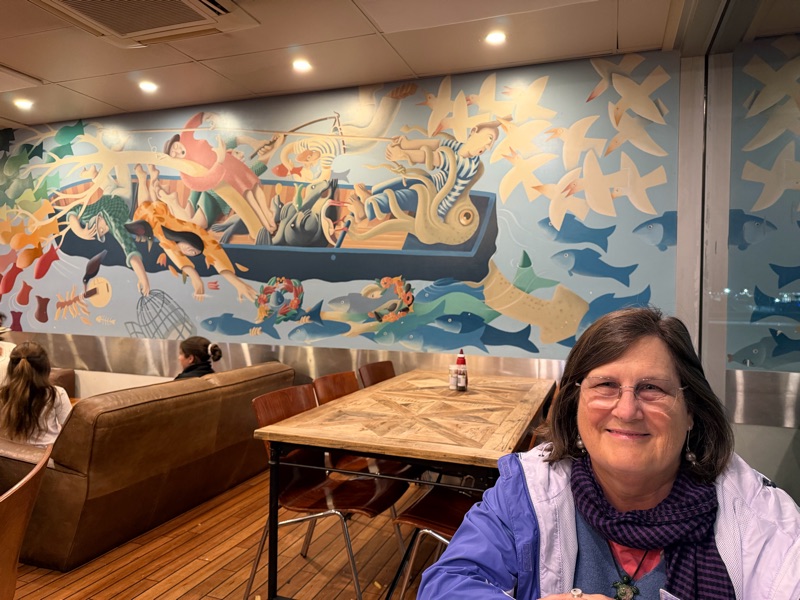
Around 3:30, we left the Park and returned to Hobart. We spent our last evening in this interesting and historical city, having dinner at a local seafood restaurant on the docks downtown.




Wow! Super interesting .. That narrow stone path [tessellated pavement] didn't appear that it would be too much of a deterrent, BUT the group of hungry dogs .. most definitely.
ReplyDeleteWas the intention of isolation successful? I liked how you shared the view from the pew to the pulpit and back.
Yes, I agree with JP2R in saying this is super interesting.
ReplyDelete