160 million years ago, Australia, India, Africa, South America and a few other things formed the great super-continent of Gondwana. The whole thing was covered in a wet tropical rainforest of ferns and palms and other trees that had learned how to procreate without flowers.
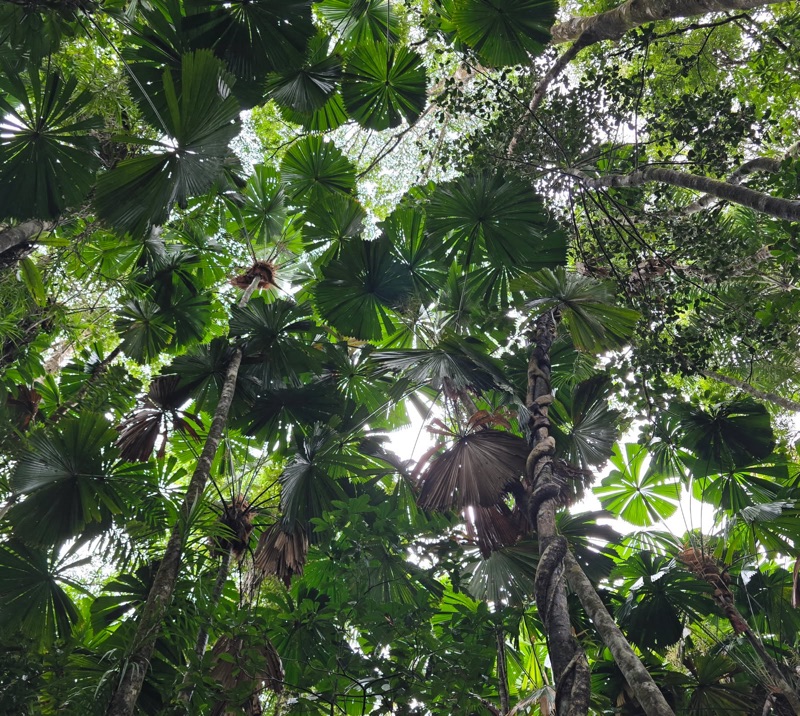
The only piece of this rainforest that still exists on earth is the Daintree Wet Rainforest in North East Queensland, Australia. Here, where the ancient Rainforest meets the Great Barrier Reef, is the only place where two world heritage sites abut one another. We drove north for about an hour and a half along the edge of the Coral Sea on a road cut out of the rocky cliff of the Great Dividing Range that runs all along the East Coast of Australia, past lovely sand and rocky beaches. Along the way there were many stops for roadwork dealing with the destruction caused by a cyclone a few months ago.
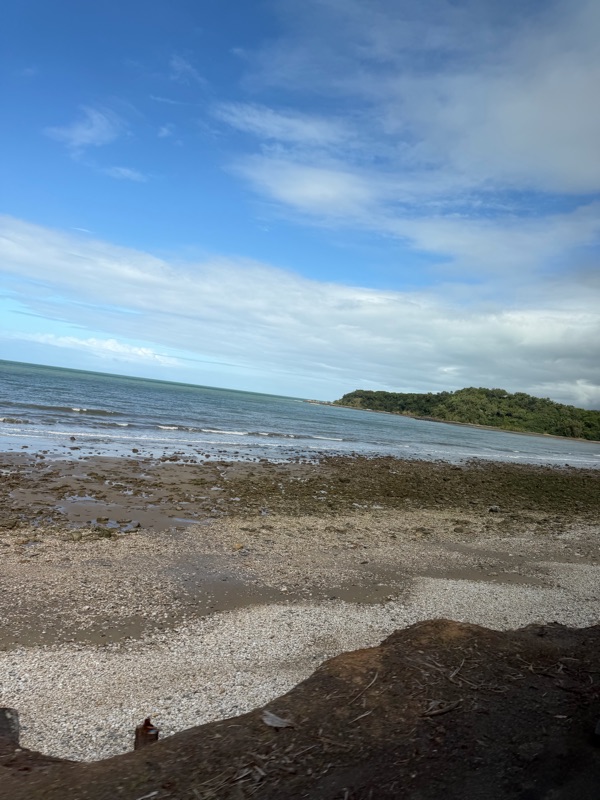
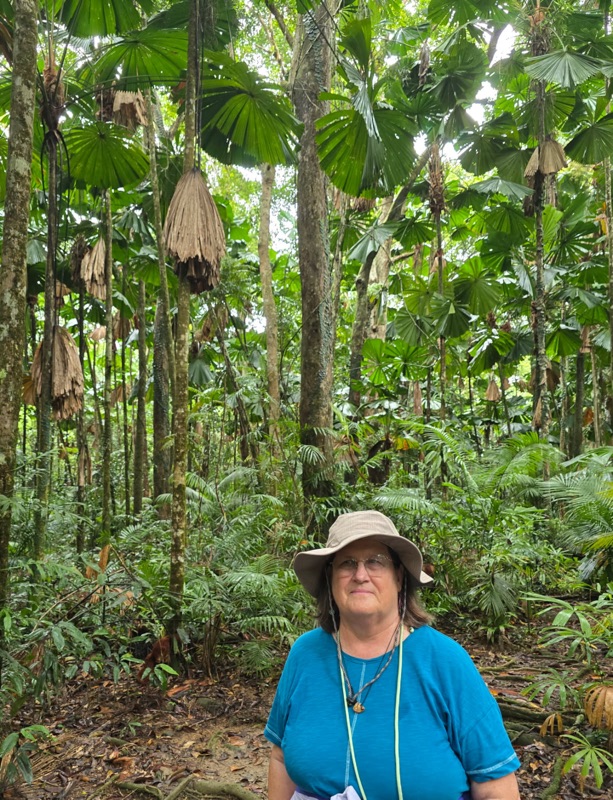
The World Heritage site starts just north of Daintree River that could be crossed only by ferry. We had a guided walk through a part of the forest led by a man who was extremely knowledgeable about the trees and plants and how they worked together in that ecosystem. It was an amazingly wonderful walk through a forest that looked much like it did when dinosaurs roamed the earth.
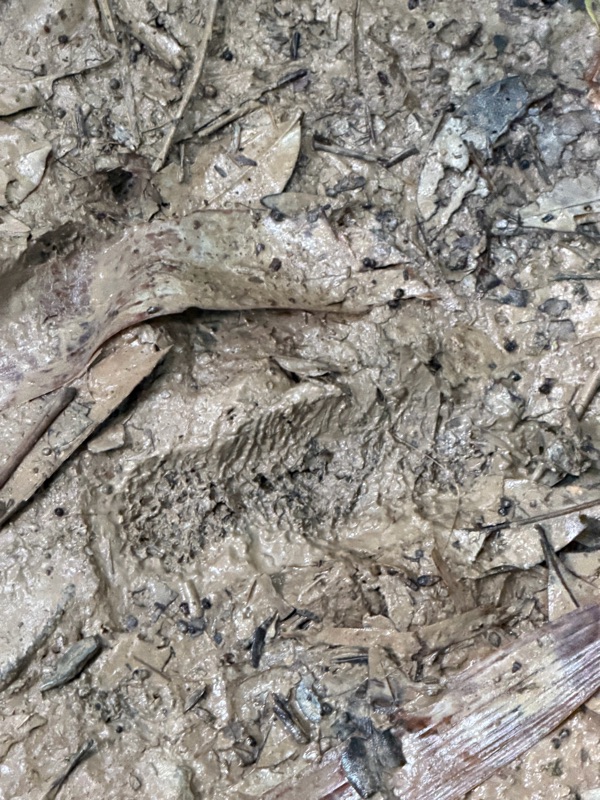
While we were hoping for glimpses of tree kangaroos and cassowary birds, we had to be satisfied with some Cassowary tracks in the muddy path and the fascinating accounts of the trees and how they interacted with each other.
We loved the glades of fantail palms - one of the oldest plants on earth. These palms grow slowly - about a meter in 100 years.
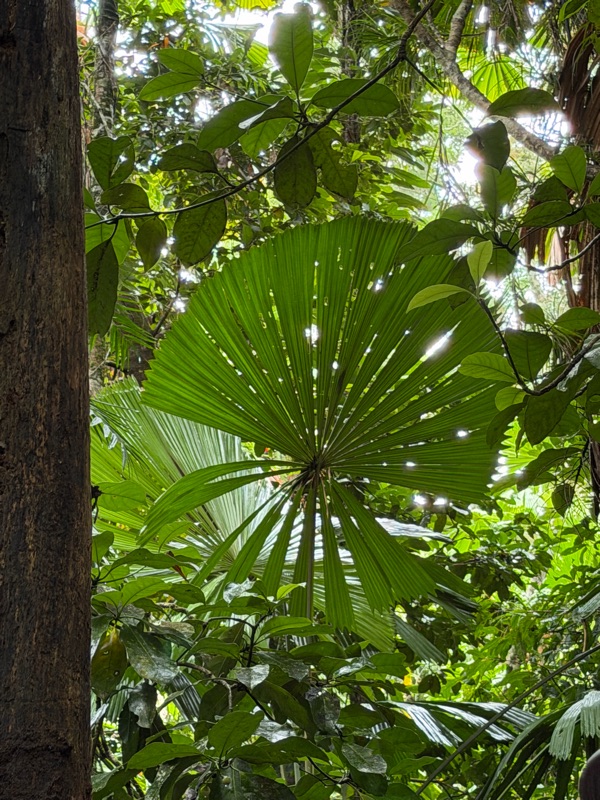
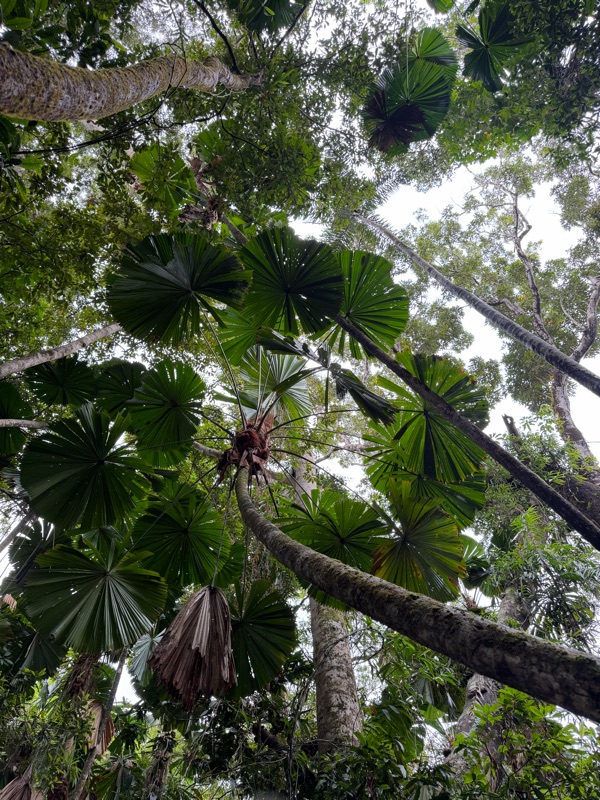
The walk helped us to understand that the indigenous people played a huge part in managing and preserving the trees and plants in the forest. Since they were removed 150 years in the past, certain parts of the forest can no longer reproduce so are dying, along with their complex web of relationships.
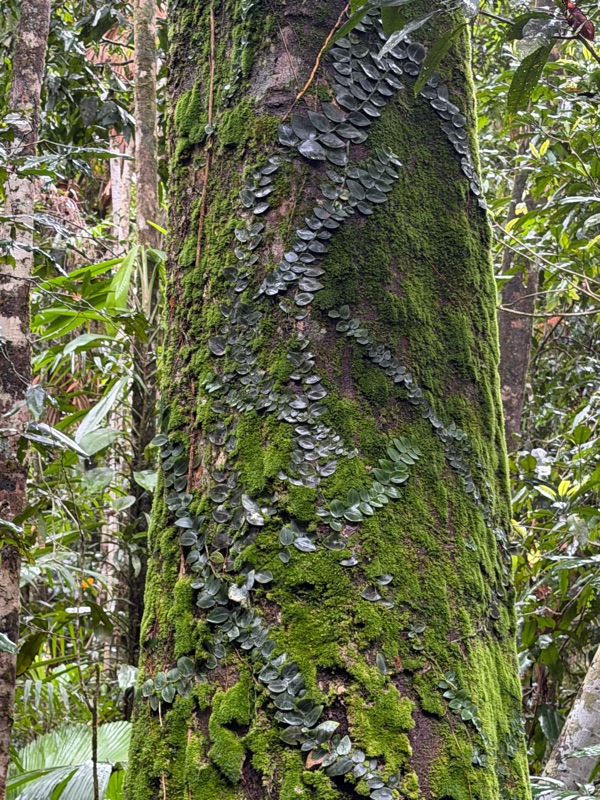
The guide also talked about how World Heritage status is meant to preserve the forest and everything in it - which means that indigenous people cannot go back, and the feral pigs that are destroying the environment cannot be killed. It is an interesting and frustrating conundrum - protection does not equal preservation.
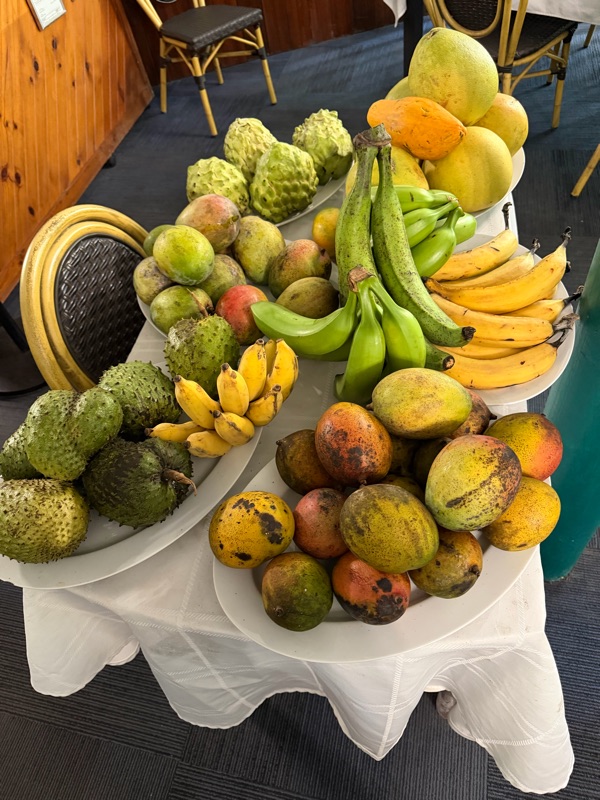
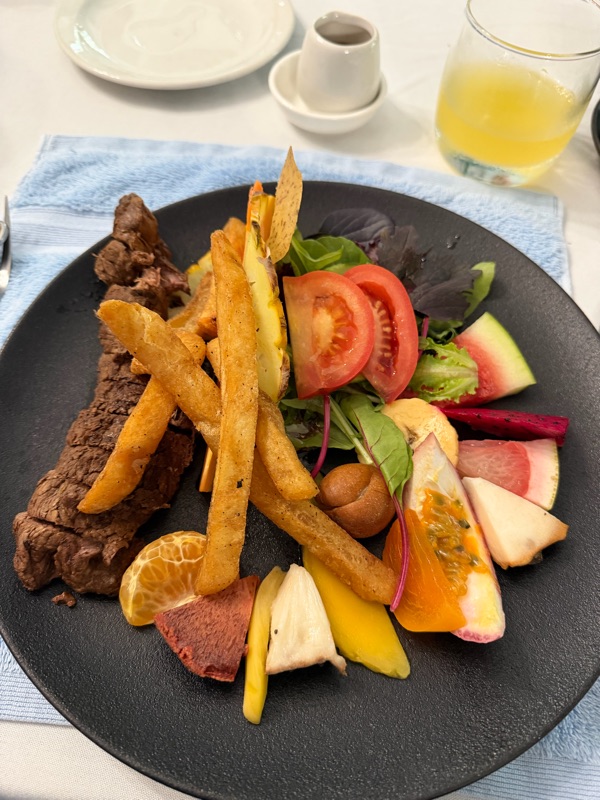
Our lunch was also a very special experience. While the food itself was fairly ordinary…baramundi fish or kangaroo kebab, the farm had an amazing number of unusual fruits, all of which were arrayed on our plates., including pomelo, finger lime, custard apple, soursop, mango, banana, pineapple and several others.



Beautiful !!😍
ReplyDeleteIf you hit the little down arrow on the top right of the comment section and put in your name, we will know who you are!😀
ReplyDeleteDon’t see the arrow on phone Ruth. Love that area! Marsha
ReplyDeleteThe Fantail Palms are beautiful. And look at that wonderful variety of fruits!
ReplyDeleteLove the Fantail palms! Marian
ReplyDelete