Today we spent the day visiting three sites (of 17 registered sites) within the Kyoto World Heritage site.
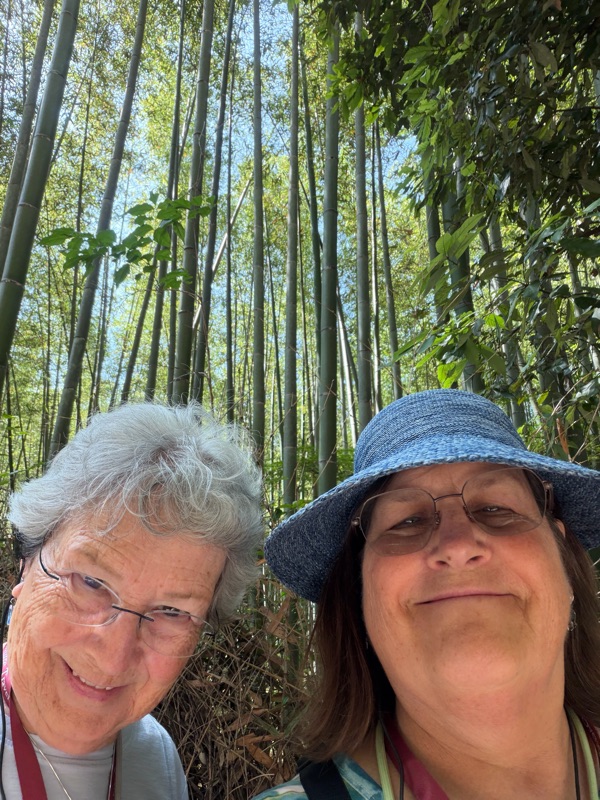
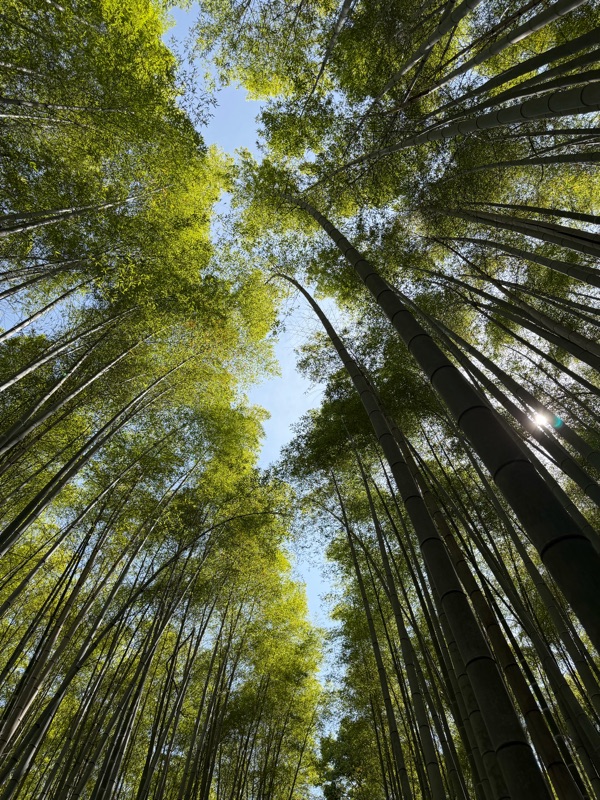
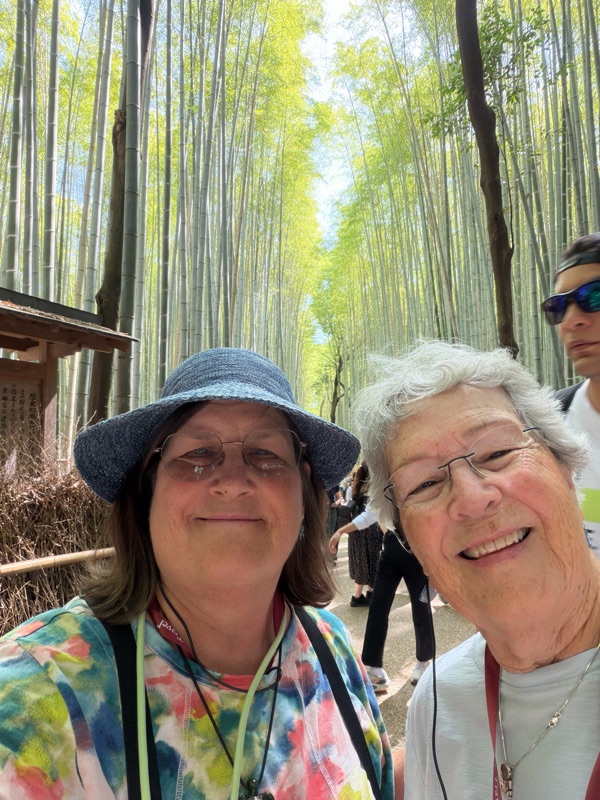
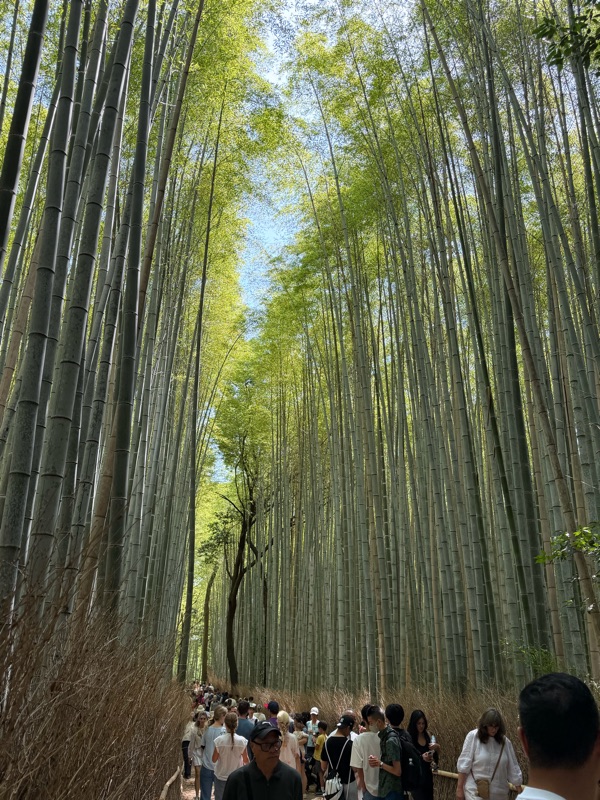
We started out by visiting the famous Arashiyama bamboo forest. The path through the forest was more crowded than we would have liked, but still beautiful. It was cool to see how beautiful and wild the bamboo looked, knowing at the same time that the whole forest is carefully tended, culled and maintained to allow light to get in so all the tall bamboo would thrive.
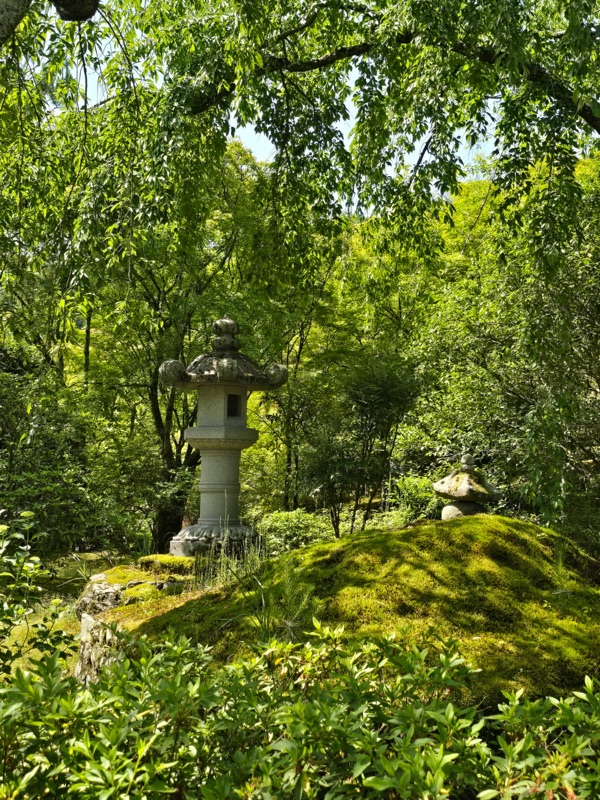
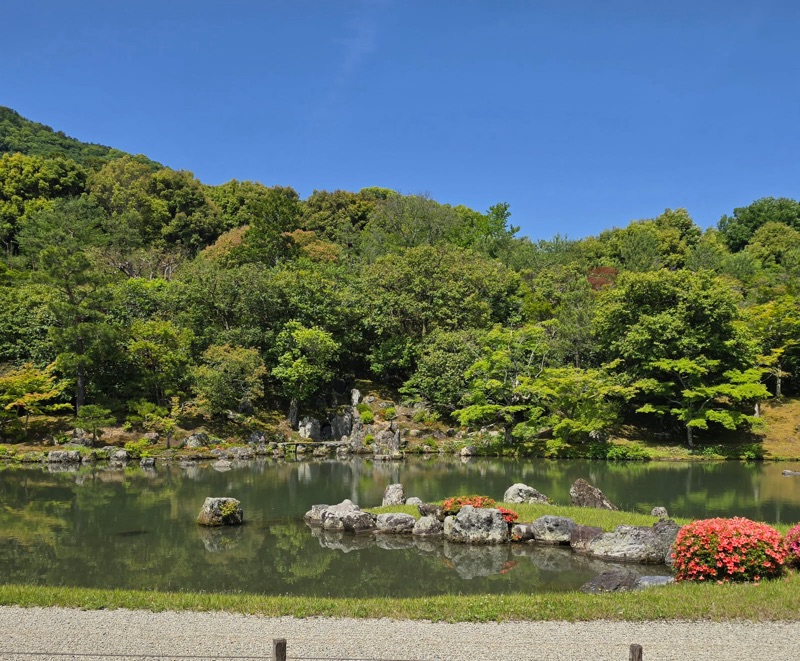
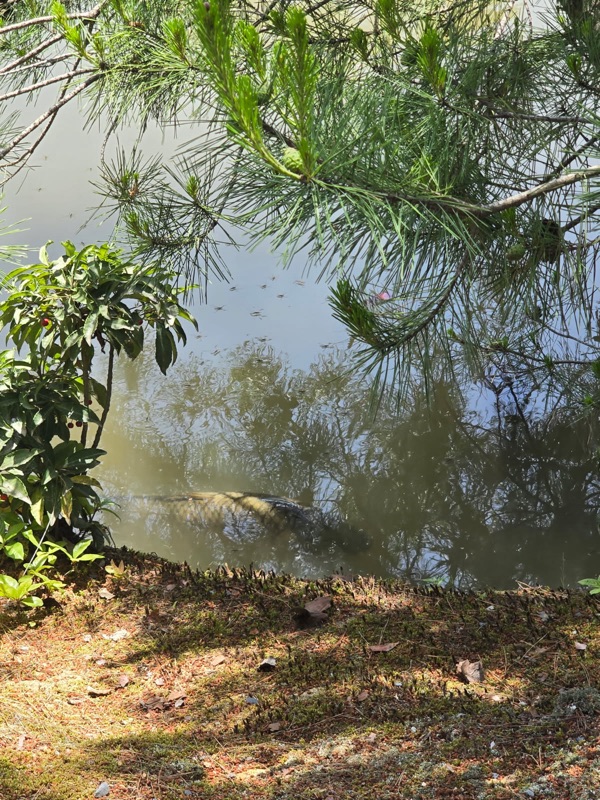
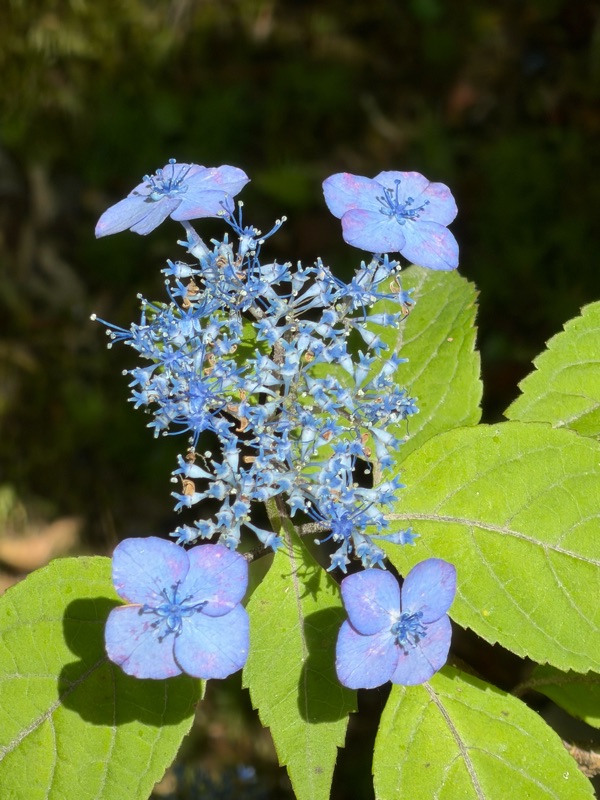
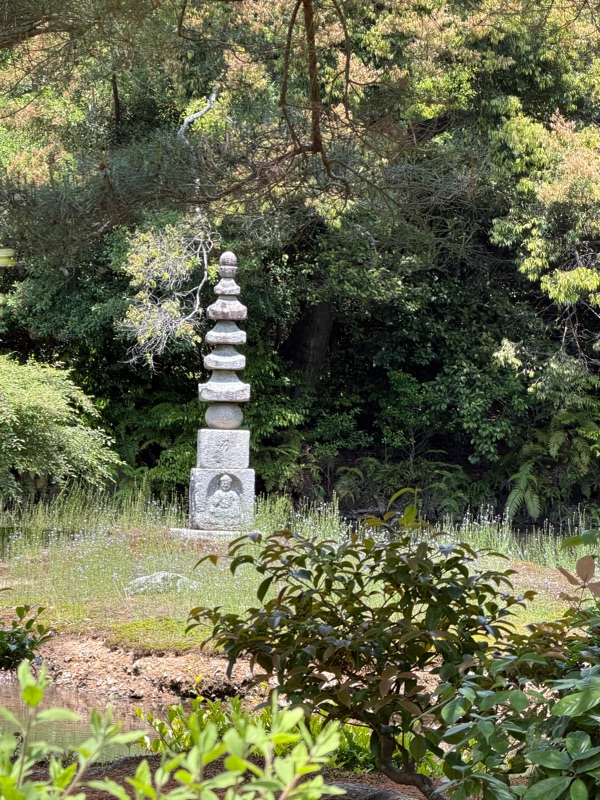
After passing through the forest, we visited the Tenryu-ji Buddhist temple (UNESCO site 1). The temple was lovely, but the focus of our visit was the lovely garden and pond. Our group leader, Makiko, pointed out especially lovely views and identified flowers, plants, small shrines and statuary, all of which were designed to enhance meditation and feelings of peace and harmony. The evolution of Japanese gardens in religious settings was featured in the UNESCO justification.
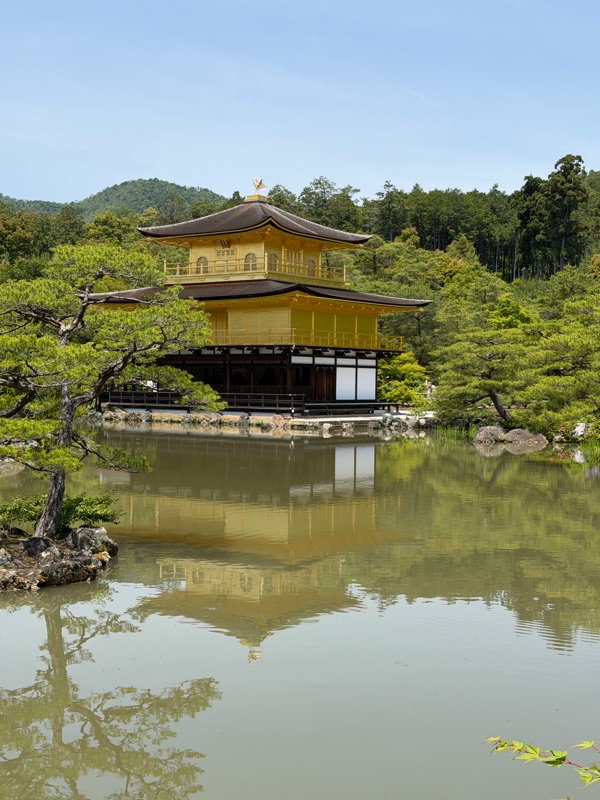
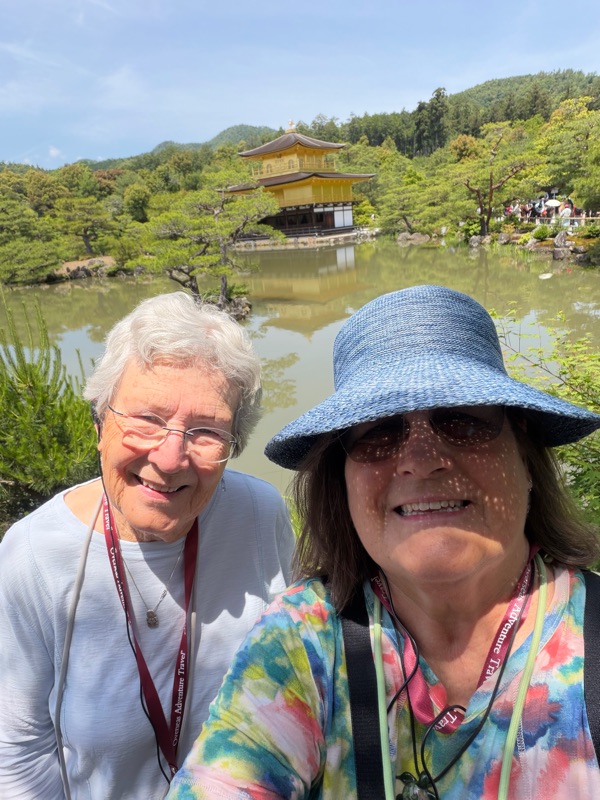
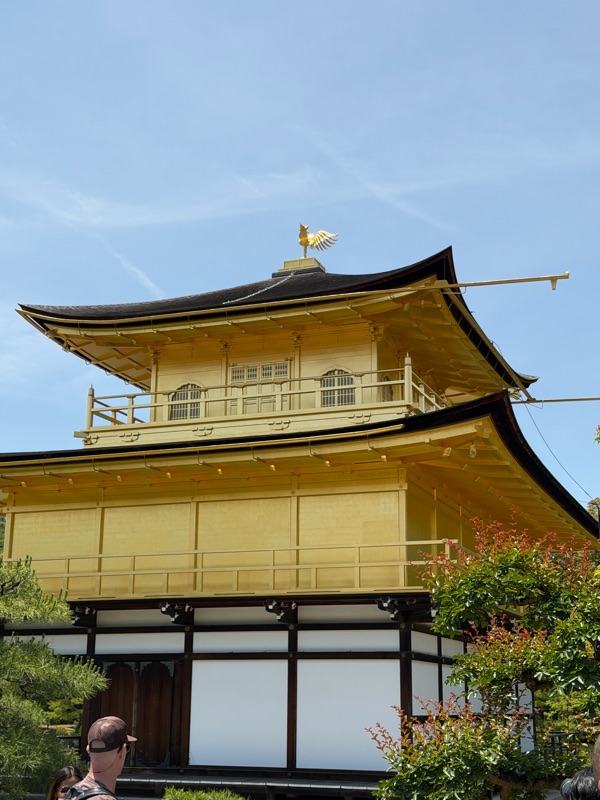
We got on the bus and went to our next site, passing through the Saga neighborhood and the Ninna-Ji Temple (also UNESCO). We visited the Kinkakuji Temple (UNESCO site #2), known as the Golden Pavilion, was built by the Third Shogun, and then converted to a Zen Buddhist temple upon his death. It was covered in gold leaf and was truly lovely, shimmering under the blue sky.
We had a very delicious lunch at Apollo HotDog where we did not eat hot dogs. (Unfortunately the cool t-shirts of samurai and geisha eating hotdogs did not fit). Then we walked to the Nijo-Jo castle (UNESCO site #3) in the blazing sunshine.

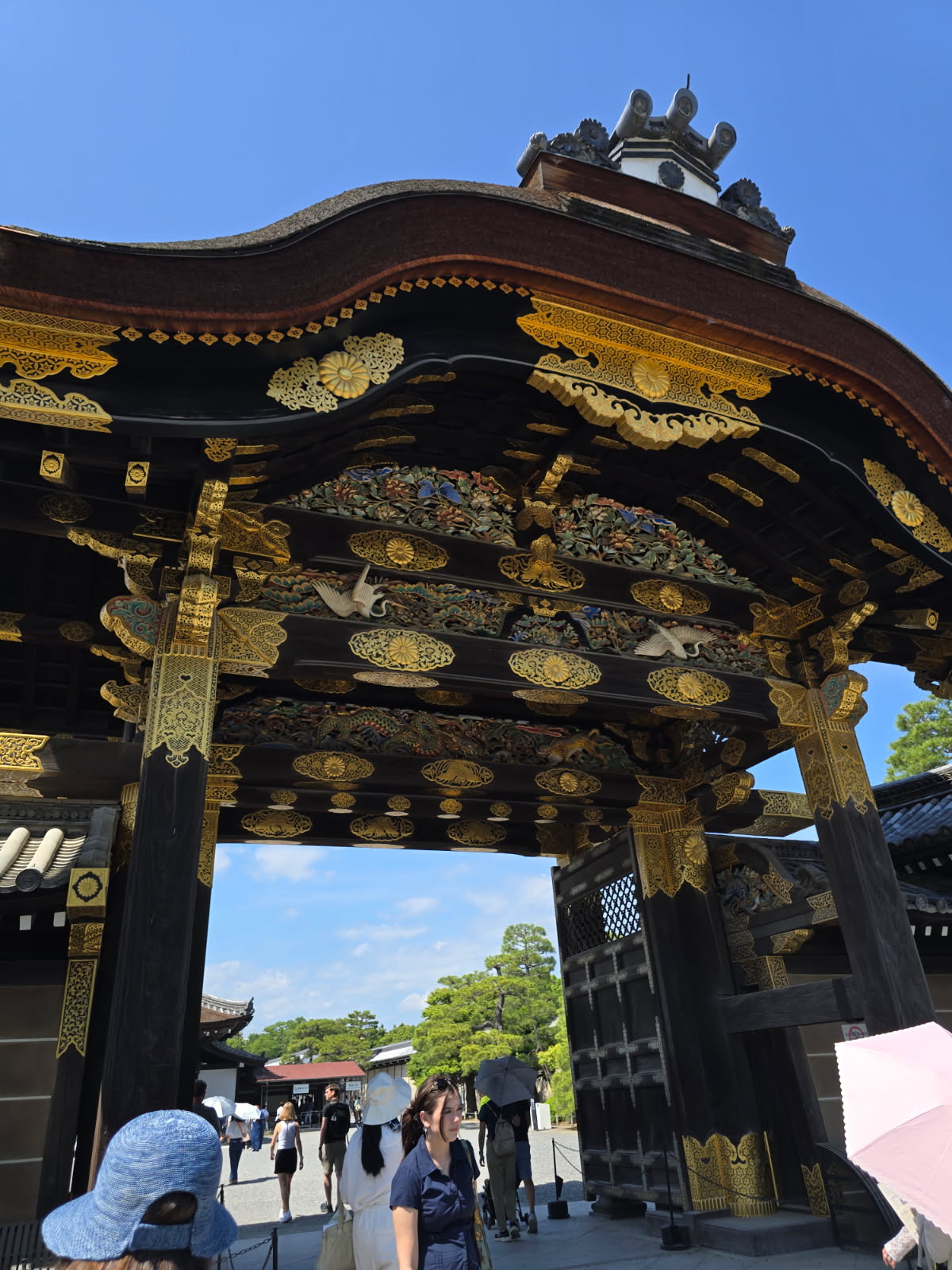
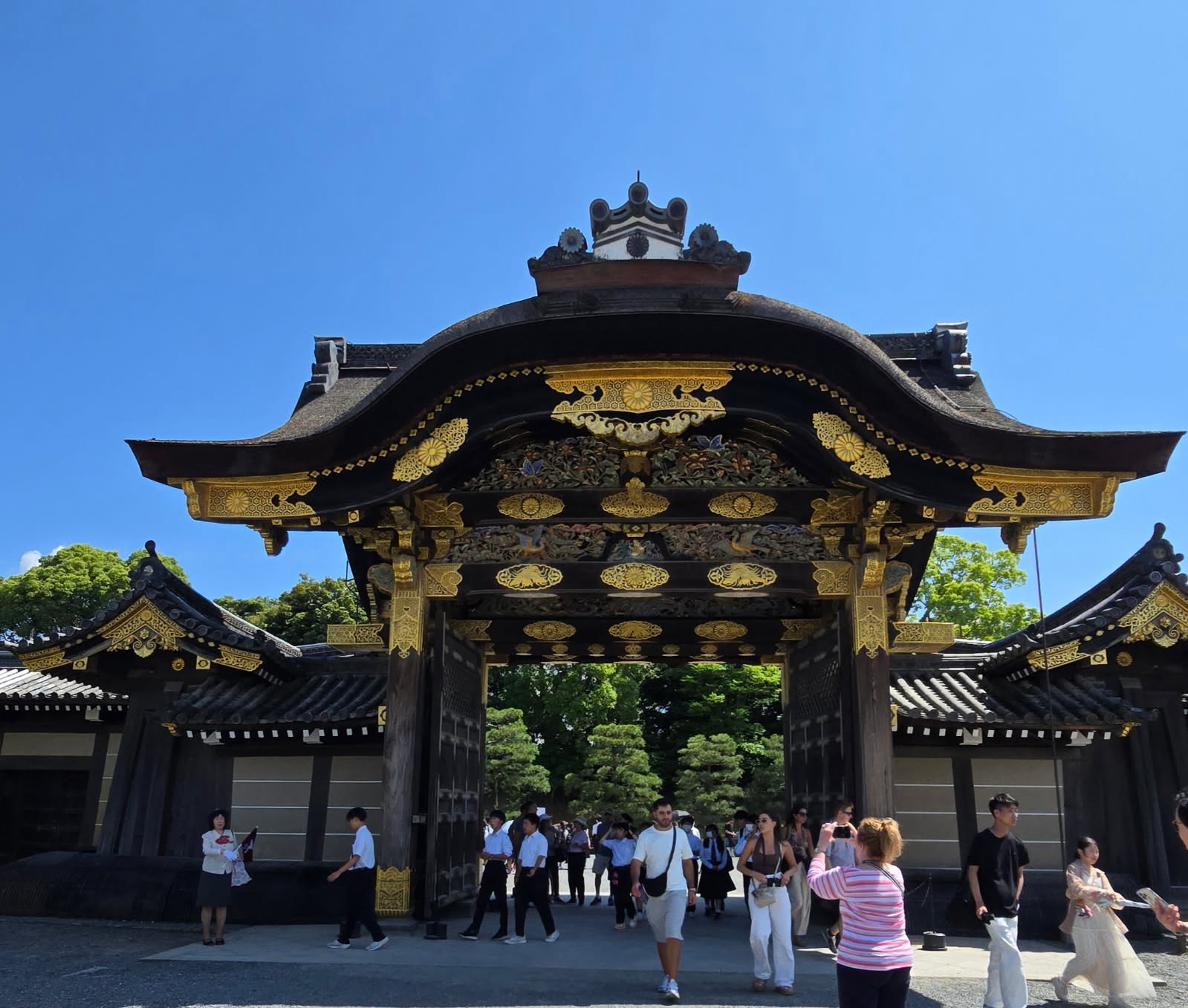
The castle was the Kyoto residence of the First Shogun, Tokogawa Ieyasu. All of the art and architecture of the building was designed to show the power of the Shogun. From the elaborate entry gate, to the size and scale of the painted golden paneled rooms, the waiting rooms let anyone waiting to see the Shogun exactly where they stood. It was a huge place with many rooms, each designated for a specific purpose, with the paintings on the wall panels reflecting the status of the people who used them.
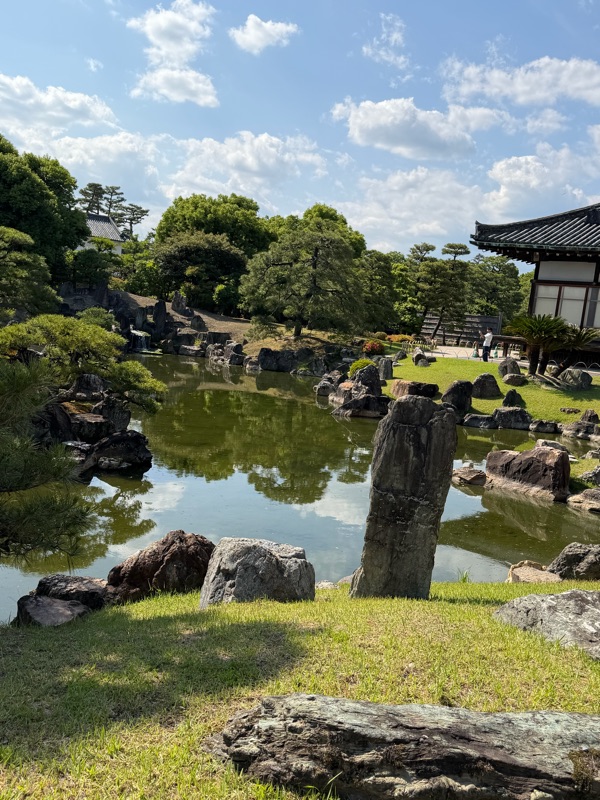
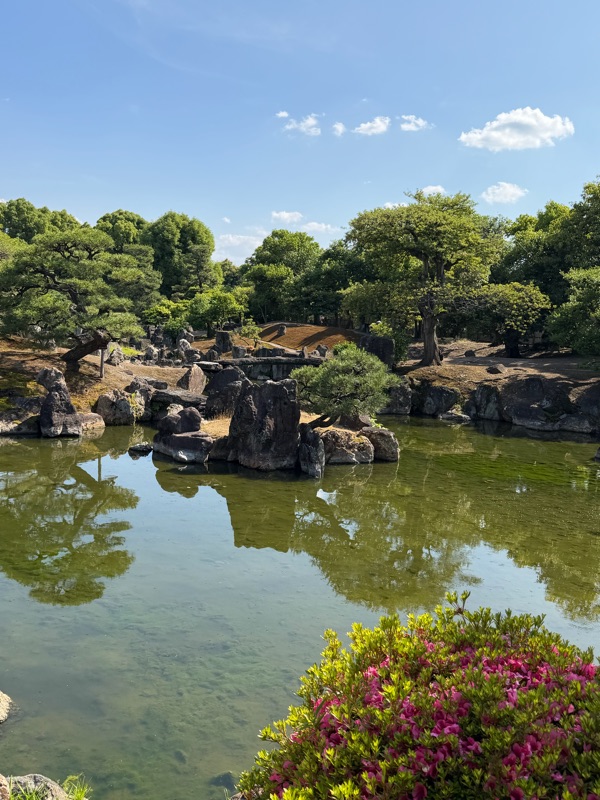
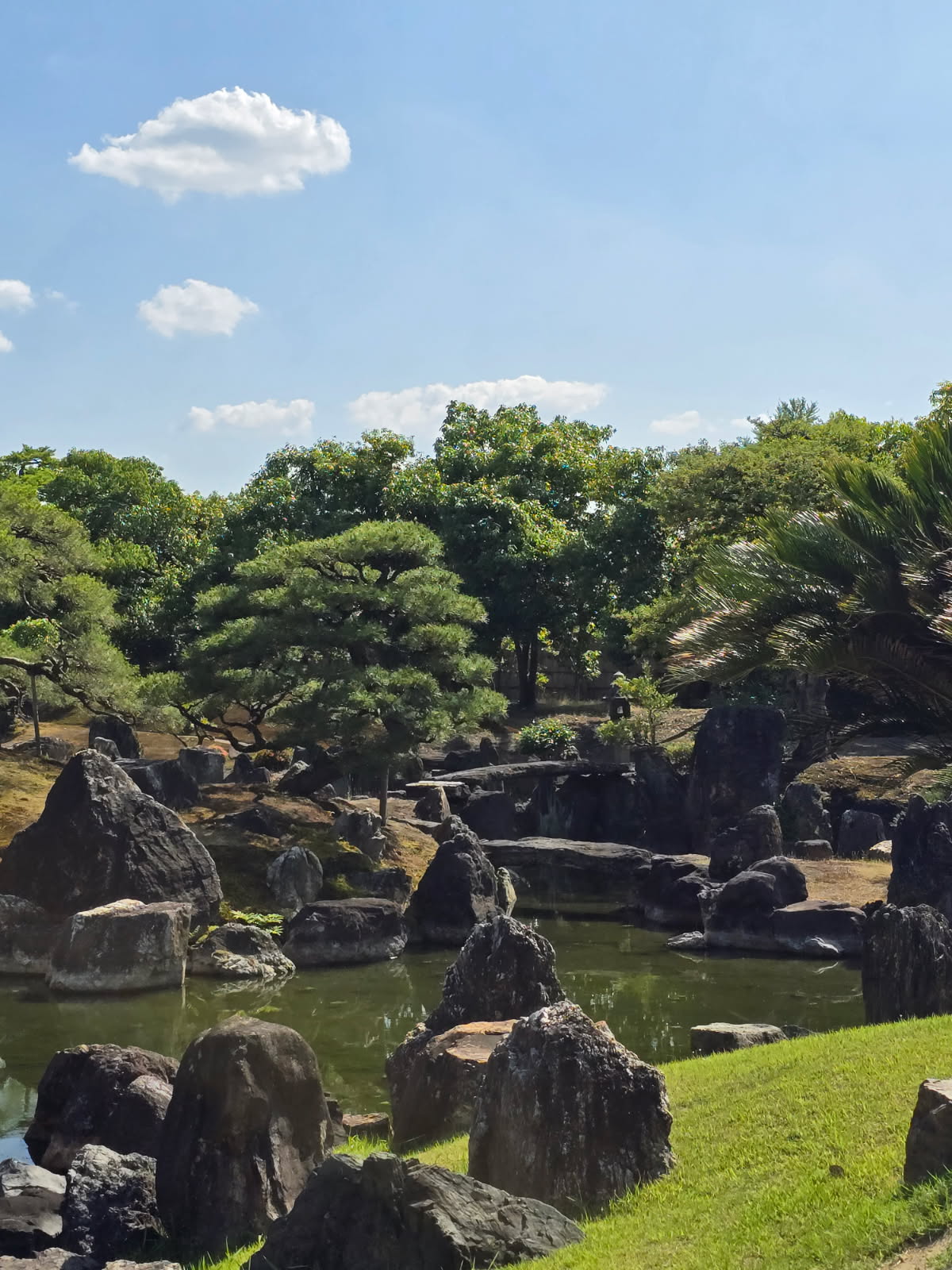
The gardens behind the palace were especially innovative and beautiful. They were designed by one of the Shoguns himself and demonstrate some early innovations in the evolution of Japanese gardens - placement of vertical rocks, water features, bridges, etc. these features contribute to the quiet contemplation needed for a powerful lord. The water features were fed from the waters of Lake Biwa, which we saw from the train yesterday.
We hope to see more of the lovely shrines and temples in Kyoto over the next few days.




No comments:
Post a Comment