Yesterday was a travel day, so we didn’t see a lot, so most of this post will be about the sites we saw today around central Ulaan Bataar.
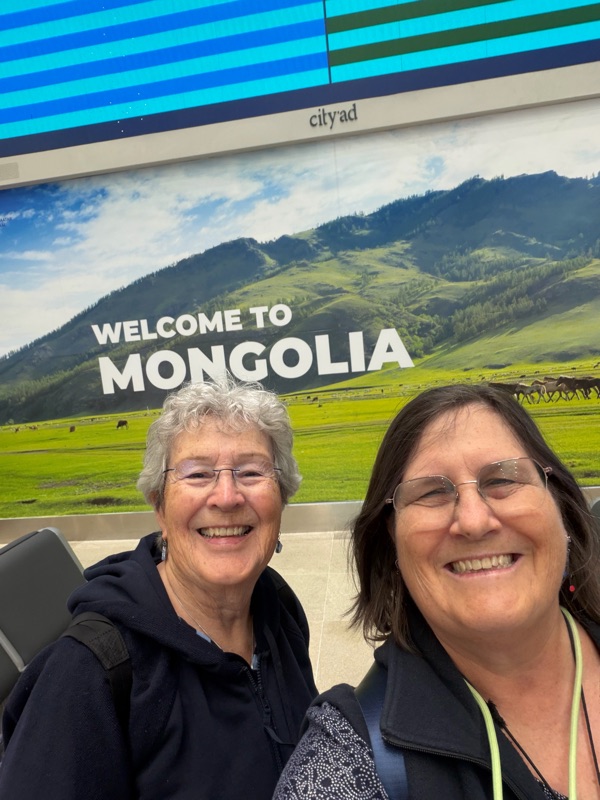
We arrived in Mongolia around 5 pm yesterday. On our flight from Korea, we watched several hours worth of documentaries about Mongolian animals, crafts and scenery. By the time we arrived, we were pretty excited about our trip.
The city is pretty far from the airport, so we drove for about half an hour through rolling hills with mountains in the background, past farms and houses. So beautiful.
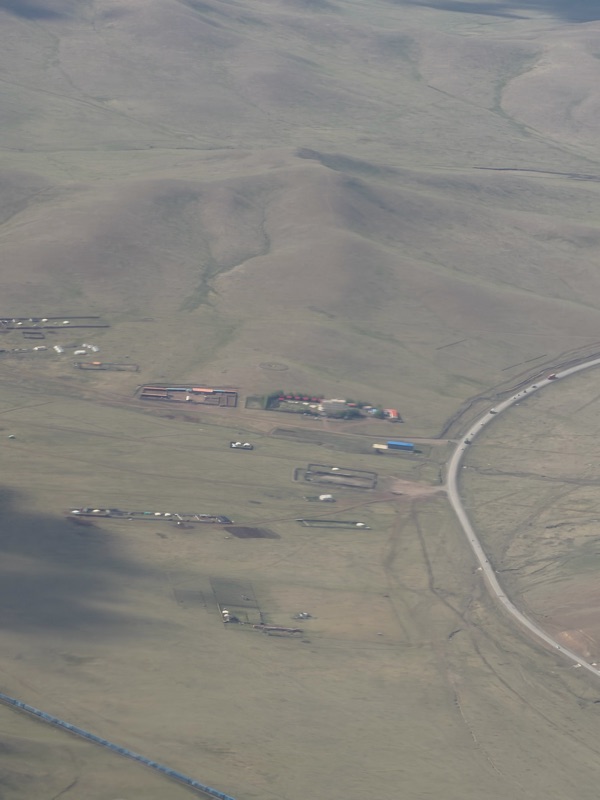
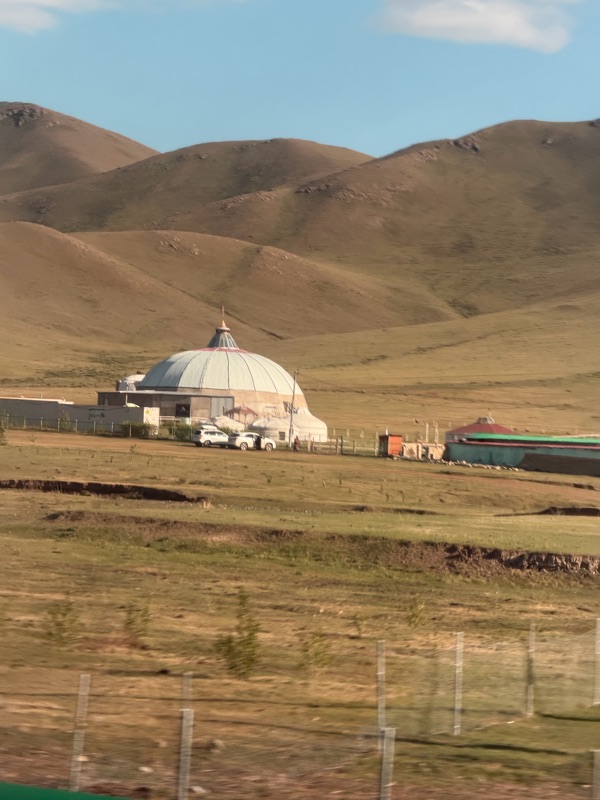
Then we hit the outskirts of the city and it took us another hour and a half to get to our hotel. Ugh! During that time, our tour leader, MG, was able to give us some history, explain some Buddhist intrigue, and generally answer questions. We arrived at the hotel around 8 pm.
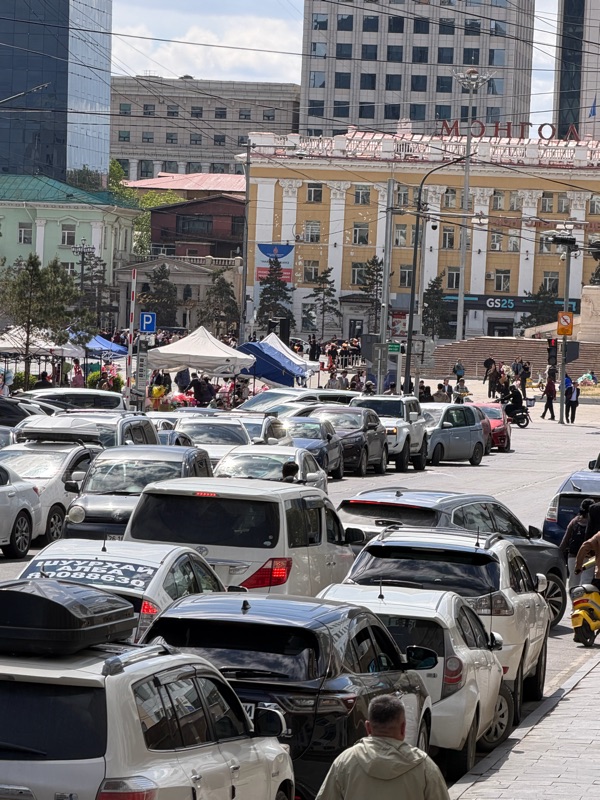
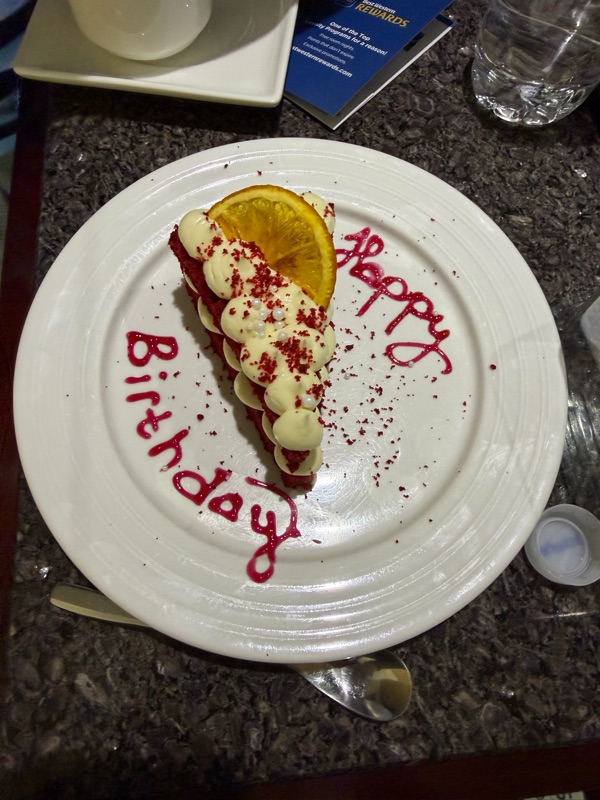
After arriving at our 17th floor rooms, and checking out the view we we went out for a walk around the square. It was still light out, but it was cold and there weren’t many people around. Back in our rooms, we ate birthday cake and went to bed.
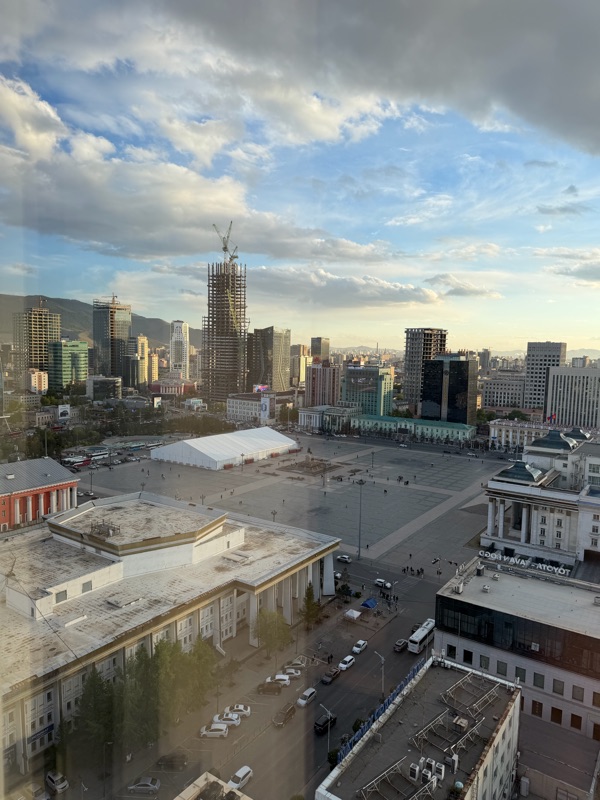
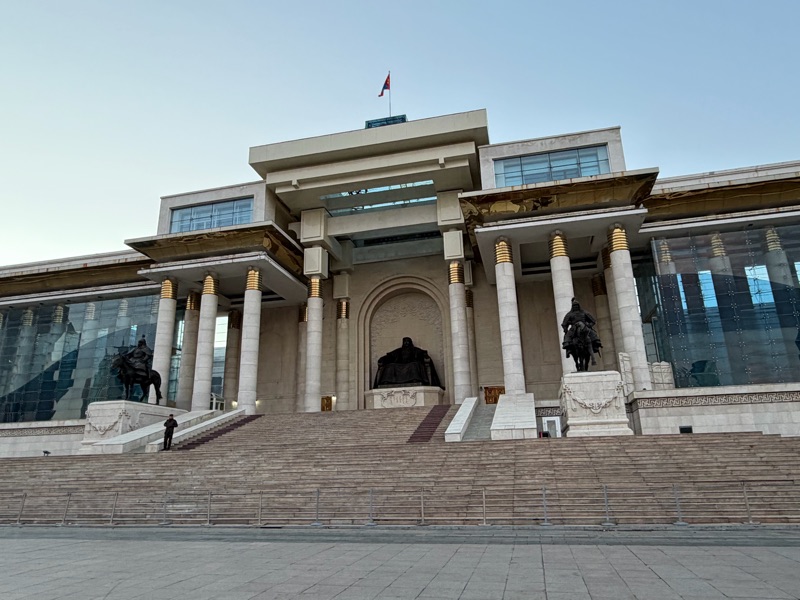
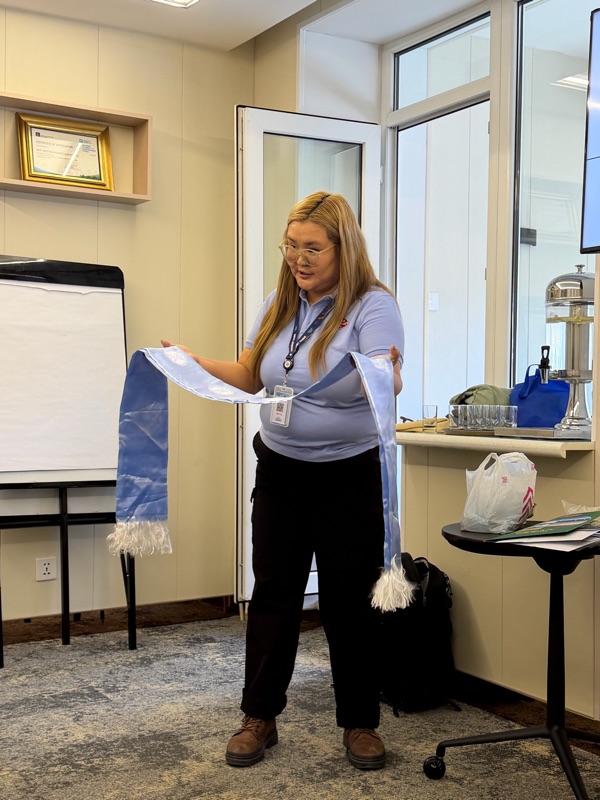
In the morning, after breakfast, we met the other members of our group and had our welcome orientation. MG did a great job of explaining how things would work in the ger camps, and a few other cultural practices we should not be alarmed by. It was fun - and her presentation had lovely photos.
Our first activity was a visit to the Gandam Monastery. It is the oldest Monastery in Mongolia and one of the very few that survived the Russian attempts to obliterate Buddhism in Mongolia. They had used part of the old buildings as barracks, which was the only thing that saved any part of the Monastery.
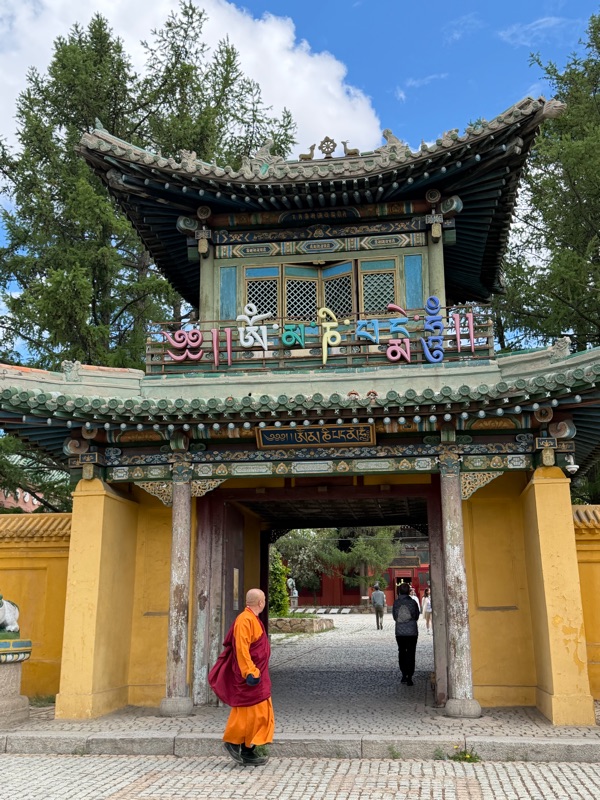
We enjoyed seeing (new) examples of Chinese, Tibetan, and Mongolian style Buddhist buildings and iconography. A lot of Mongolian monks had to be sent to Tibet for training when religion was allowed again so that they could lead schools in Mongolia, so the Tibetan practices are strong here.
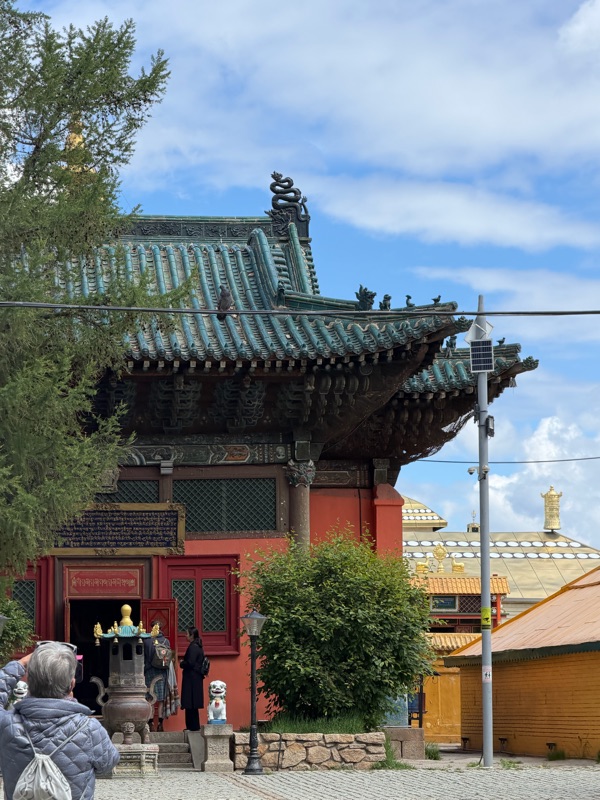
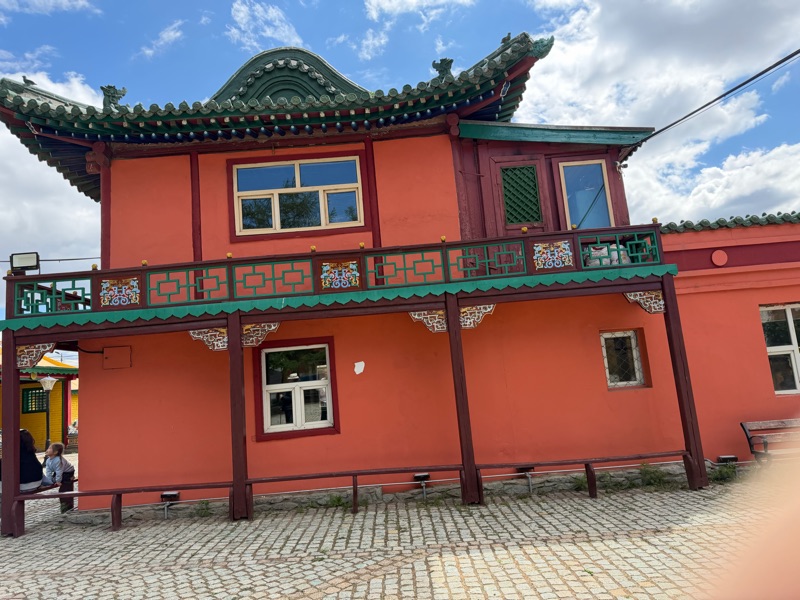
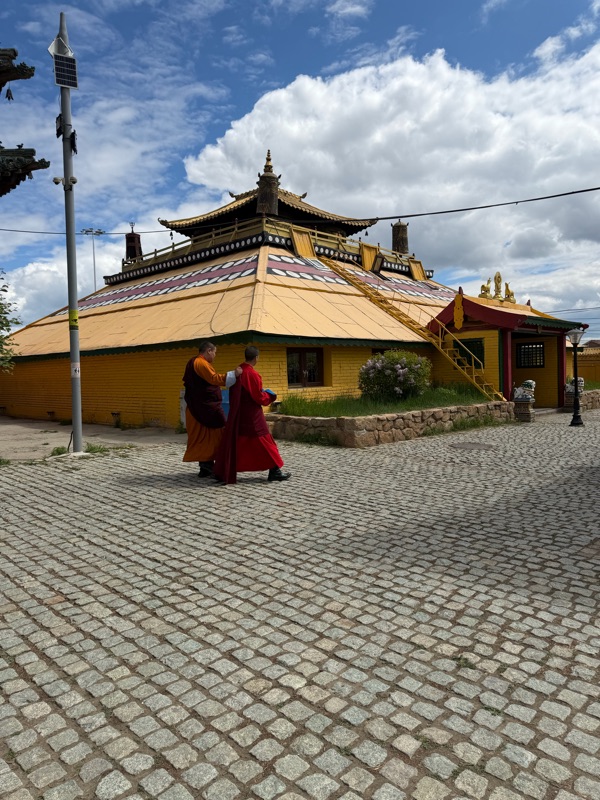
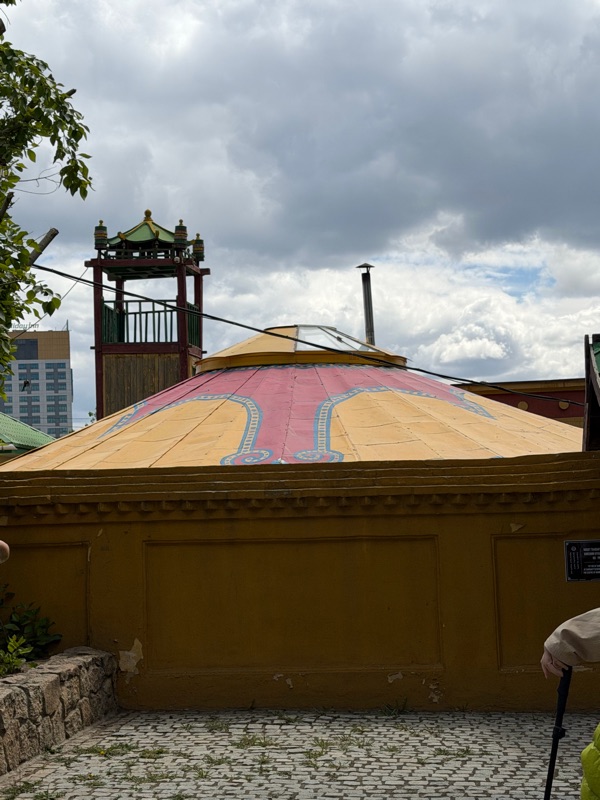
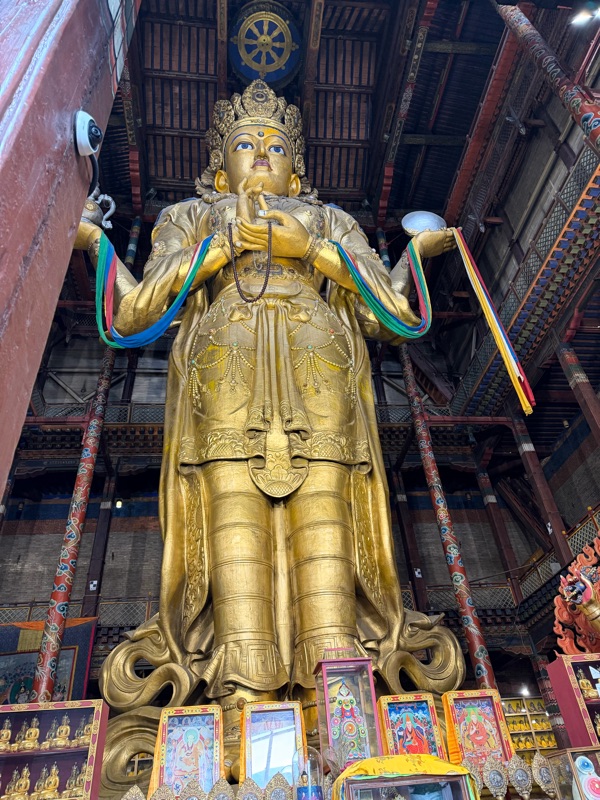
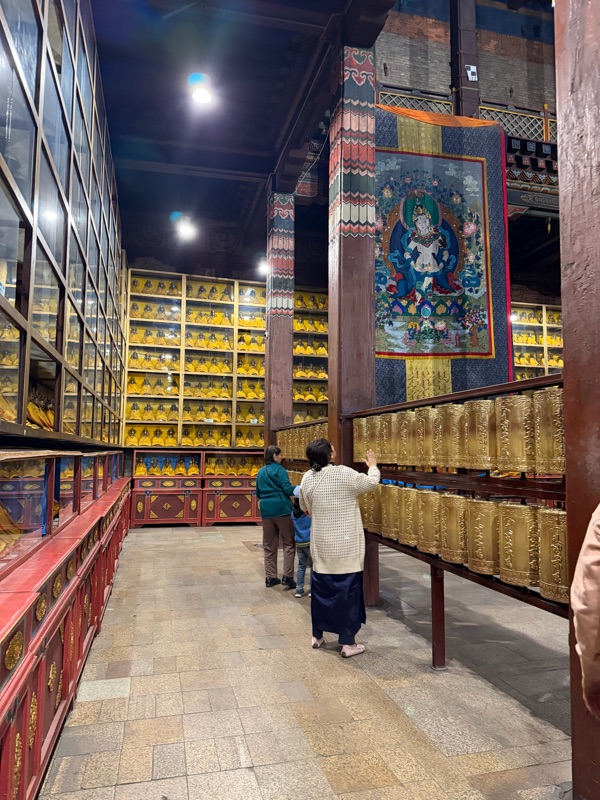
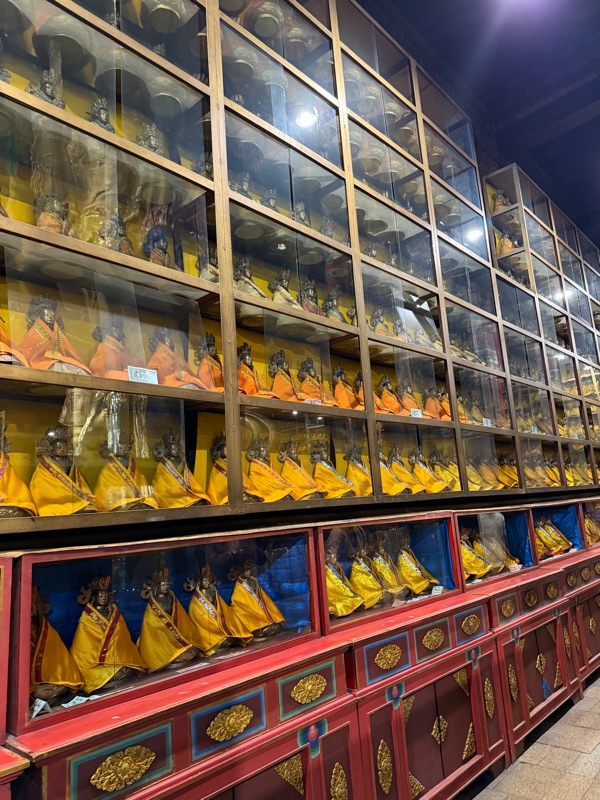
The world's tallest indoor statue is the Megjid Janraisig Statue of Avalokiteśvara, one of many reincarnations of the Buddha at this monastery. In addition to the enormous gold statue, there were several other large statues and three walls of the temple were filled floor to ceiling with about 7,000 smaller old doll-like figures. Ruth wanted one for her collection.
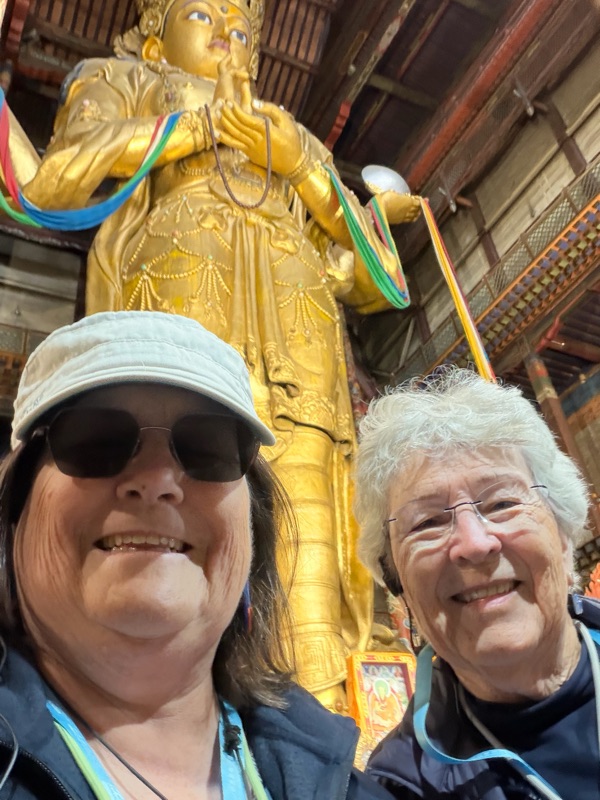
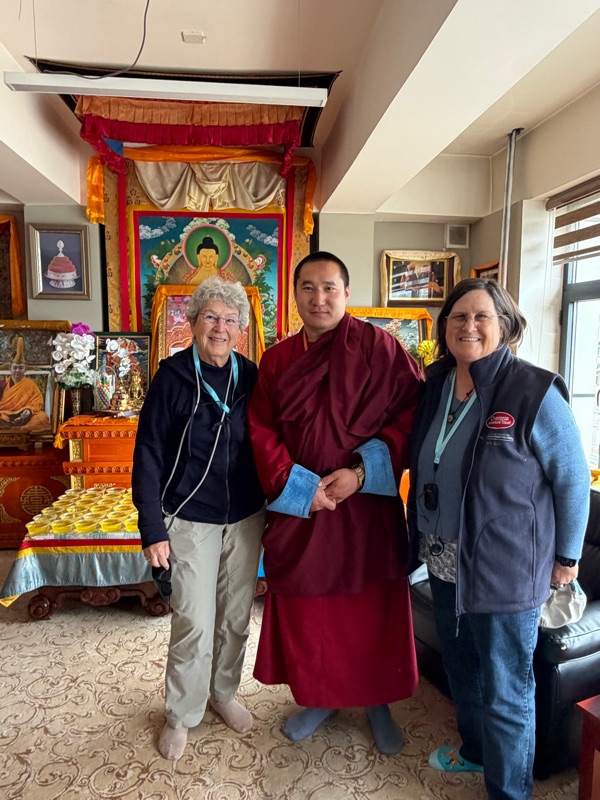
Next we went to have a private conversation with a senior monk and teacher at one of the training schools. Mongolian Buddhism has a strong emphasis on helping people, so he talked about the role he plays in helping people to solve their problems, through meditative chanting, individual and family sessions and other works. The Monastery also operates several schools at all levels of education for both young monks as well as the local population.
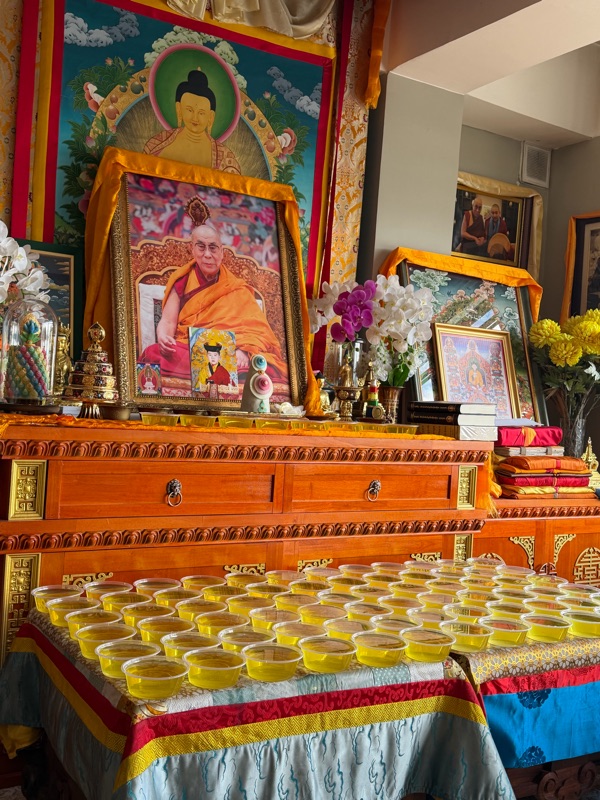
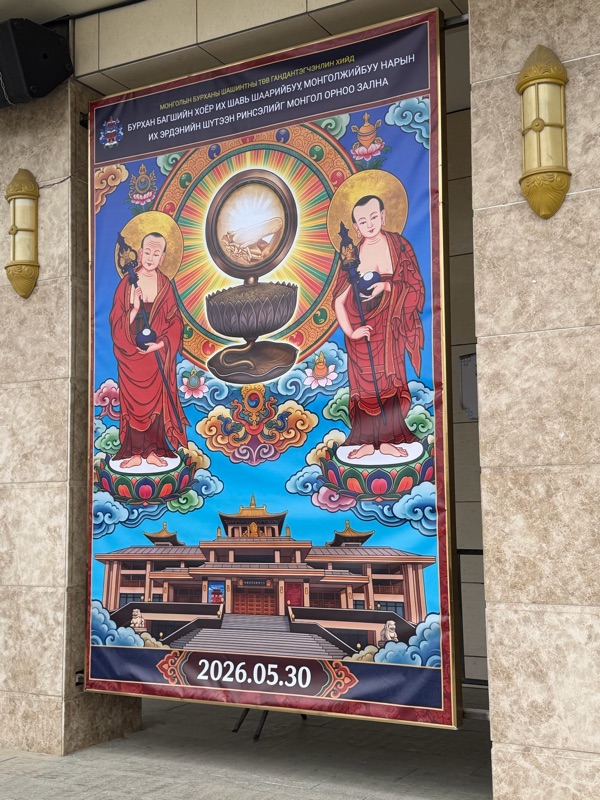
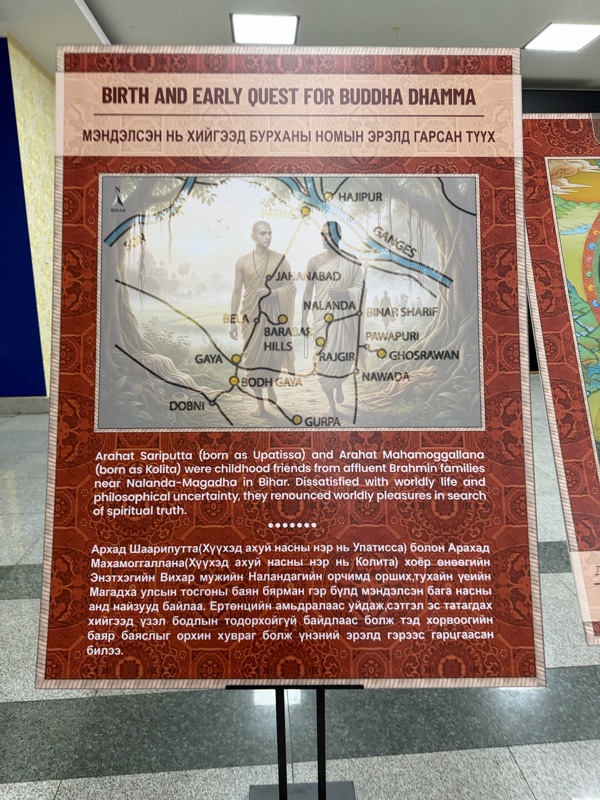
Our last stop before leaving the Monastery was to see two relics from Buddha's immediate disciples. It was really interesting to see all the monks and secret service types there to protect these relics, as well as many beautiful thankas (large hanging embroidered banners) and other decorations around the relics, and seeing the worship practices of the many believers in the line that filed past the relics.
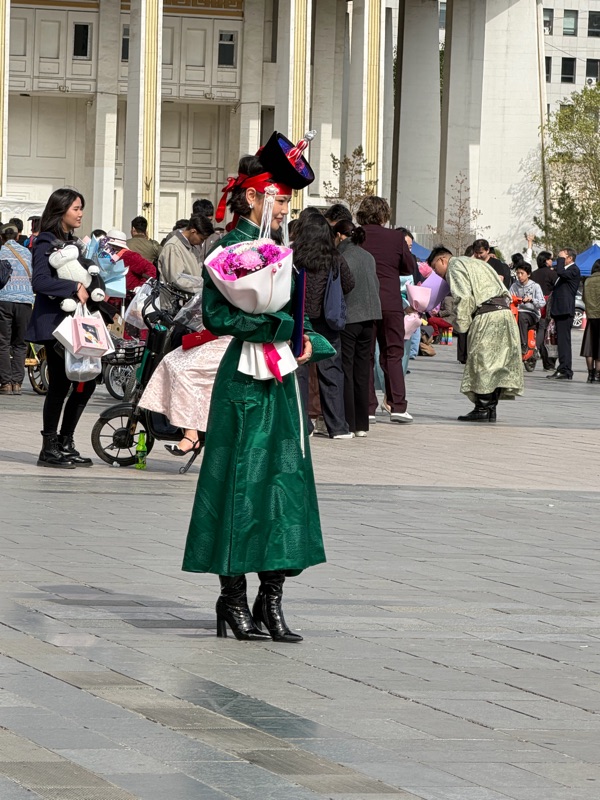
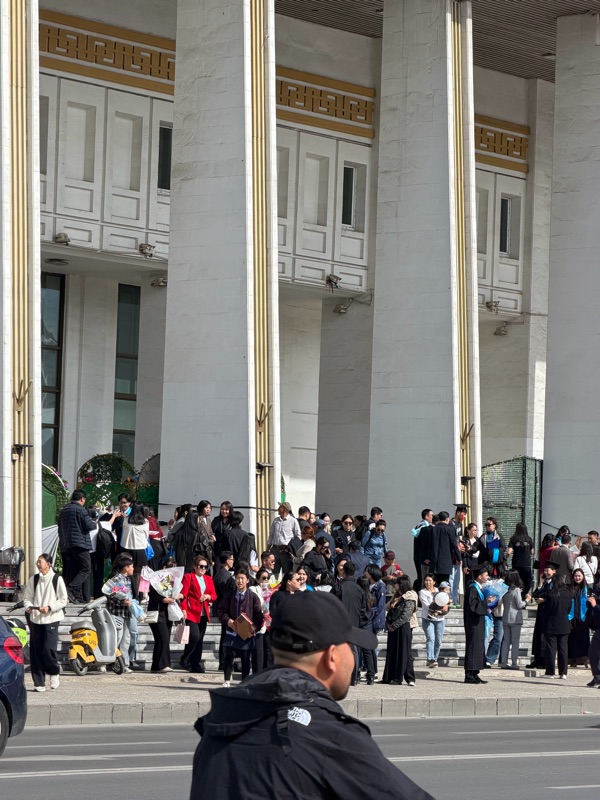
As we headed back to hotel the traffic was so bad we ended up getting out and walking to a nearby restaurant. The traffic was bad because it was graduation day for some colleges, and the graduates with their families, carrying arms full of flowers, thronged the square to take photos.
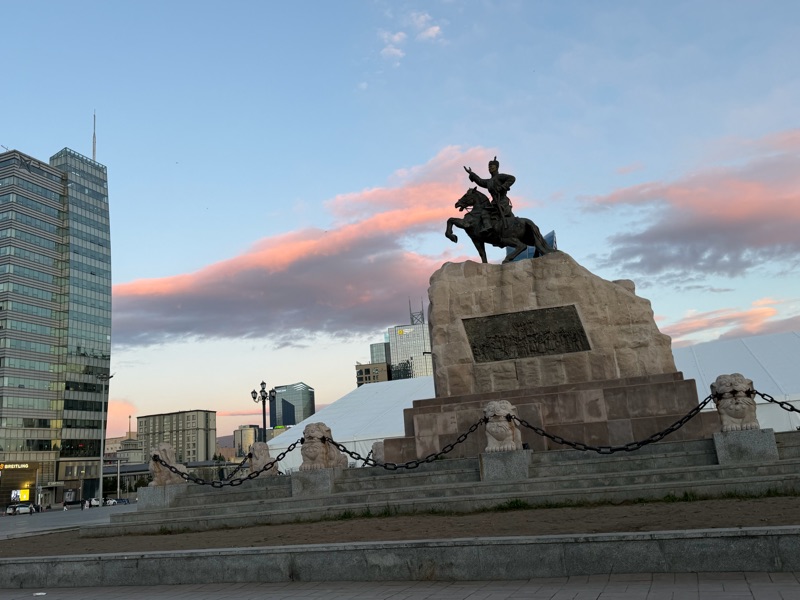
After a short rest, MG led us on an orientation walk through the Square. We learned that Sukh Baatar was the guy who led the Mongolians to throw the Chinese out. He was a great hero, although the Russians came in and took over a few years later, he is greatly honored by Mongolians as a liberator.
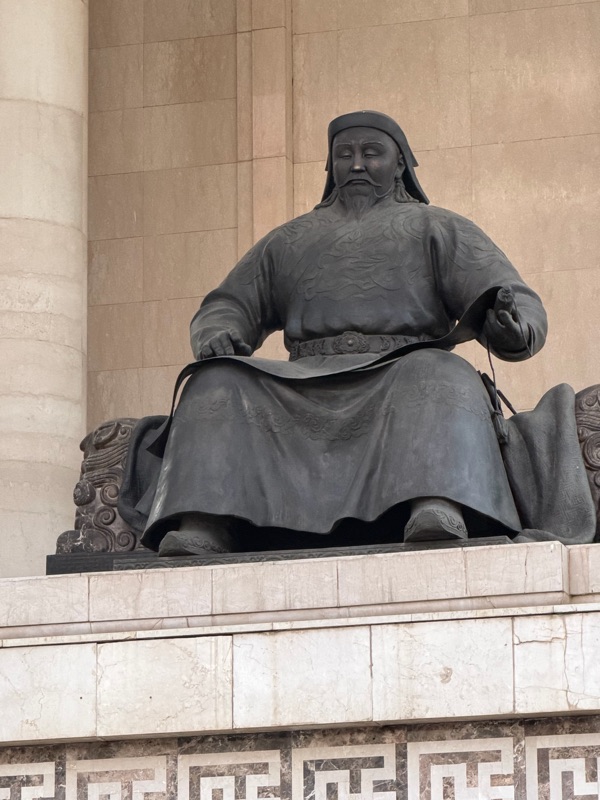
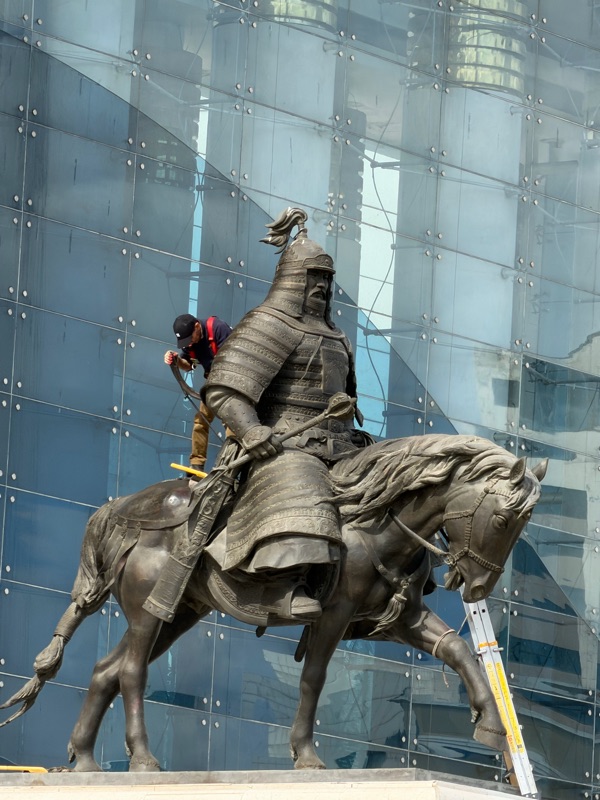
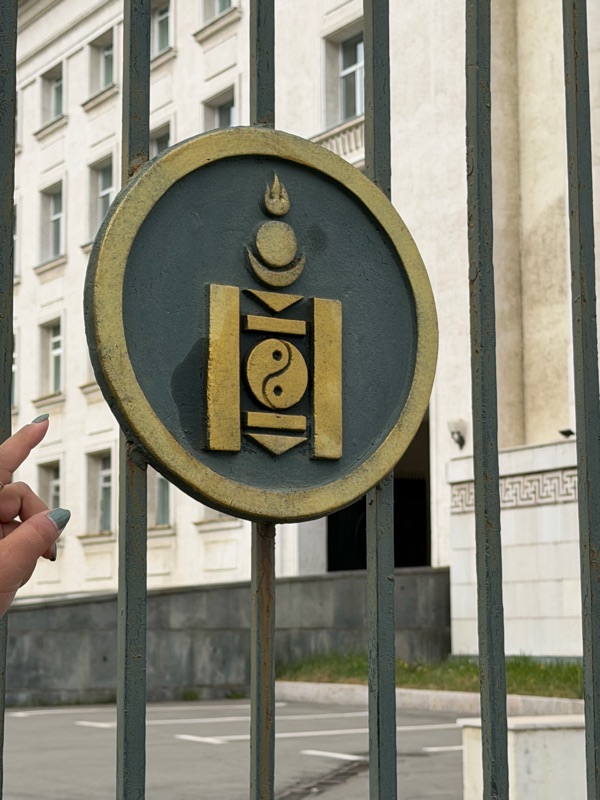
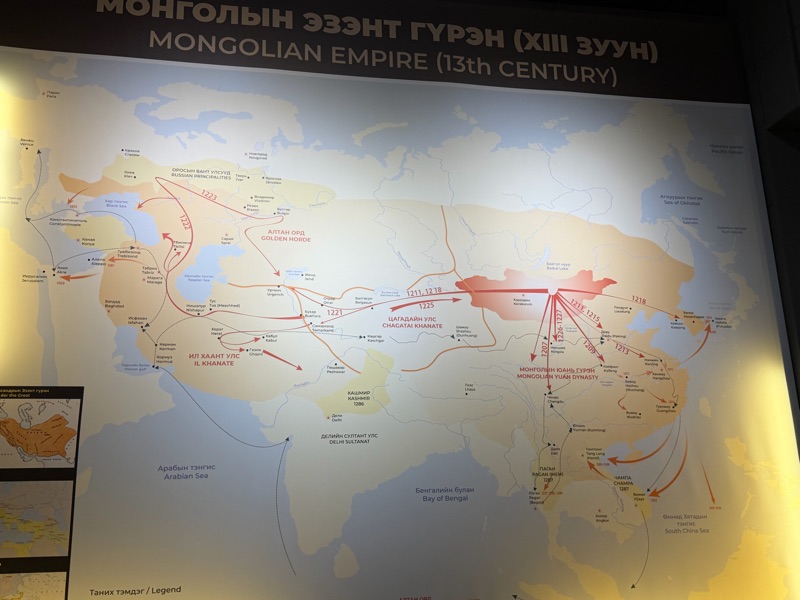
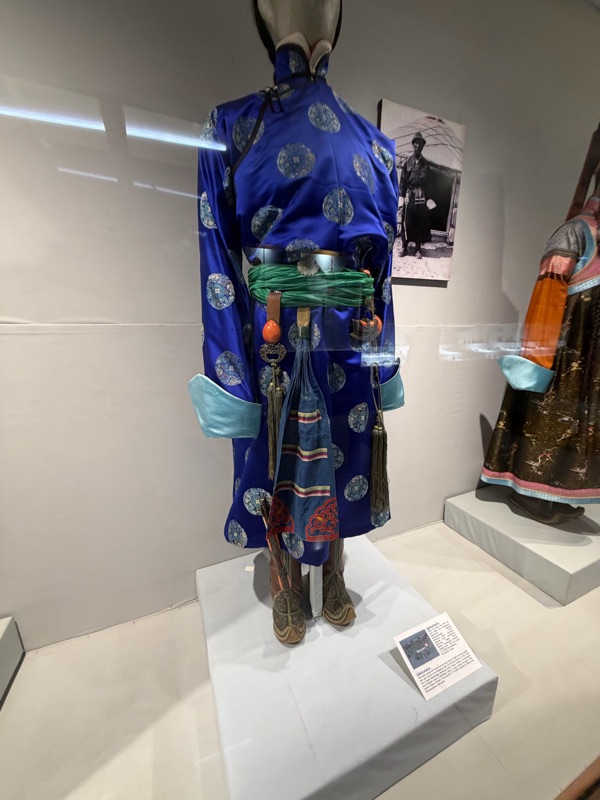
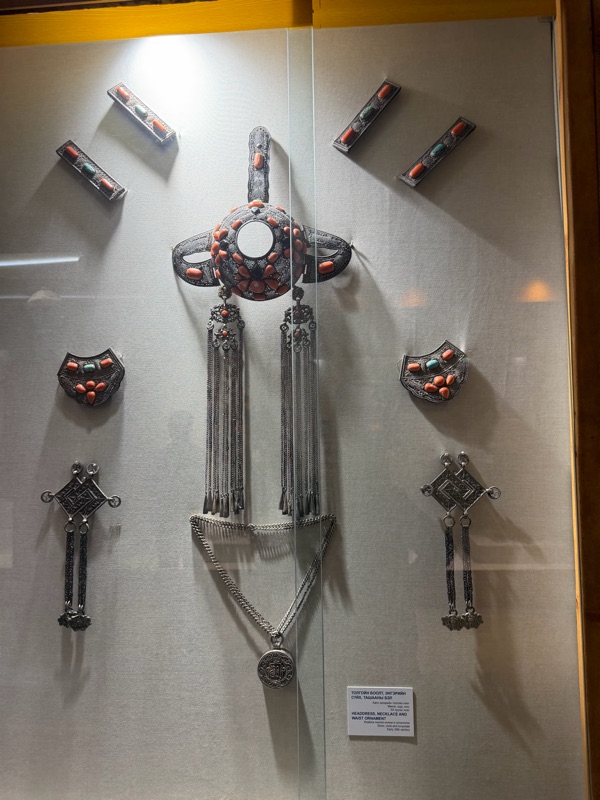
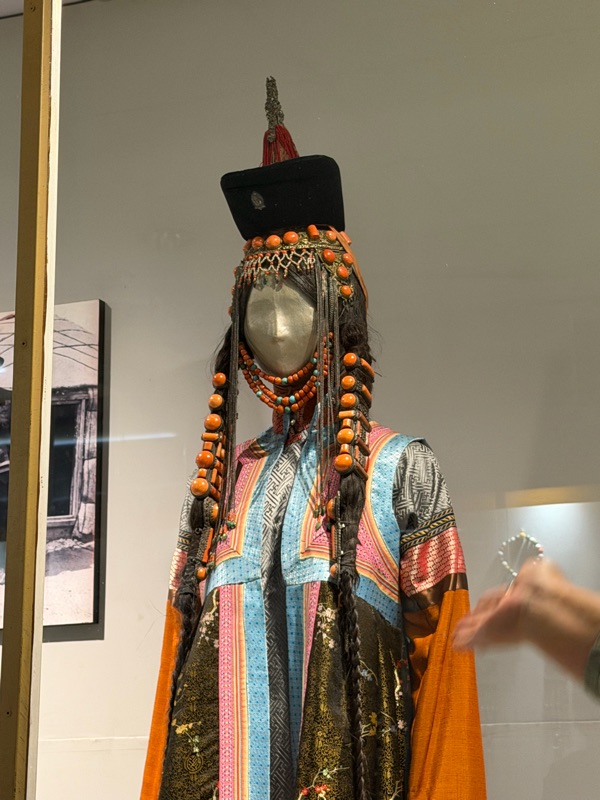
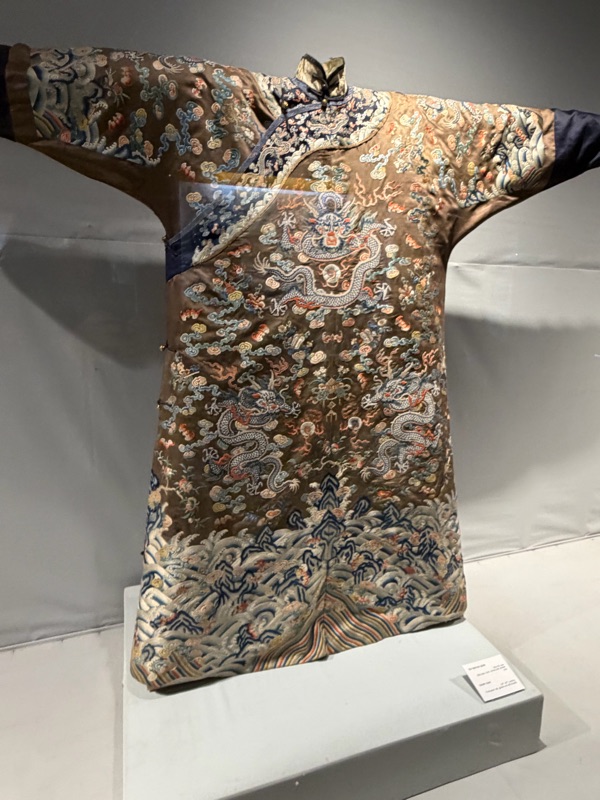
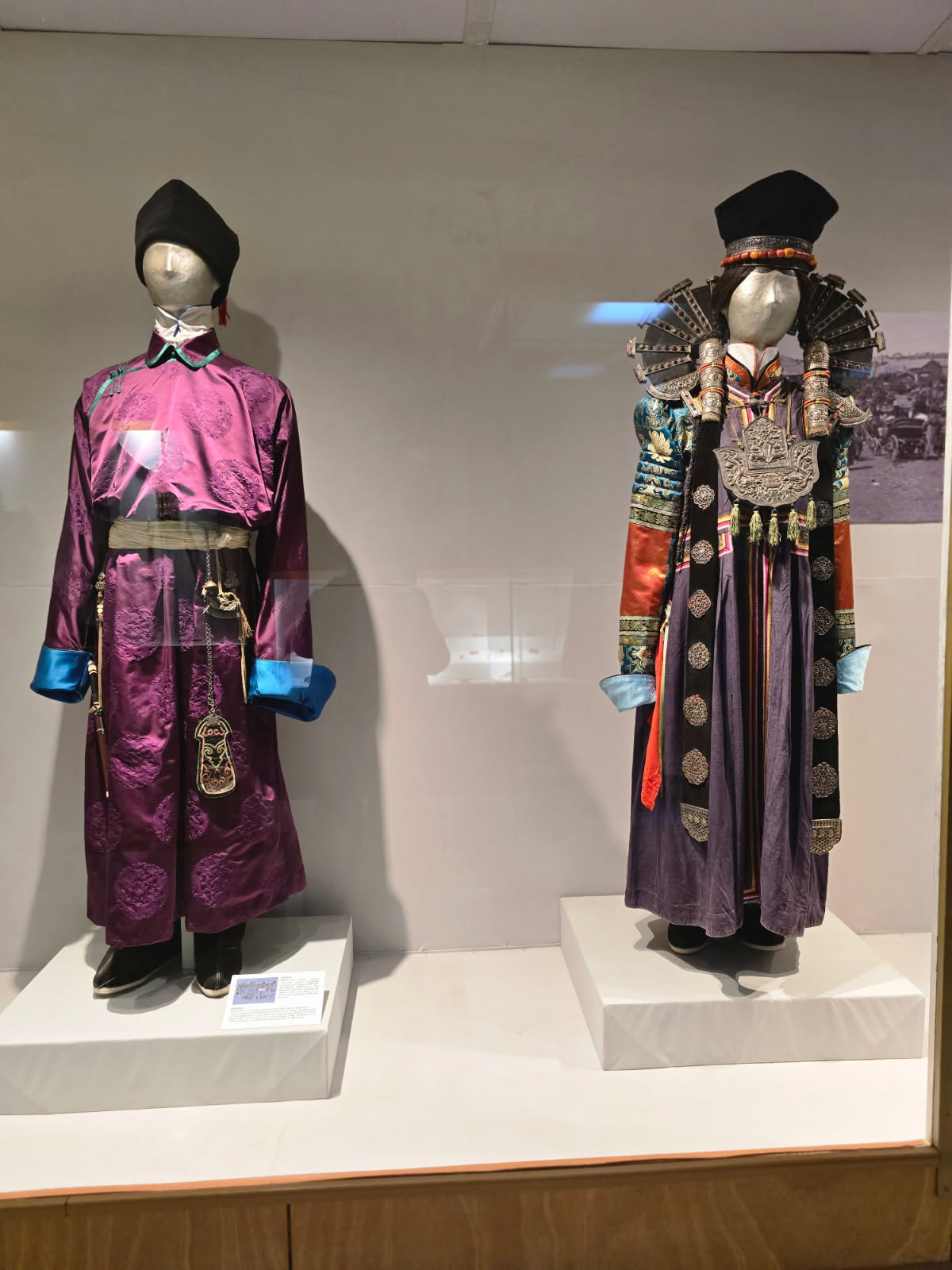
Then MG led us on a whirlwind tour of the Mongolian History Museum explaining the country's history from prehistoric times to the present. It was great to see the main events strung together in context. We also loved seeing the clothing of some of the 20 nomadic ethnic groups in the country, along with explanations about how they differed and the background and usefulness of various attributes of the clothing.
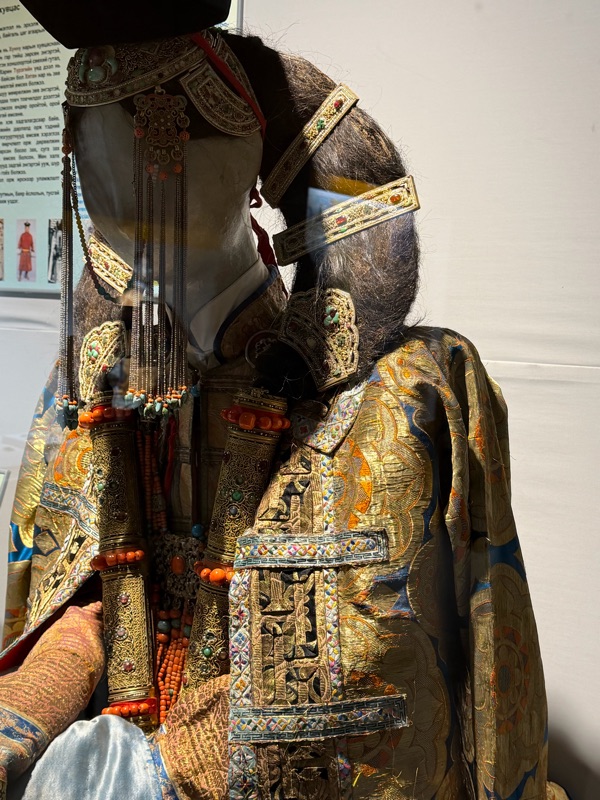 Hair meant to look like an eagle to scare away rats.
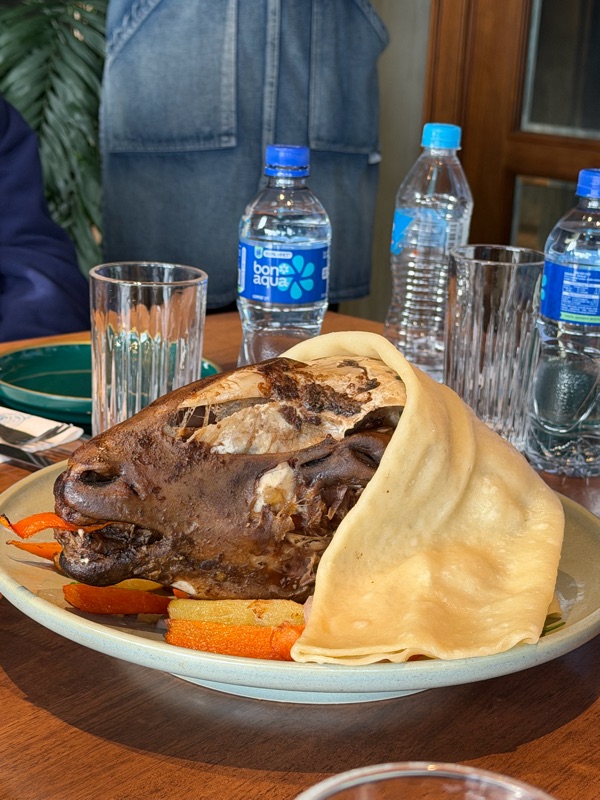
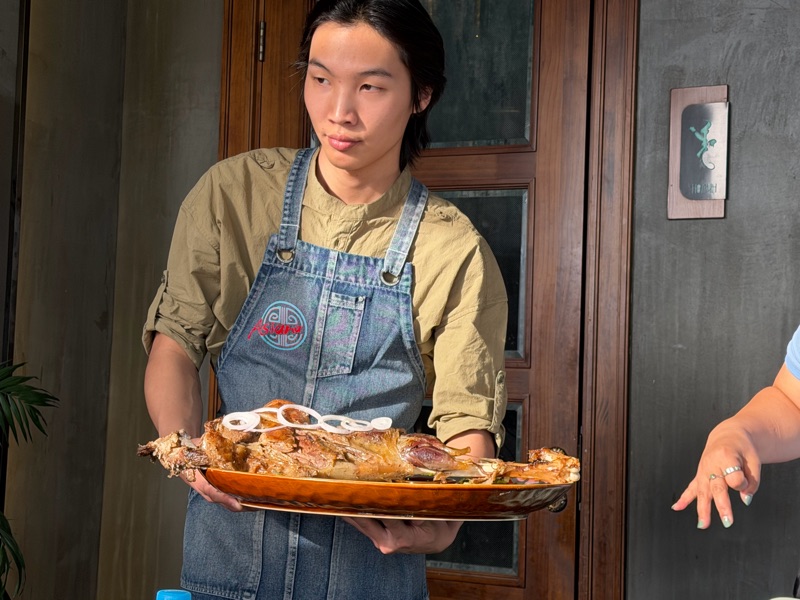
From the museum, we headed across the square again to get to our welcome dinner! The main feature was a huge leg of lamb, as well as a roasted sheep’s head, which MG really wanted us to try although many were reluctant. We are the sheep’s head - but didn’t love it. There were also lots of salad and vegetables and other meats as well. We ate a lot.
It was 8 pm when we finished, and still very light out. We walked back to the hotel for a well deserved rest.



So fascinating! I'm learning so much from all your posts, and Mongolia is especially intriguing. What were the relics you saw of the two immediate disciples of Buddha? (Margie)
ReplyDeleteThat sheep's head is intimidating. Which of you was celebrating a birthday? Happy Birthday to whomever!
ReplyDeleteHope you make it to the giant Genghis Kahn monument!
ReplyDeleteBlue certainly becomes you, Ruth - a beautiful dress /costume
ReplyDelete.What fun ( !Jackie 0