Brasilia: What an interesting and weird place!!
Brasilia is a planned community on on a massive scale that has nly existed since the 1950's. It is a city of three million people, all packed into hyper designed “superquartos,” laid out on a grid to represent a huge airplane. Not just another capital city.
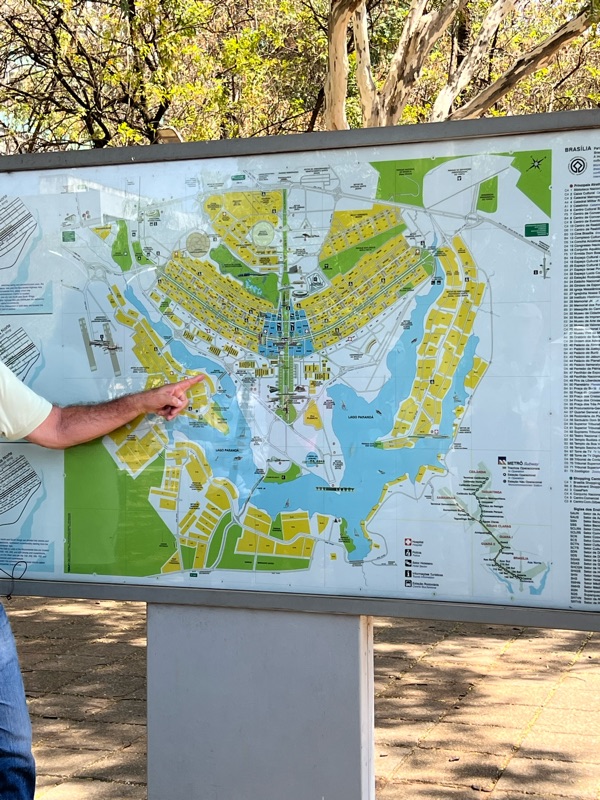
We arrived in Brasilia from Manaus and got a quick drive-by tour of the central city on the way to our home-hosted dinner. On the way we saw many of the famous landmarks, lit up with colorful floodlights.
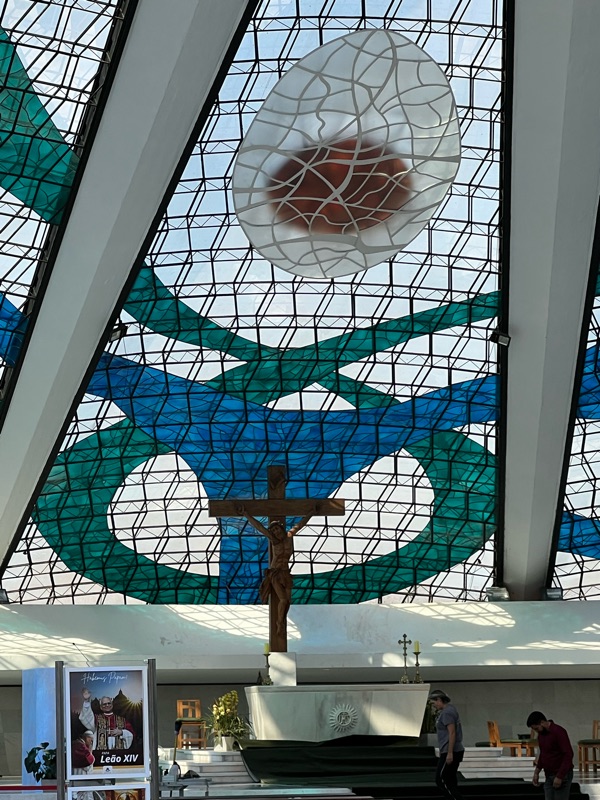
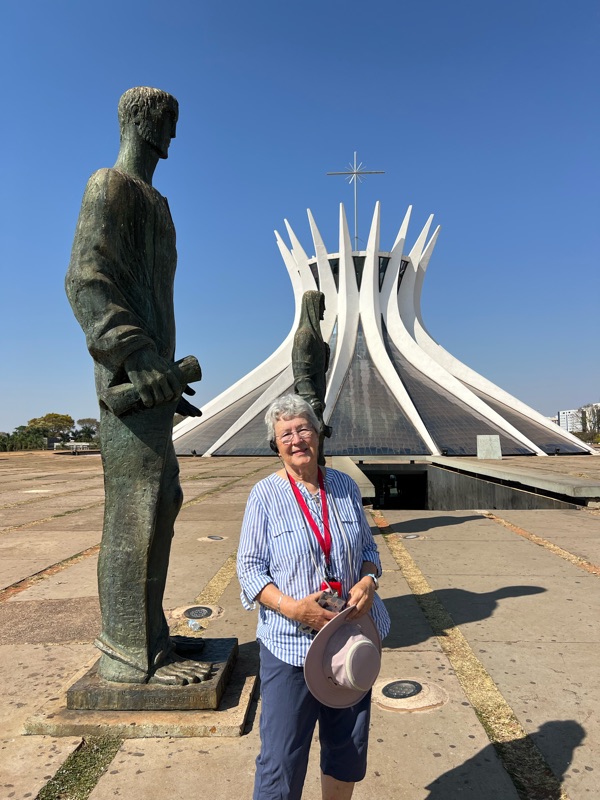
In the morning, we had a bus tour of the best-known landmarks. In the main corridor (the fuselage of the airplane) is a Mall-like area as in Washington DC, with all the government Ministries as well as the Parliament buildings. We toured that area, seeing some of Oscar Neimeyer’s greatest accomplishments, including the Cathedral of Brazilia and the iconic Parliament building. The cathedral consists of 16 curved concrete columns, arranged in a circle, with the wall spaces between them that are covered with swirling waves of blue, green and white stained glass. There are also three huge bronze angels suspended from the top.

One of Neimeier’s proudest accomplishments was the Parliament building, with two bowls - one inverted - representing the two bodies - the house and the senate. There was also a towering office building in between.
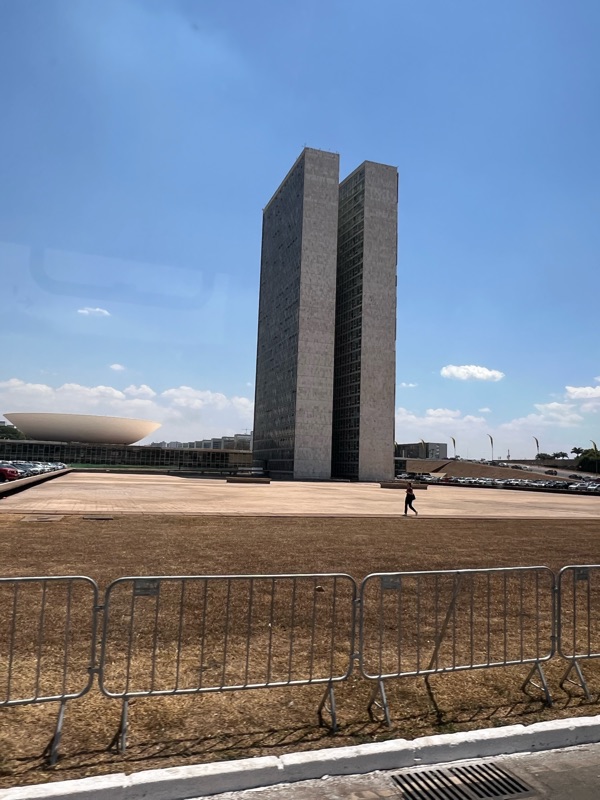
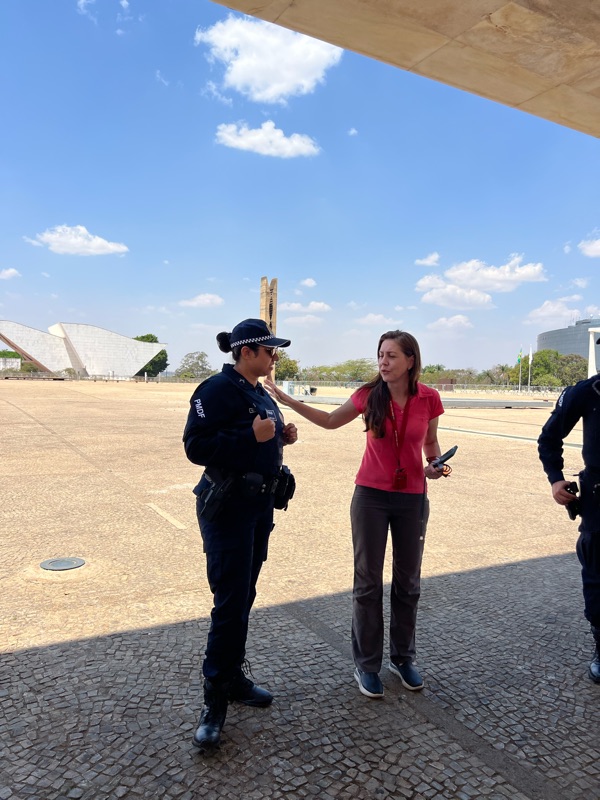
We also visited the “three Powers square - which in addition to Parliament also has the Supreme Court, and the Presidents office. There was a big case being heard at the Suprere Court that day about the crimes of a former President, so lots of security.
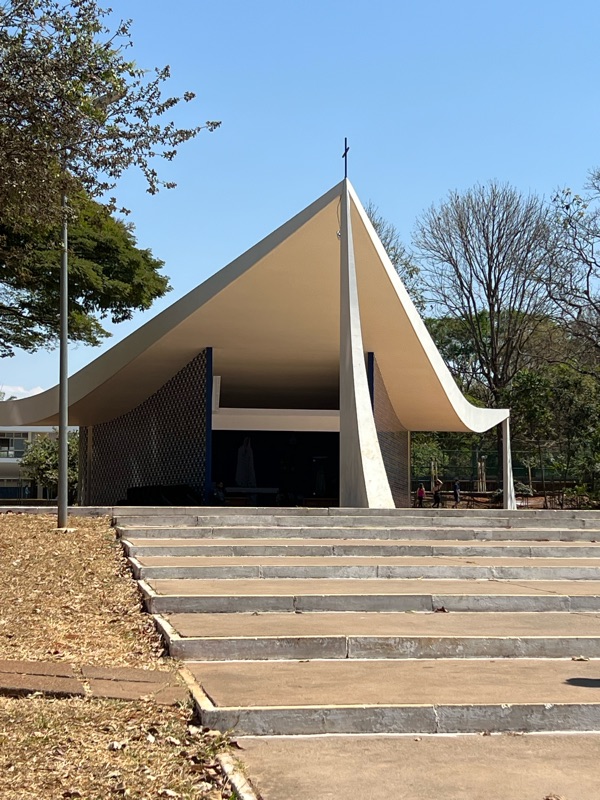
When learning more about the creation of the city, we visited the Fatima Chapel - the first building built in the new city in 1951. The tiny chapel was built in one of the Superquartos.
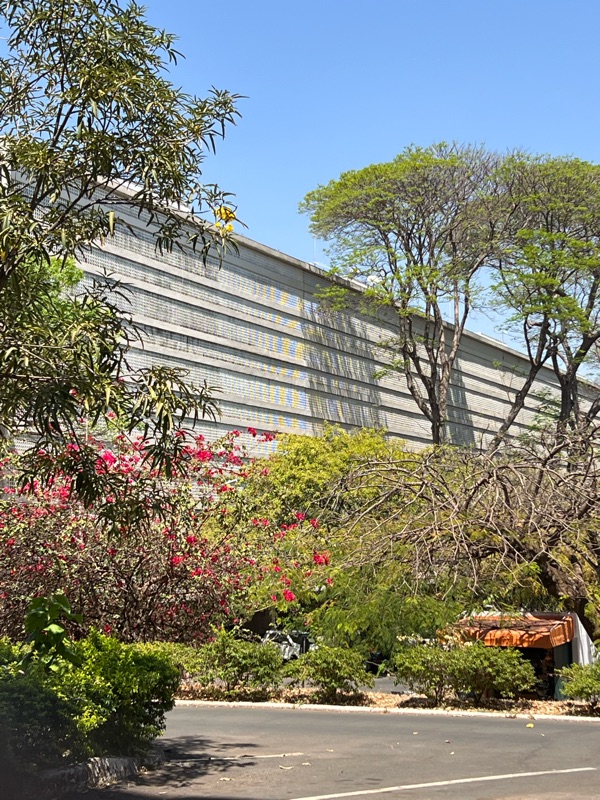
We also walked around in the area. Each superquarto is a neighborhood of several square blocks. There are low rise apartment buildings that house approximately 2500 people, and each neighborhood has its own church, shopping area, schools, and parks. This concept makes for very livable spaces in the large city.
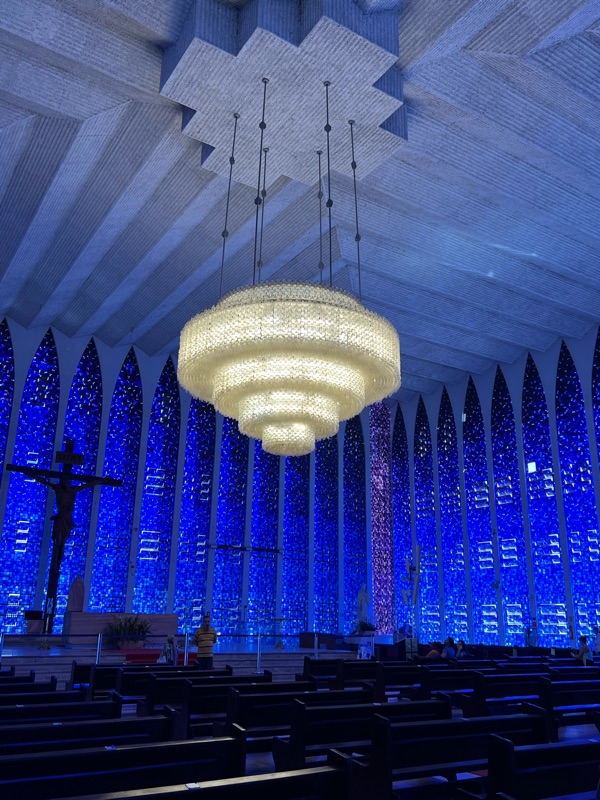
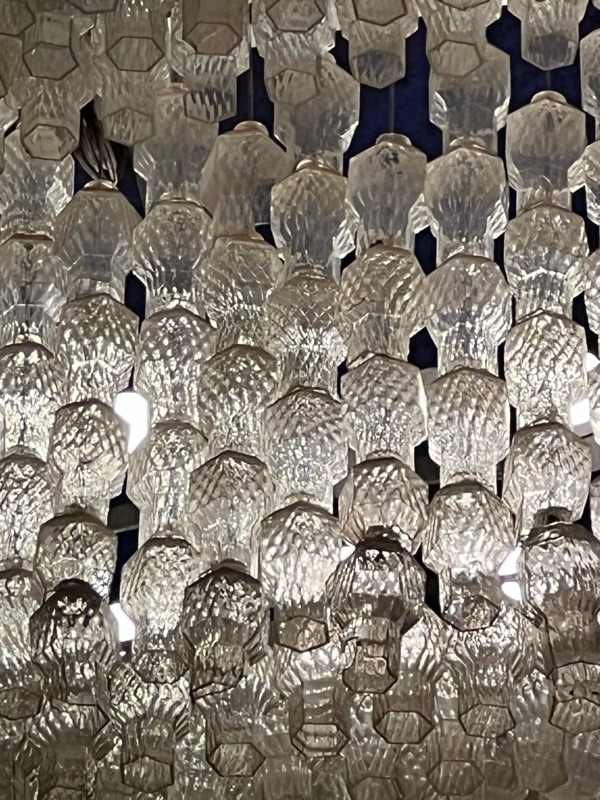
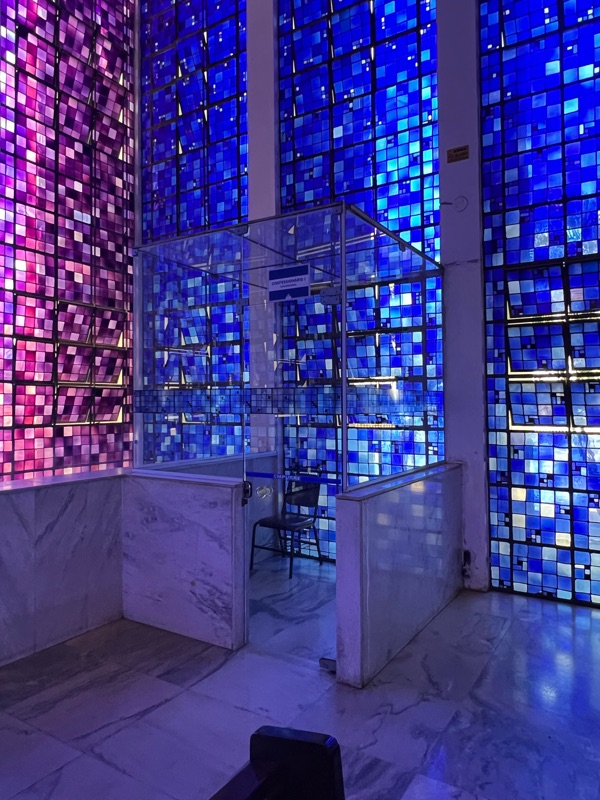
Another modernist church (by a different architect) was the Santurio de Dom Bosco. From the outside it looks like a concrete rectangle, but inside you see that the walls are made of 12 shades of blue stained glass, representing the changing intensity of the sky color. There was also an enormous chandelier murano chandelier. It was magnificent. Dom Bosco was an Italian priest who had a prophetic dream that a city would be built in the middle of Brazil in the New World and his prediction led to the creation of the city of Brasilia. [Note the very exposed confessional in the last photo]

In the afternoon, we had the interesting and unusual experience of visiting a local hospital. One of the travelers in our group had a minor medical issue. Our tour leader was concerned that we were going be far from medical care in the Pantanel, at least nine hours by car and plane, so she took us to Brasilia’s chic-est hospital as a preventive measure. It turned out there was no reason to be concerned, but it demonstrated the training of the OAT group leaders who need to think ahead about possible disruption to the trip and take preventive action when possible. So interesting.
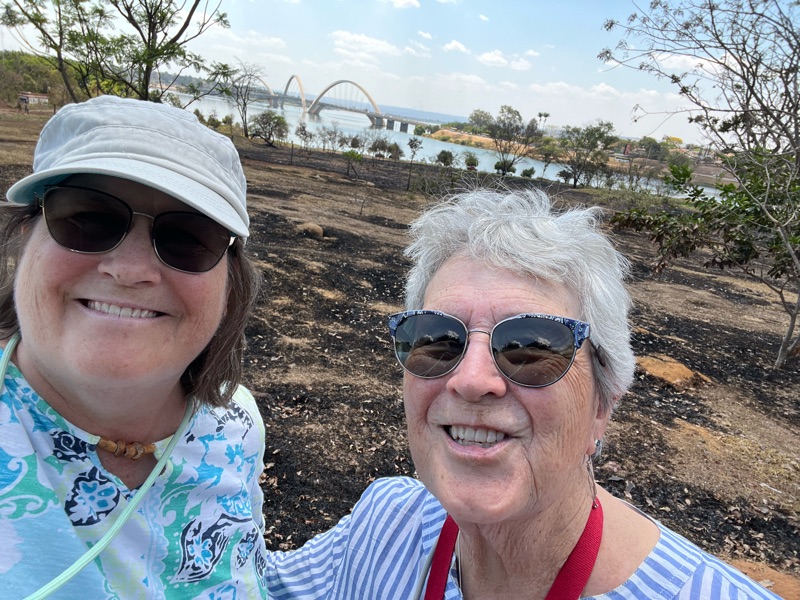
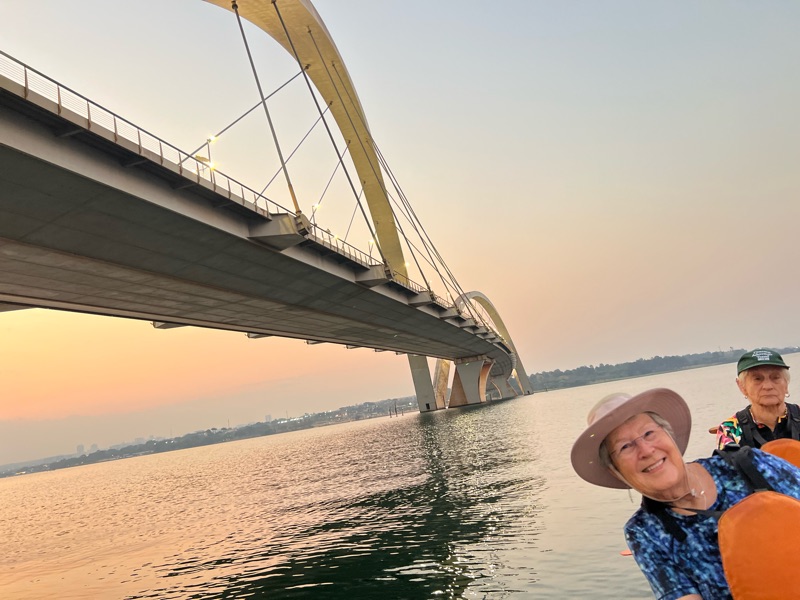
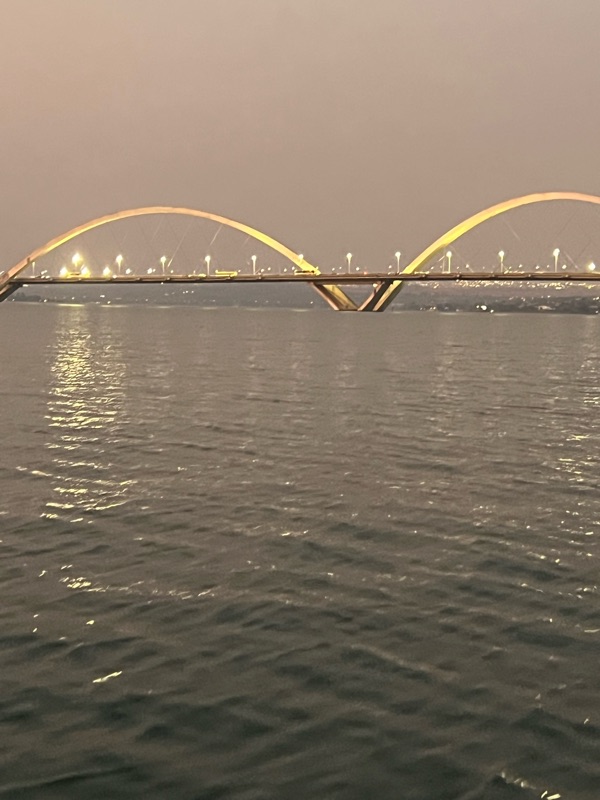
To cap off the day we went canoeing in two outrigger canoes and propelled ourselves all the way under the “stone skipping bridge”. Lovely views, a sunset and a bit of exercise.

Back at the hotel, we decided to visit the famous TV tower and elevated restaurant. We walked through a lovely garden full of fountains lit up at night. Then we had a delicious dinner. It was a perfect way to end our short visit to Brazil's capital city.




Yes, indeed, that open-air confessional is interesting.
ReplyDelete