Our cross country trip included a lot of parks celebrating the ancient history and geology of the United States. Below are a few of the highlights.
BONES
We visited six or more NPS sites where fossils were either the main attraction or at least part of the draw. We were impressed with how the Park Service made each site interesting by highlighting special features of the site. One of the things that struck us most profoundly is that huge areas of the US west of the Mississippi have massive fossil beds. This is partly because in ancient times the central part of the country was a vast inland sea. When marine animals died they sank to the bottom and were preserved in the low oxygen mud. There were also many volcanos and earthquakes as the Rocky Mountains pushed upwards burying ecosystems in volcanic ash and as mountains eroded they created layers of clay and silt deposits in the land below, where the effect of wind and water gradually exposes the fossils embedded in the rock for eons.
At Hagerman Fossil Beds NM, ID and John Day Fossil Beds NM in eastern OR, the role of paleontologists is mostly to wait for a big rain to expose new fossils. It was also interesting to learn about the conditions that led to different things being fossilized.
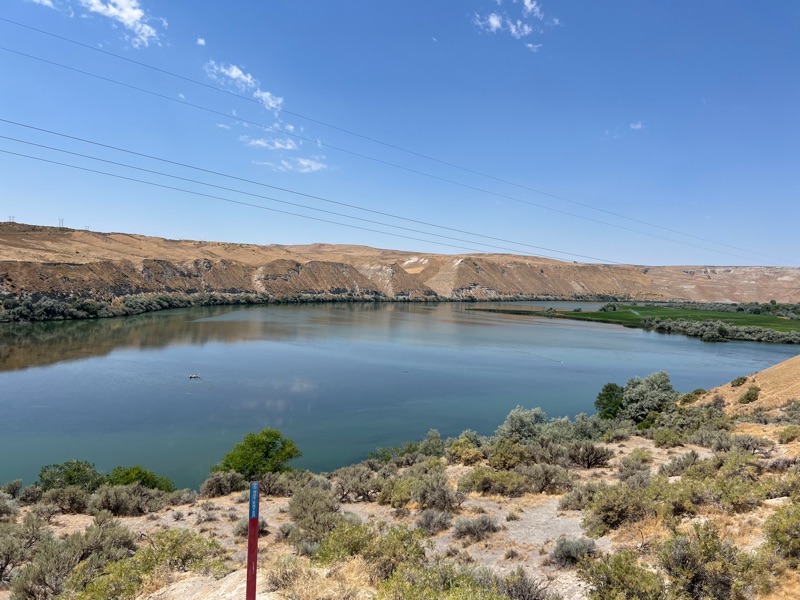
Cliffs with fossil layers at Hagerman

Early horses discovered at Hagerman
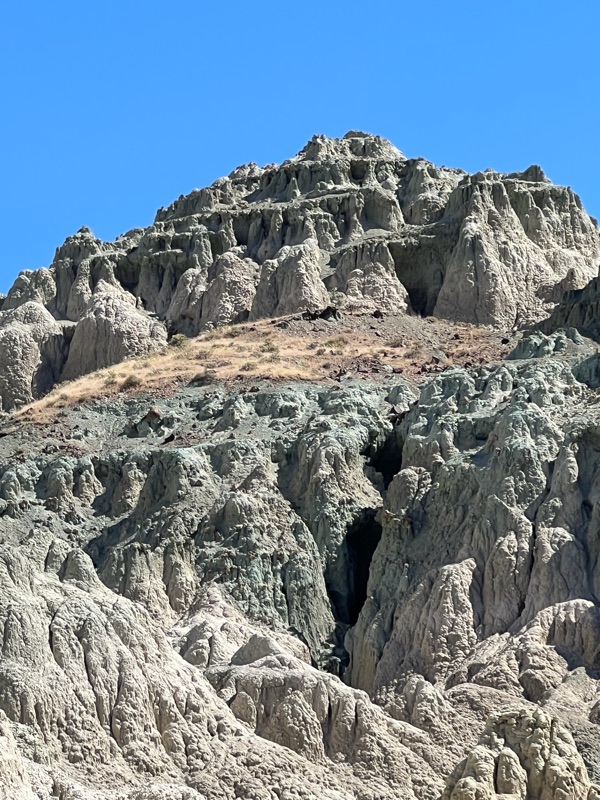
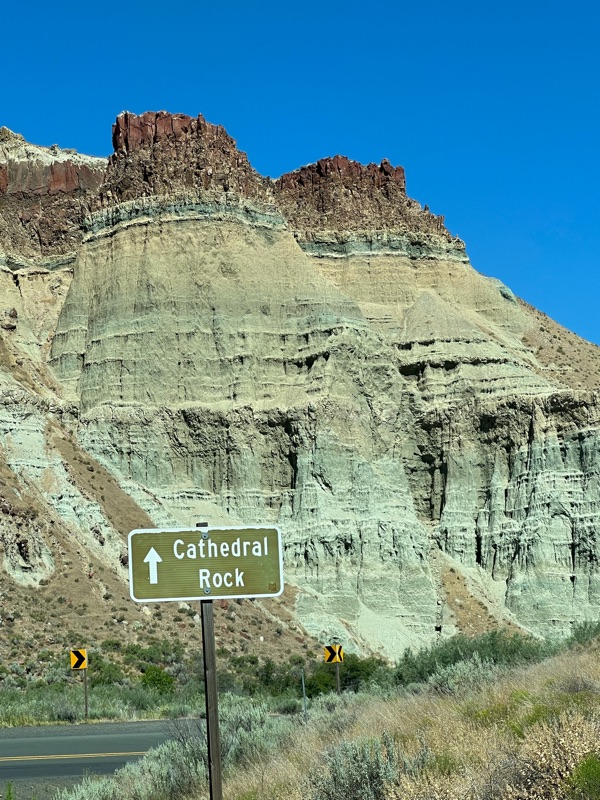
John Day blue and green clay cliffs full of fossils!
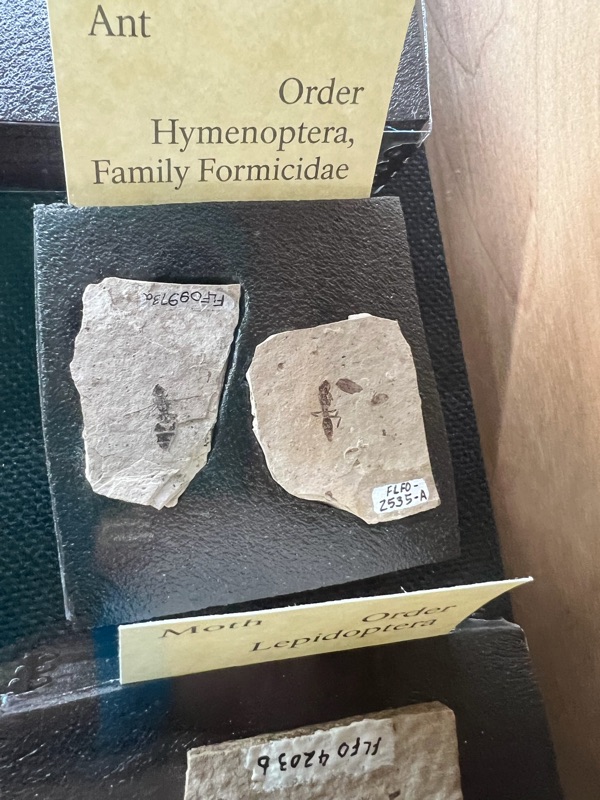
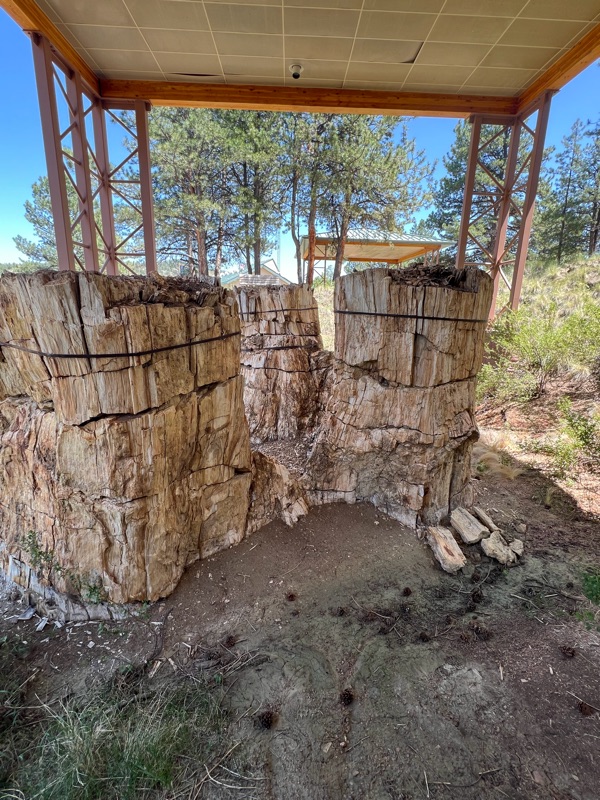
At Florissant Fossil Beds NM, CO, a muddy lake preserved so many insects that the site has drawn paleontologists from all over the world. Volcanic mudflows preserved Giant redwood stumps from 34 million years ago, but the tops of the trees were lost.
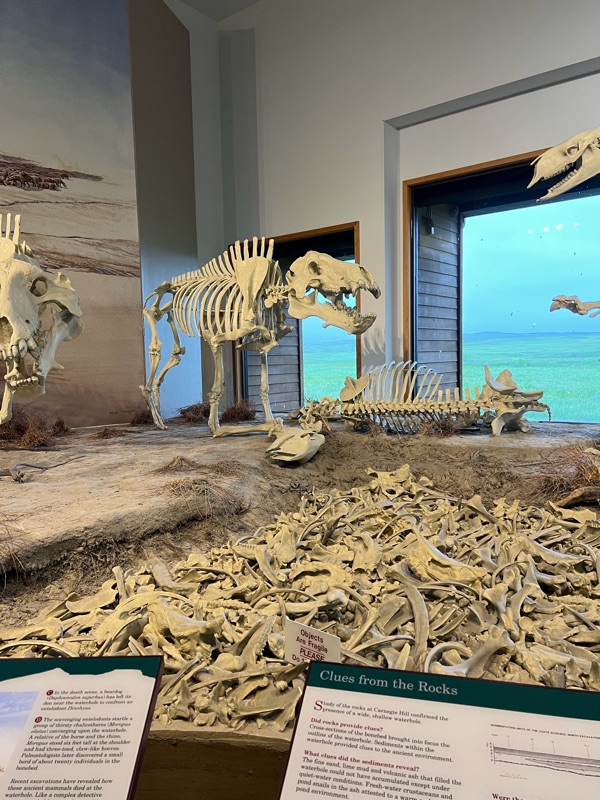
At Agate Fossil Beds NM in NE, a huge drought between 19 adn 21 million years ago brought carnivores and their prey to die by the same watering holes, trapping and preserving them in the mud (we especially liked the “Hell Pig”).
A salt lick in Big Bone Lick, KY, brought a similar array of giant mammals to the same location creating layers of fossilized bones.
VOLCANOES
We knew that there would be a lot of volcanos on the West Coast, because we were already familiar with Mount Rainier, Mount Hood, Mount St Helens and others, because they are famous for their iconic cones dominating the landscape. But we didn't know there are so many and so many different kinds of volcanoes in the area.
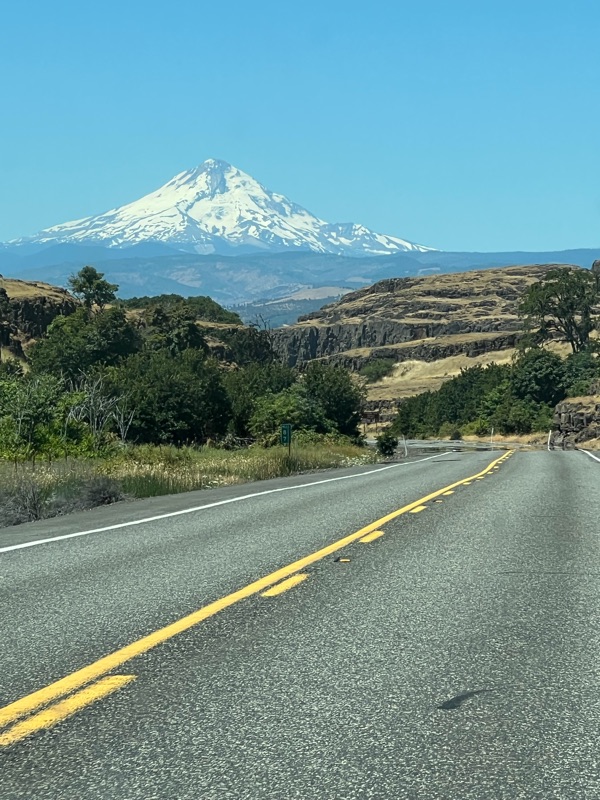
Mt Hood from the Colombia River Gorge
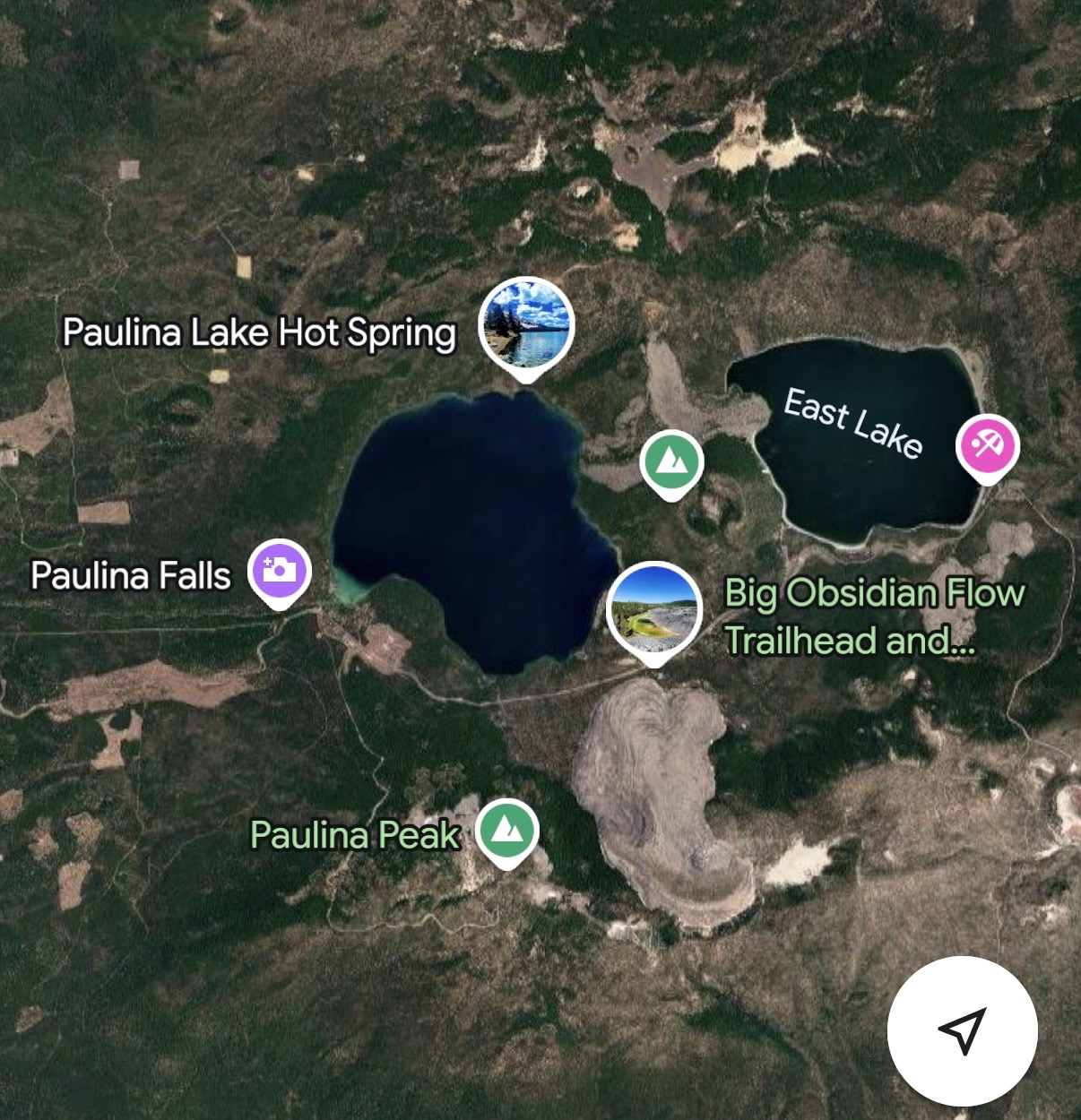
A rather precipitous drive up the side of a huge ash cone on the edge of the Newbury Volcano caldera near Bend, Oregon, was an opportunity to look down the results of eruptions of a huge shield volcano. From the top we looked down into the 17 square mile caldera containing 400 cinder cones and vents, two lakes and a large sea of obsidian. Later we had a close up view of the obsidian field which covers about a square mile of jagged black volcanic glass.

Crater Lake, Lassen and Lava Beds NPS sites each gave us a different perspective in the volcanic experience on the West Coast Volcano trail.
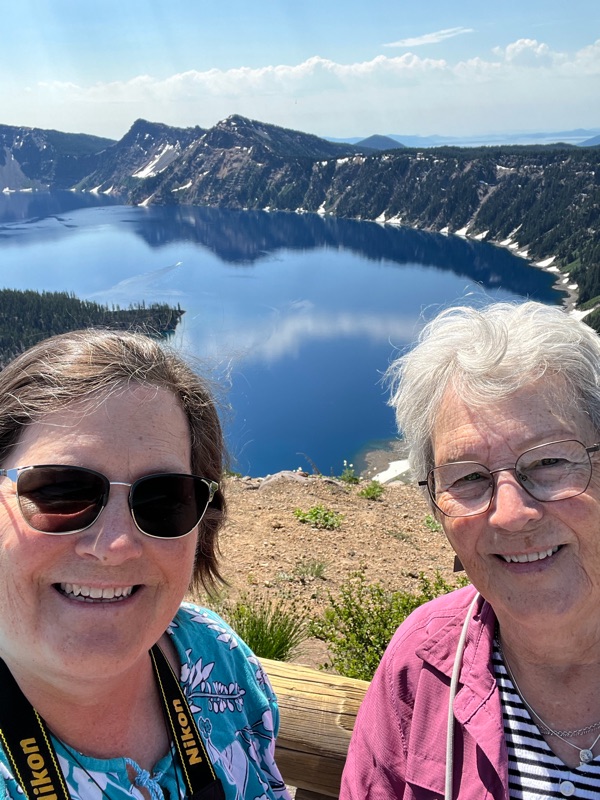
Crater Lake NP, OR, highlighted the ecological isolation that can be created by volcanic action. A huge stratovolcano, Mourt Mazama, erupted repeatedly over thousands of years, ever increasing its size. Finally, there was a mega eruption that caused the top of the volcano to blow up and then collapse under its own weight, creating a deep caldera in the middle of the remaining mountain. Centuries of rain and snowmelt filled the crater creating a very deep, beautiful crystal clear lake which is believed to be the cleanest water in the world.
In addition to lovely views, Lassen Volcanic NP, CA, had examples of all four types of volcanoes - plug (or lava) domes, cinder cones, shield volcanos and stratovolcanos (composite). Lassen Peak had a huge eruption in 1915, causing massive devastation. The park also has many steam vents, boiling mud pots and lovely, hot turquoise pools, caused by the mass of magma roiling about five miles below the surface.

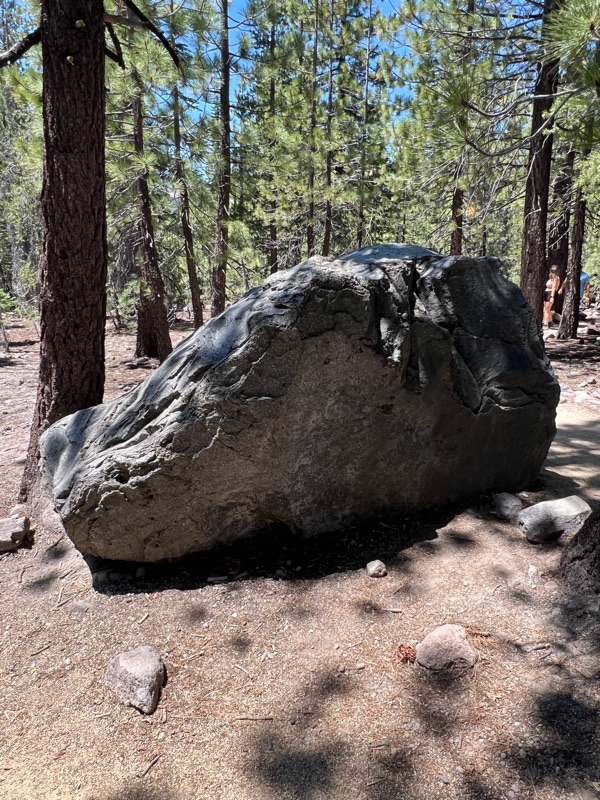 Erratic boulder thrown by the 1915 eruption
The Lava Beds National Monument, CA, gave us a sense of the immense scale of the huge shield volcanoes that dominated the area millions of years ago (the smoke from nearby forest fires made the scene even more dramatic). The two-mile loop road took us through the immense lava field created by the Medicine Lake shield volcano. This site also included the battlefields of the Modoc War, including "Captain Jack's Stronghold" a favorite of Robinson Family lore.
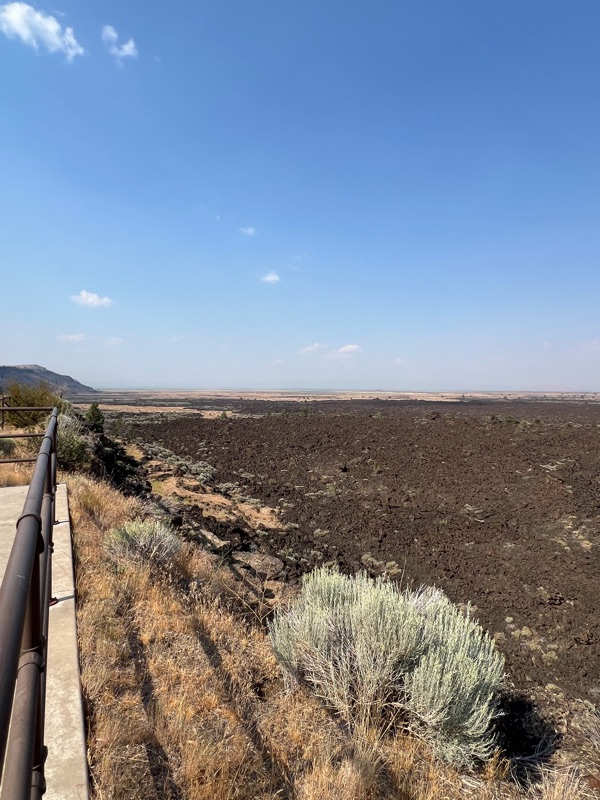
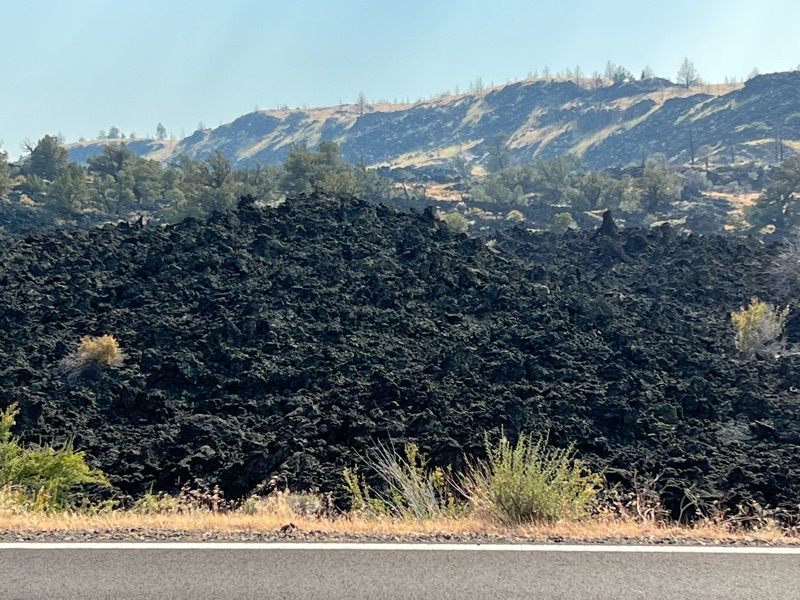
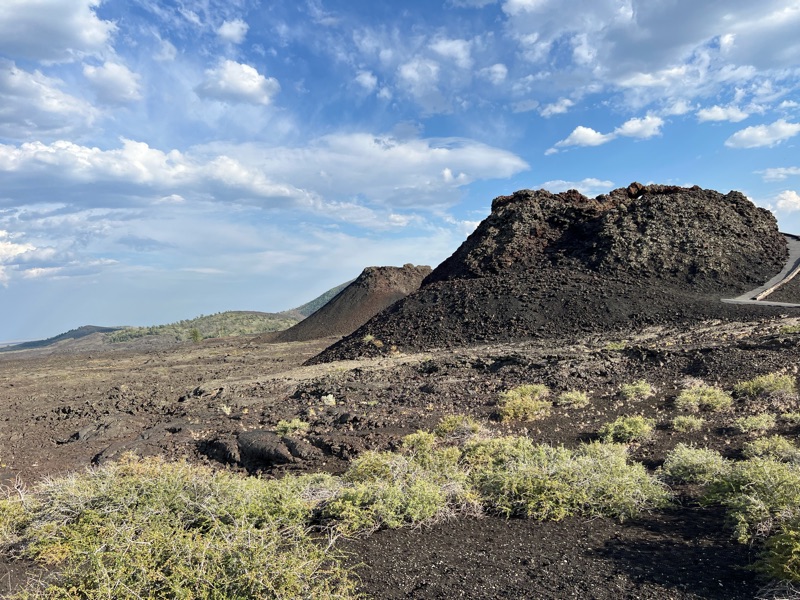
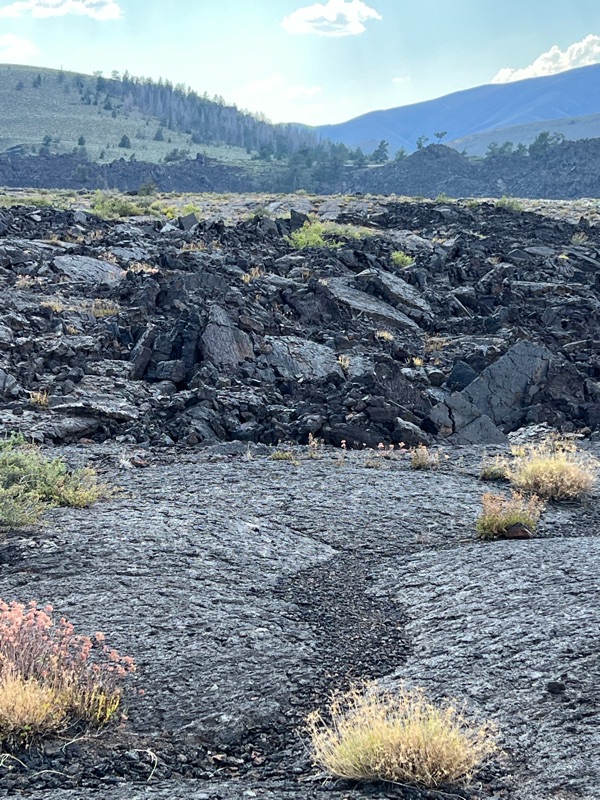
In Idaho, Craters of the Moon NM & Preserve, another large volcanic area focused on different types of of lava - a’a and pahoey-hoey, traditional Hawaiian names used by geologists. The pahoey-hoey is smooth lava that looks like coils of rope or fabric, caused by very hot lava that forms a skin on top as it cools as the hotter lava flows beneath it dragging and wrinkling the “skin.” The a’a is jagged with sharp points, and results from cooler lava that breaks up as it flows. The other feature of the park is the cinder cones that follow the fault lines across a vast plain, one of which, covered in black gravel, was necessary to climb. This park also had a lot of lava tubes and caves - home to bats and other critters.

Yellowstone NP, WY,(covered more extensively elsewhere) also featured bubbling sulfur baths, sulphur pools, steam vents and geysers, the famous “Old Faithful,” and other features that remind us that the crust of earth we live on gets very thin in spots, and there is in inferno of magma beneath us.
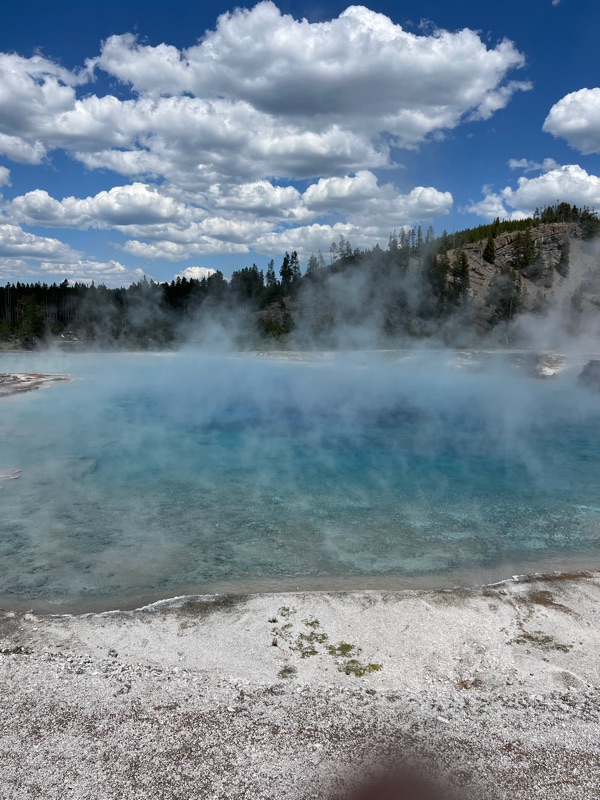 The polychromatic ponds at Yellowstone



No comments:
Post a Comment