Medina is the Arabic word for city. However in ancient cities like Fes, Medina refers to anything inside the city walls - which, in Fes, date back to the 14th century. But Medina in Fes more specifically refers to the 9th century Old City - a warren of narrow passageways and neighborhoods.
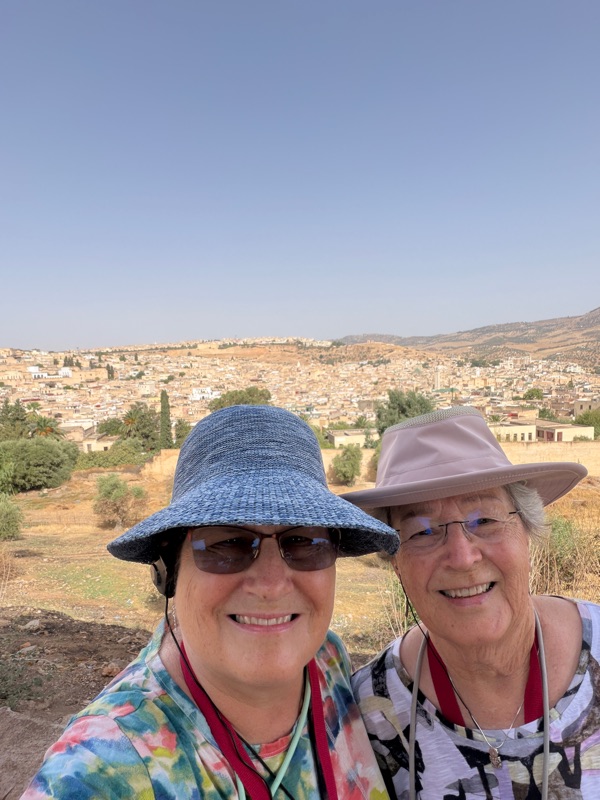
The Fes Medina is a UNESCO World Heritage site, with many buildings dating from the 14 century and some from much much earlier. Many craft shops also have very old histories, and the way they create their crafts is carefully regulated to preserve the historic ways of creating the beautiful buildings, textiles, pottery, and leather for which Morocco, and Fes, especially, is known.
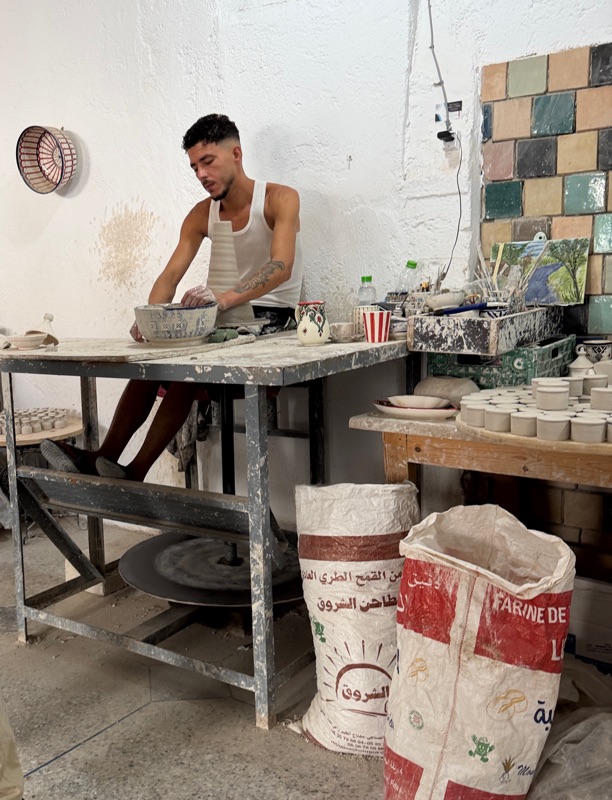
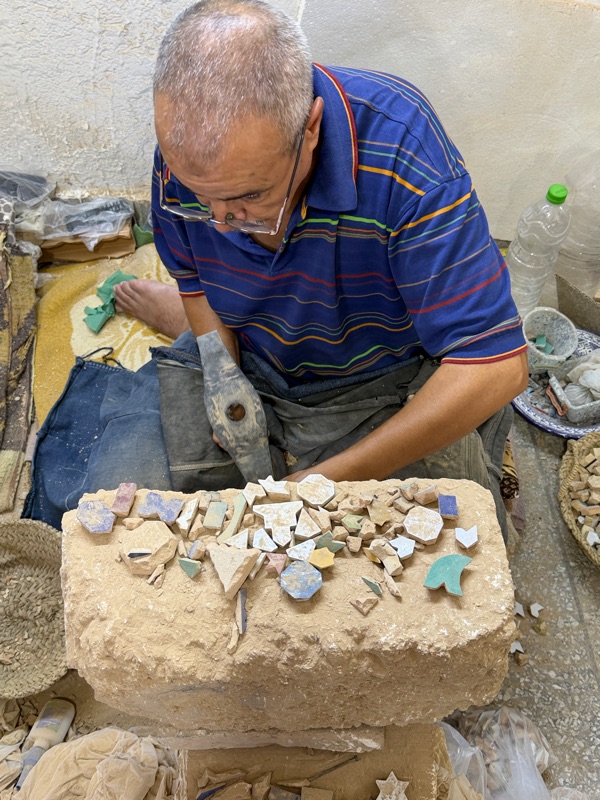
We visited a pottery craft shop which due to safety concerns is located a bit outside of the city walls. We learned about the entire process used to create the beautiful, colorful pottery bowls, platters, cook ware and hundreds of other items, from the shaping of the clay, drying, scraping, firing, and painting. The craftsmen and women of the pottery cooperative also create many mosaic objects from enameled tiles that are cut into traditional shapes and fitted together to make tables, fountains and many other decorative items.
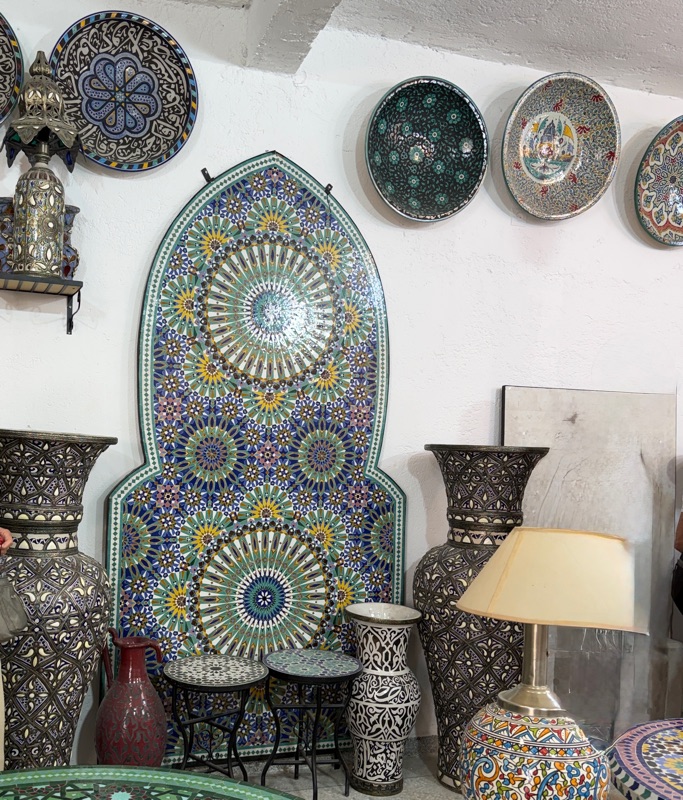
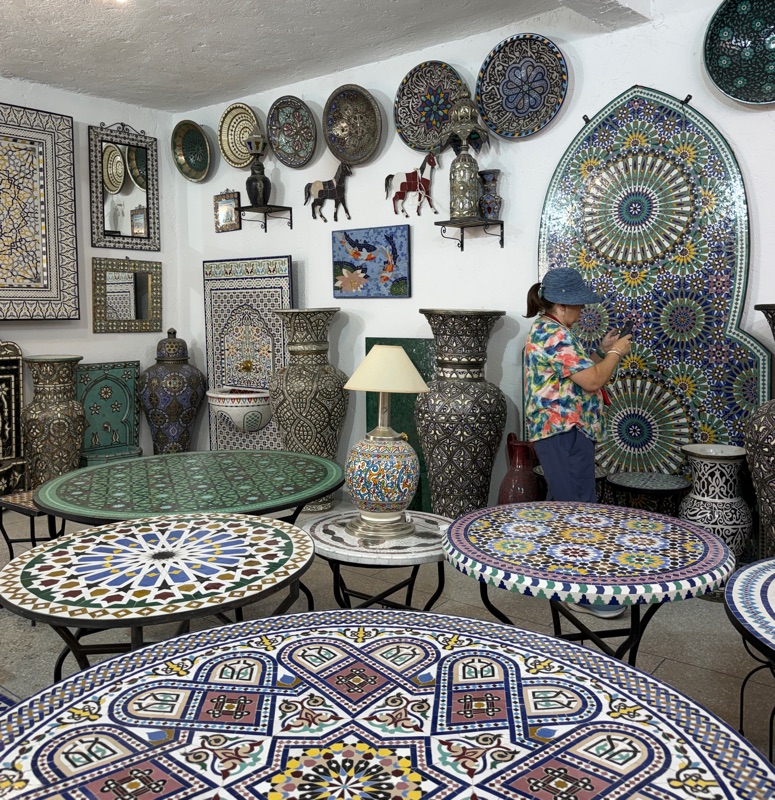
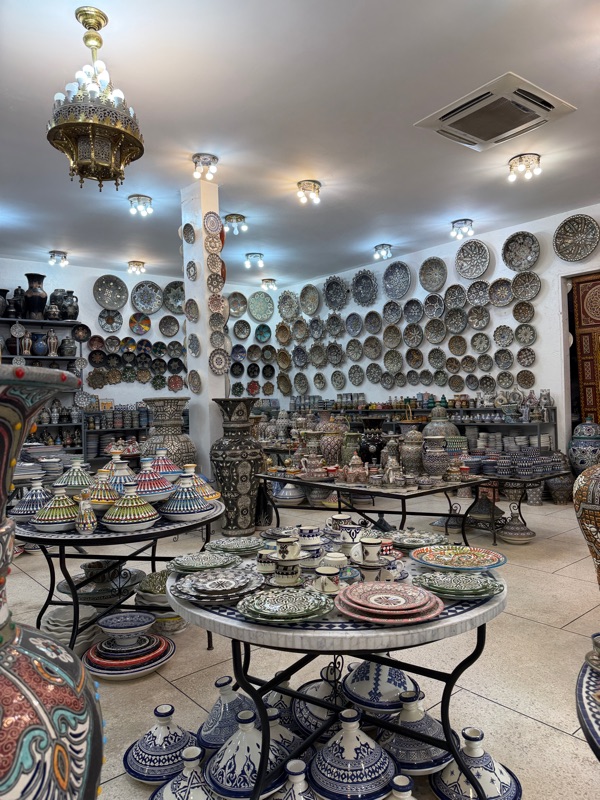
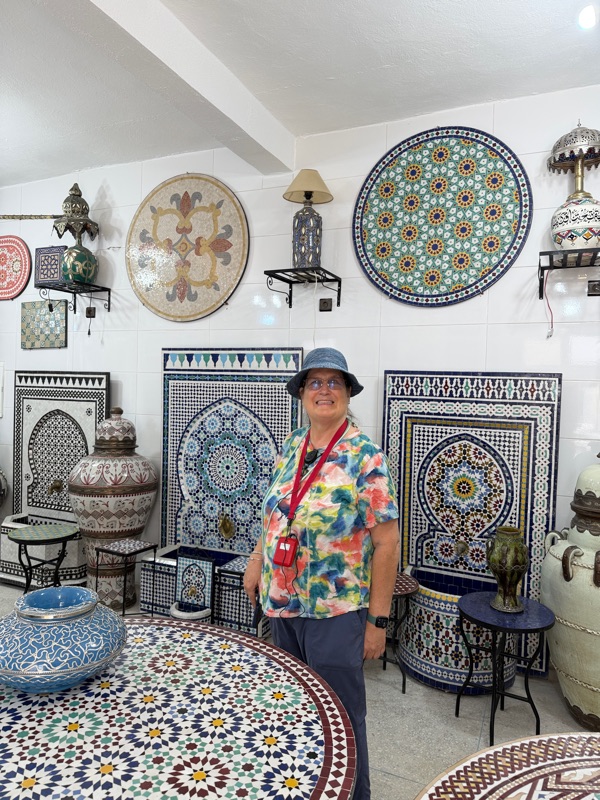
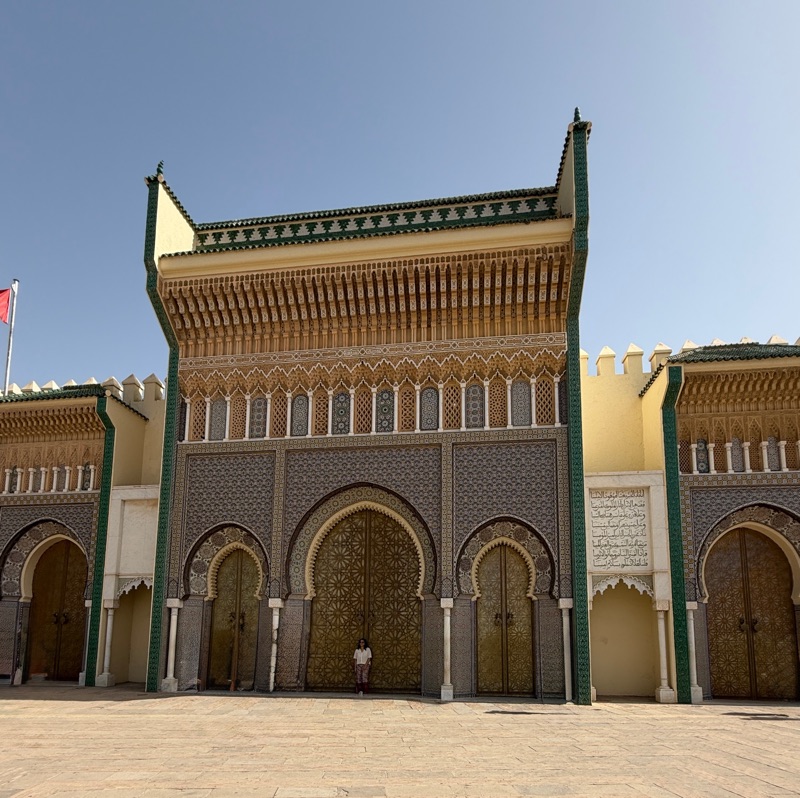
Next we visited the facade of the Royal Palace - a 14th century construction with elaborate tile and mosaic work. It was interesting to see these fine examples of the craft right after visiting the artisans.
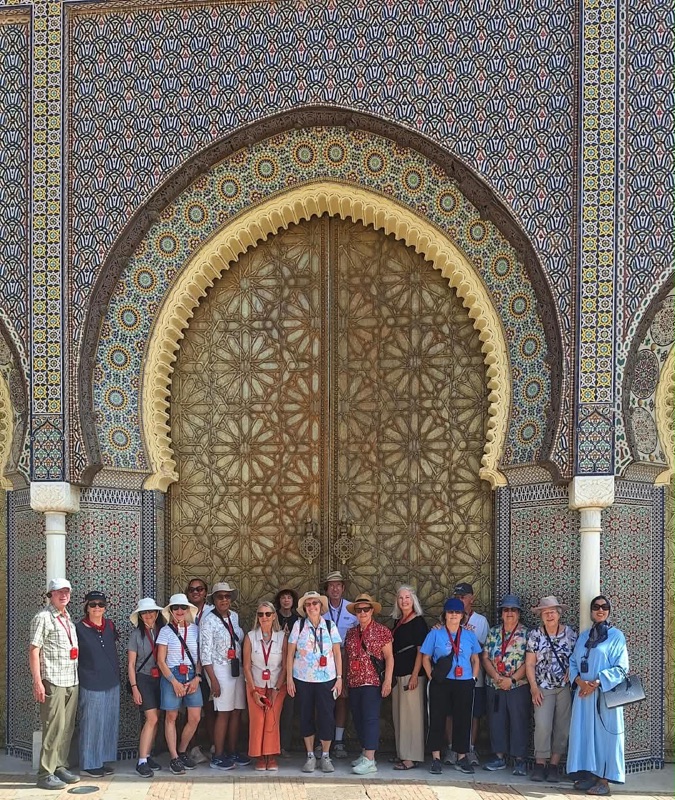
From there, we made our way to the Jewish quarter of the Medina. Established in the 14th century (the second time that Fes served as the capital city of Morocco), the Jewish quarter featured a variety of interesting and picturesque balconies over the narrow alleys - a feature not found at all in the Muslim parts of the city. We visited an old synagogue from this area which is now a museum where we learned about the ways in which three different cultures - Muslim, Berber, and Jewish - have been able live together peaceably. Currently the population is even more diverse and more blended.
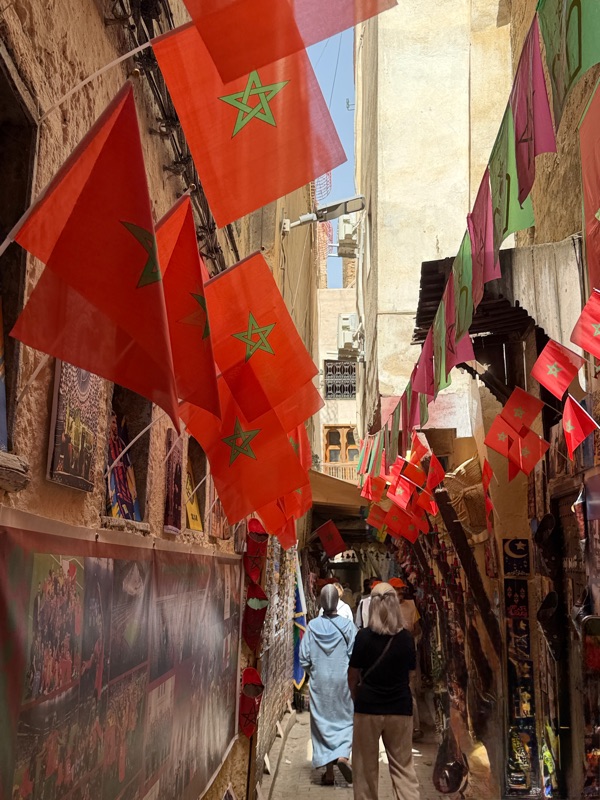
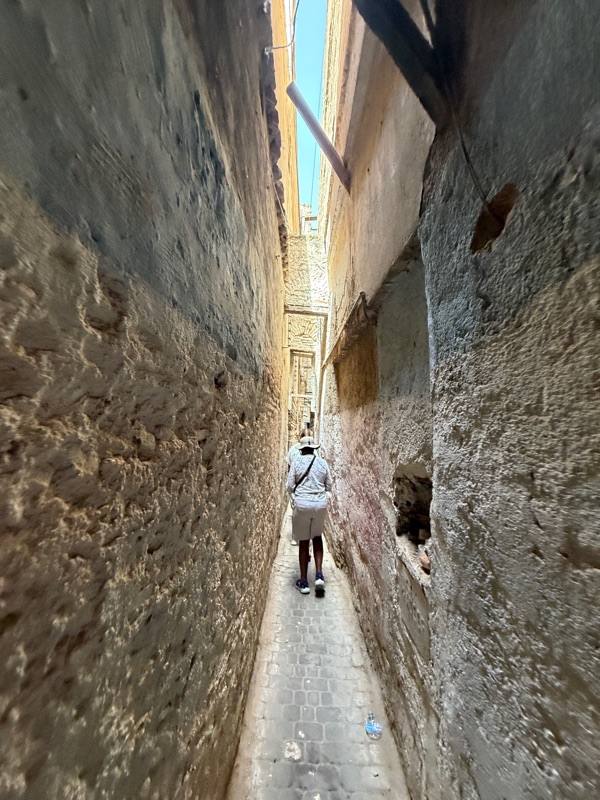
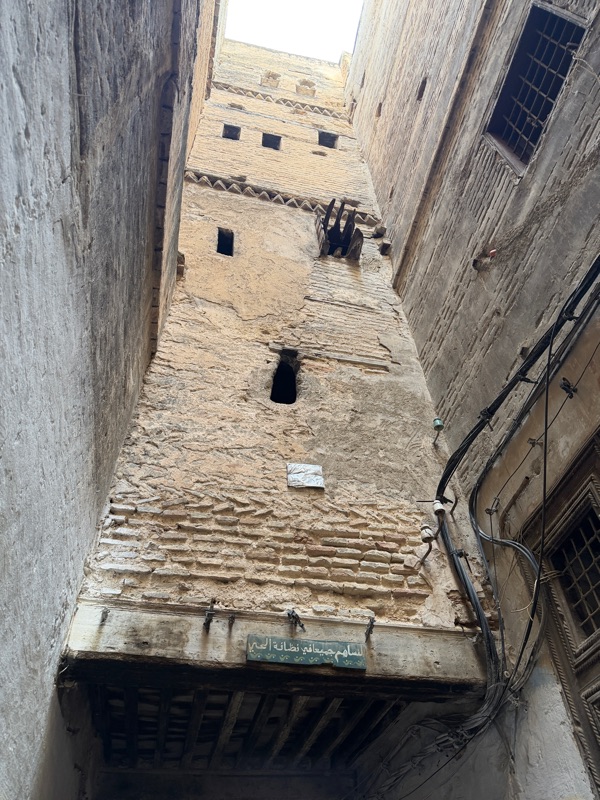
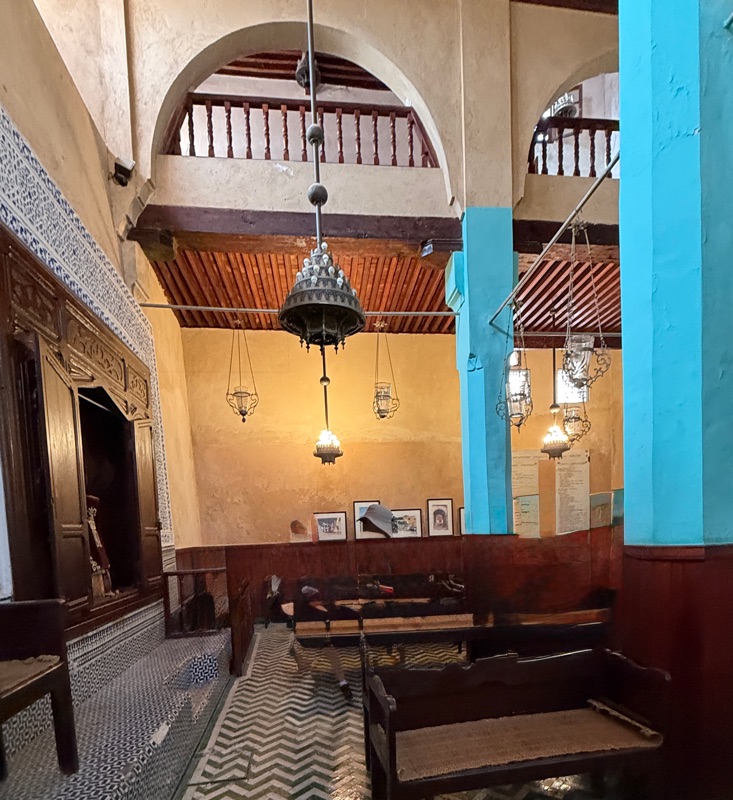
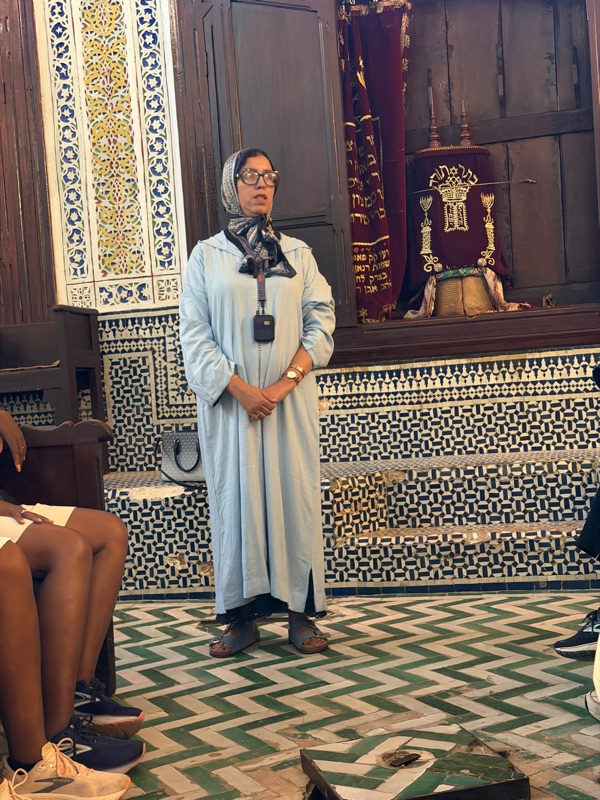 We also learned a lot about how the Moroccan king (Mohammed V) defied the Nazis in WWII and refused to send the Jewish population to camps. He said “We are all Moroccans, and if wearing a circular hat makes a difference, I will wear one too.” This and other things made him a beloved ruler, leading the people to throw off French rule after the war and declare independence in 1956.
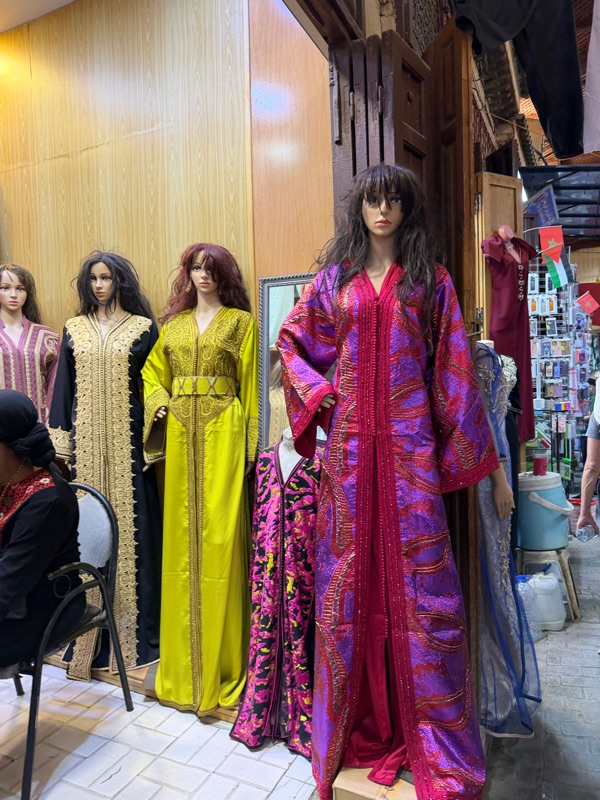
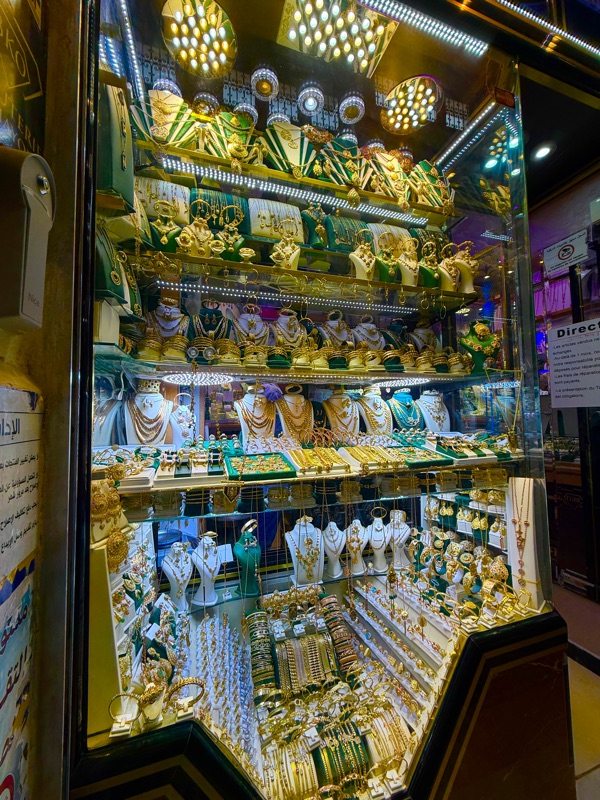
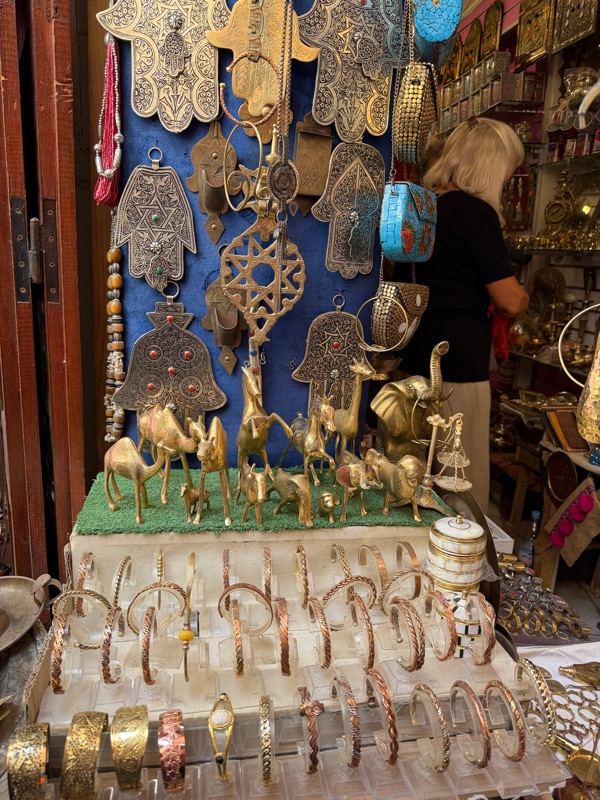
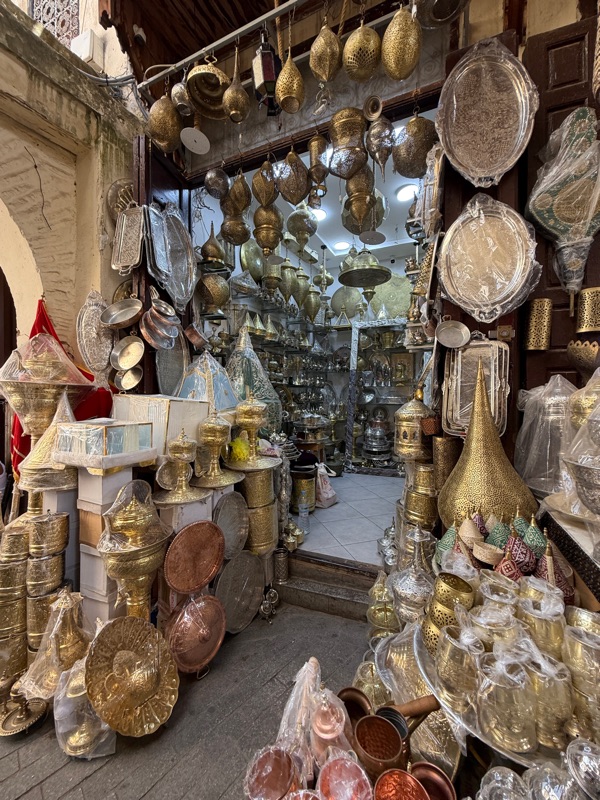
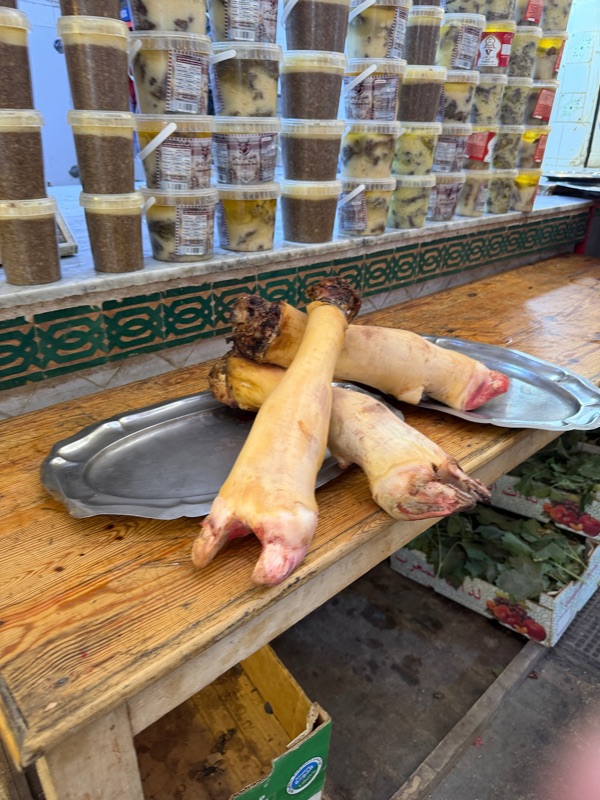
We walked through many narrow alleys of the Medina, each of which featured different products - wood working, gold ,silver, textiles, produce, ceramics, leather, etc. In many places the artisans were engaged in making their wares in the tiny shops. Intermixed were mosques, mausoleums, museums and restaurants.
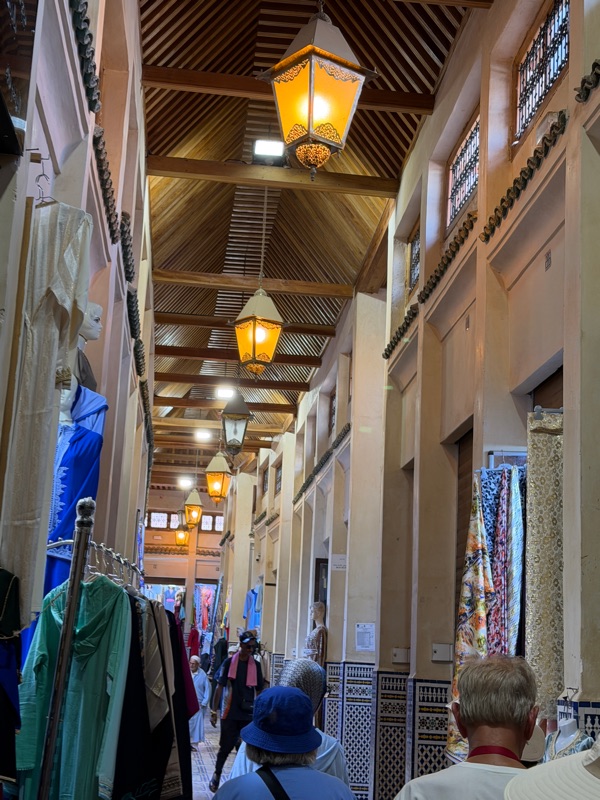
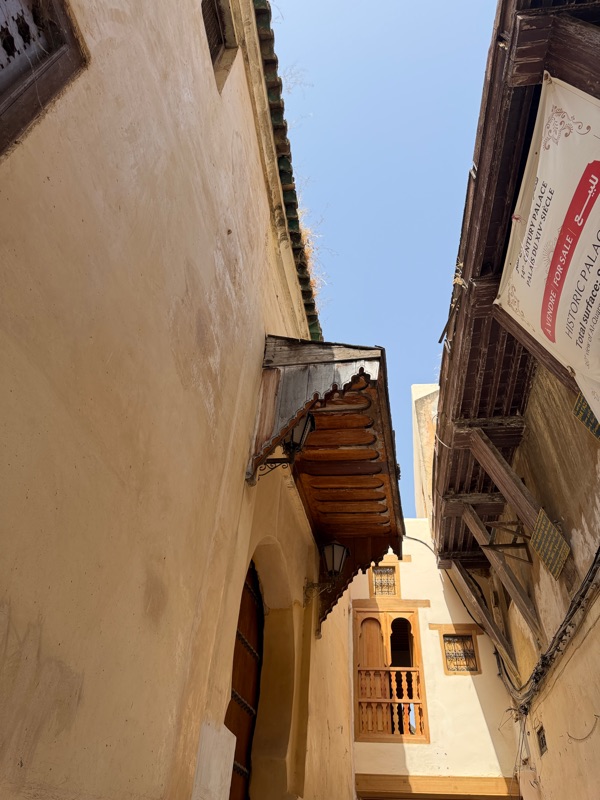
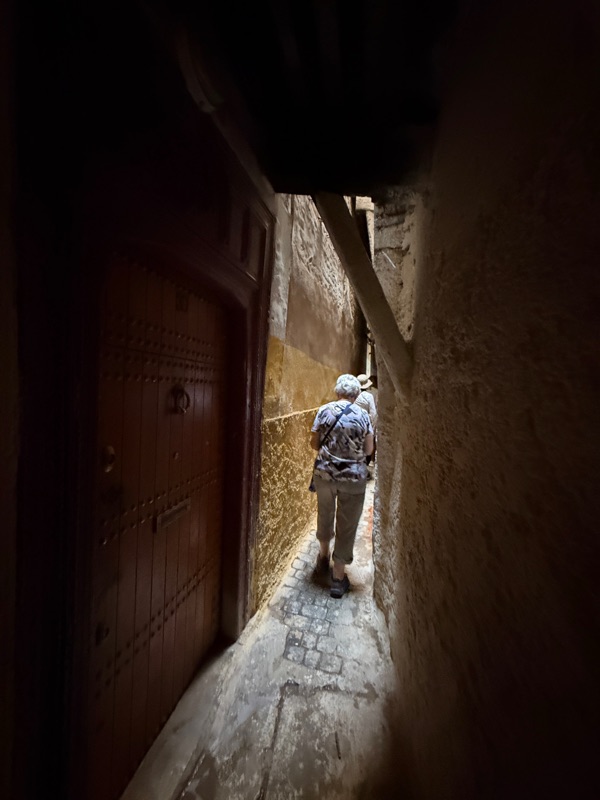
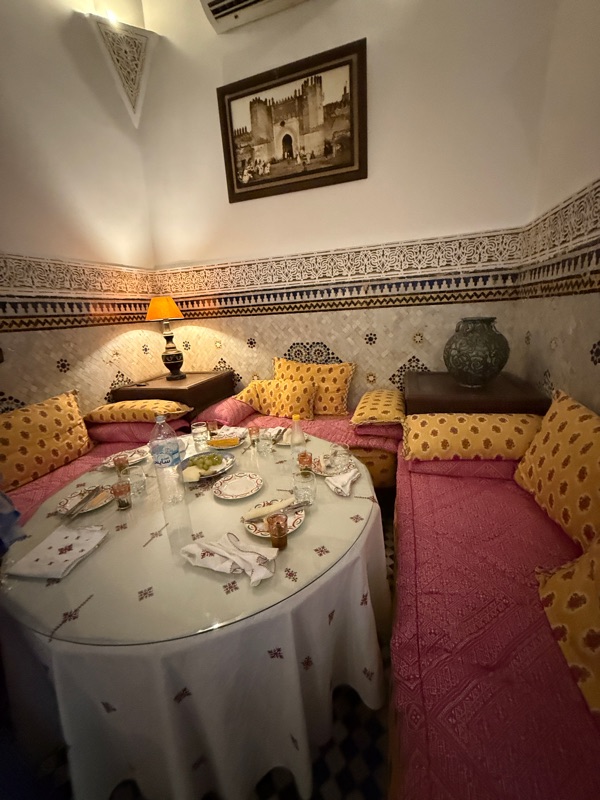
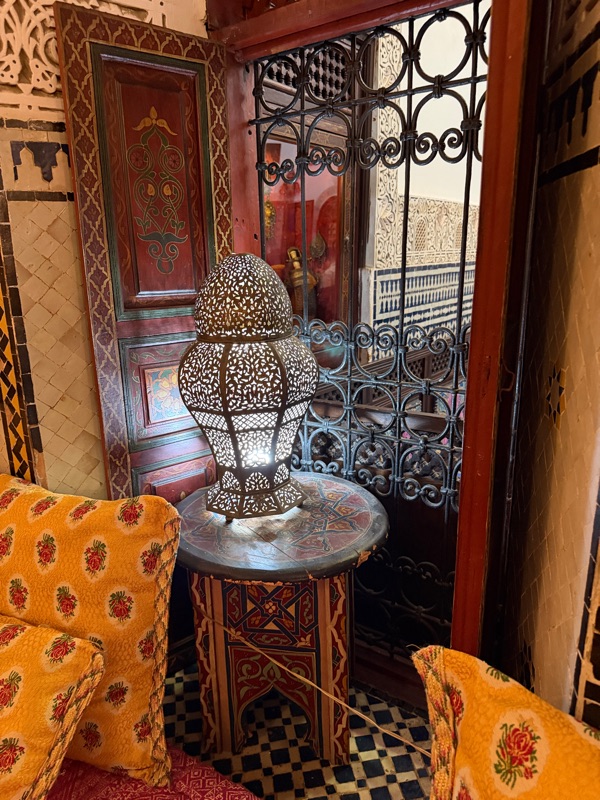
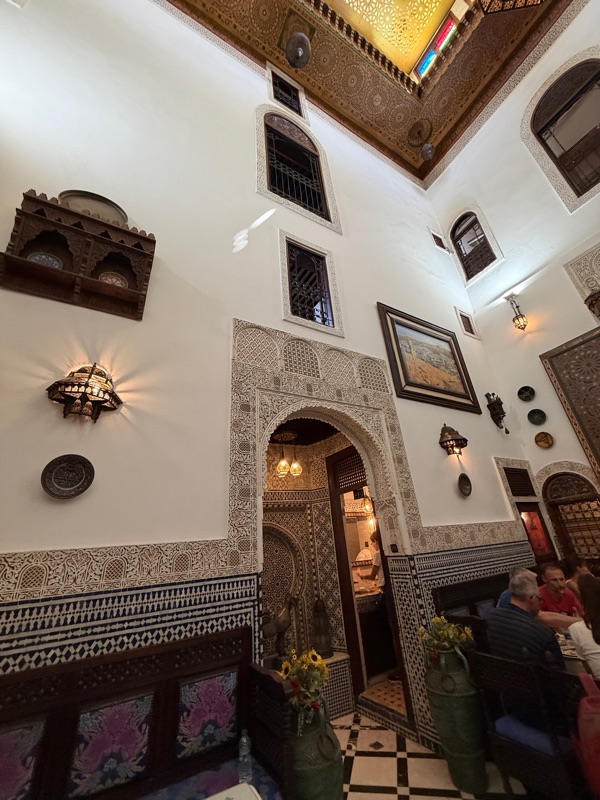
Lunch had been arranged in a lovely restaurant in an old riad (traditional Moroccan house build around a courtyard), Riad Nejjarine, where we had a variety of Moroccan specialties, including tagine, couscous, mint tea, and baba ganoush. The high ceilings, mosaic, tile, plaster and woodwork were beautiful.
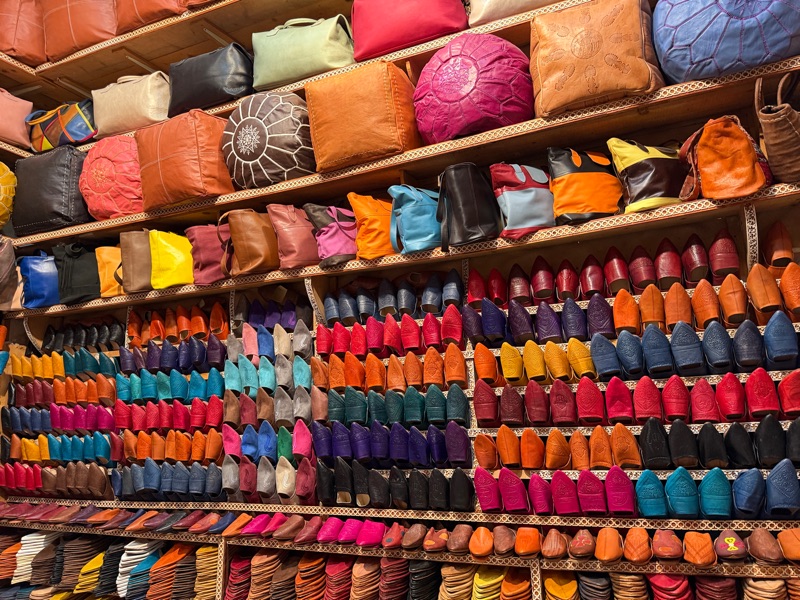
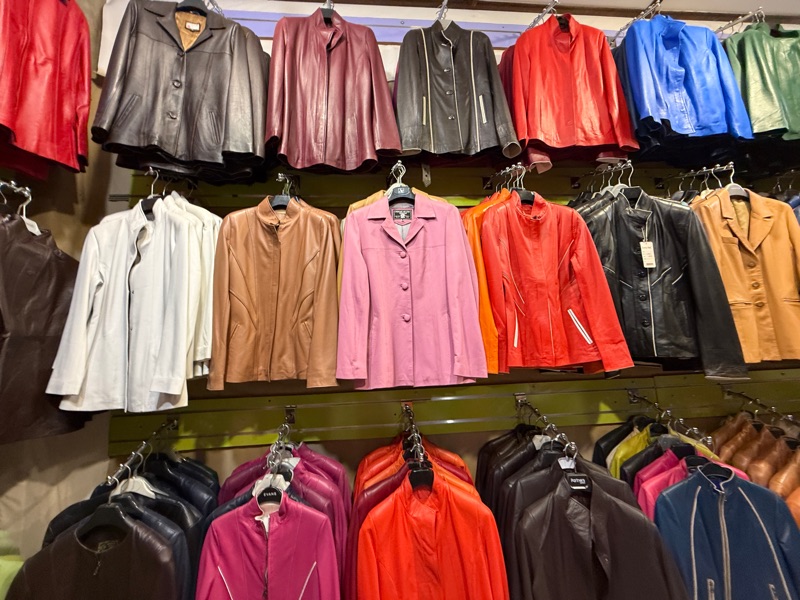
The next stop was a leather shop/tannery where we were handed sprigs of mint to cover our noses before going to see the dyeing operation. We climbed 75 narrow stairs to a roof top where we could look down on the dyeing pits where workers dyed leather from goats, sheep, cows and camels. Despite the smell, it was interesting to see a process largely unchanged since the 9th century. The leather was beautiful and soft, and was used to make coats, jackets (very tempting) and handbags of many different vibrant colors and styles.
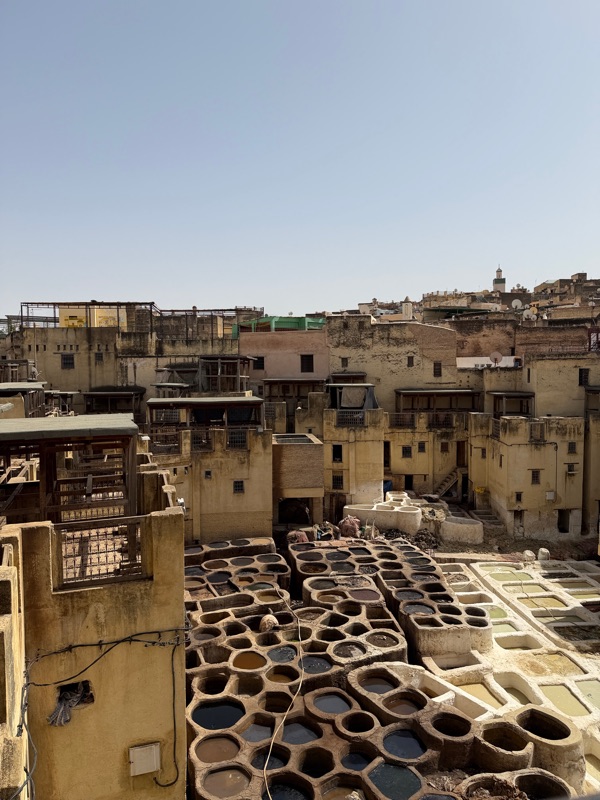
Dye pots with the drying racks along the walls. 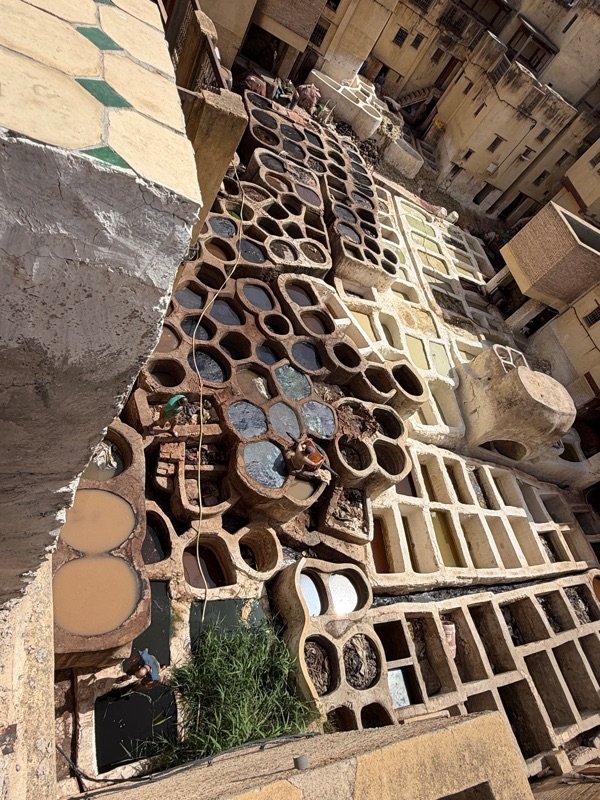
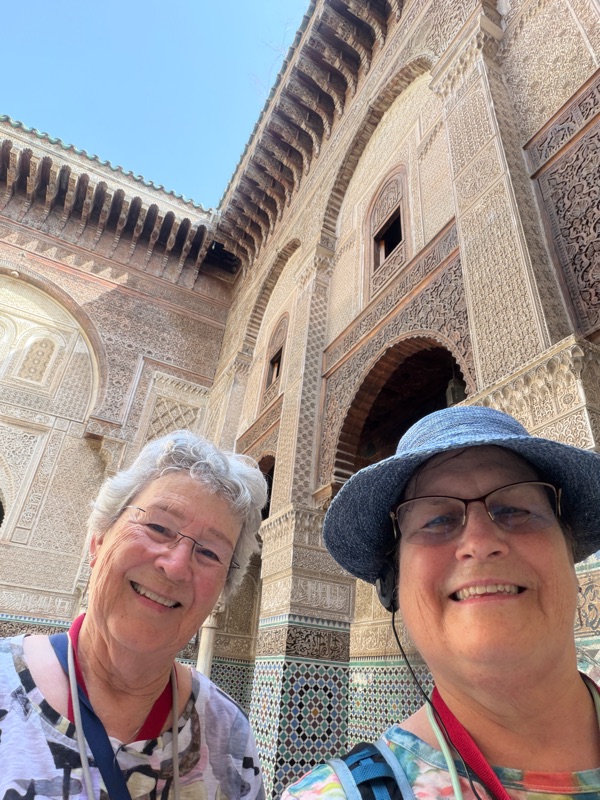
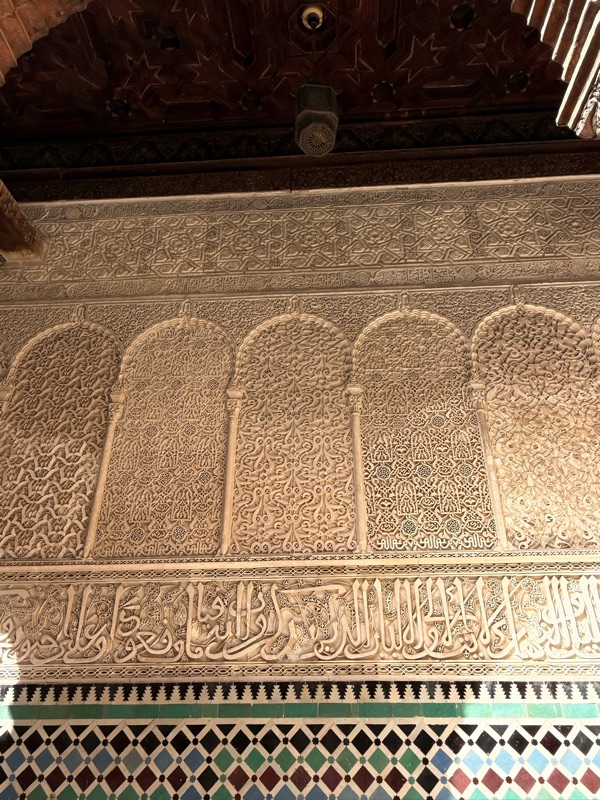
The last stop was a lovely maderesa (school) also dating from the 14th century which had been used as a dormitory for students at the university. The spectacular decoration is now preserved as a museum. The elaborate stucco work is called “work for gold,” because the plaster debris that resulted from chiseling out the designs was weighed to determine the amount of gold that was to be paid for the work.
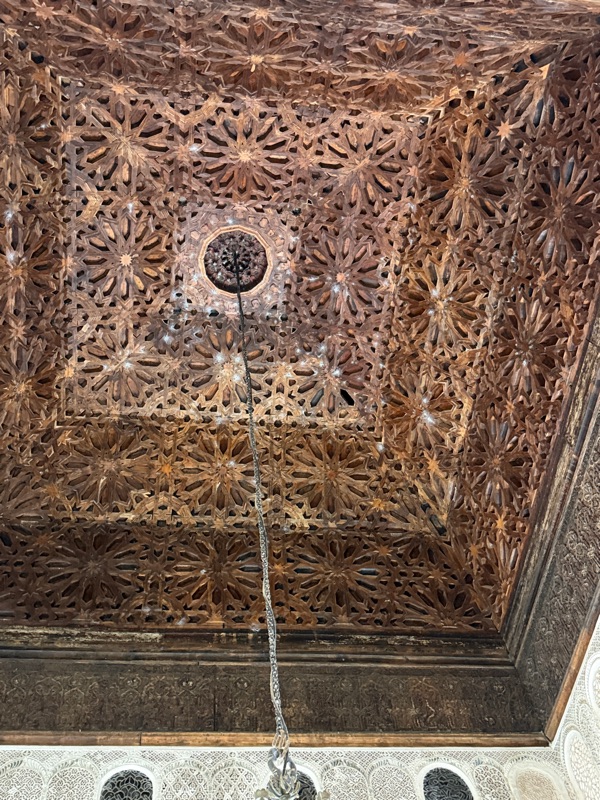
Wood ceiling
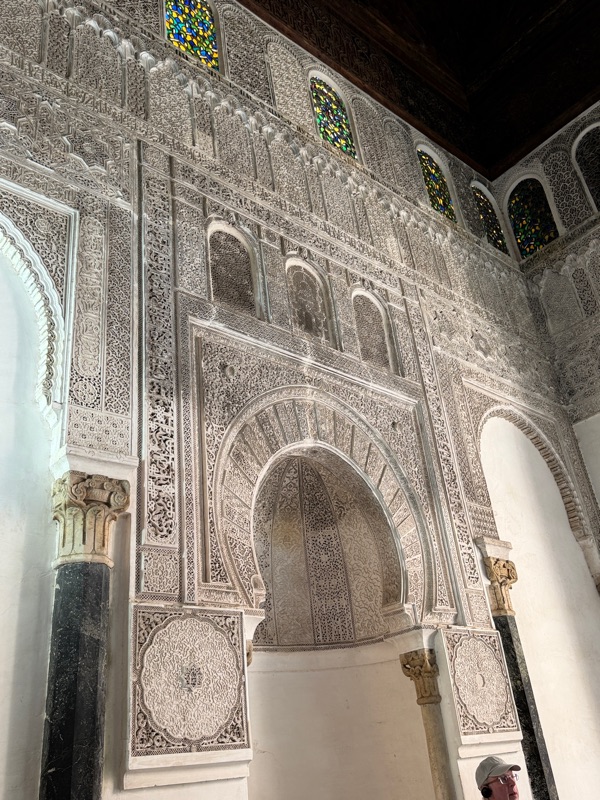 Work for gold stucco
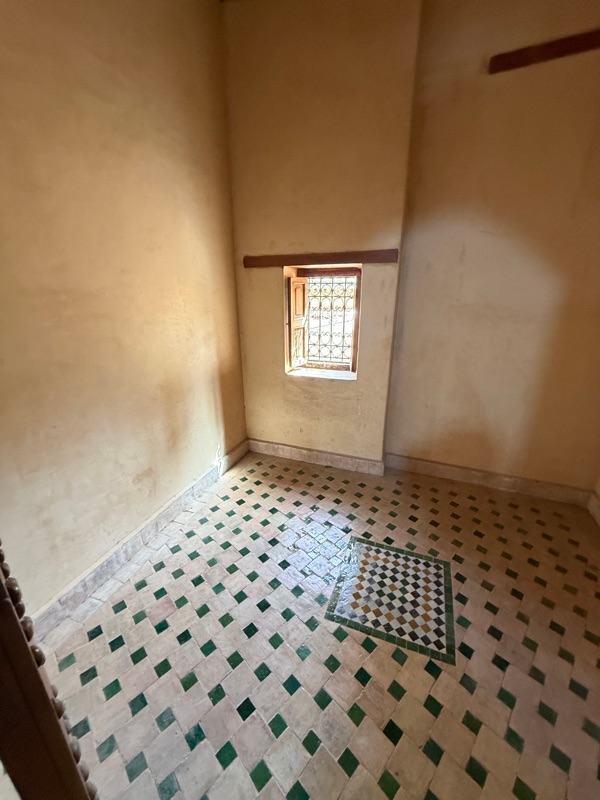 Dormatory rooms
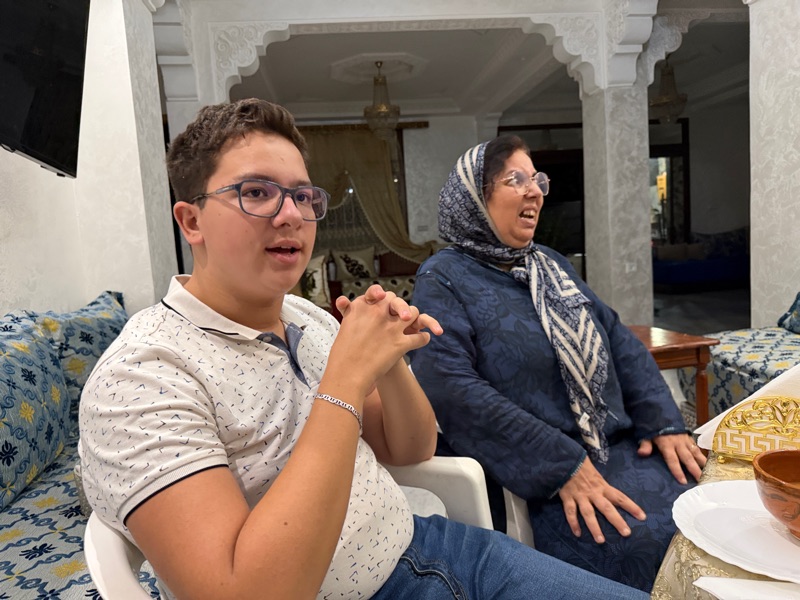
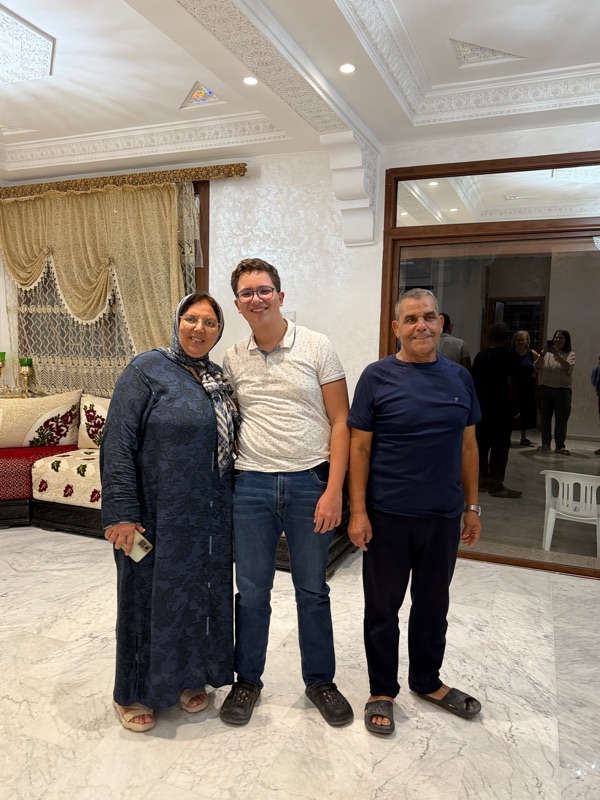
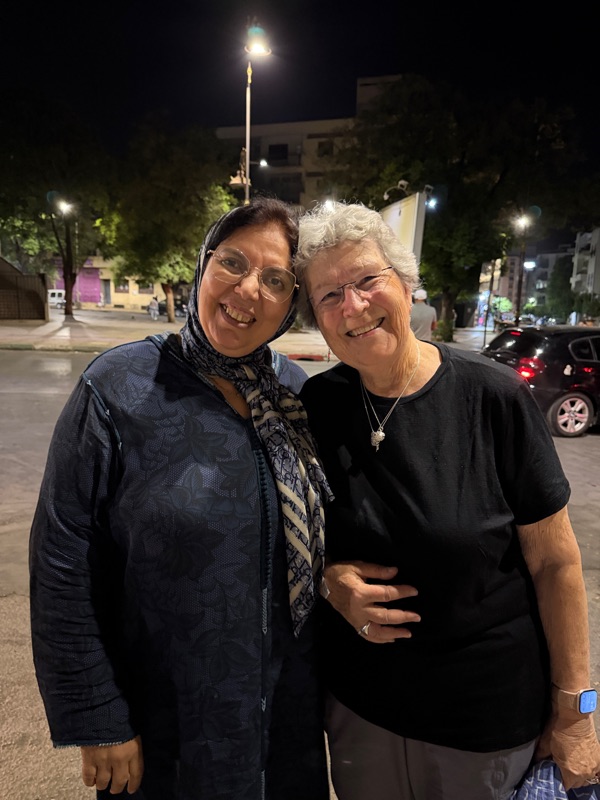
We had a couple of hours to rest and rehydrate before dinner. Then we headed to our home hosted dinner in the New City (the area built by the French starting after 1912). We had an interesting and delicious dinner with Khadija and her son, Omar, while her husband Mohamed cooked the lamb main course and took on the role of waiter.



Looks like a beautiful place ,you guys look happy get some rest, though take care of yourselves
ReplyDeleteWhat is the red lanyard about? (The square box attached to the strap?) The dyeing pits/pots made for an interesting sight. Those jackets, yes, they were beautiful. Does it ever get cool enough in Morocco to need a jacket?
ReplyDeleteThe red this is a “whisperer” - the device that allows tour guides to talk directly to the whole group even when we are in a crowded market or museum.
Delete