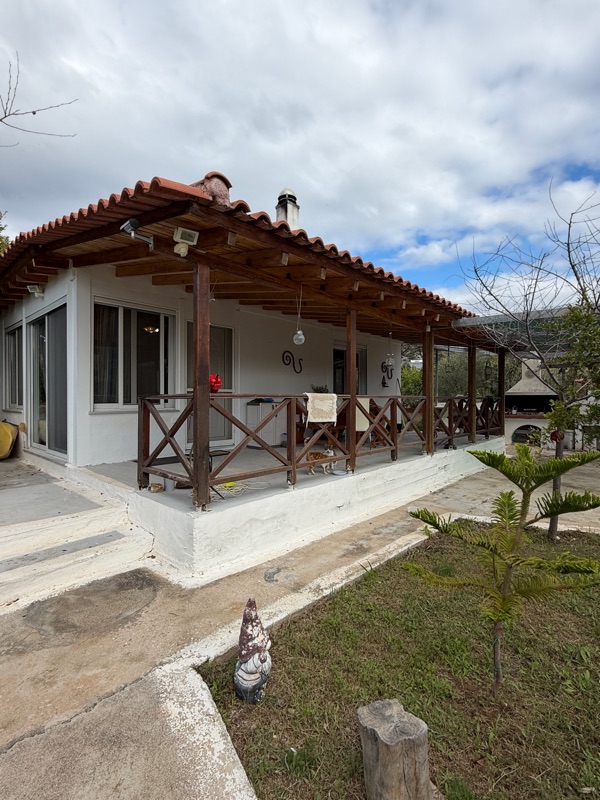
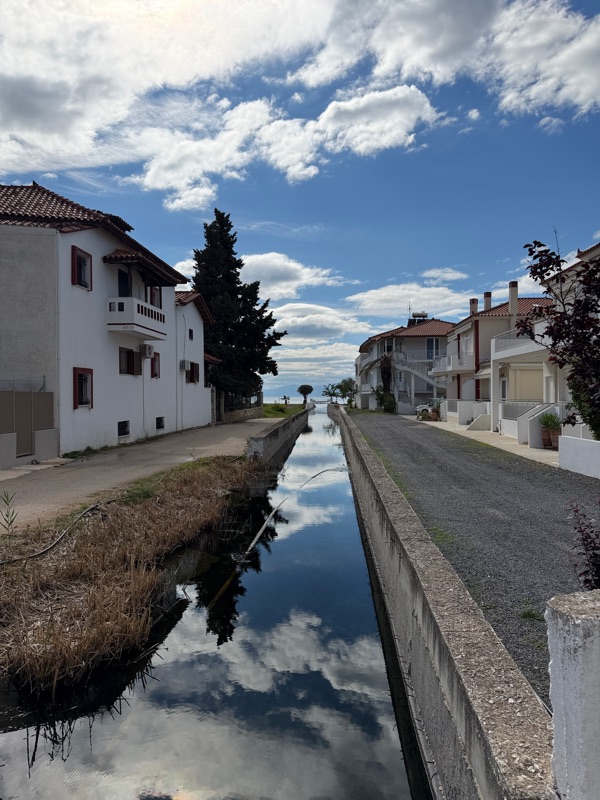
We spent the day Wednesday hanging out in the village of Kantia, in the Pelopennese.
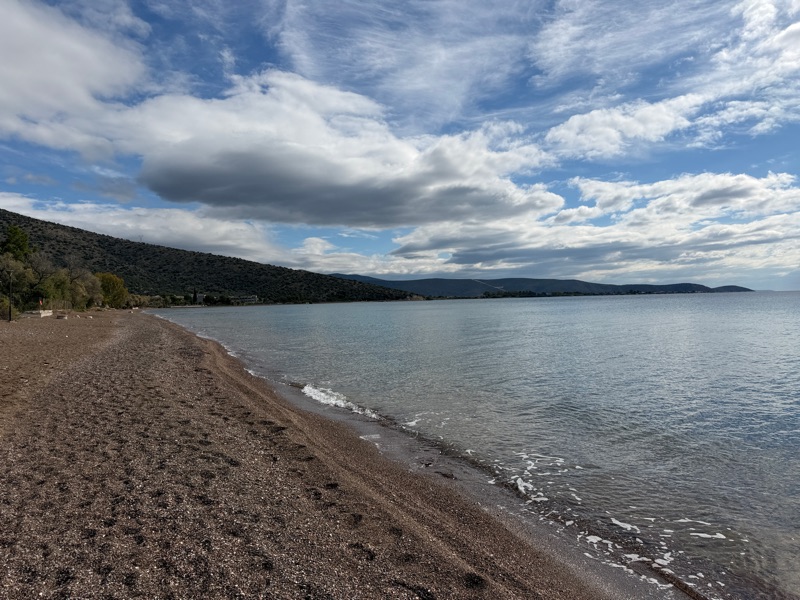
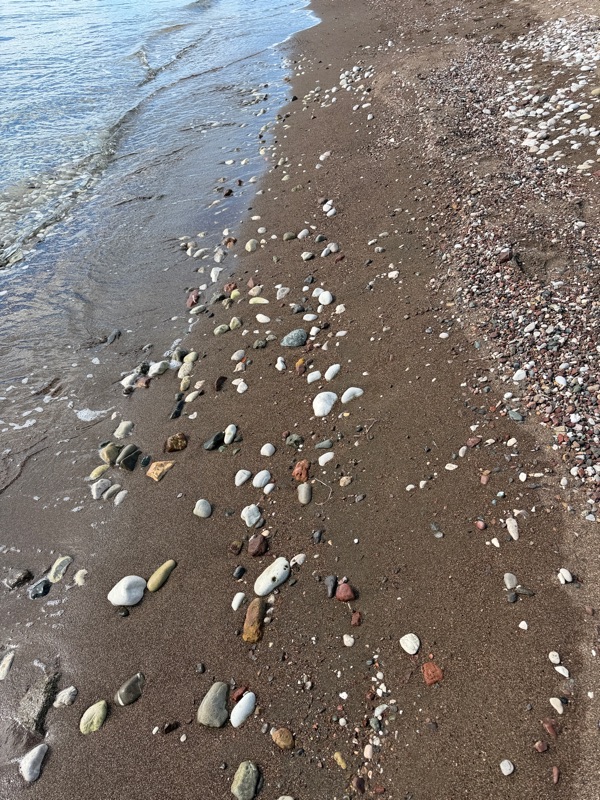
In the morning we walked along the dirt road down to the beach which was not far from the house. The beach had dark sand with a a lot of small multi-hued pebbles Then we headed for the village center and the bakery and the Mini-market. The market was very limited, but the bakery provided some delights - light airy pastry with ham and cheese for lunch along with a cream cheese sesame roll and a cream filled yummy for later.
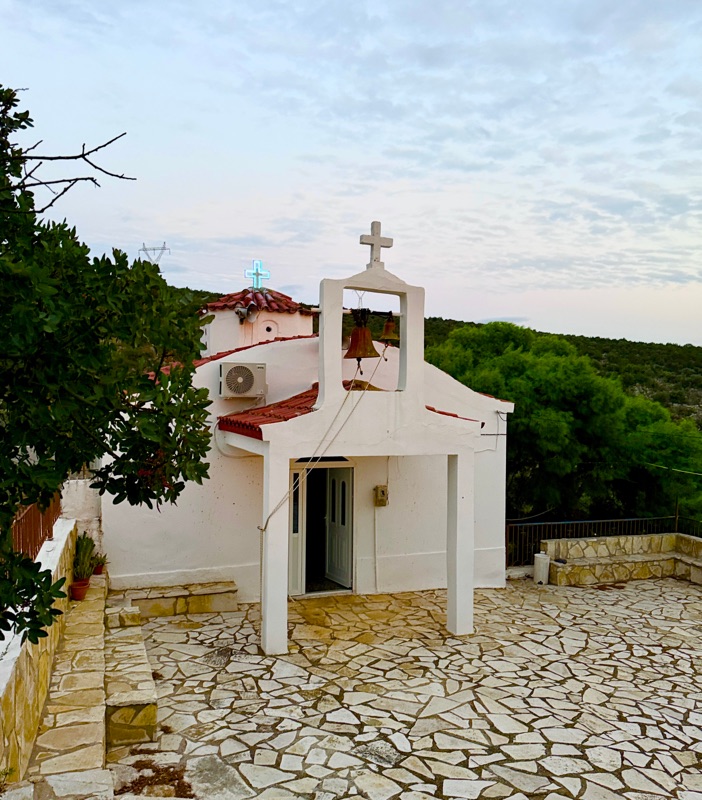
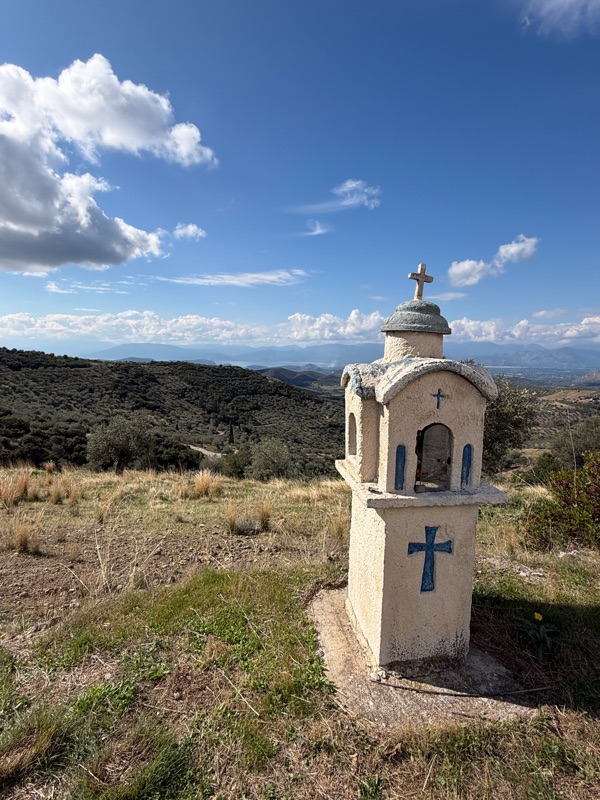
In the evening, we visited a beautiful little church on top of a hill and watched a spectacular sunset.
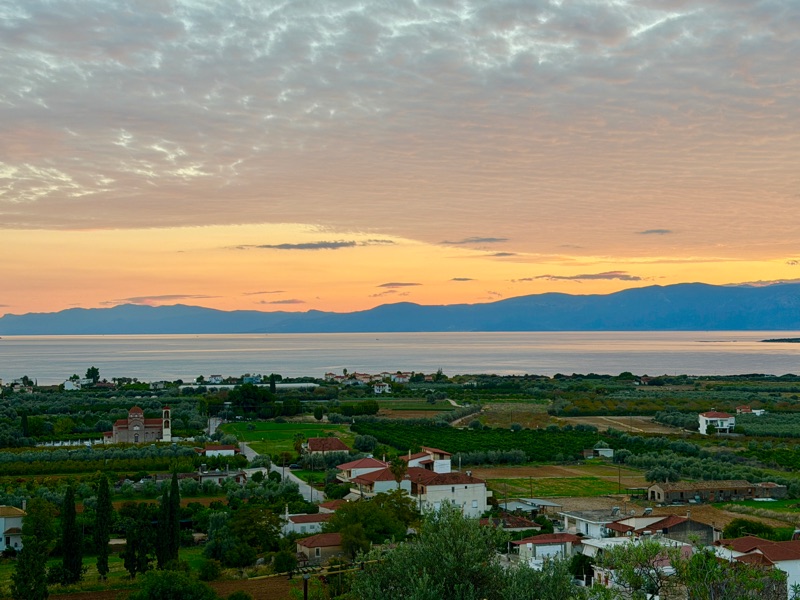
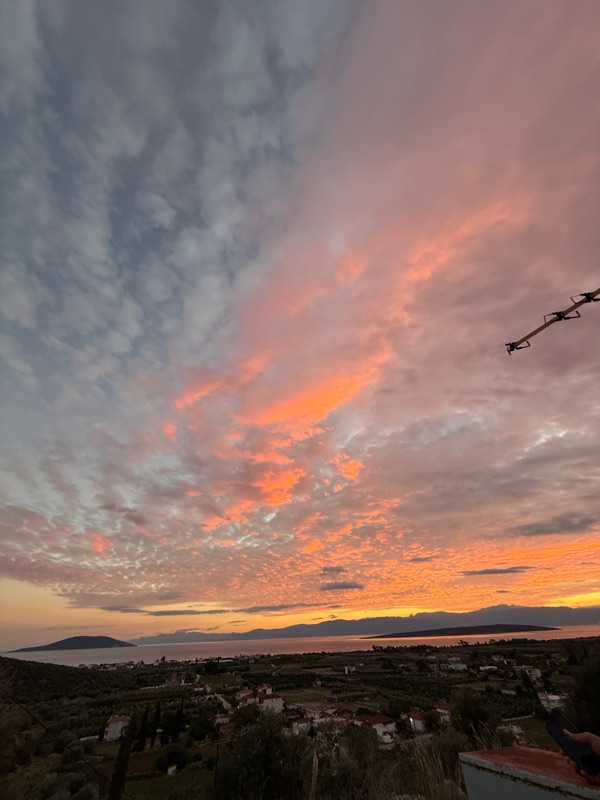
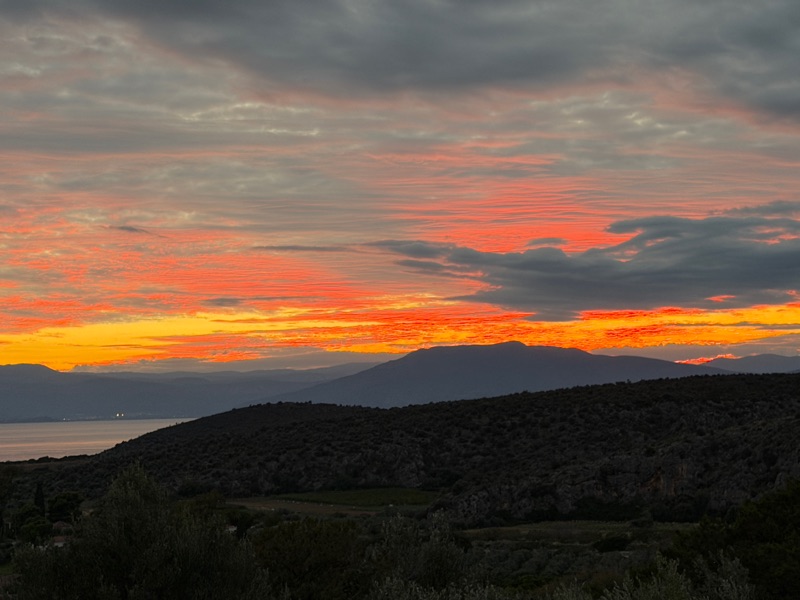
Back home, we enjoyed a delicious lentil soup and the dessert pastry from the bakery! A lovely and relaxing day.
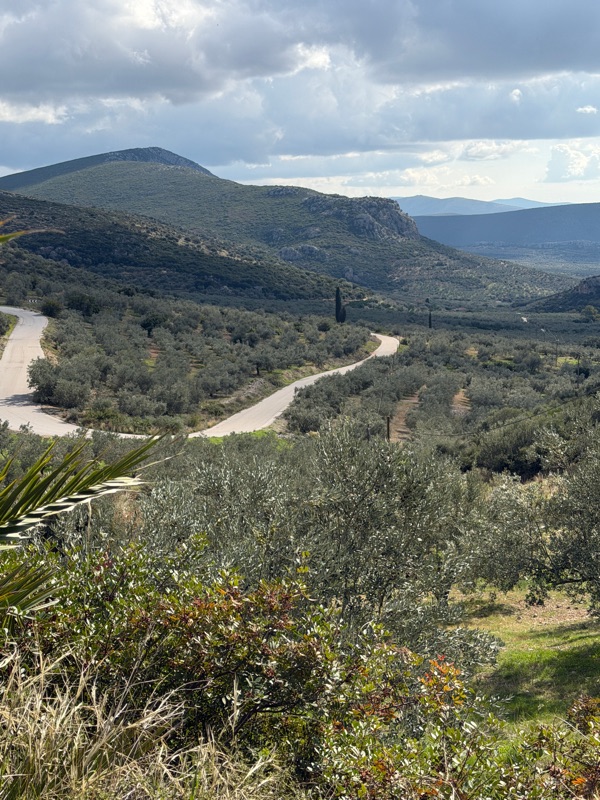
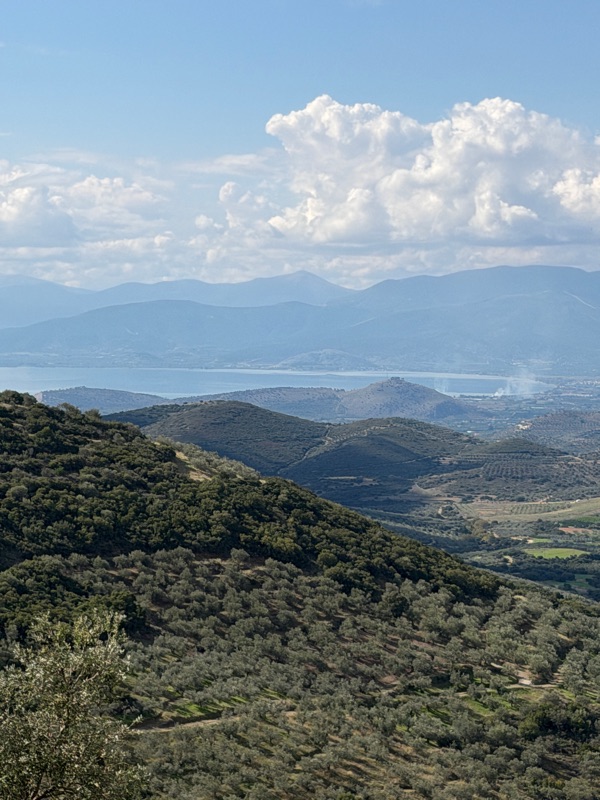
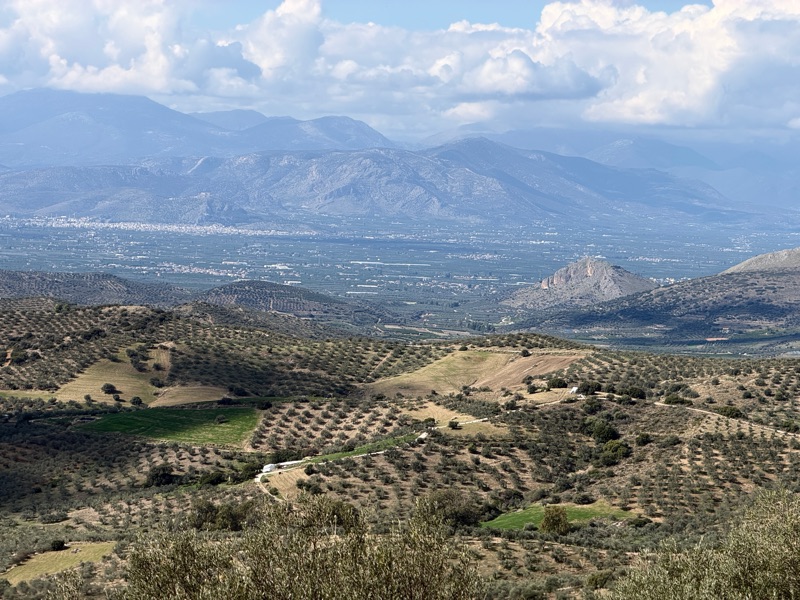
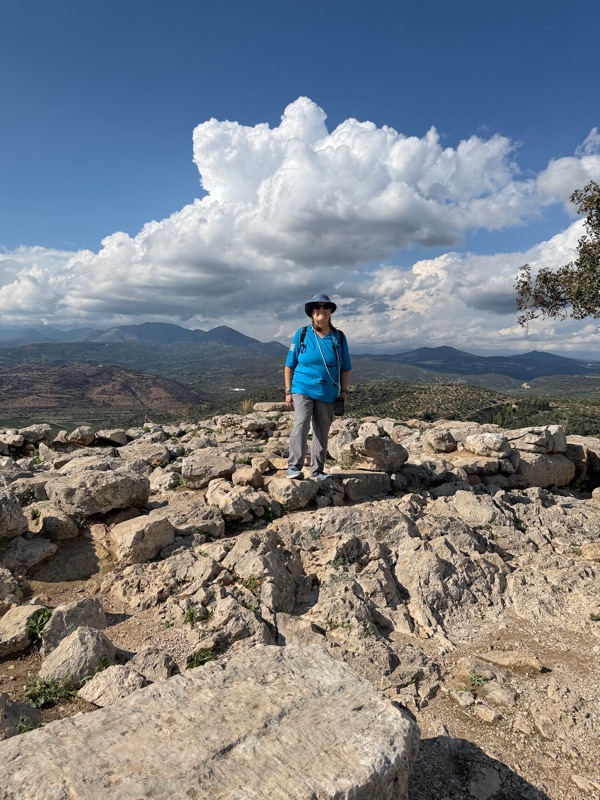
On Thursday, we explored the ancient Acropolis of Mycenae. We took a delightful winding road that went high into the mountains past many orange and olive groves and small villages and magnificent views all the way to the sea. We could see the towns of Argos and Nafplion and the fields and orchards around them.
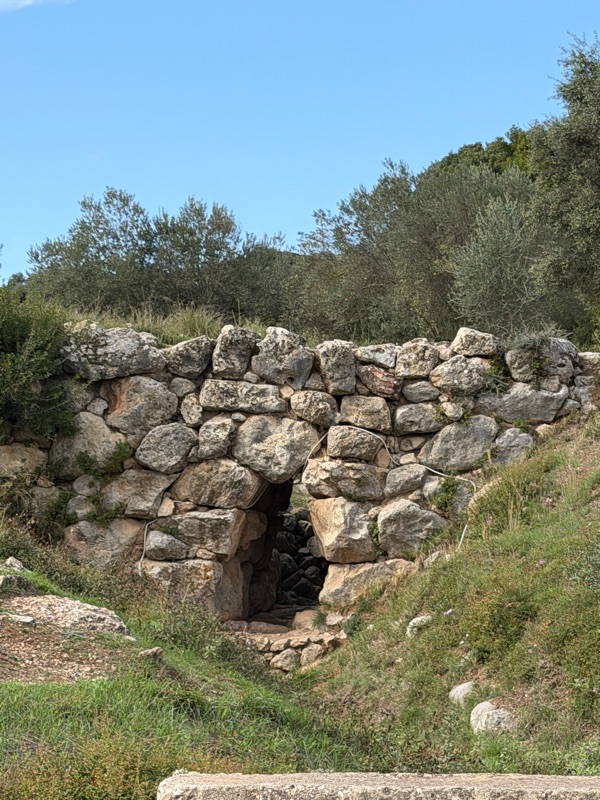
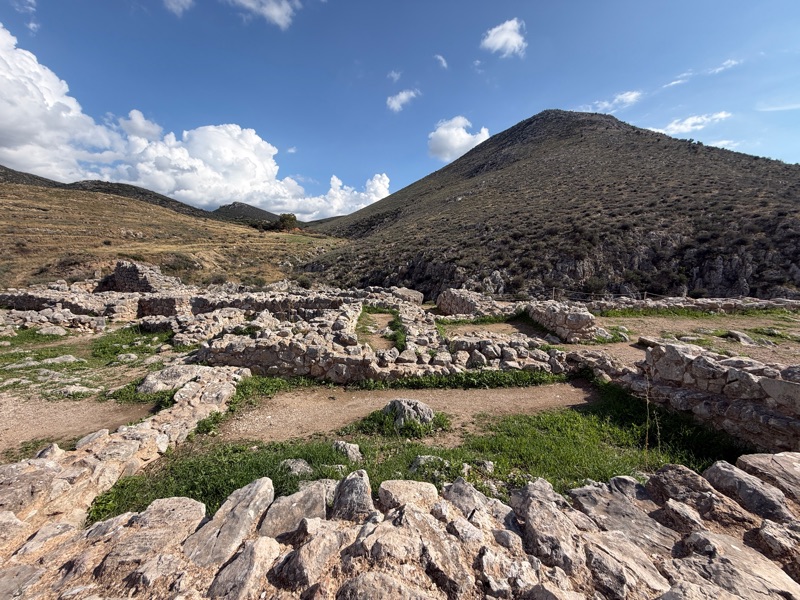
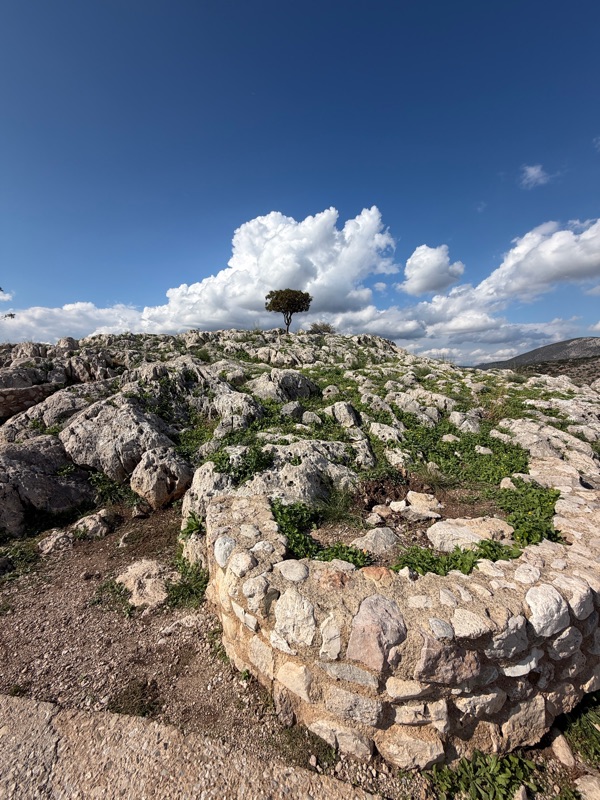
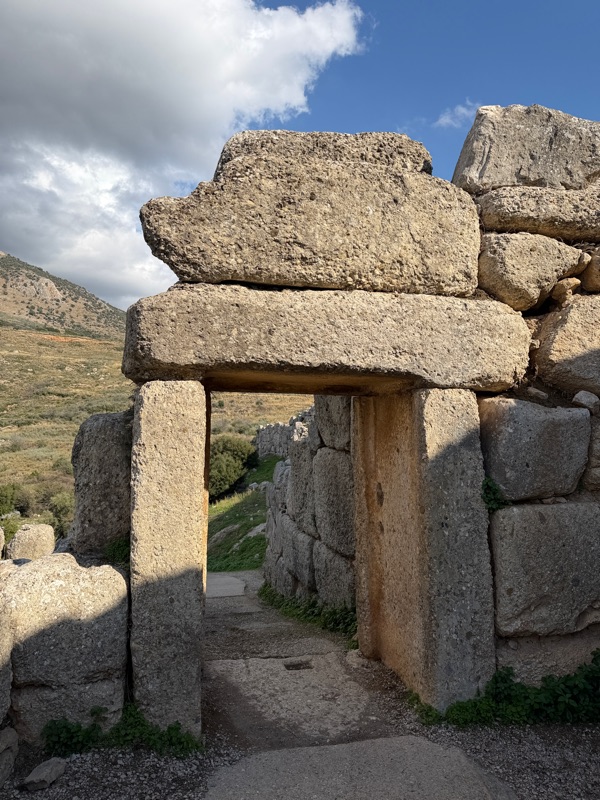
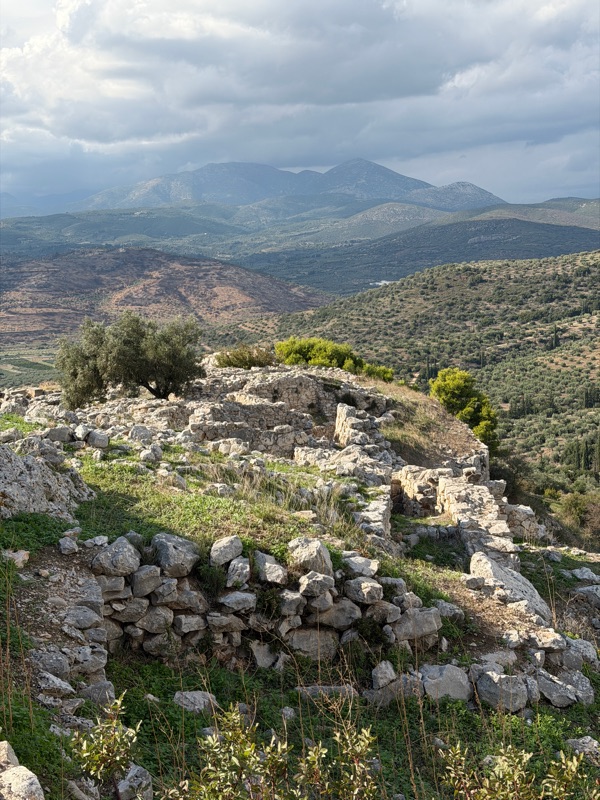
Arriving in Mycenae, we had a little appetizer in the form of an old Mycenaean Bridge before approaching the archeological feast that is Agamemnon’s fortress. The huge fortress dates from the 16th to the 13th centuries BC although there is evidence that much more ancient peoples also used the location. A UNESCO World Heritage site, it is very well organized, along a trail of cement paths with frequent informational boards pointing out the various excavations along the route as it ascended to the top of the hill. The entire site is surrounded with “Cyclopian” walls, consisting of humongous stone blocks.
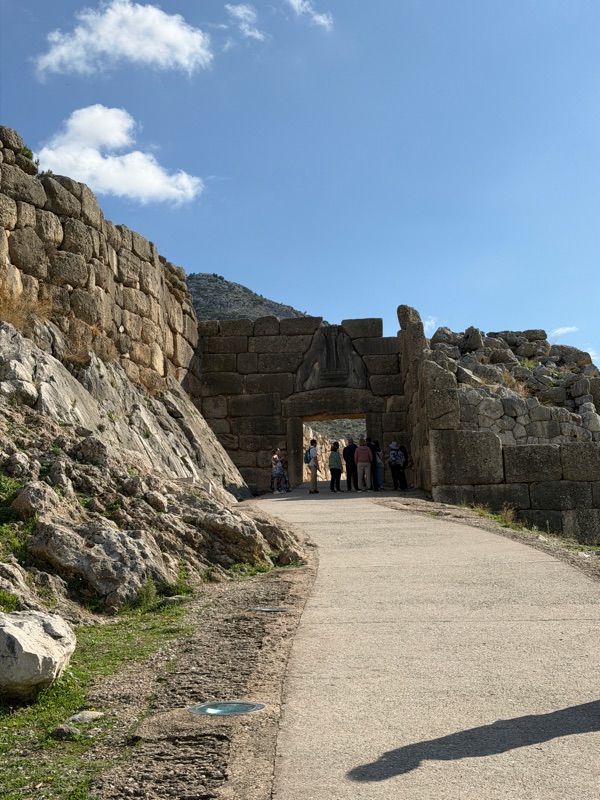
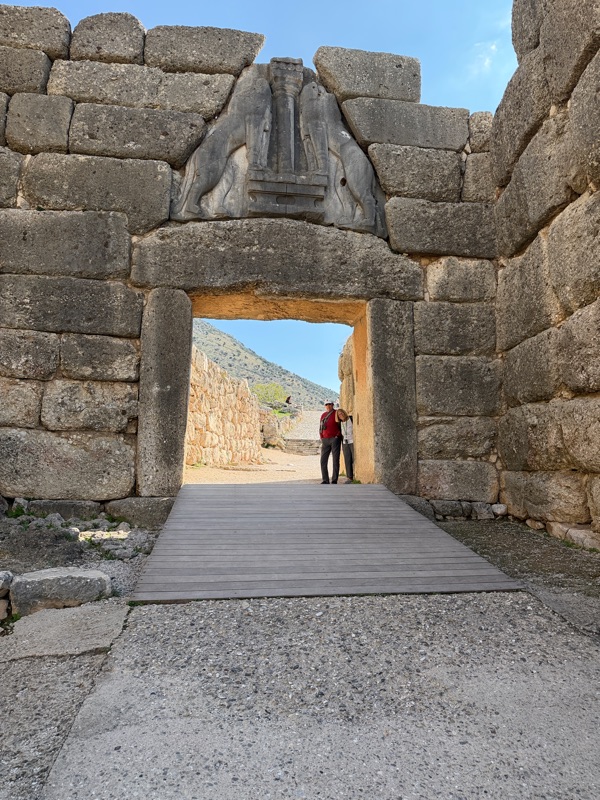
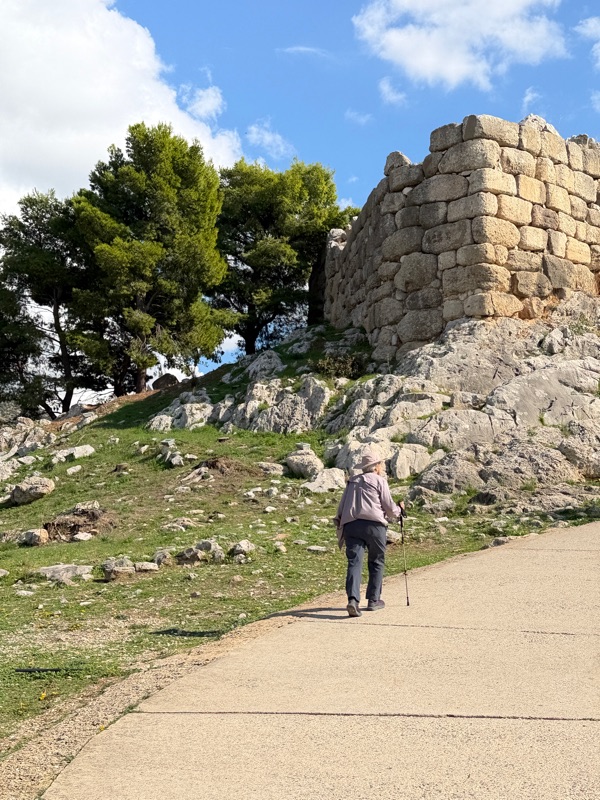
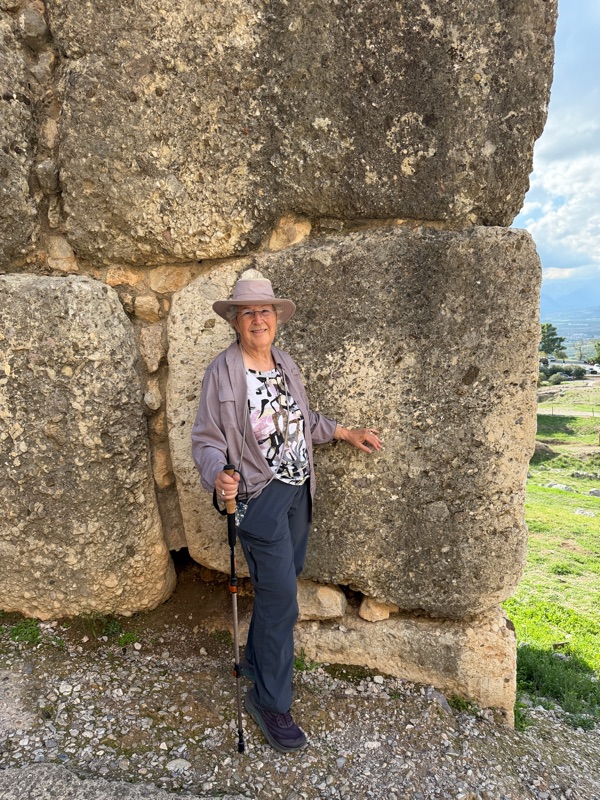
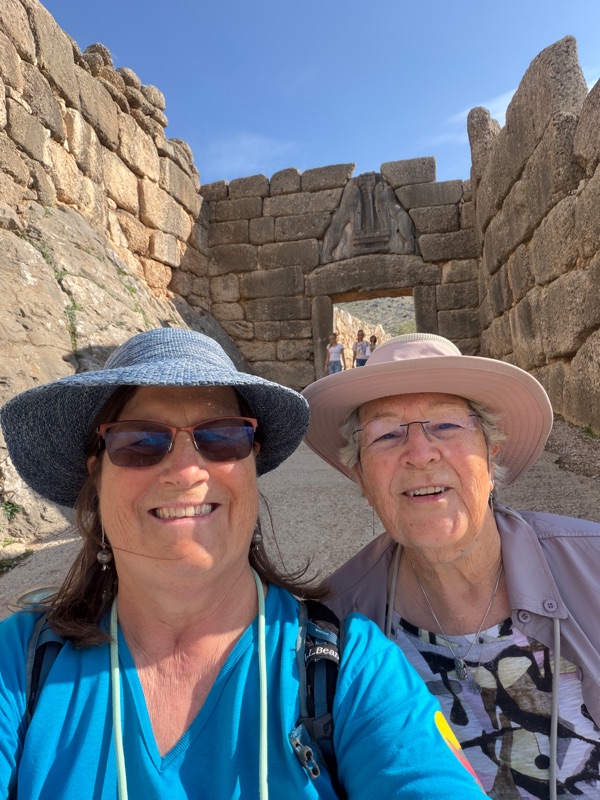
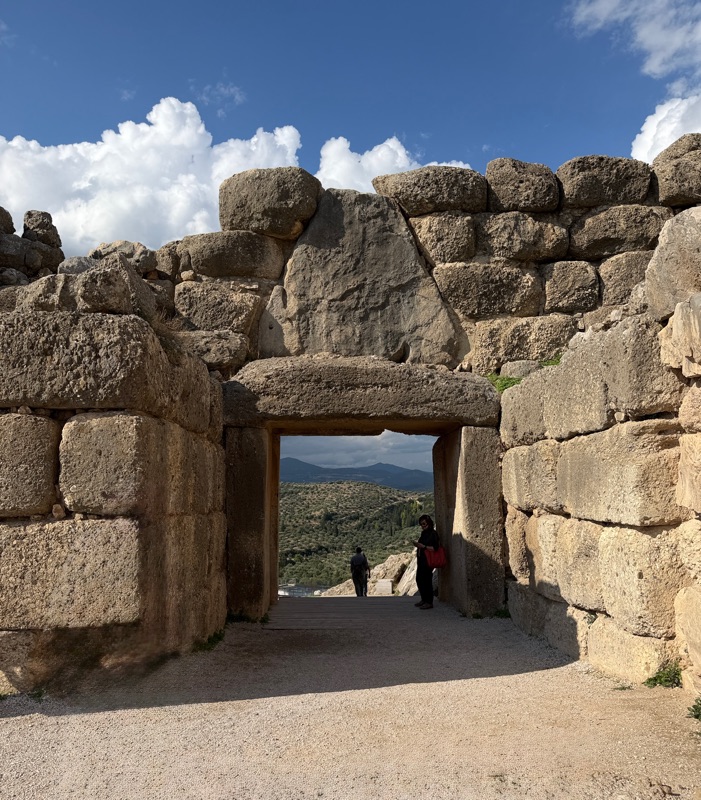
Walking up the ramp to enter the fortress area, along this Cyclopian stone blocks, the first significant part of the site is the Lions Gate. Built in 1250 BC, it is the oldest surviving monumental gate in Europe. The ancient Mycenaeans devised a way to build it by using the large Cyclopian blocks on the sides creating a triangle which relieved the weight in the center to prevent collapse of the lintel. Limestone was used in the center. The two lions with paws on a central pillar signified royal power. The long ramp was a military design because attackers approaching the gate on the ramp would be shot at from the top of the wall.
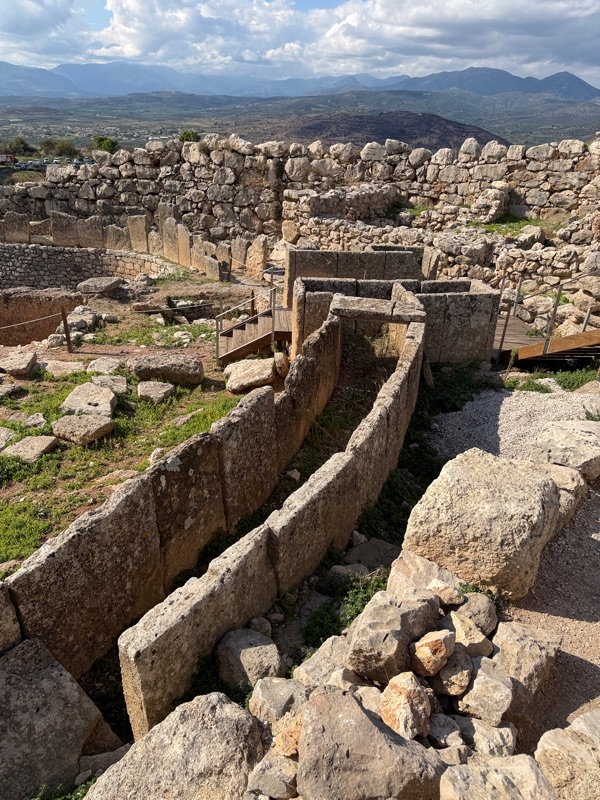
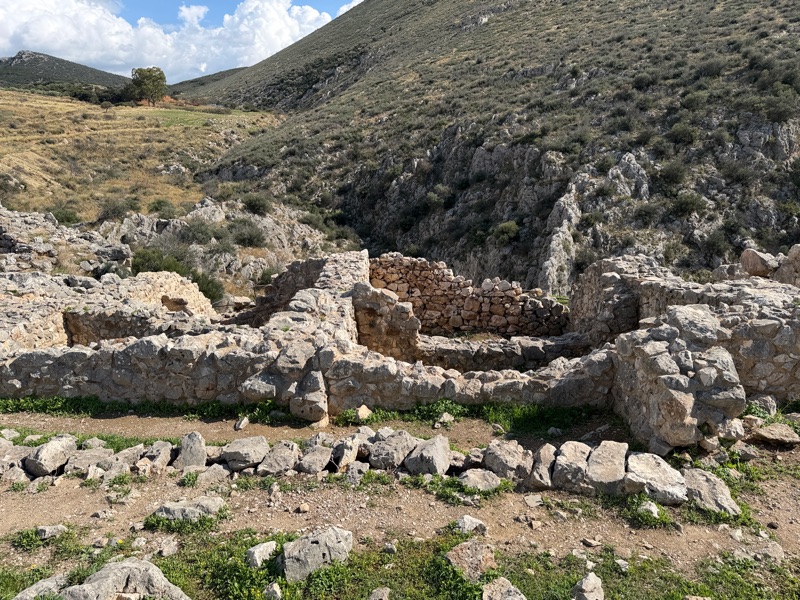
There were many different areas where the excavations delineated the walls of buildings and rooms for both the elite who lived there as well as the artisans and workers.
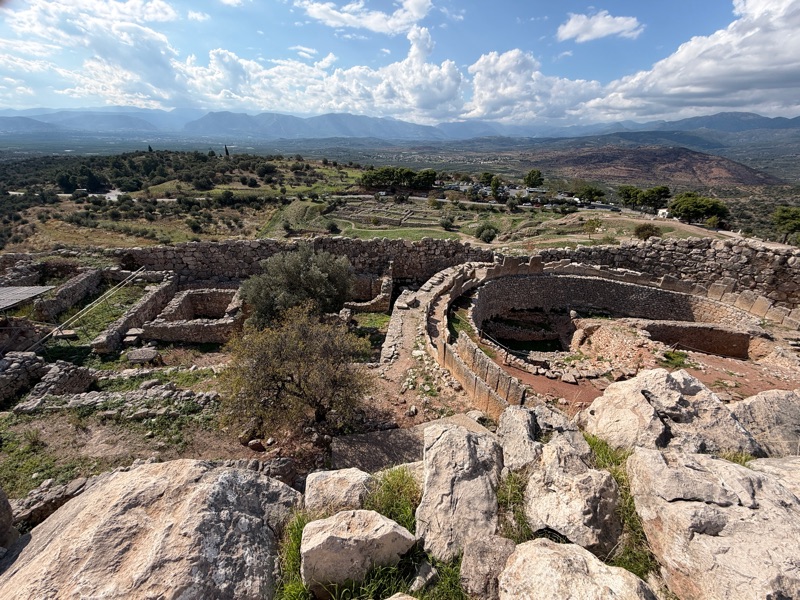
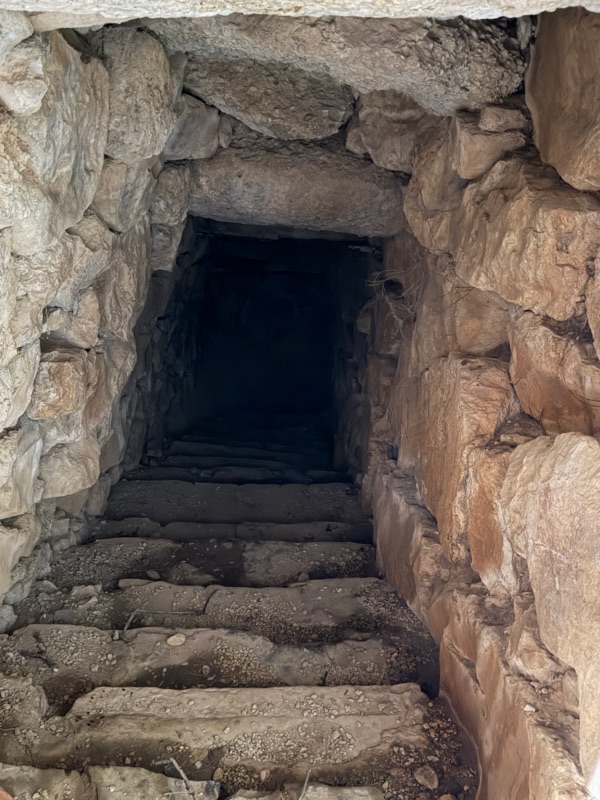
The fortress was supplied with water in the event of a siege by an underground cistern.
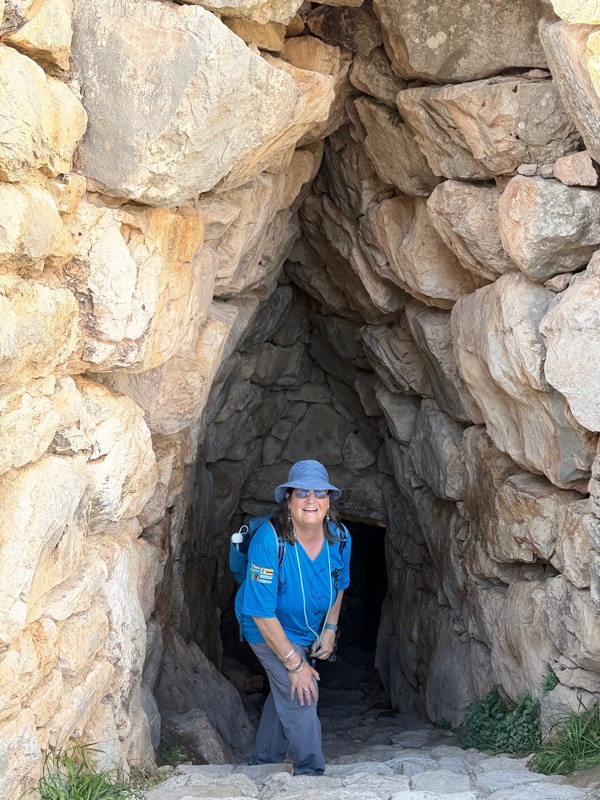
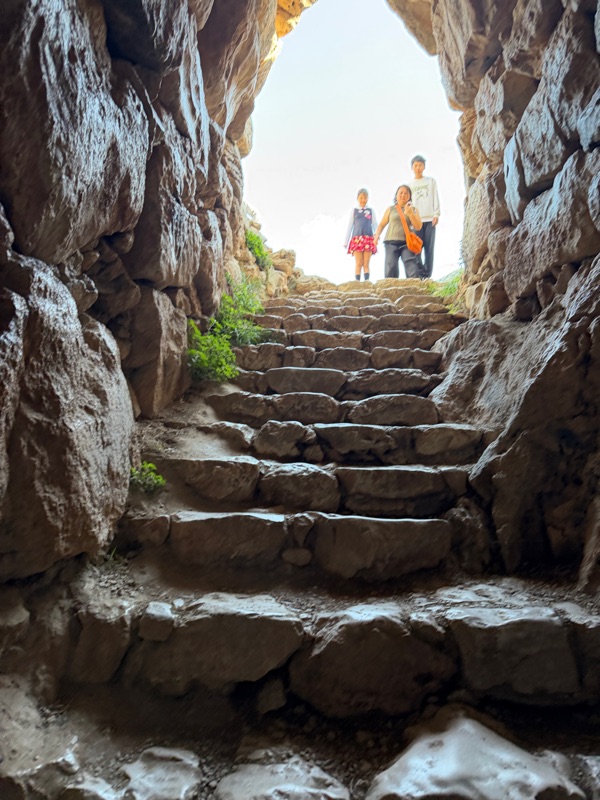
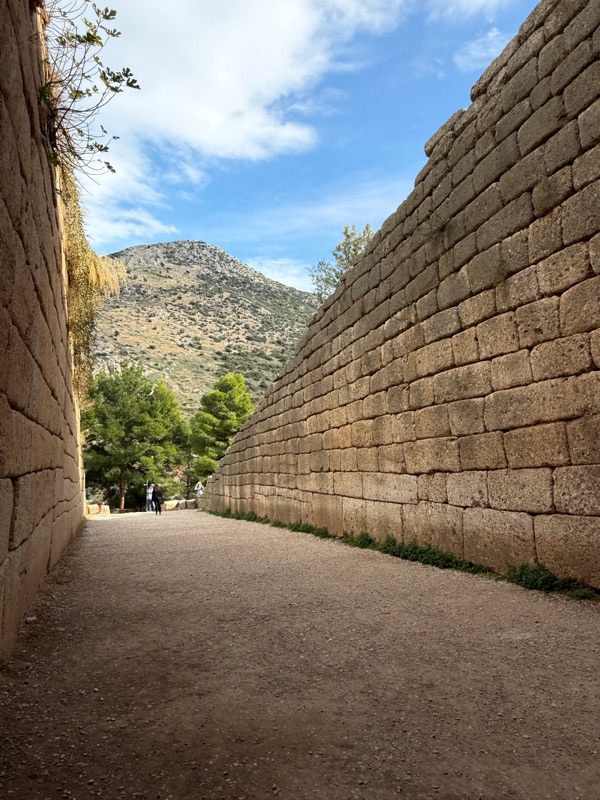
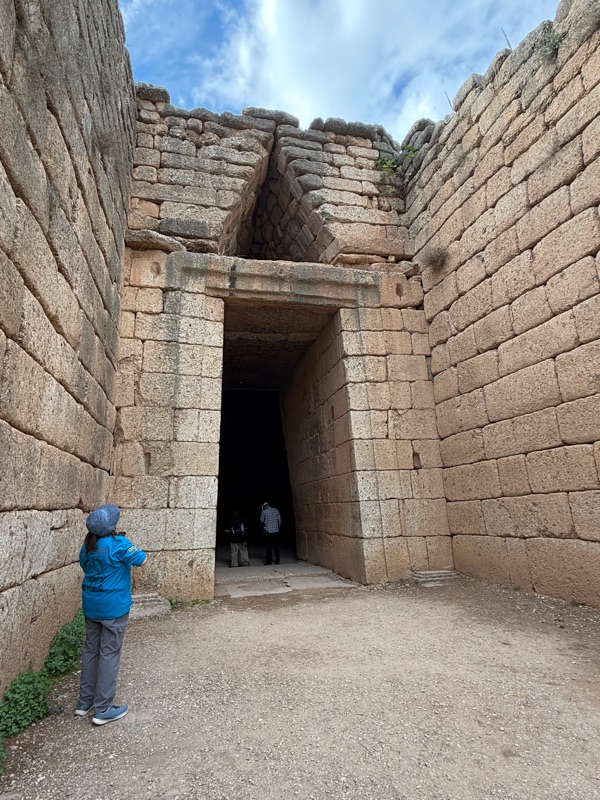
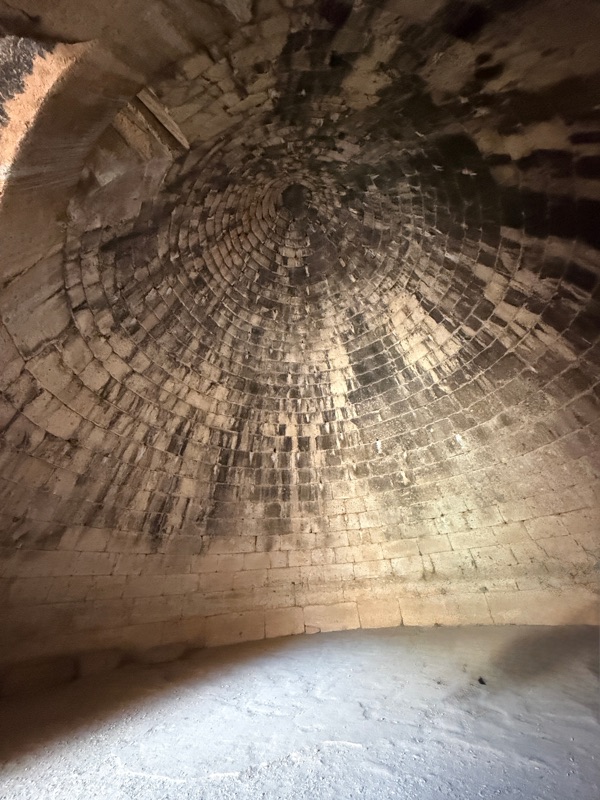
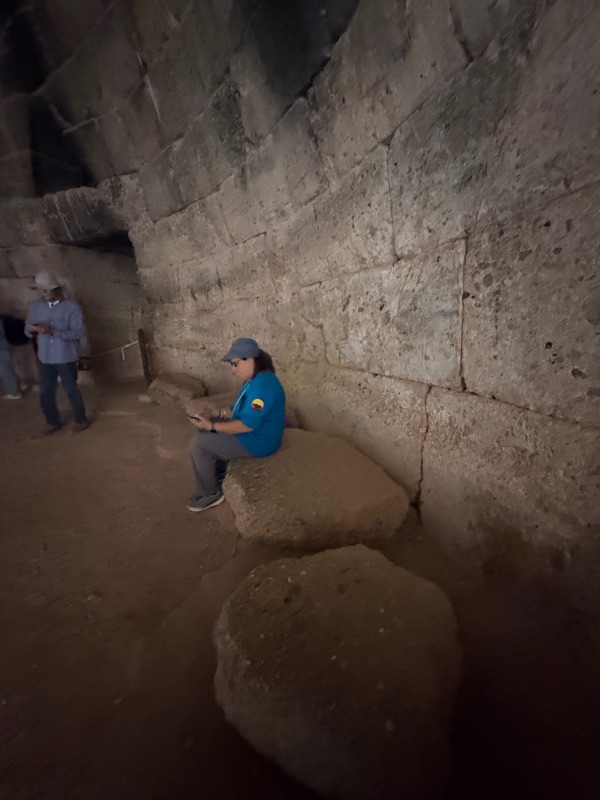
We also visited the Tholos tomb known as the Treasury of Atreus.
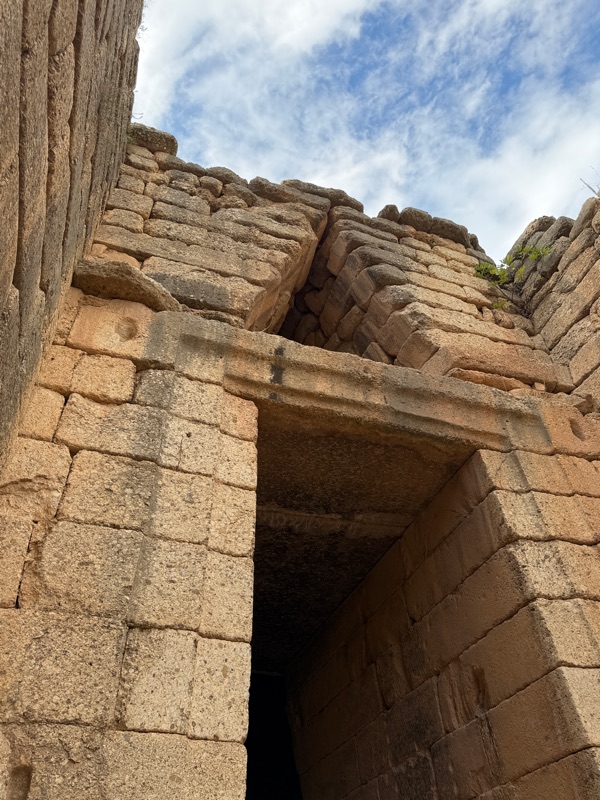
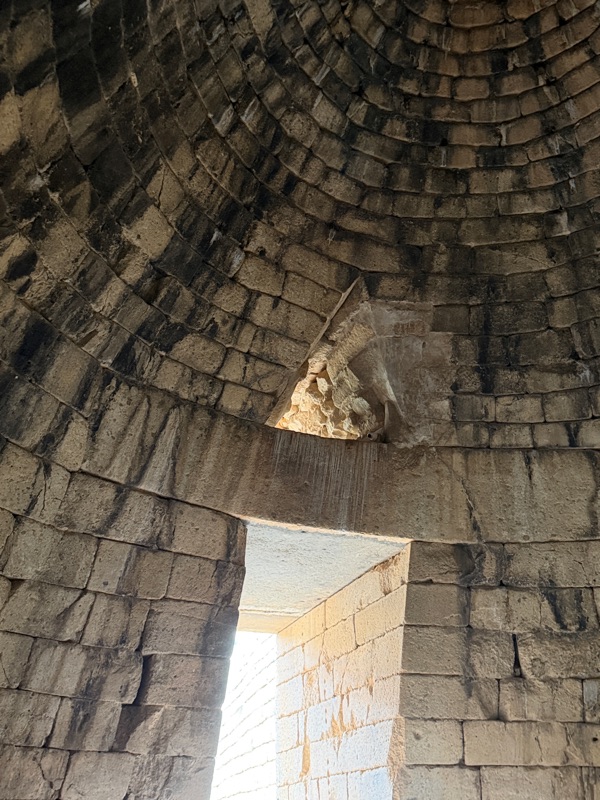
The gold, ivory and bronze artifacts, statuary and household and military objects had all been removed to the archaeological museum in Athens, so we were especially glad that we had seen them there.
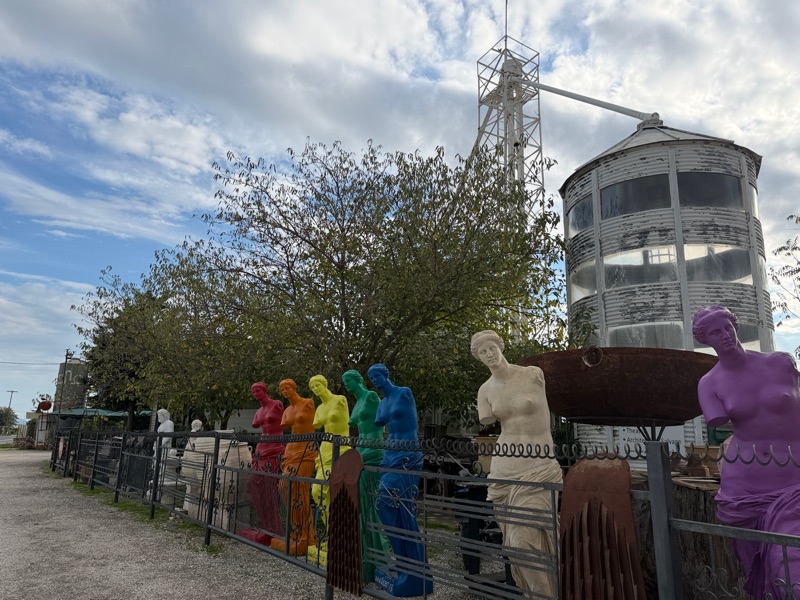
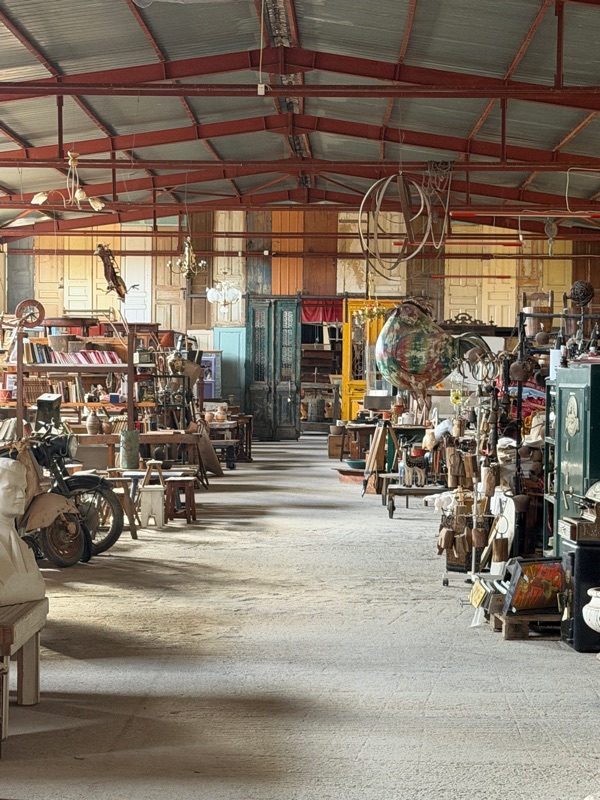
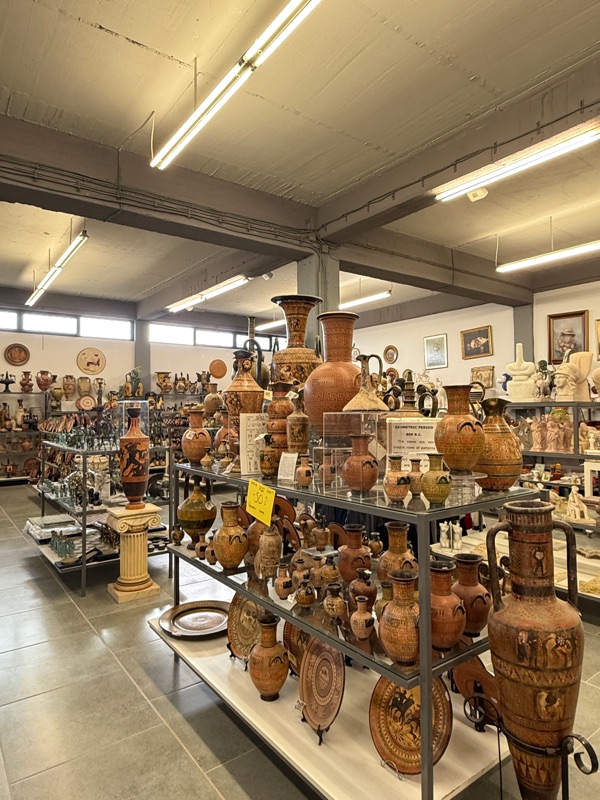
On the way home we stopped at a marvelous antique store that had lots of cool and quirky reproductions of famous artwork, as well as cool pottery and art. Then we went home for another delicious home made dinner, thanks to Dennis’ culinary prowess.


No comments:
Post a Comment