Our Capetown post trip began with a city tour on the bus with the trip leader pointing out various landmarks and telling us a little about the history of the city. Capetown has been an important commercial center since it was founded by European traders - Portuguese, Dutch, Spanish, German, and English, primarily. Until the 1960’s and the imposition of apartheid, peoples of many ethnicities lived together in relative harmony. There were problems that stemmed from racial, economic and cultural differences, but they were not determined by law. Apartheid divided and separated the population into white and non white which included blacks, Asians, Indians, Arabs and mixed races. Since the abolition of Apartheid people are still living with the aftermath.
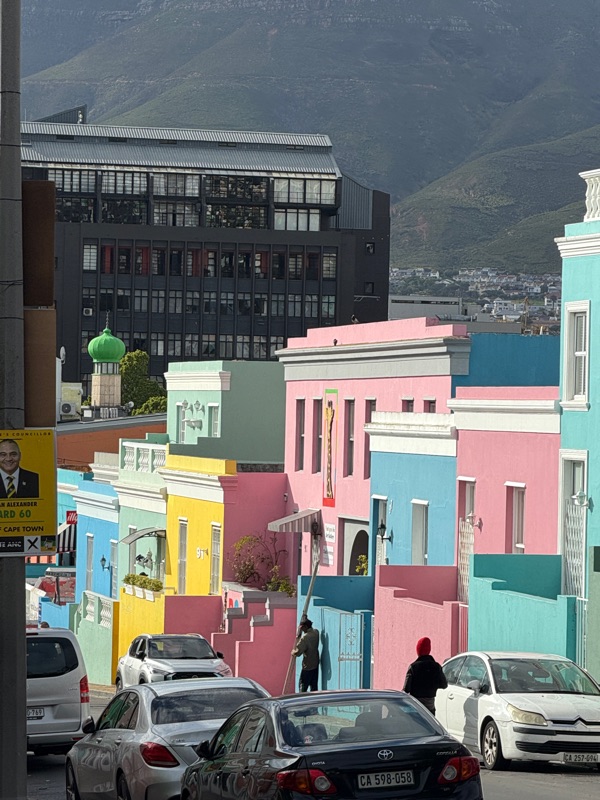
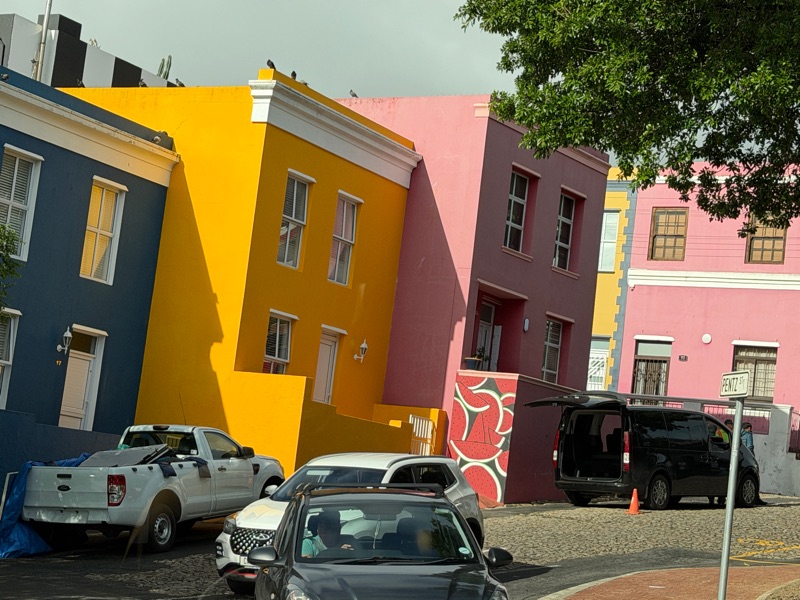
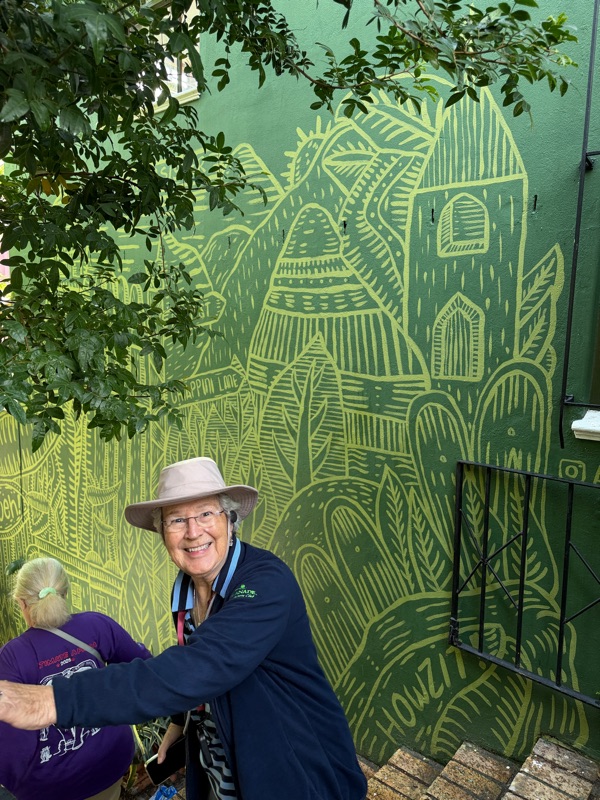
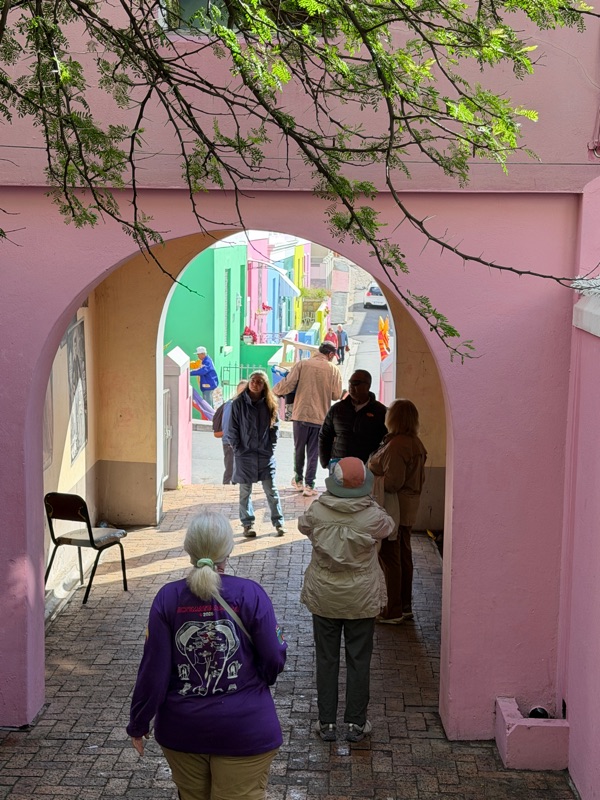
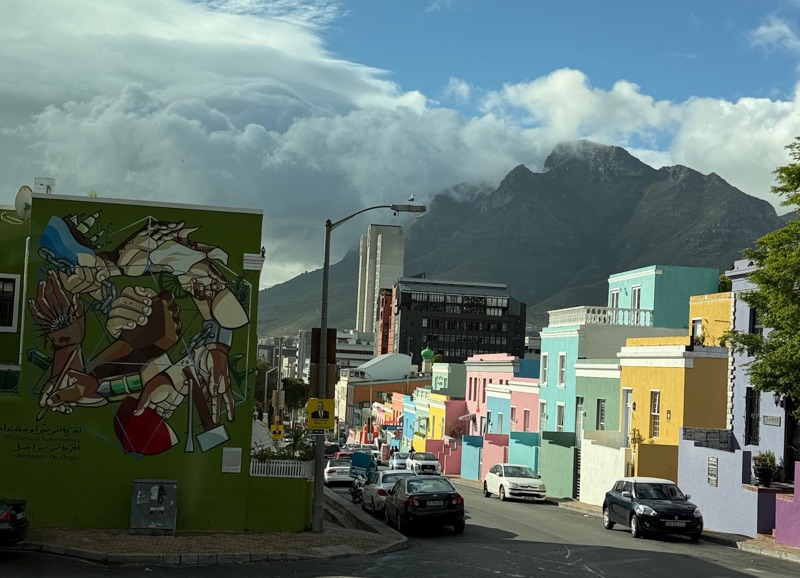
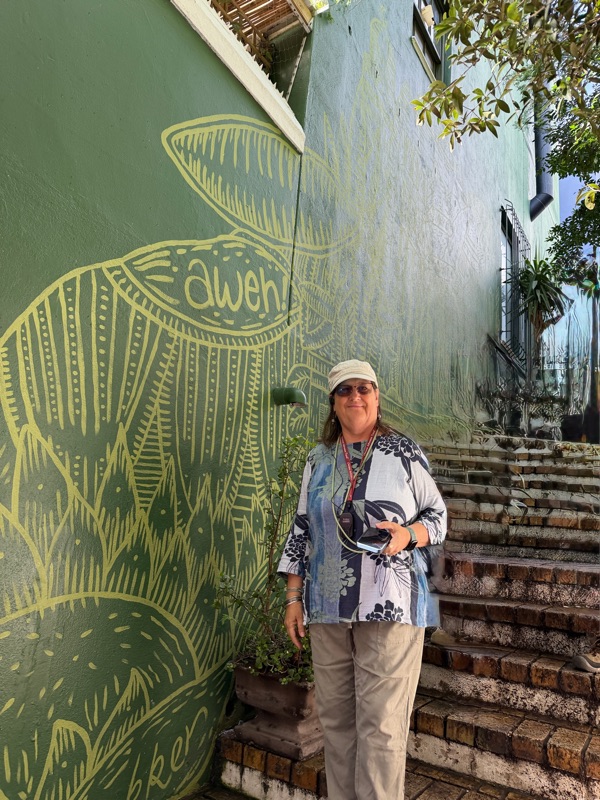
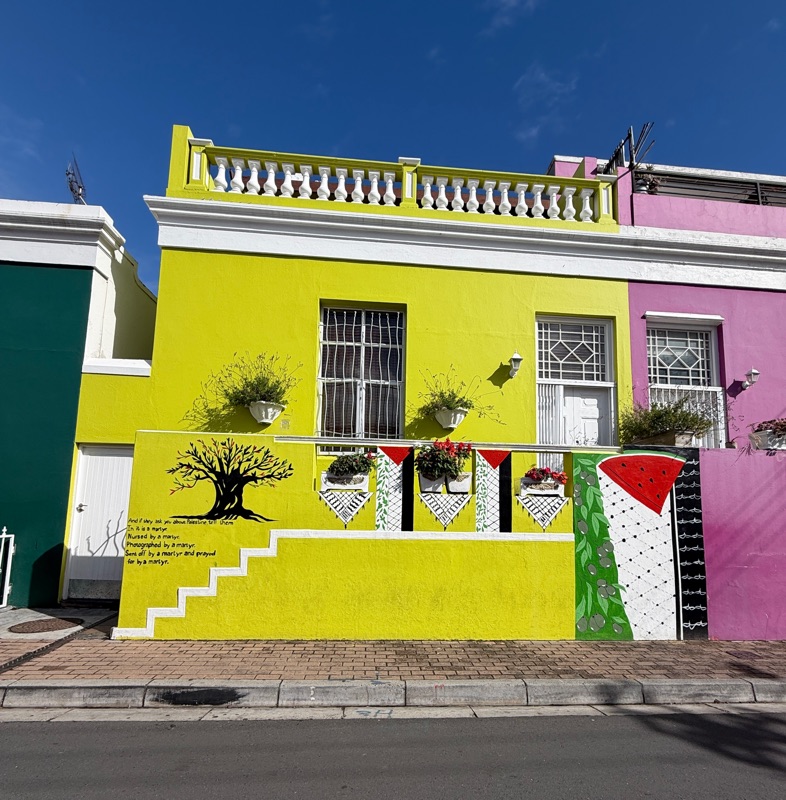
Our first stop was Bokaap - a lovely mixed neighborhood on a hill. All of the houses are painted bright colors, to symbolize the freedom the non-white population feels after the years of apartheid. It also creates a lively and vibrant community. We took a short walk thru the neighborhood, learning a bit about the history of the houses, the area and the evolution of the mixed race culture that is dominant in Cape Town - very different from the rest of the country.
We visited the old parliament, learning more about how South Africa was governed in the British era, the two Anglo-Boer wars, and the Apartheid policies established after independence in the 1960s.
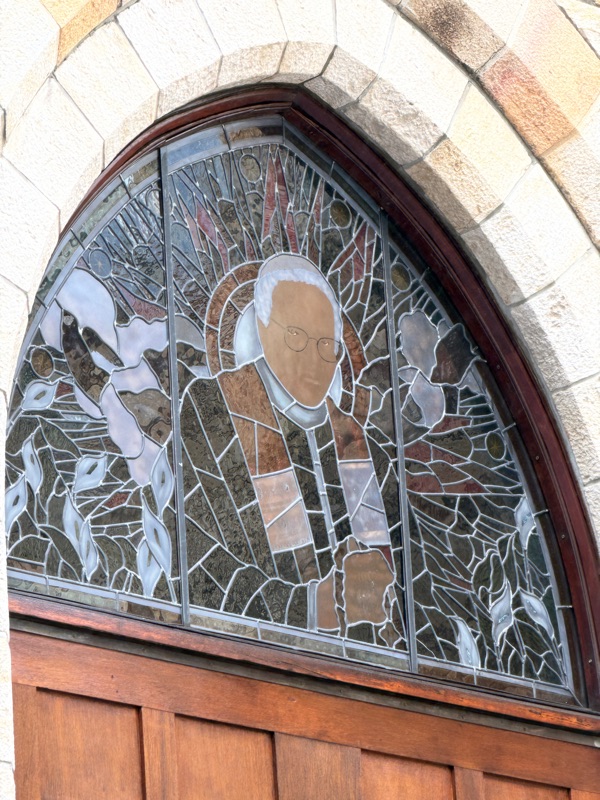
We also visited St George’s Anglican Cathedral , with many gorgeous stained glass windows including one of Bishop Desmond Tutu and another of the first woman bishop on South Africa.
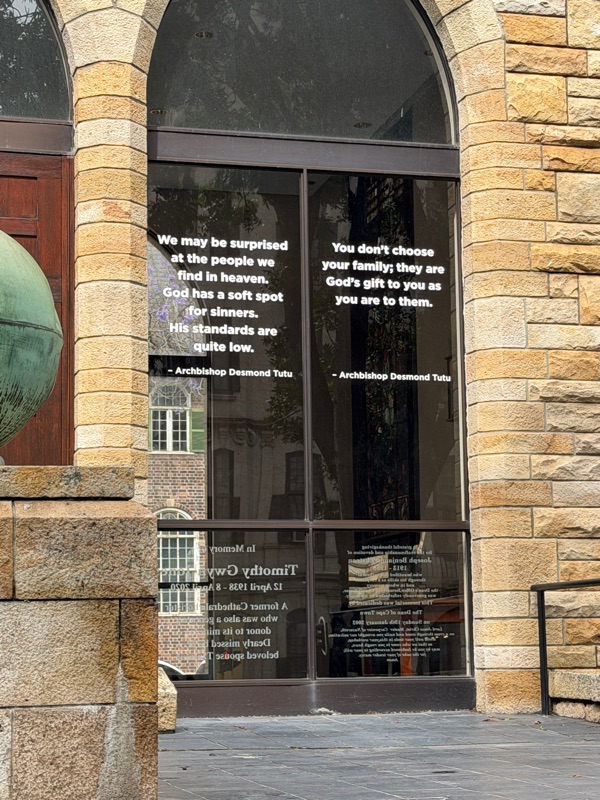
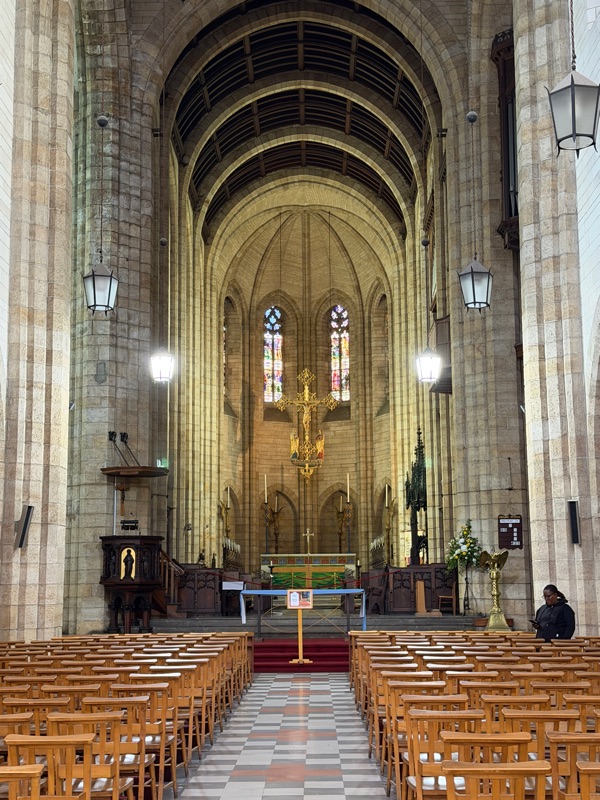
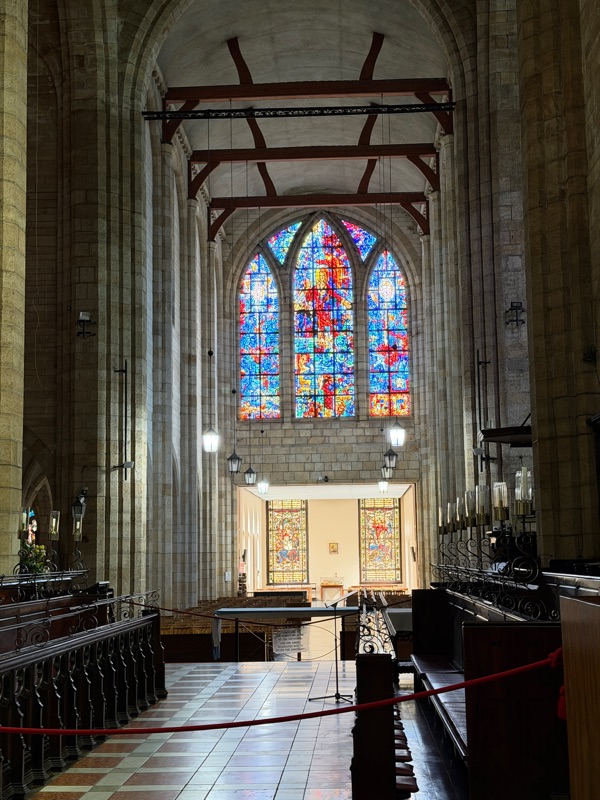
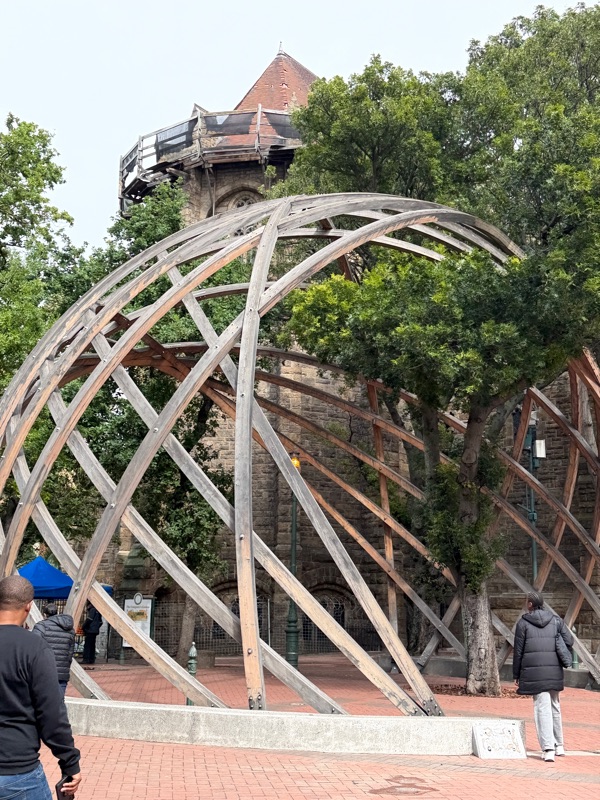
Near the church was a large wooden sculpture of seven curved staves forming a circle, representing the 14 articles of the South African Constitution.
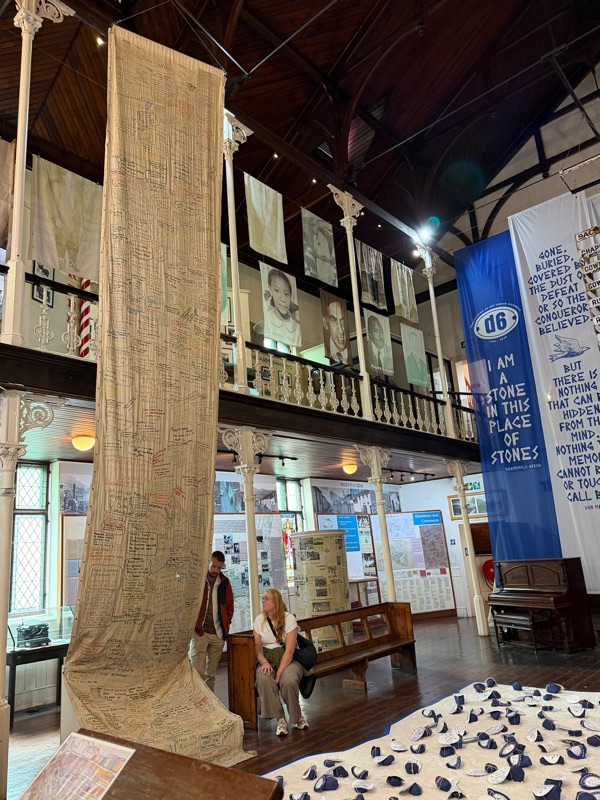
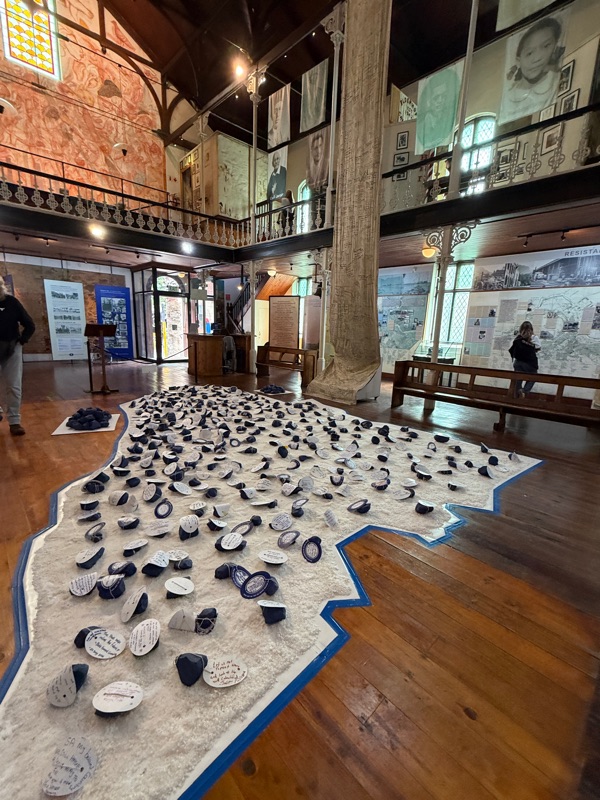
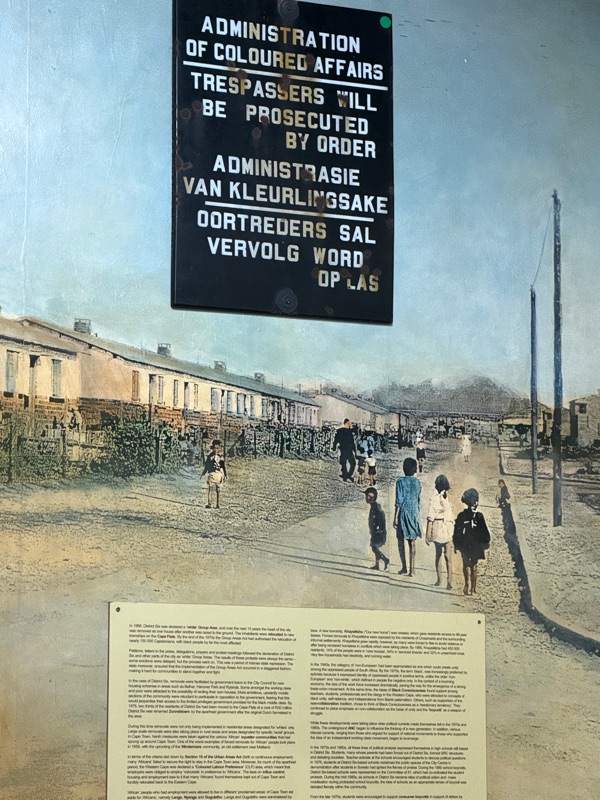
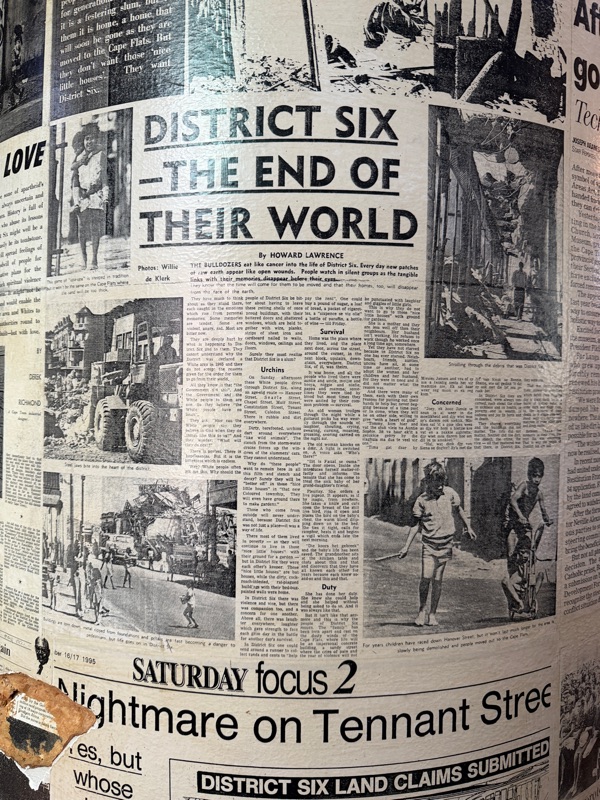
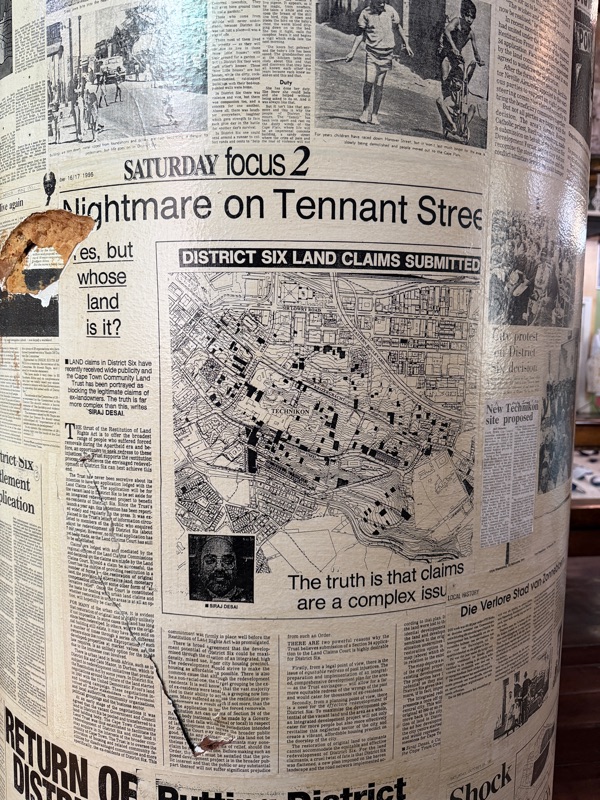
We continued on to the District Six area and Museum. District Six was like the Harlem of South Africa - a busy thriving mixed race community, full if restaurants, artists, musicians, etc. not without problems, but full of life. Under apartheid, the area was designated a white-only neighborhood. Everyone was moved out, and most of the buildings were demolished. When Cheryl visited in 1999, they were collecting memorabilia of the neighborhood to put together a museum. Now the resulting museum is located in a former church, and celebrates the vibrant community that was lost.
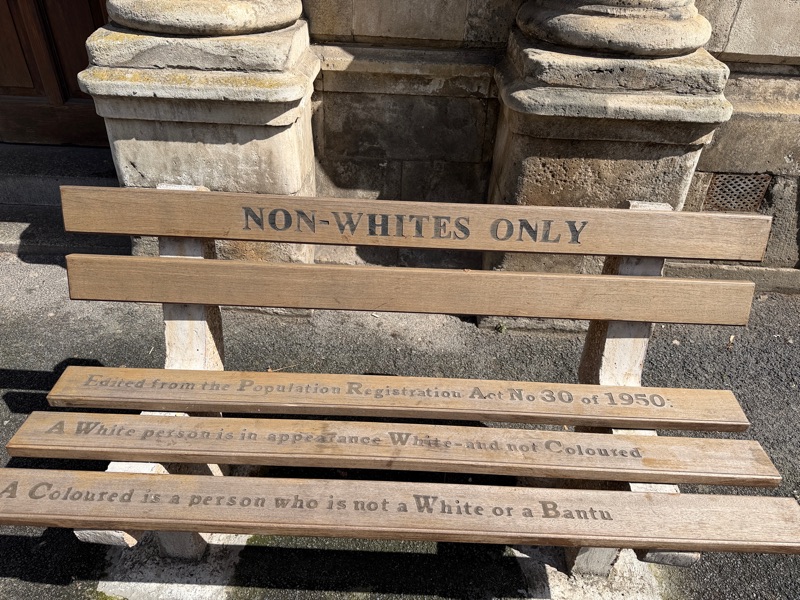
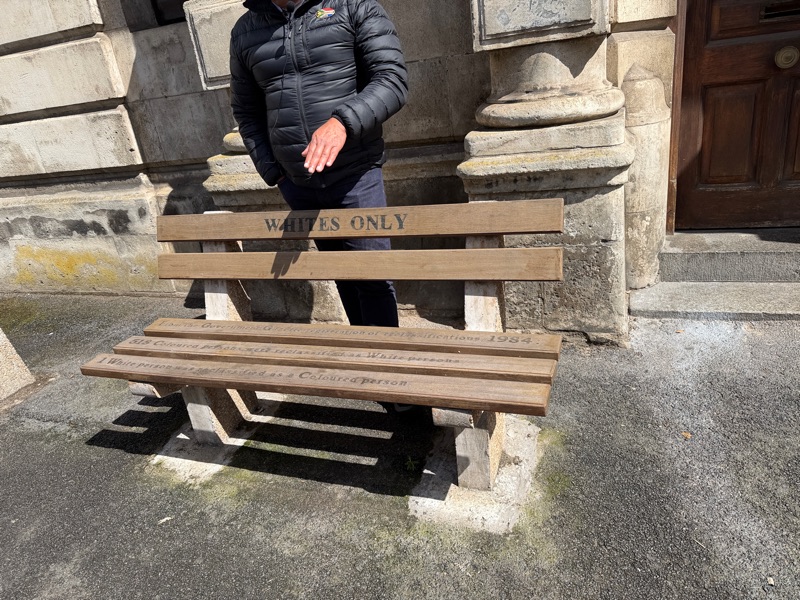
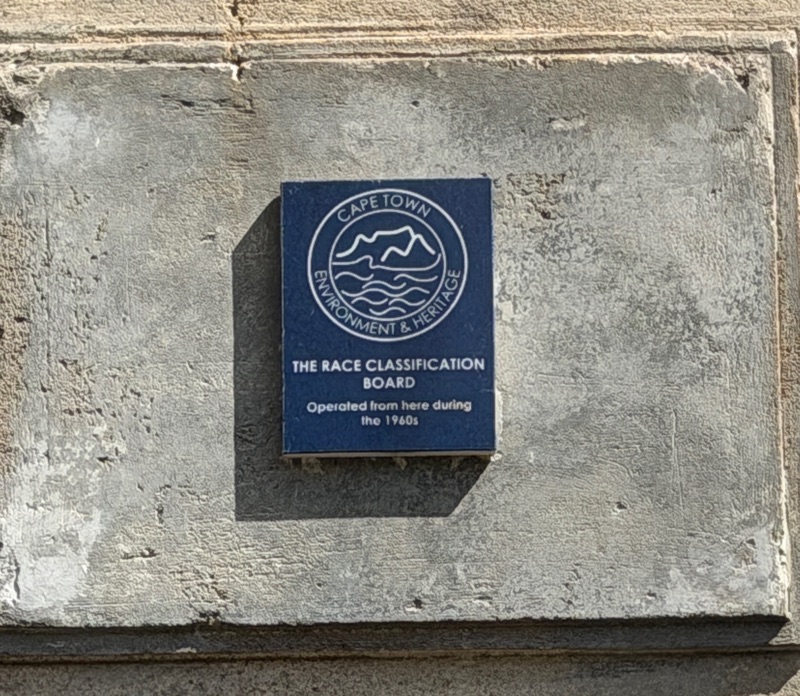
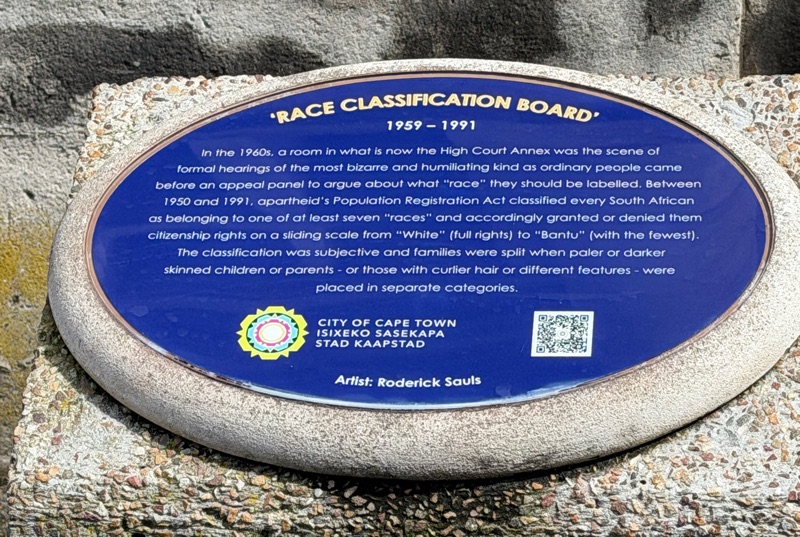
Another reminder of the Apartheid era was the High Court Building with its separate seats for whites and non whites and a plaque documenting the tests for “whiteness.”
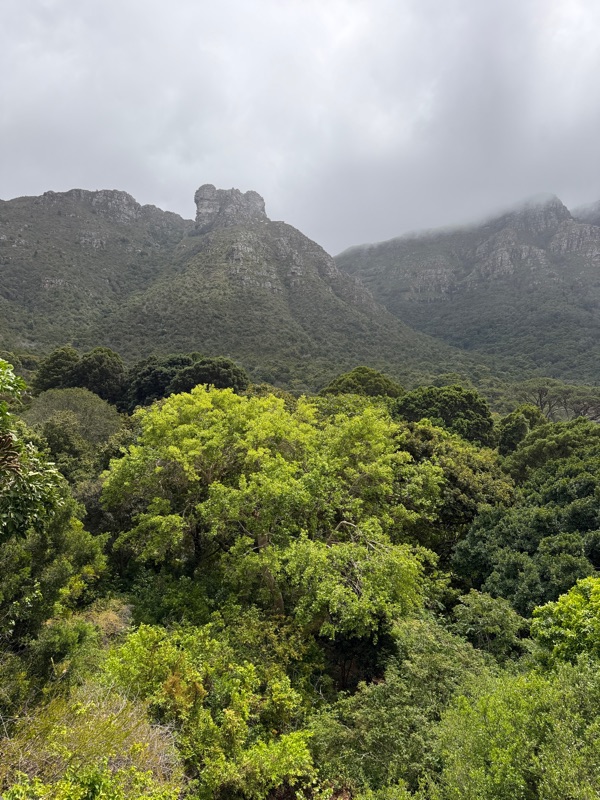
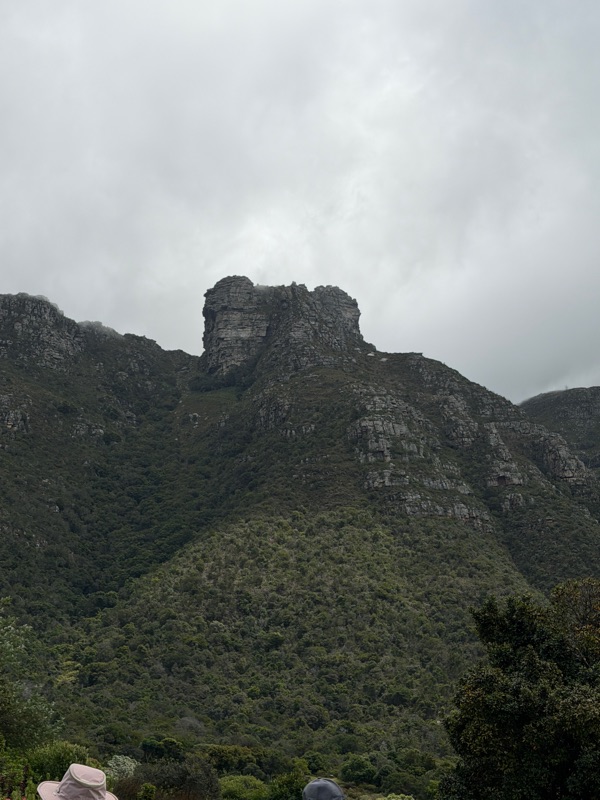
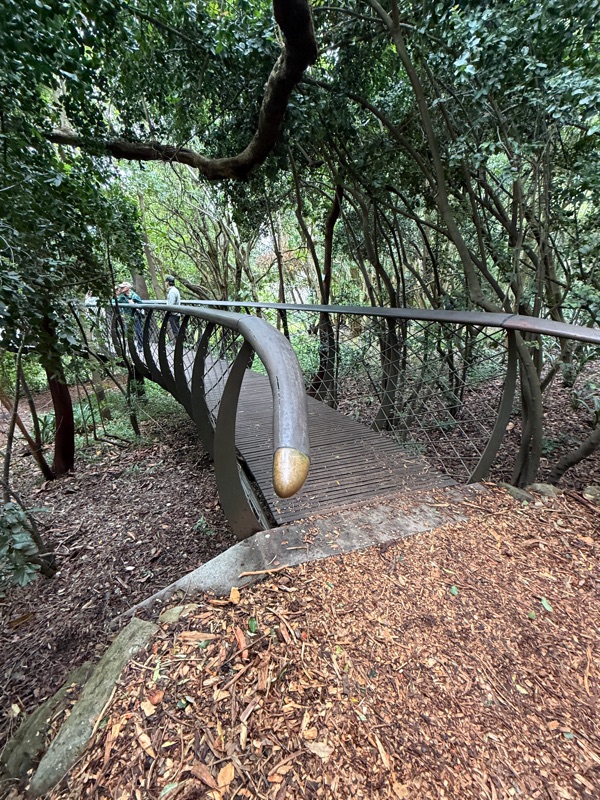
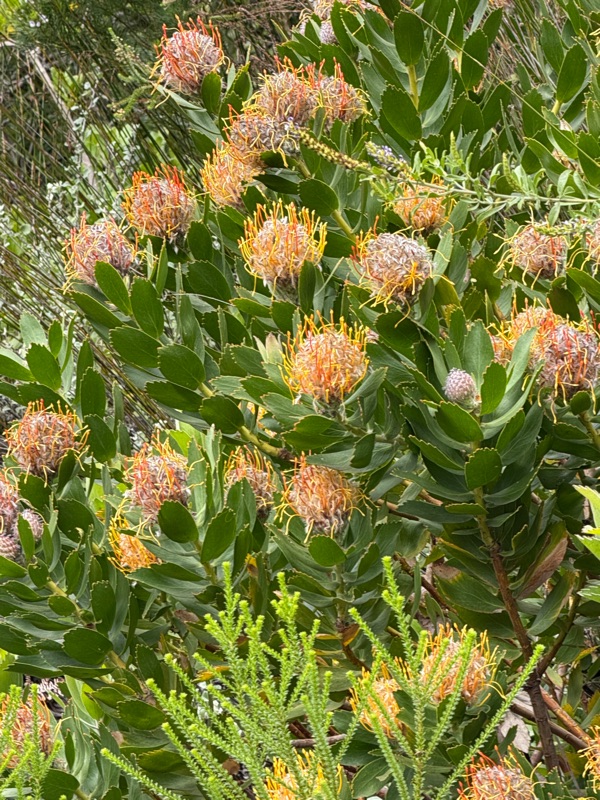
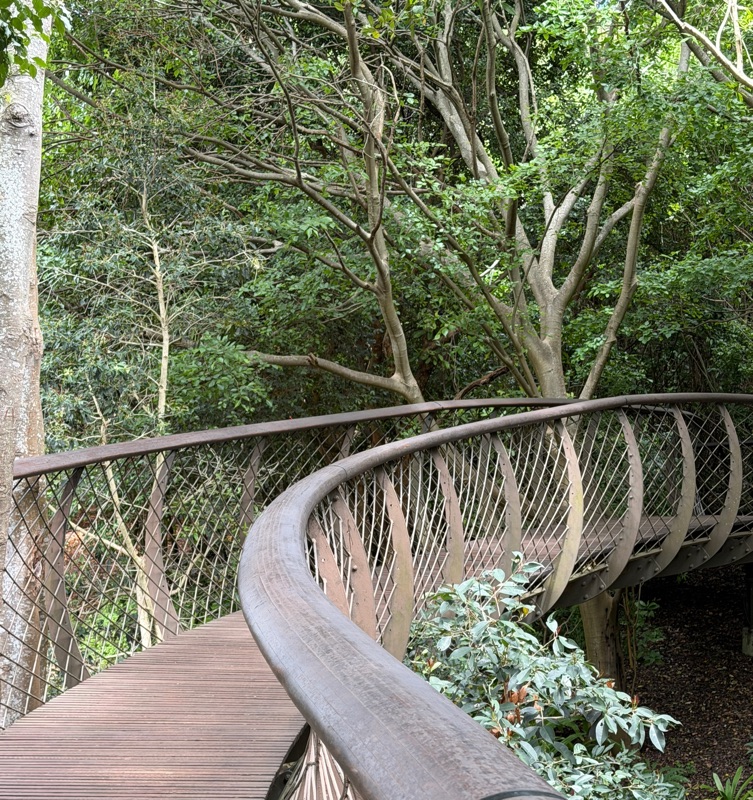
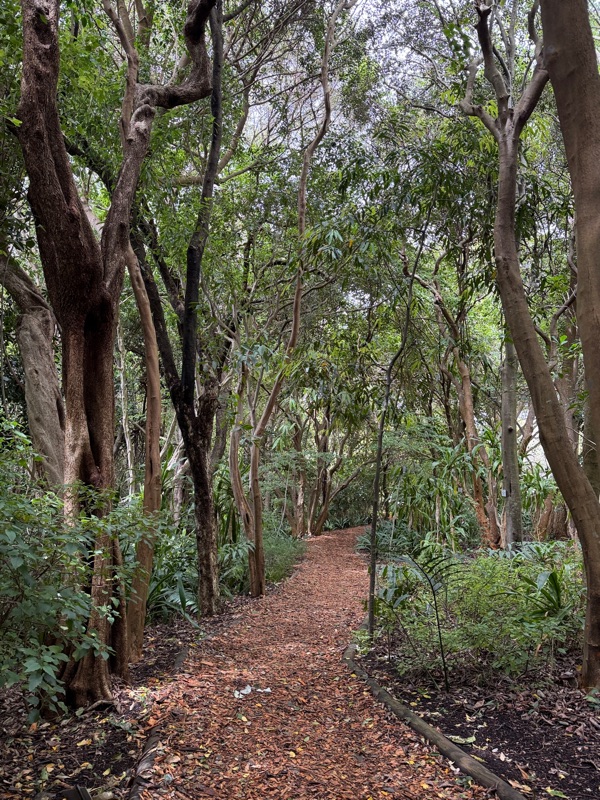
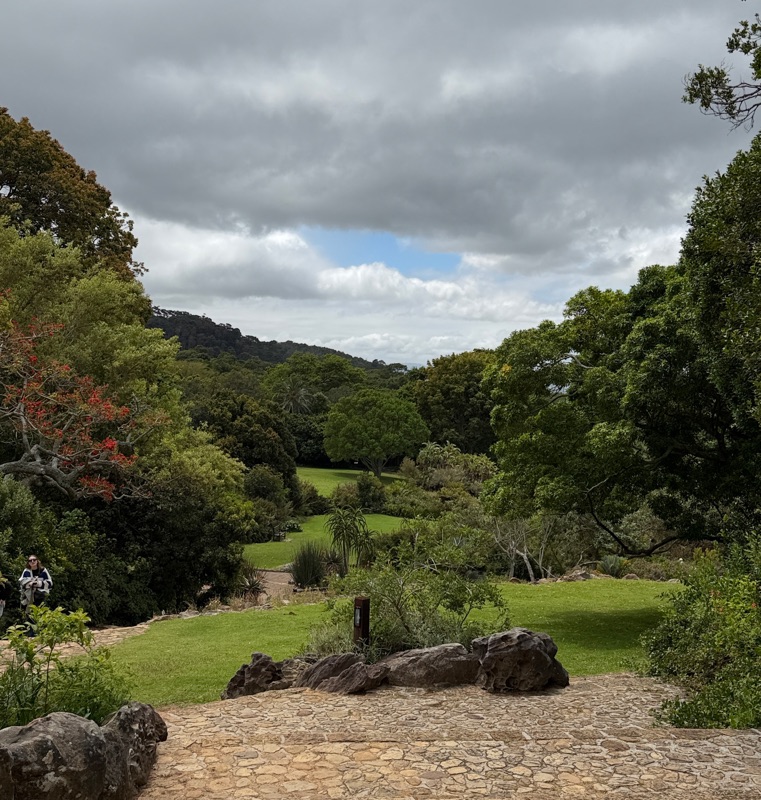
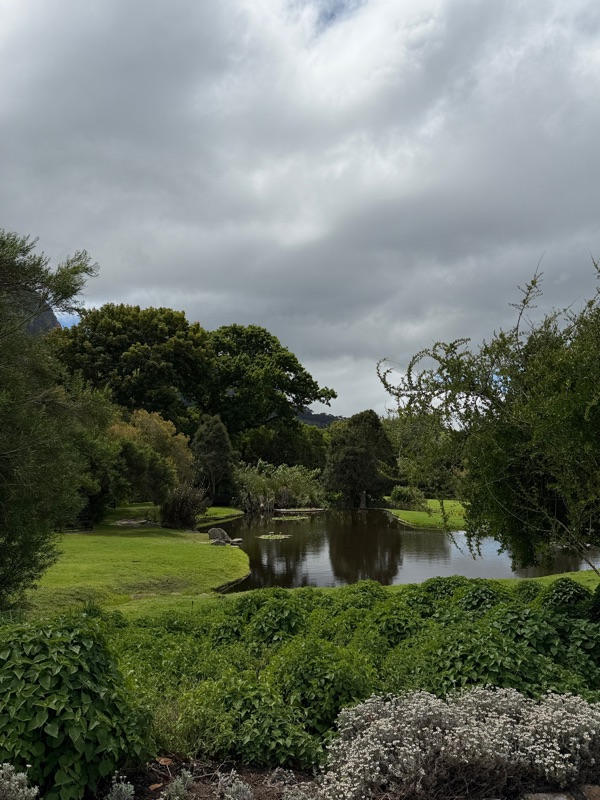
We drove thru the city seeing lots of historical landmarks, and ended up at the top/back entrance to the Kirstenbosch Botanical Gardens. The gardens are beautiful, set in the foothills above the city with the mountains as a backdrop. They have been named the 6th best botanical garden in the world.
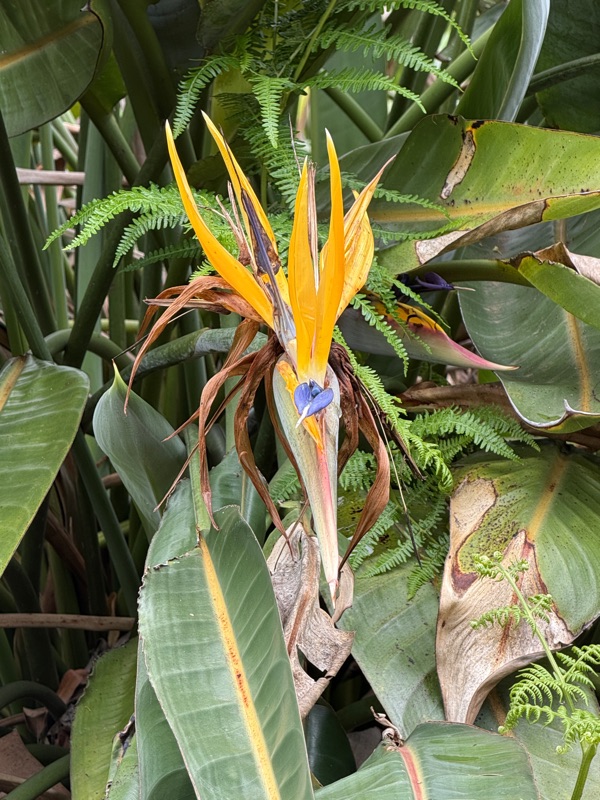
We saw lots and lots of different protea flowers, including the national flower of South Africa, the King Protea. There was also a hybriy yellow bird of paradise flower that was created by botanists in the garden to honor Nelson Mandela because he loved yellow. Also lots of cool trees and flowers, and a few birds.
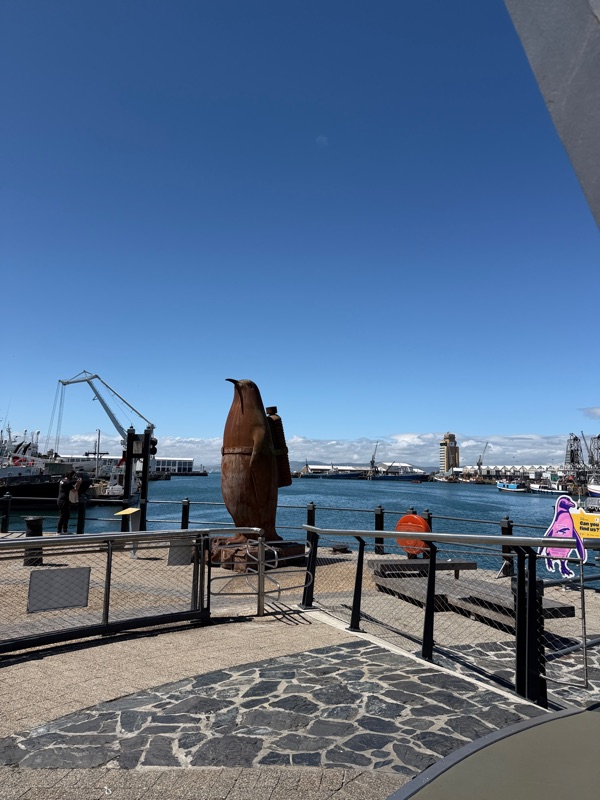
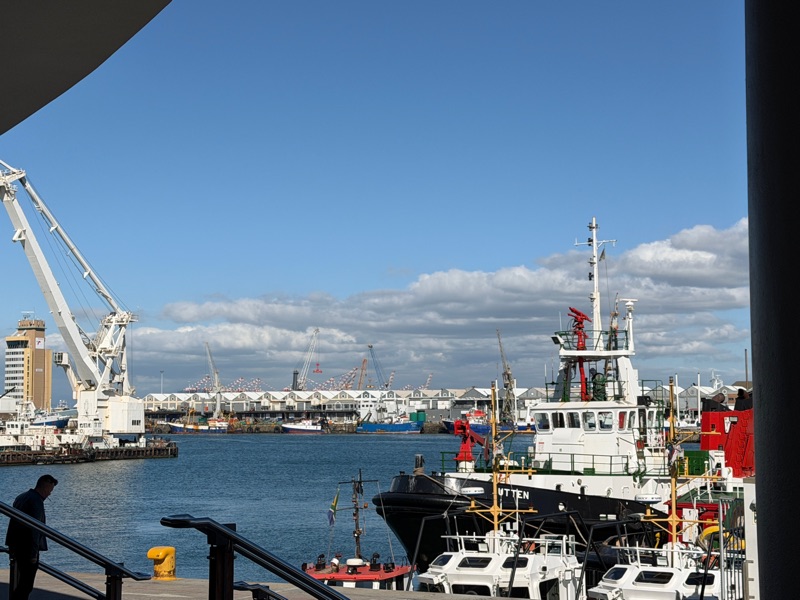
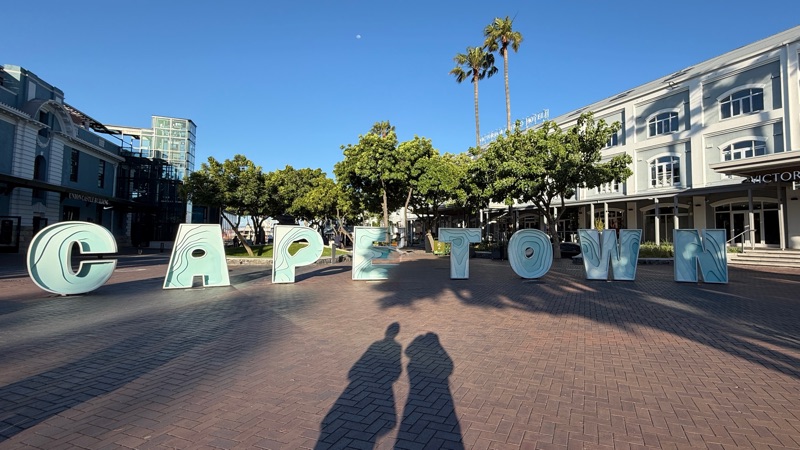
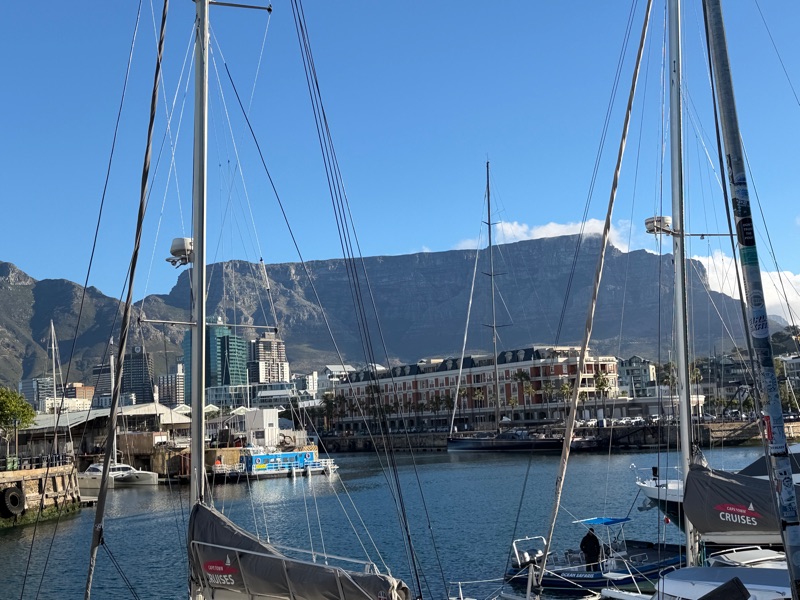
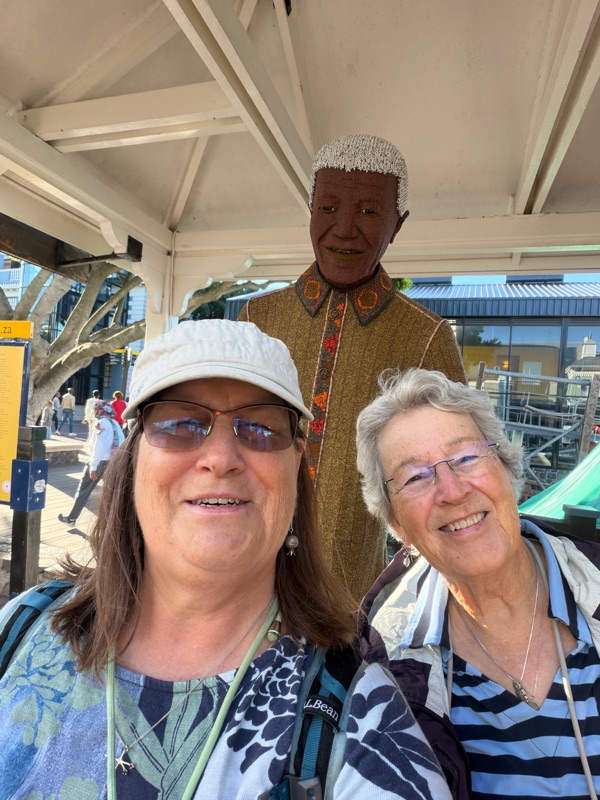
Our last stop was the Victoria and Alfred Waterfront, a huge shopping and eating area. We had lunch, shopped, briefly visited the Robben Island Museum and passed a pleasant afternoon. til we caught a shuttle back to the hotel.


No comments:
Post a Comment