We got up early this morning to get to Karnak Temple before the crowds. Evidently, two days ago there were 800 buses of Russian and Spanish tourists that came on day trips from the Red Sea resort town of Hurghada - so we needed to be finished by 9am.
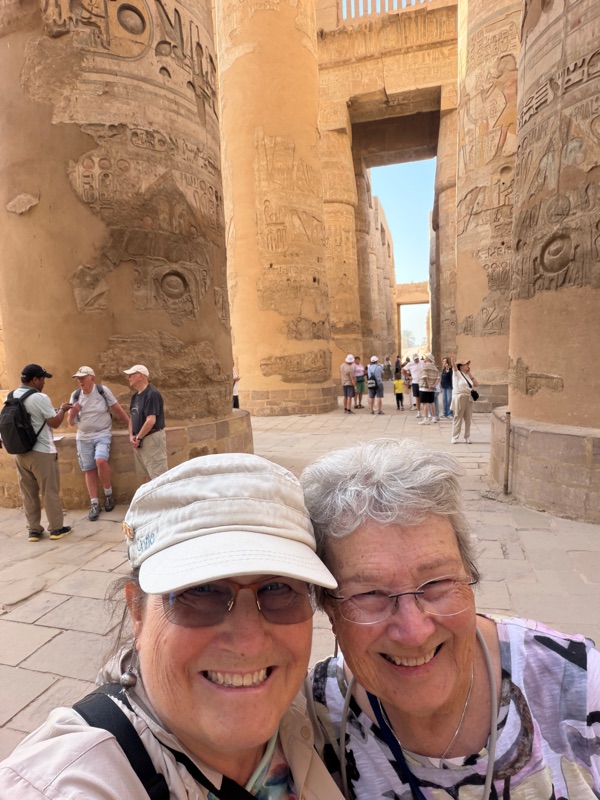
Karnak is a lot like Luxor temple, but much much bigger. It was also built over an extremely long period of time, over 1500 years, with each king (or Queen) adding their piece. The entire area was surrounded by a huge earthen wall. The oldest parts are towards the back, and later kings added in front. Much of the grand statuary has been lost or damaged, but there have also been a number of new discoveries that had been restored since 2006.
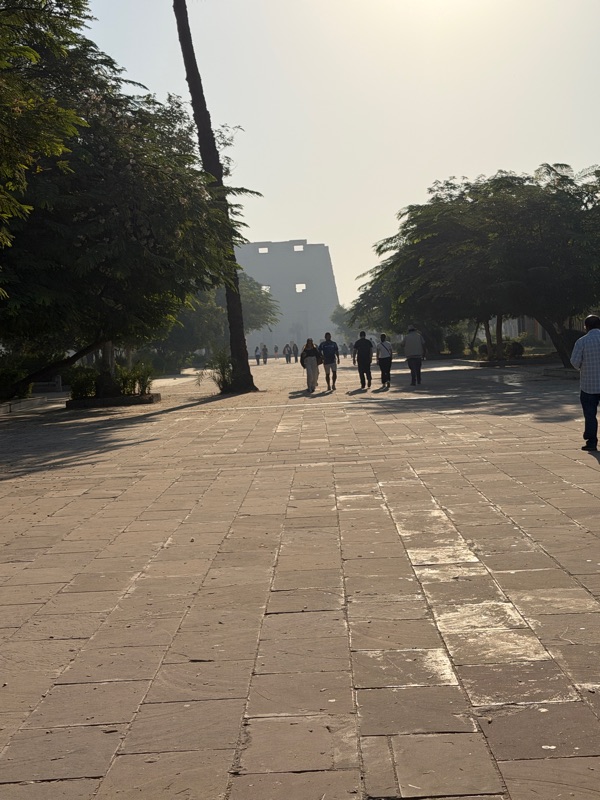
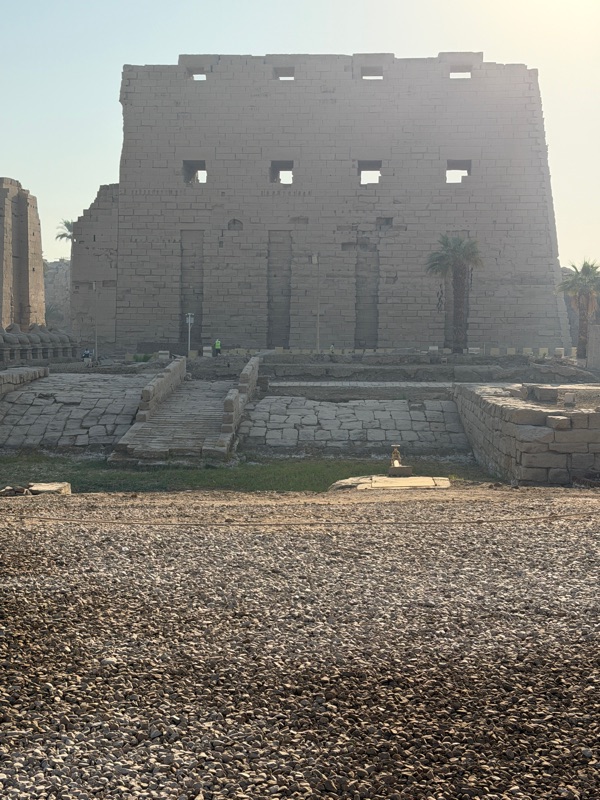
Entrance to the site
The first new discovery was the harbor area just outside the main gate. In 2006 the government moved about 3000 people out of the big courtyard in front of the temple, and they found the harbor underneath. It was interesting to realize that the river came much farther inland in ancient times, especially before the Aswan dam.
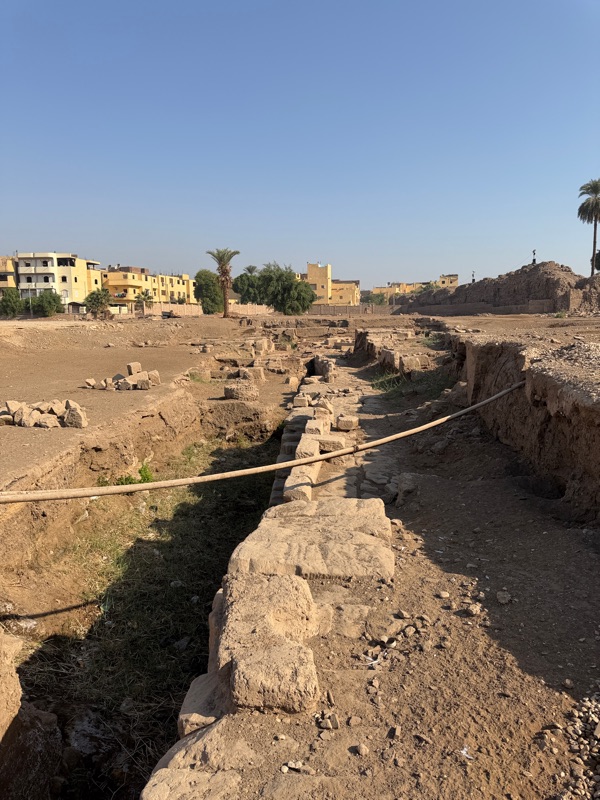
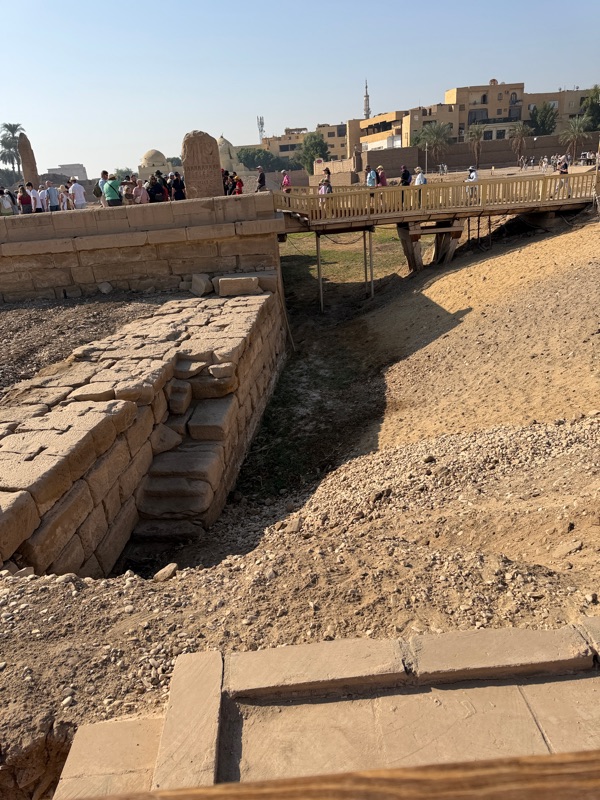
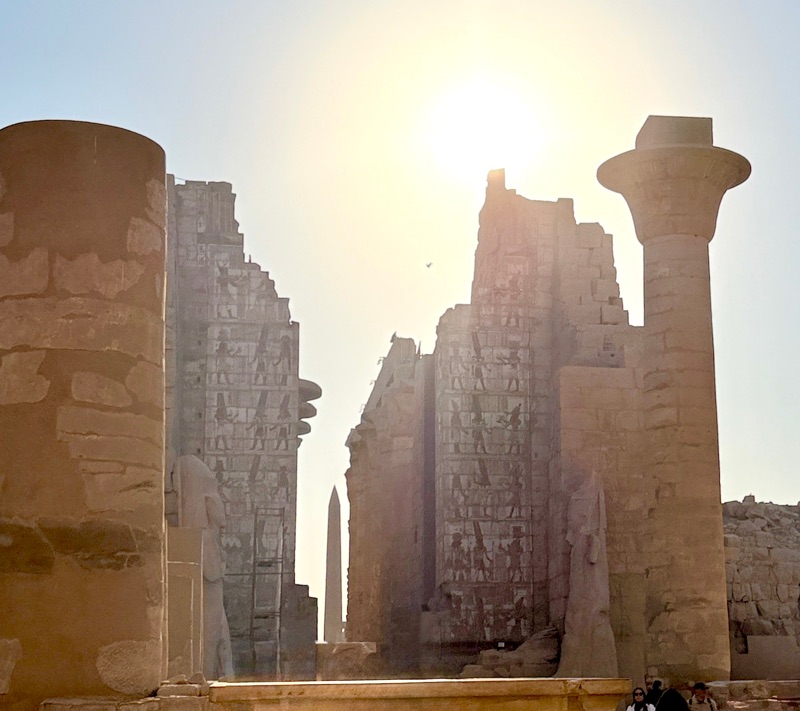
The other recently restored item was the tip of the Queen Hatshepsut obelisk. These obelisks were always made in pairs. Hatshepsut’s surviving obelisk is the largest and tallest in the world. When her stepson took over from her, he couldn’t deface it because he didn’t want to anger the gods whom it honored - so instead he build a wall around it, which ended up protecting it through antiquity. You can see the difference in color between the very top which was not covered and the lower part which was. But the sister obelisk collapsed, and the top half was restored in 2006.
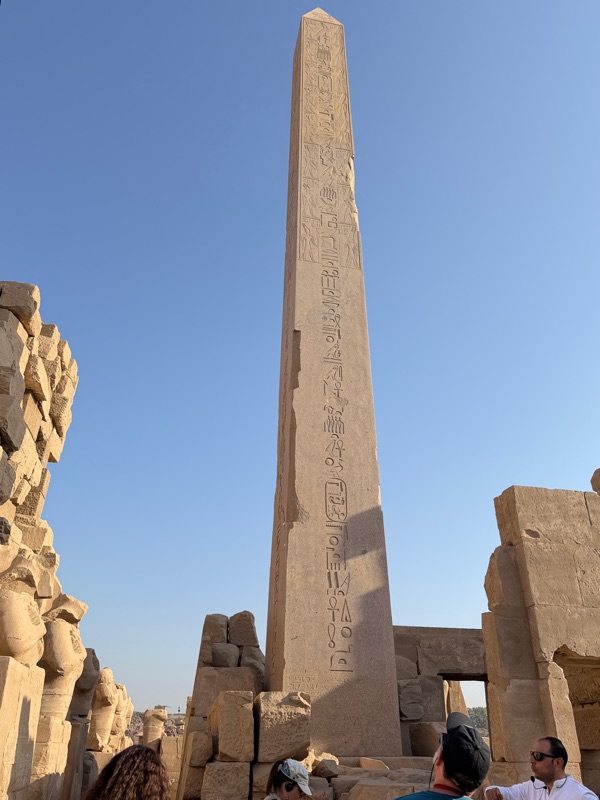
Full size obelisk
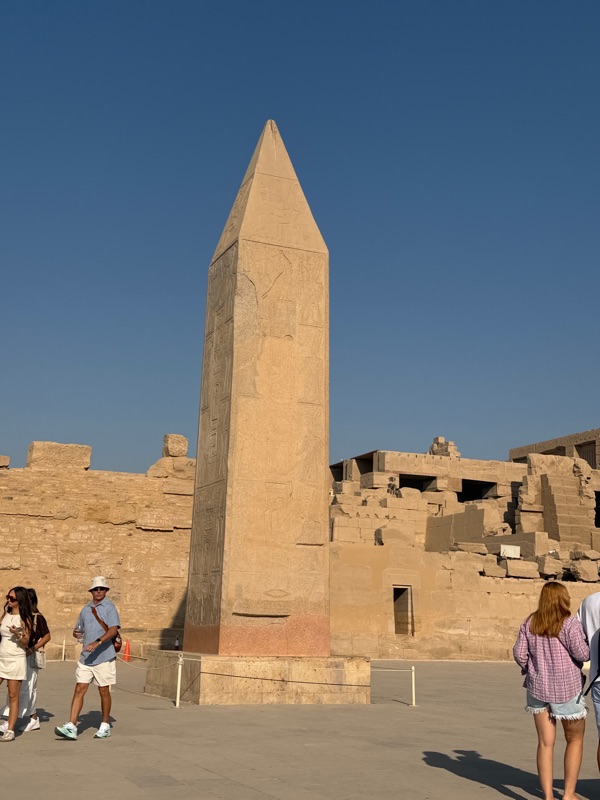
Top of the sister Obelisk
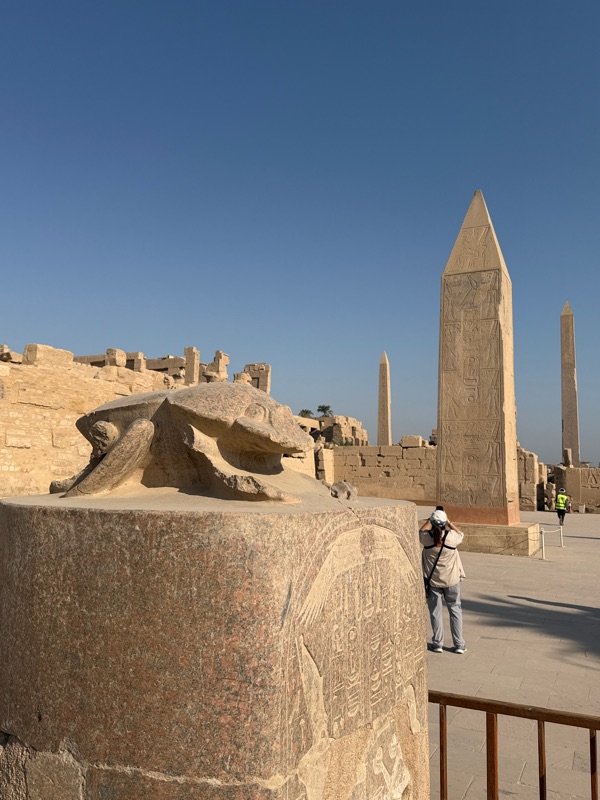
Both obelisks and the scarab sculpture
The most significant feature of the Temple is the Great Hypostyle Hall: This hall covers about 50,000 square feet and contains 134 enormous sandstone columns arranged in 16 rows, with the central columns rising over 70 feet high. The columns are covered with carvings, many of them with the paint still intact. They had gorgeous capitals, each one different and some of the lintels are still there.
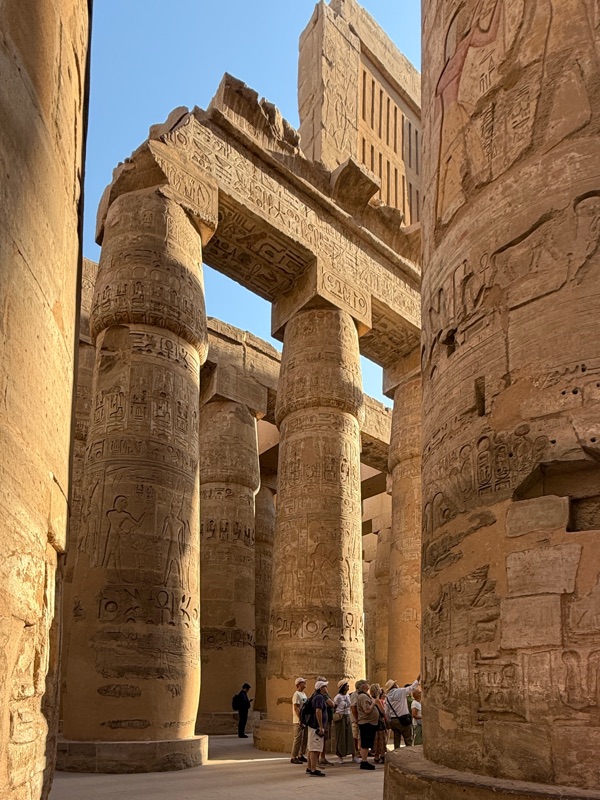
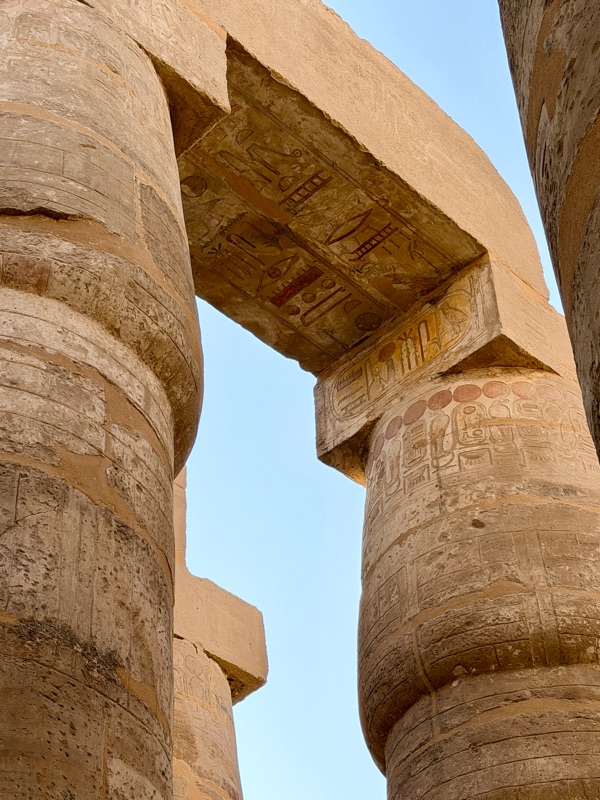
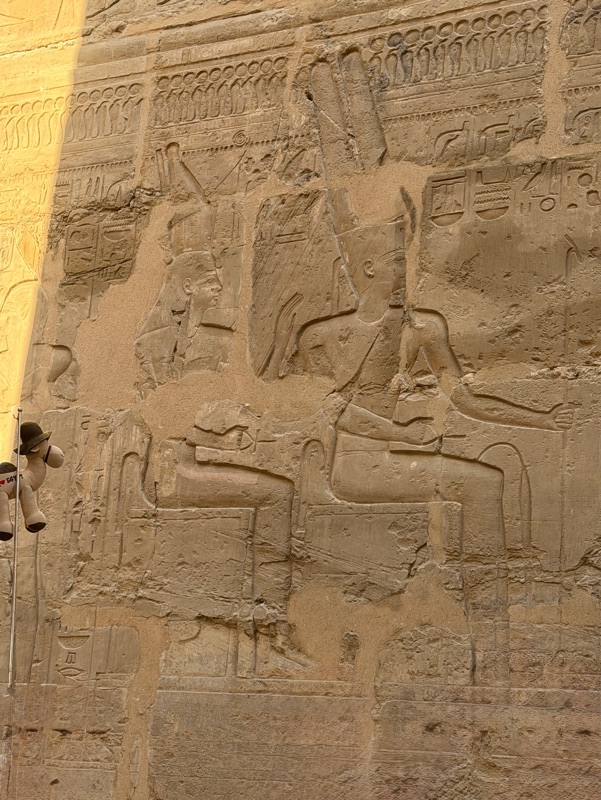
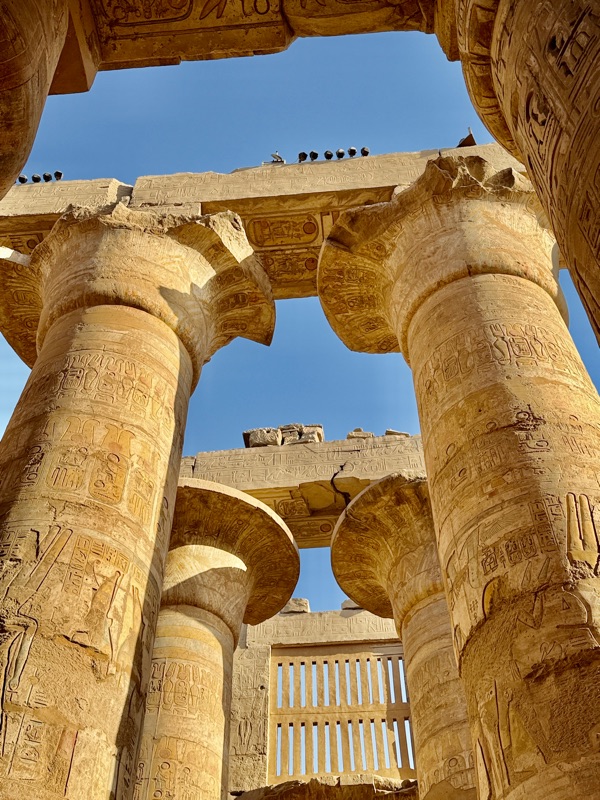
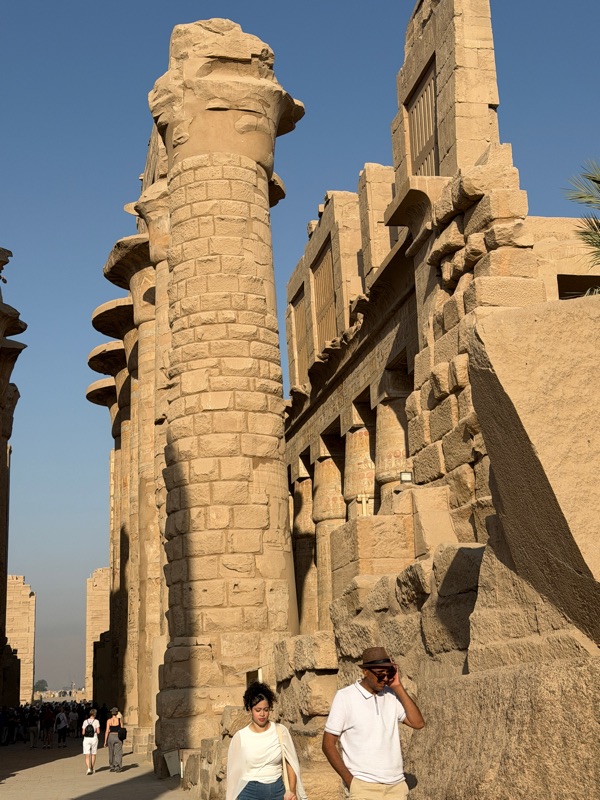
In addition to the passage lined with sphinx that was used as a processional route between the temple at Luxor and the one at Karnak, there is a passage lined with rams leading to the Hypostyle Hall. Rams are associated with the god Amon Re.
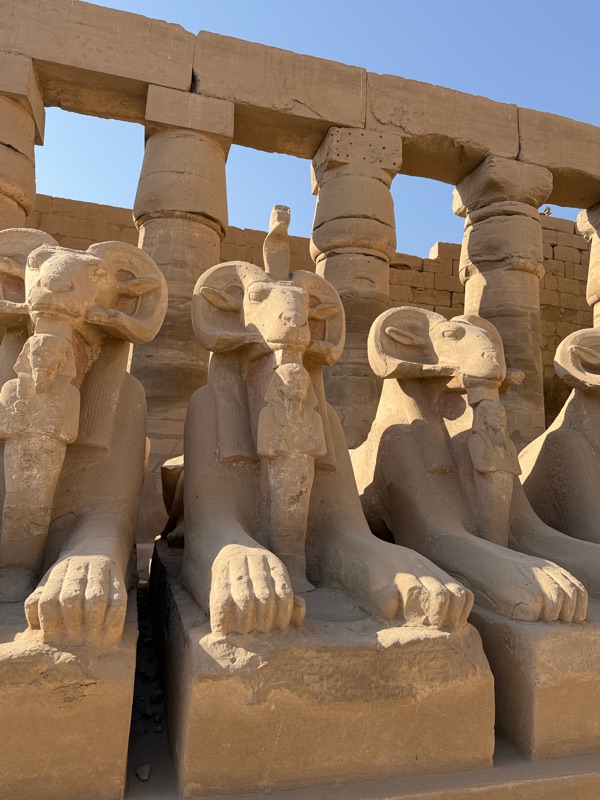
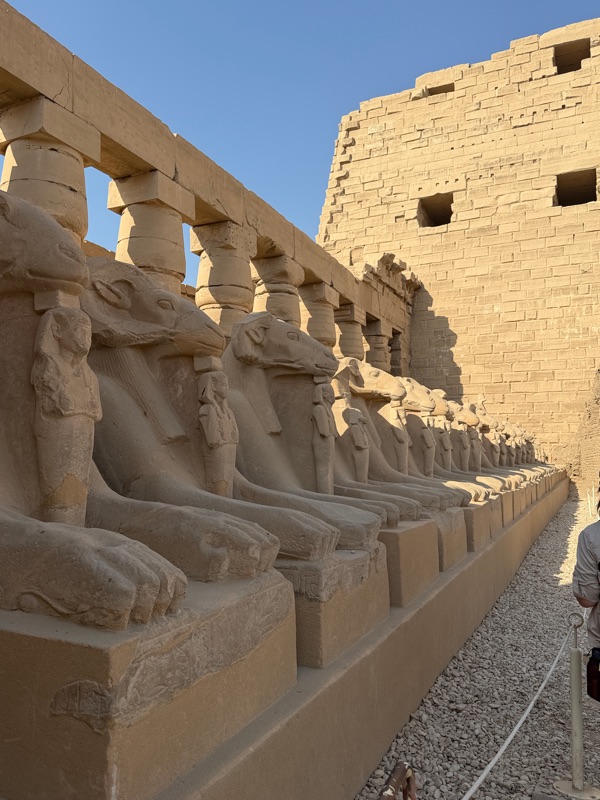
We were very happy that we got up early to leave around 7 am to get to Karnak early when we saw the dense crowds coming in as we walked back to the bus.
Our major destination for the day was the place where we met the OAT Dahabiya ( Nile River Sailing boat) for our five day exploration of the upper Nile and lunch! Before we did that, though, we had one more interesting temple to visit in Esna
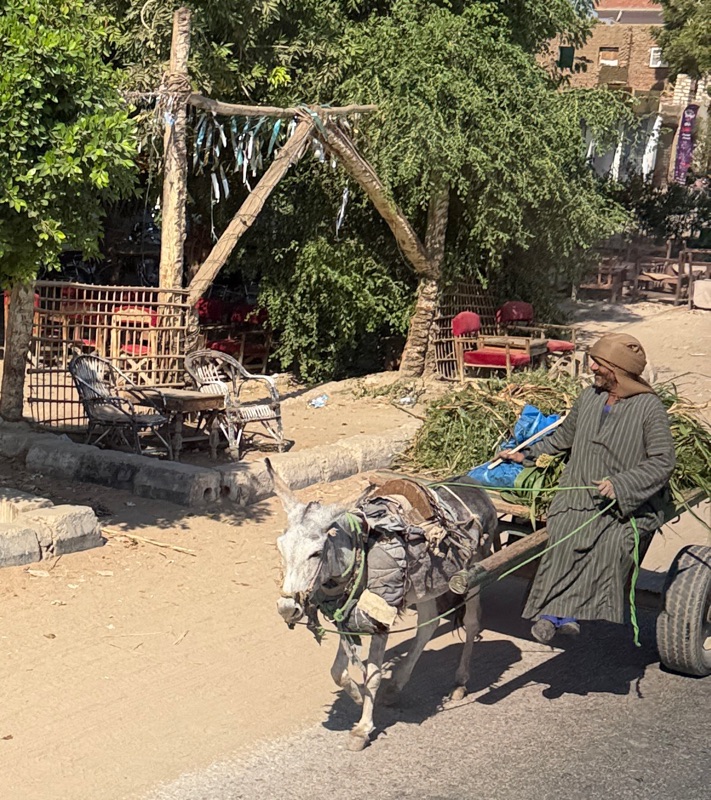
On the way to Esna we drove along the irrigation canals, past fields and fields of crops - mostly sugarcane, but lots of horticulture too. The fields are divided into narrow rectangles, surrounded with small walks for irrigation purposes. There were people, men and women, working in their fields, driving donkey carts and in the little villages, lots of men hanging around drinking coffee.
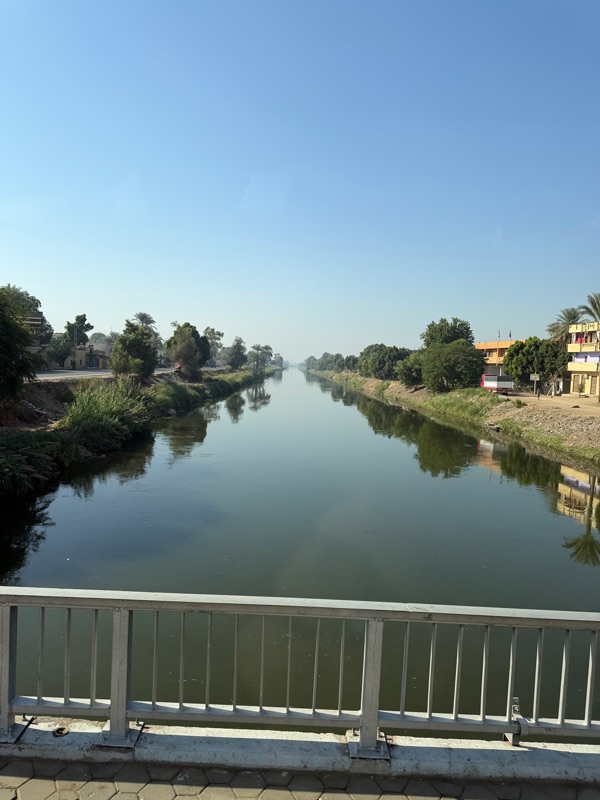 |
| Large irrigation canal |
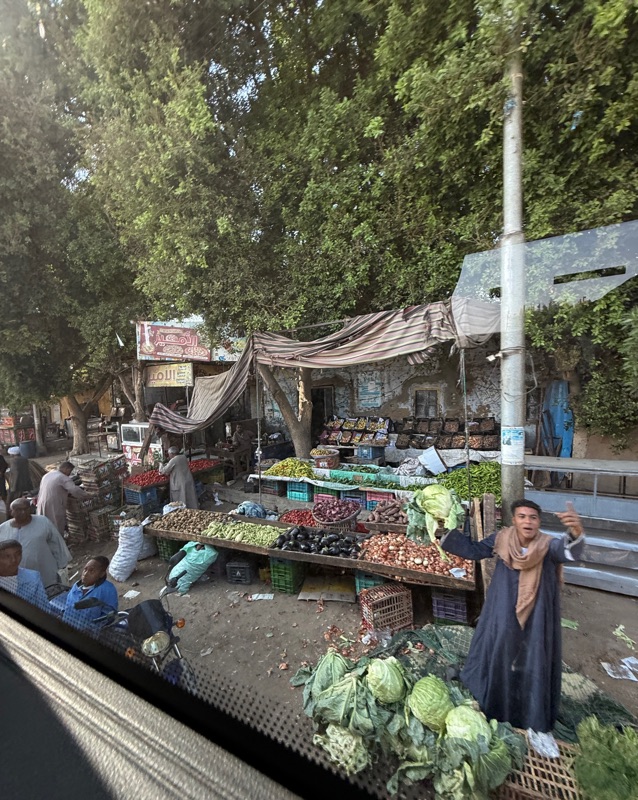
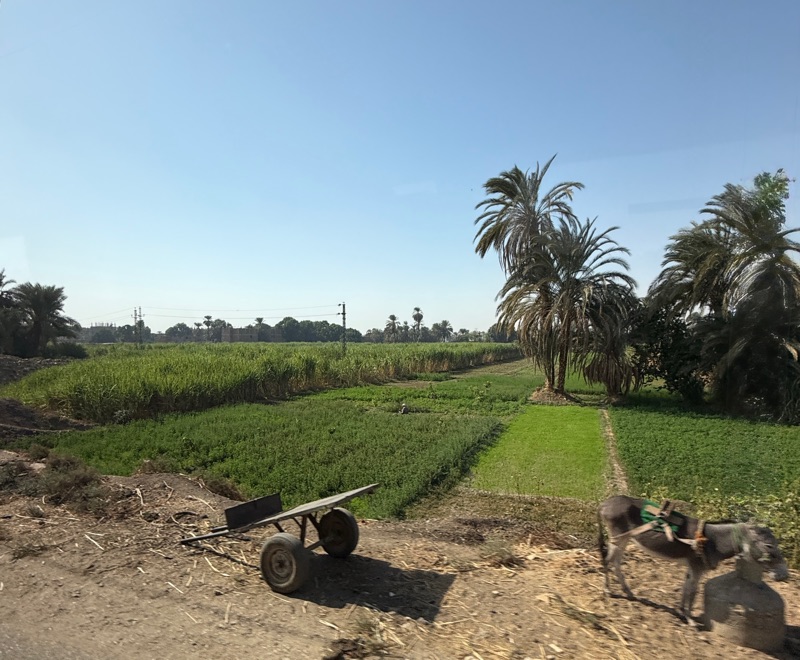
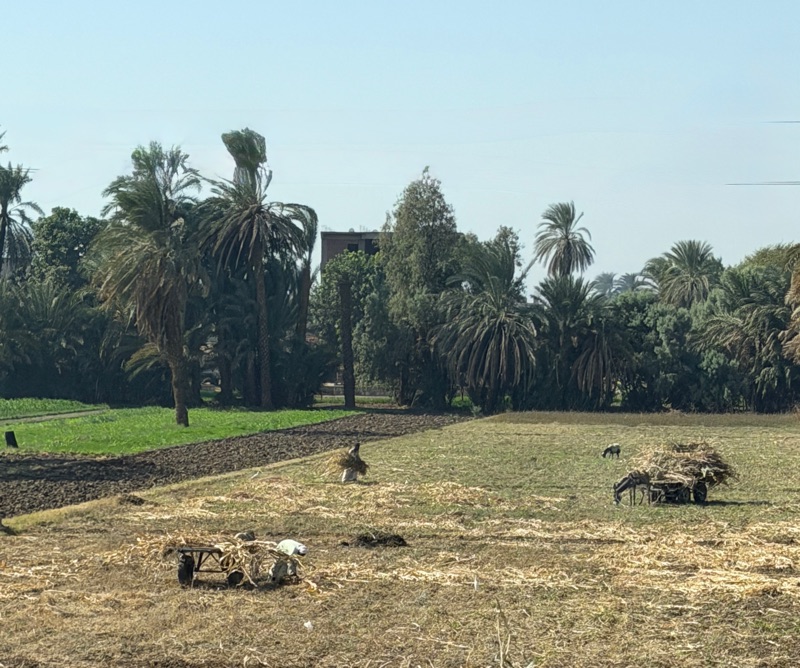
Around 11, we arrived in Esna. This town hosts a minor dam across the river Nile, which includes a lock where cruise ships can go through. This lock is why we join our boat cruise south of Esna.
Esna’s other claim to fame is its ancient temple - a small and lovely Greco-Roman temple to honor the god Khnum. The temple was built about 1000 years after Karnak, so it was interesting to see different styles of art & decoration.
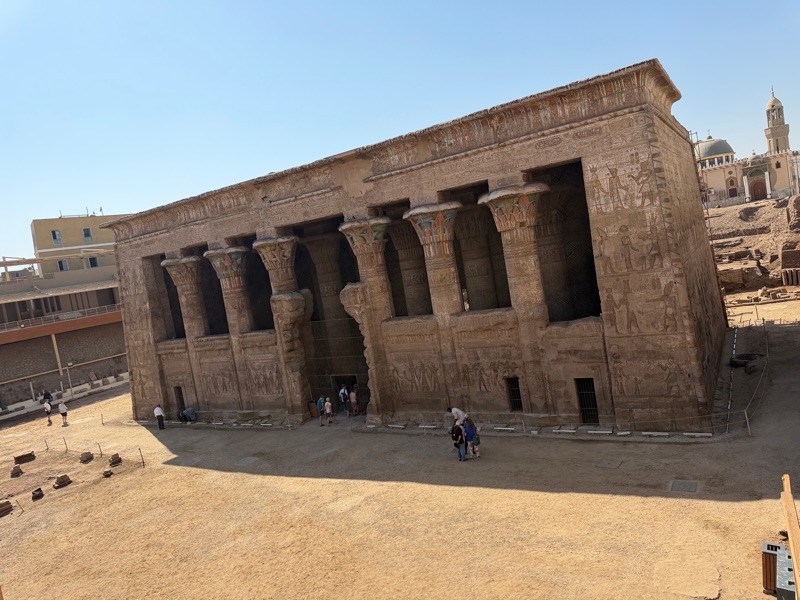
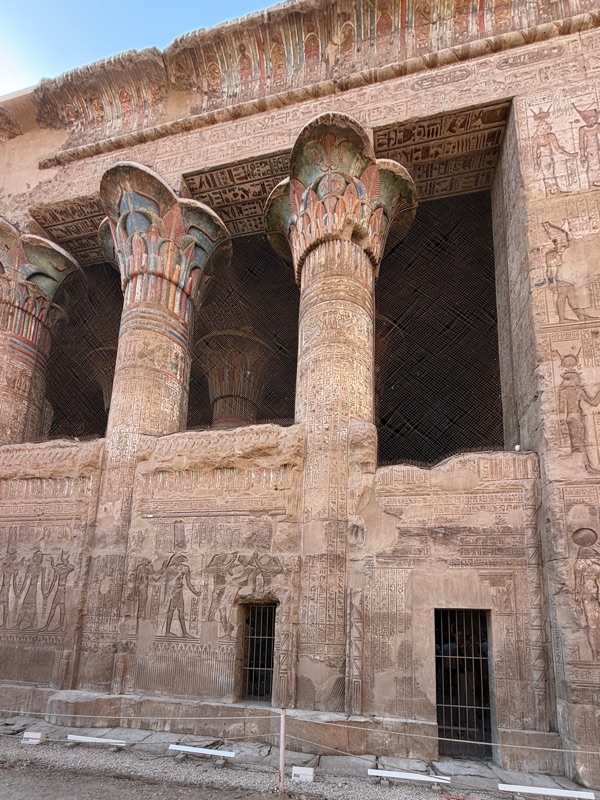
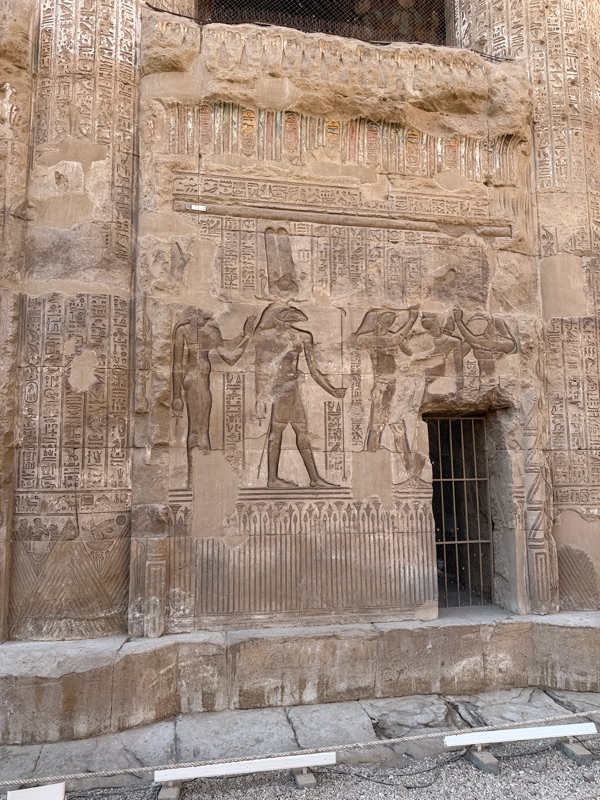
Outside facade
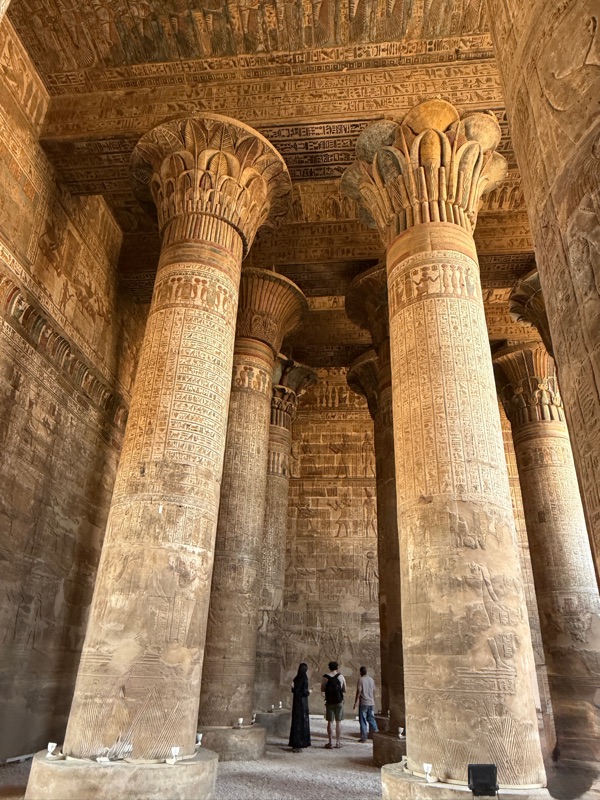
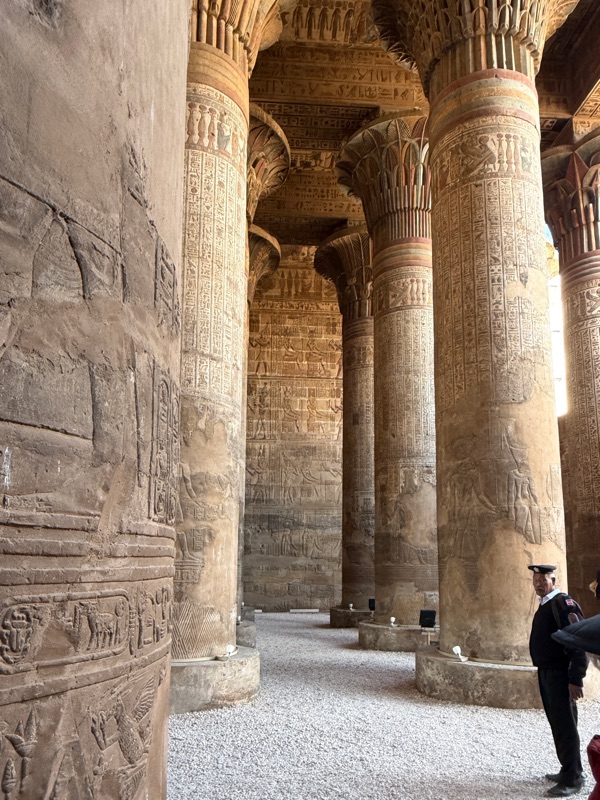
Gallery of columns
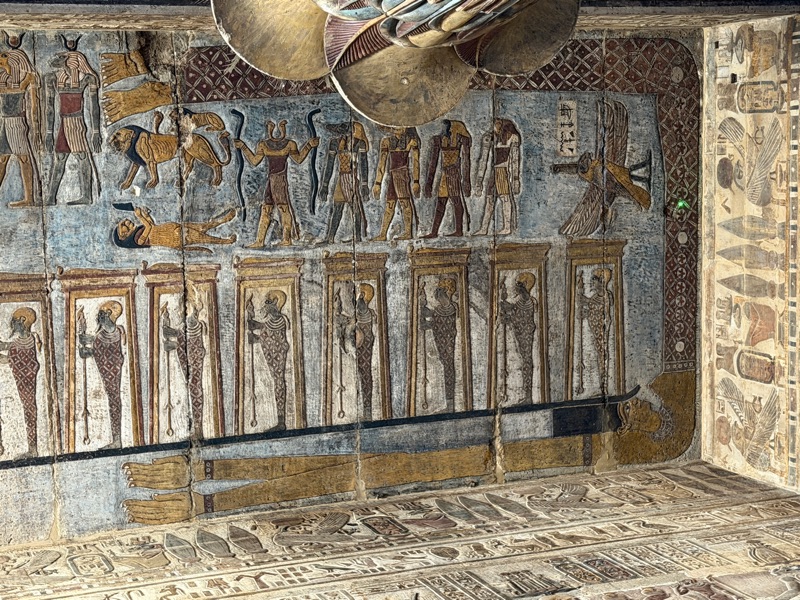
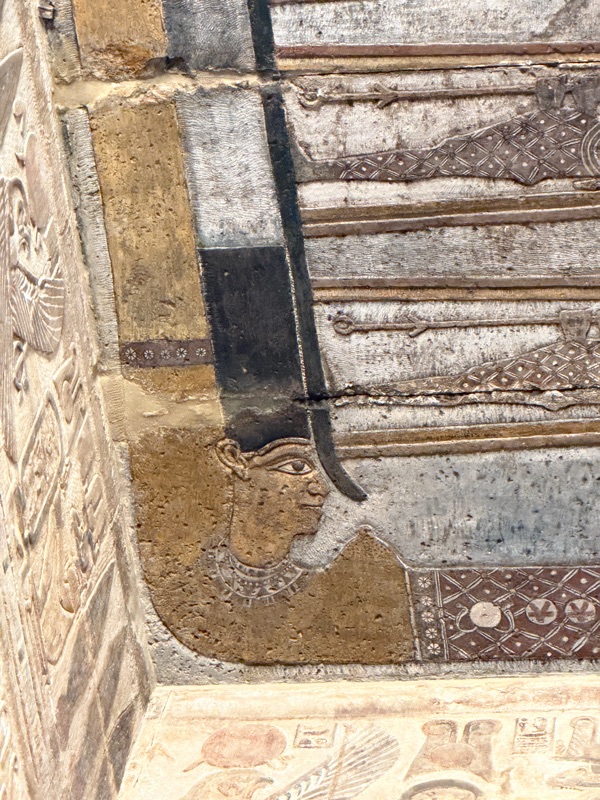
Ceiling scene with hands and arms of the goddess drawn along the edges, head is in the corner.
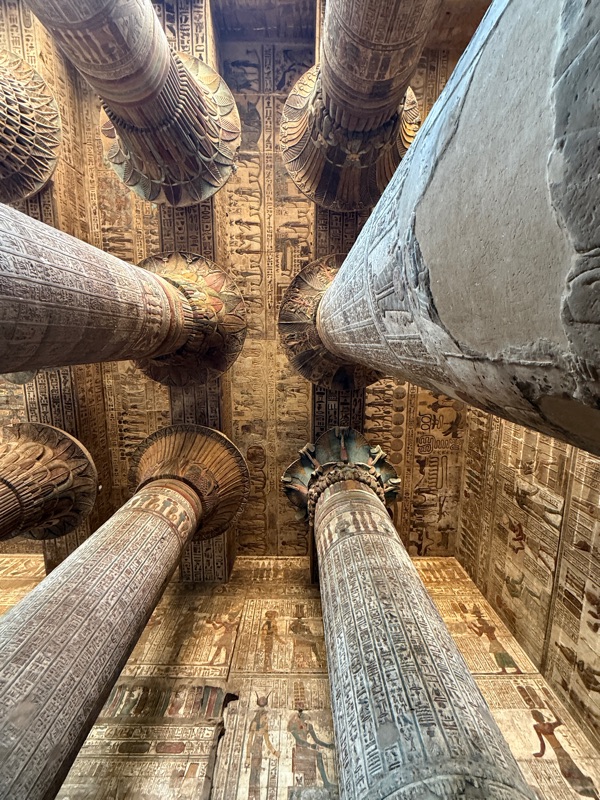
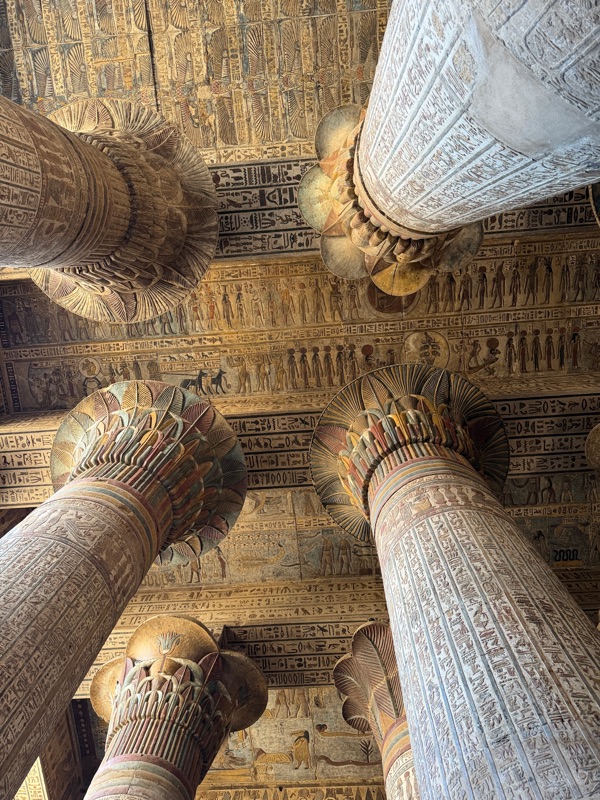
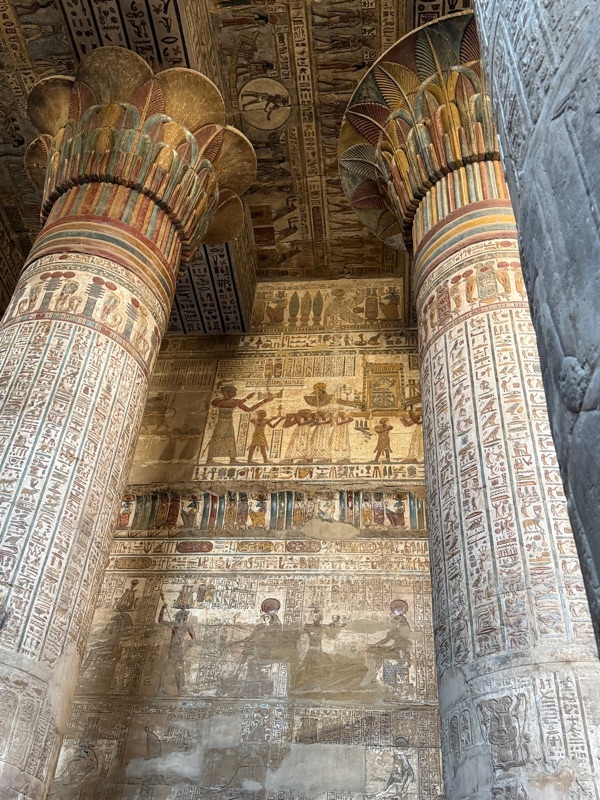
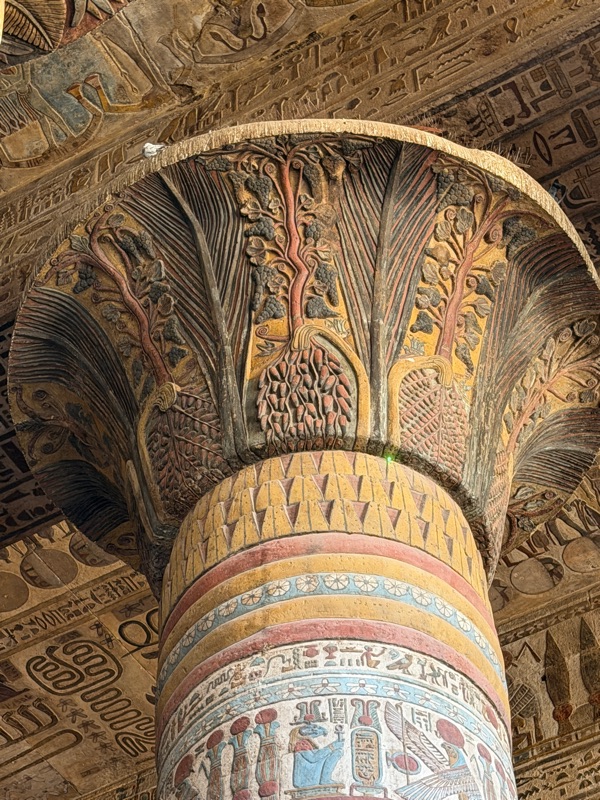
Ceiling art
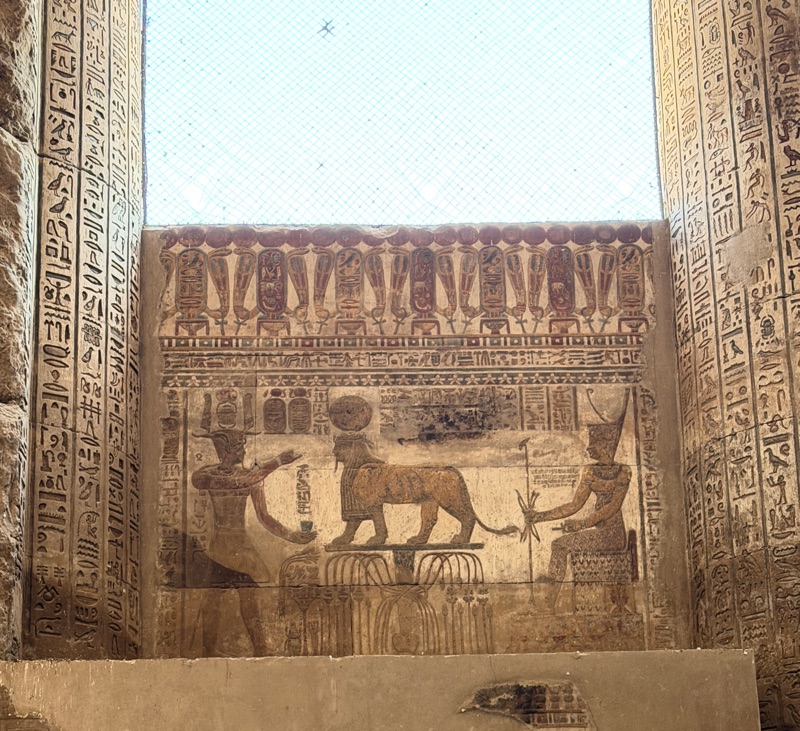
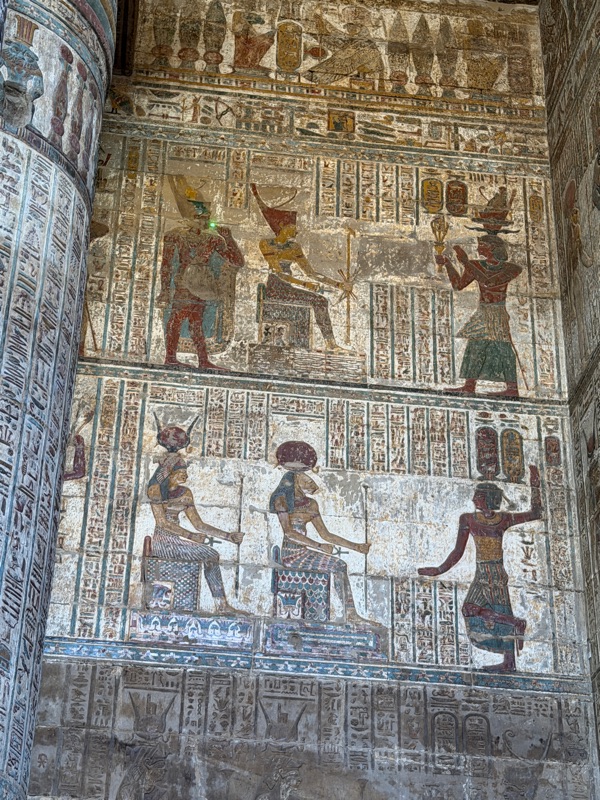
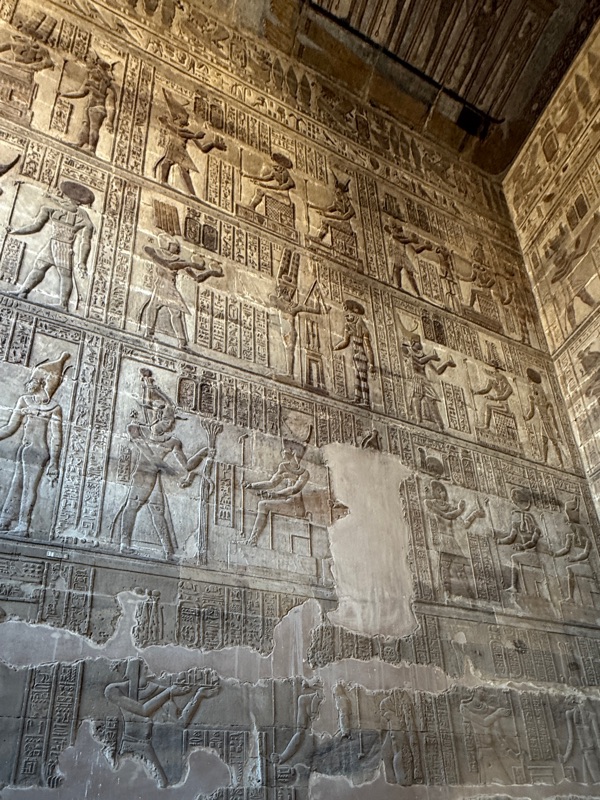
Wall art the art in this temple illustrated the attributes and stories associated with the god Khnum.
This temple was almost completely covered in Nile River mud, which damaged most of the paintings on the bottom part of the temple but also protected it from the ravages of time and deconstruction by people using it for building materials. The paintings on the top part and the ceiling were amazing, partly because they were recently cleaned to remove the soot from the ceiling which was black until two years ago. This government of Egypt had also recently removed people from the area behind the temple, where they hope to be able to find the holiest part of the temple intact.
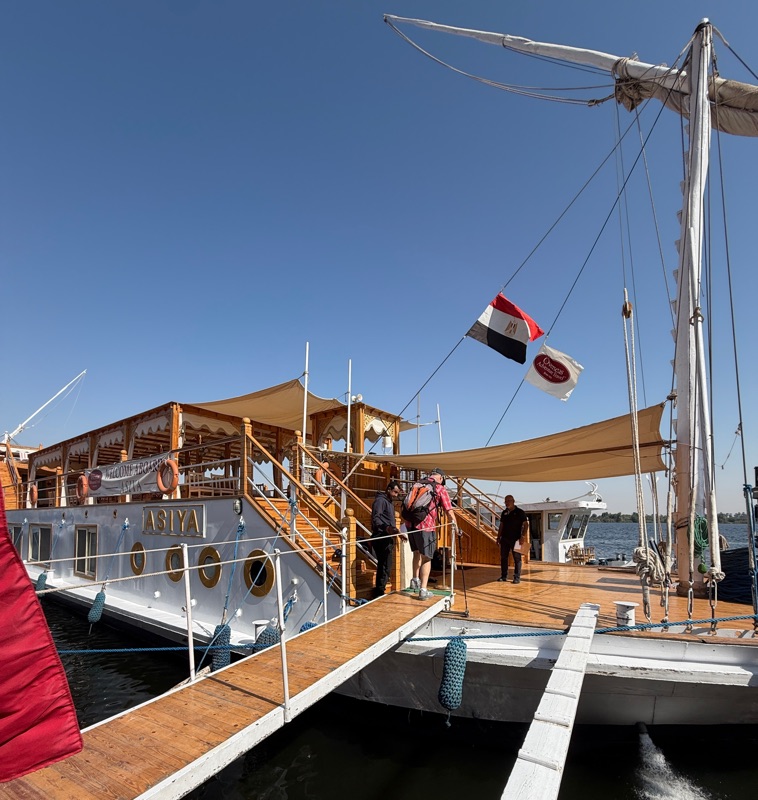
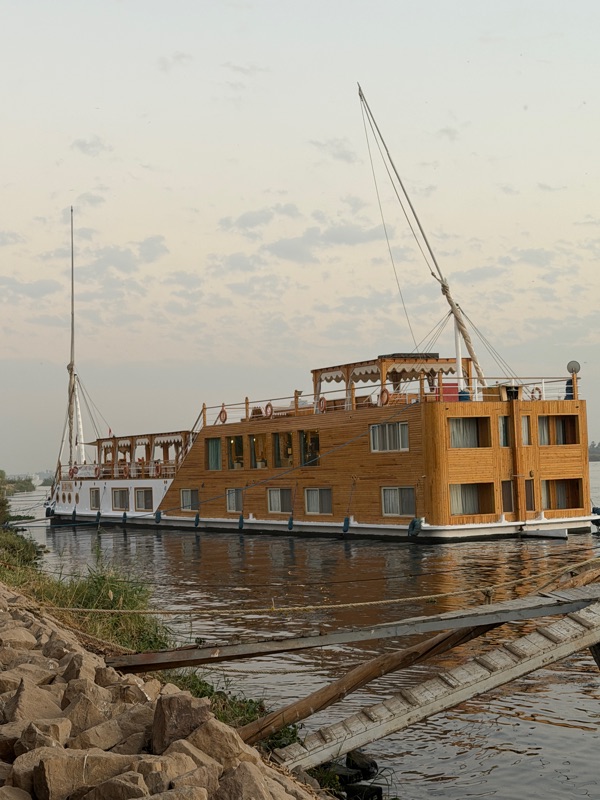
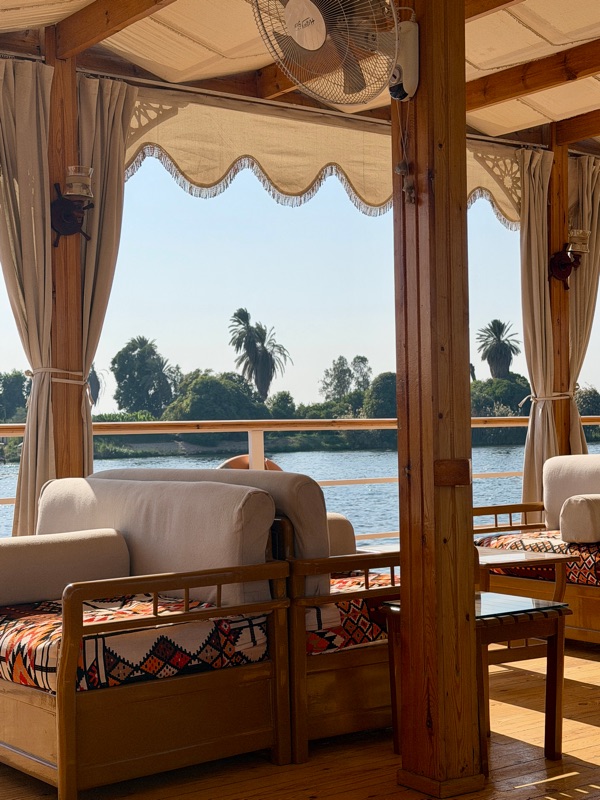
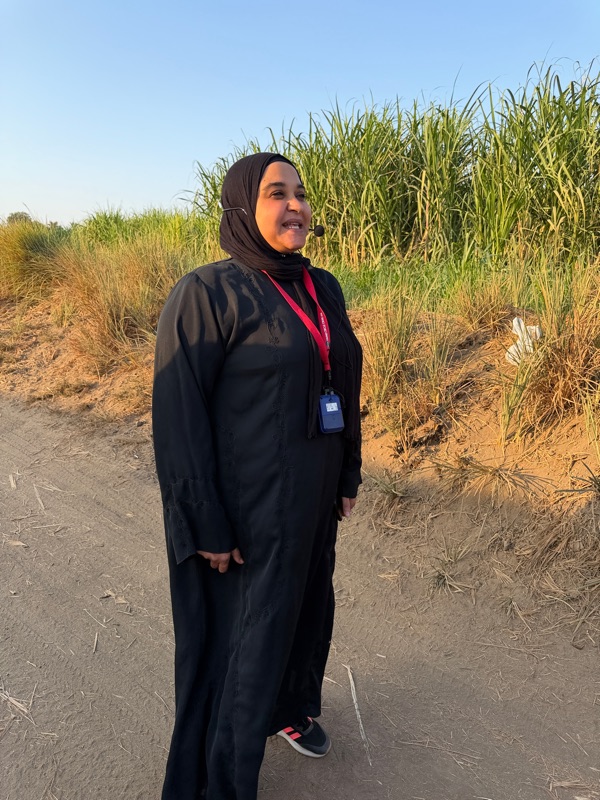
After the temple, we arrived at our dahabiya. It is delightful and we will really enjoy our next 5 nights. It is a sailing vessel, but when there is not much wind. OAT has a dedicated tug boat to pull us up the river. After lunch and a restful afternoon, at dusk we took a walk through a small village with a local woman. It was very pleasant chatting with her about local people’s lives and persuits.
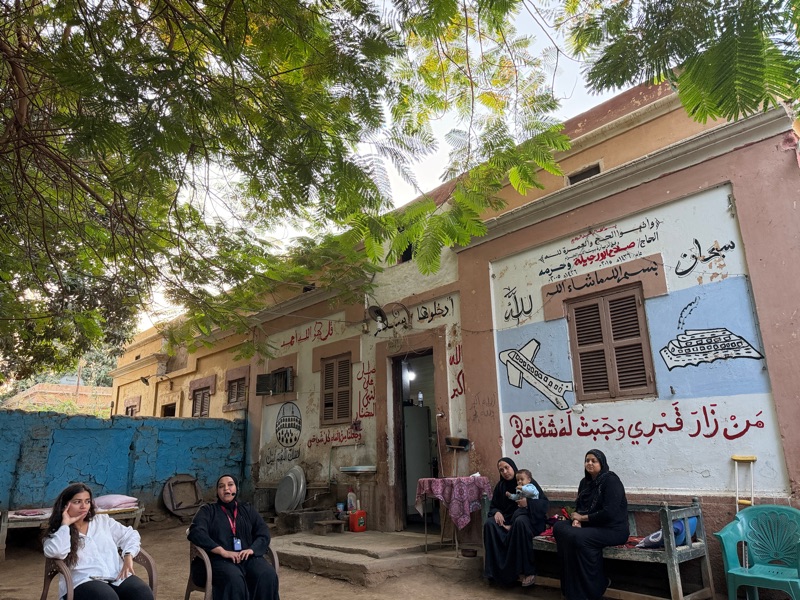
Inside home compound
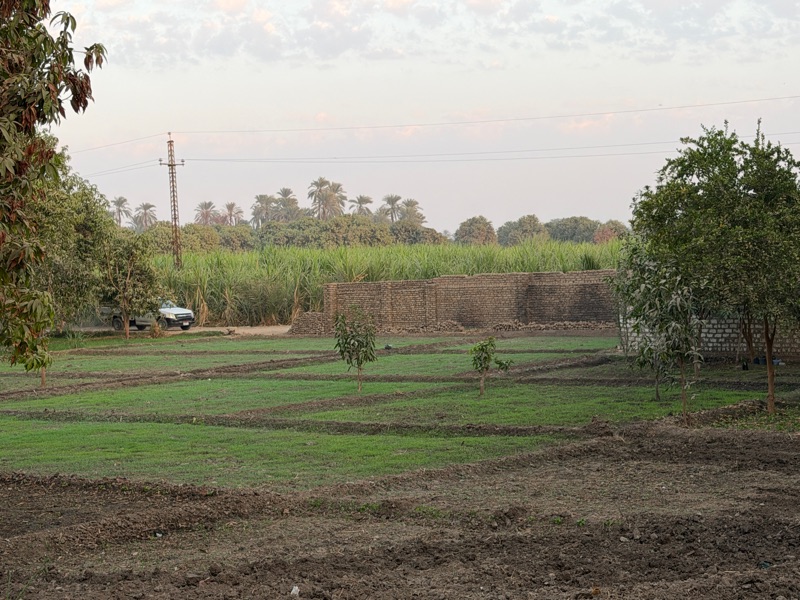
Irrigated vegetable gardens with sugar cane in the background.
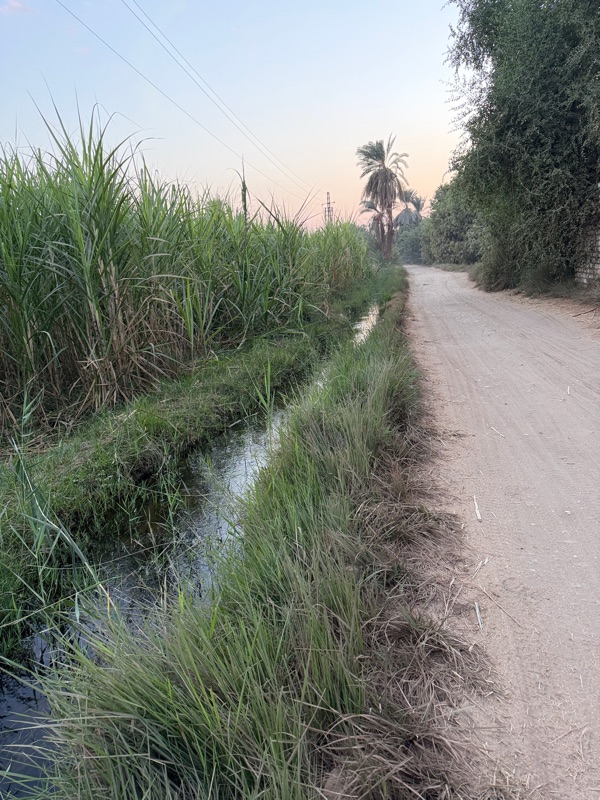
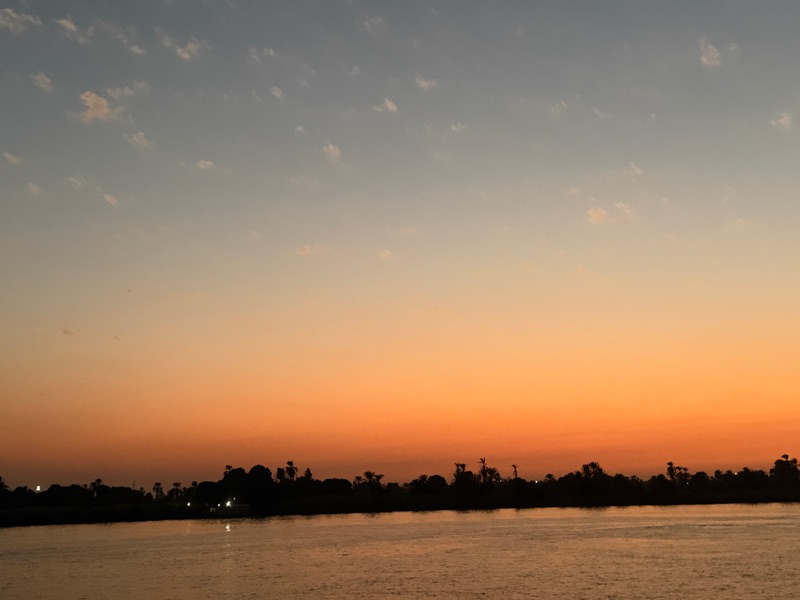
Sunset on the Nile.

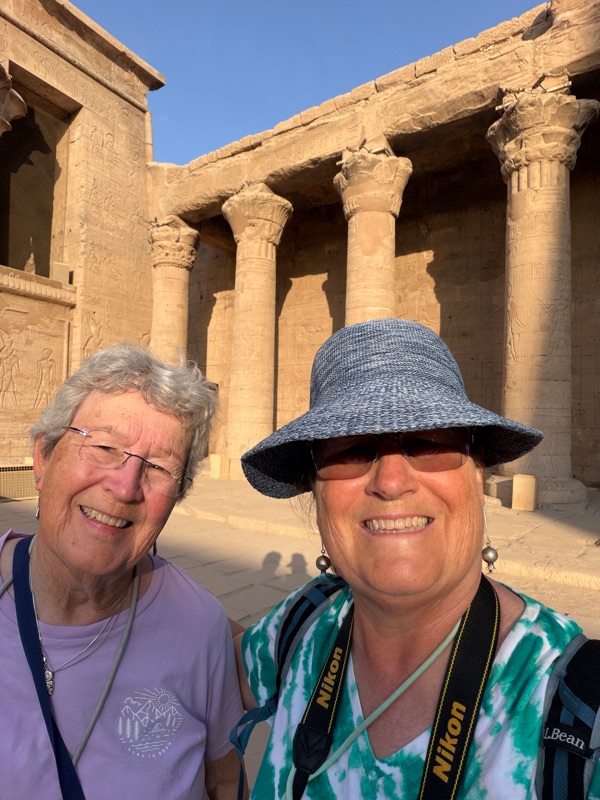


Amazing. Marian
ReplyDeleteThe intricate detail at the top of the columns is amazing. My neck sort of wants to hurt from wondering how the craftsmen could stand the physical effort of creating that art.
ReplyDeleteOne of the things that made us easier is that they carved the temple from the top to the bottom. They filled the area with dirt and then removed it as they worked down.
Delete