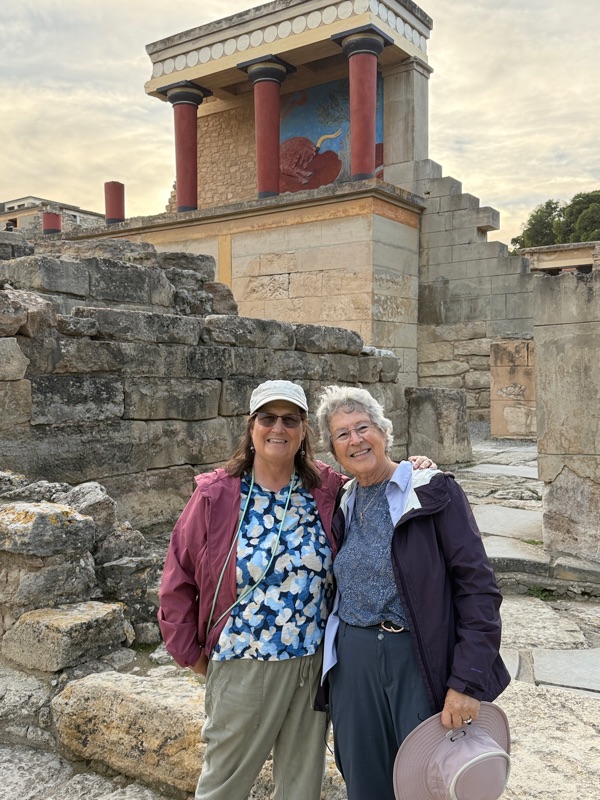
Today we started our sojourn in Crete, a destination we are both pretty excited about! We opted for an hour on a plane instead of nine hours on the ferry, and were met by our guide for the week, Panos Kritikos around 2:30. He immediately whisked us away to the very large and impressive Palace of Knossos.
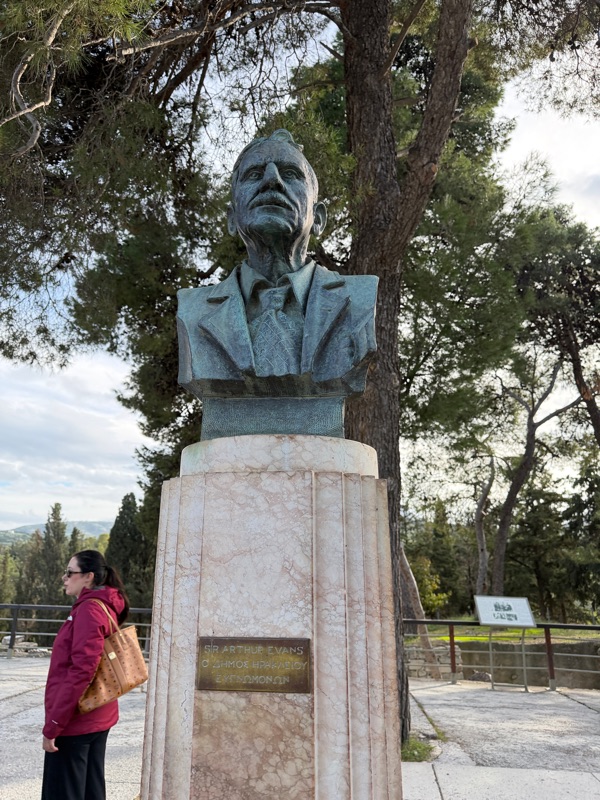
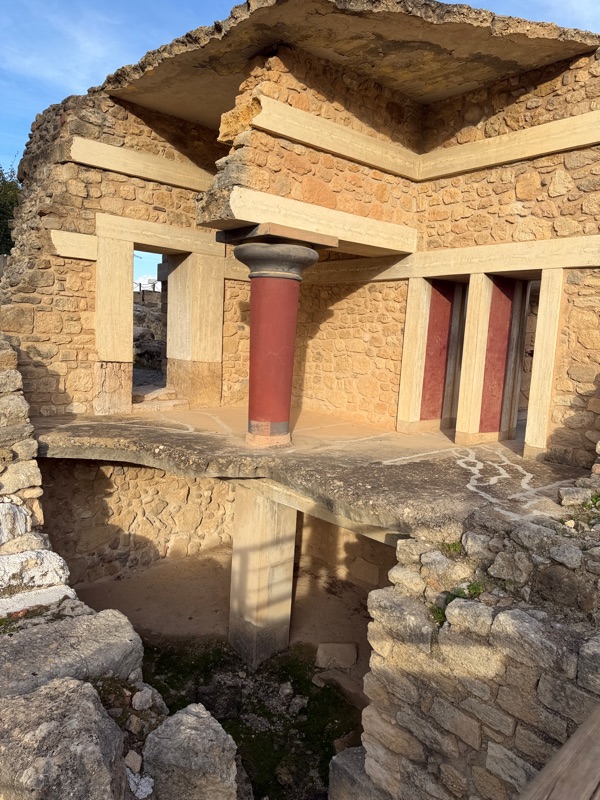
Although this site is the largest Minoan ruin and one of the most interesting, it does not qualify as a UNESCO World Heritage Site. This is because the first British excavator, Arthur Evans, in his effort to make it a attractive to tourists, reconstructed the most significant areas of the site and in the process covered over what lay beneath with concrete, preventing further excavation of the underlying layers. It is, however, part of the multi site Minoan complex that is a UNESCO designated area. Although an anathema to current day archeologists, the extensive reconstructions do provide a sense of what it might have looked like originally, which helps the visitor to appreciate the scope and power of the Minoans in the 15th century BC.
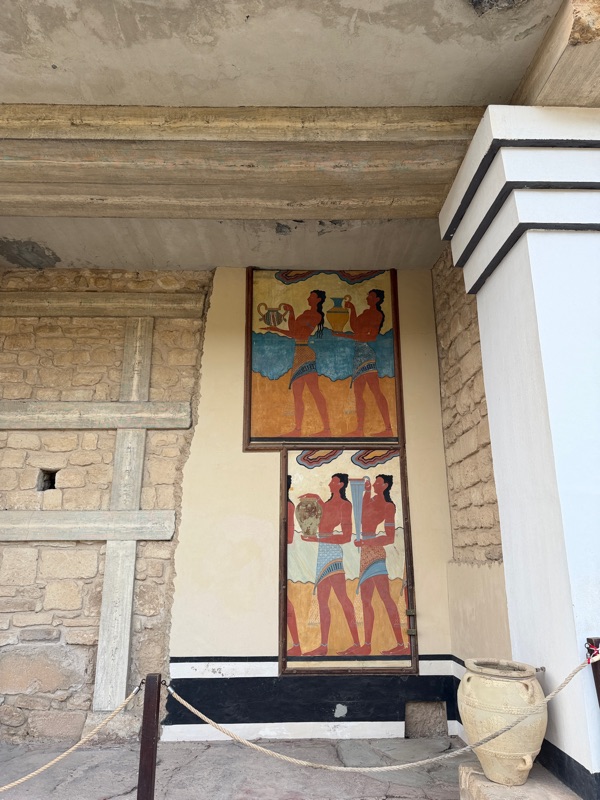
Panos explained how the Minoans were influenced by the Egyptians with whom they traded, sending olive oil to Egypt and bringing back skilled workers, artisans and craftsmen. This fresco shows the influence of Egyptian art, with the basic rigid style of Egyptian paintings, but with a little more sense of movement and less adherence to the style of the Egyptians.
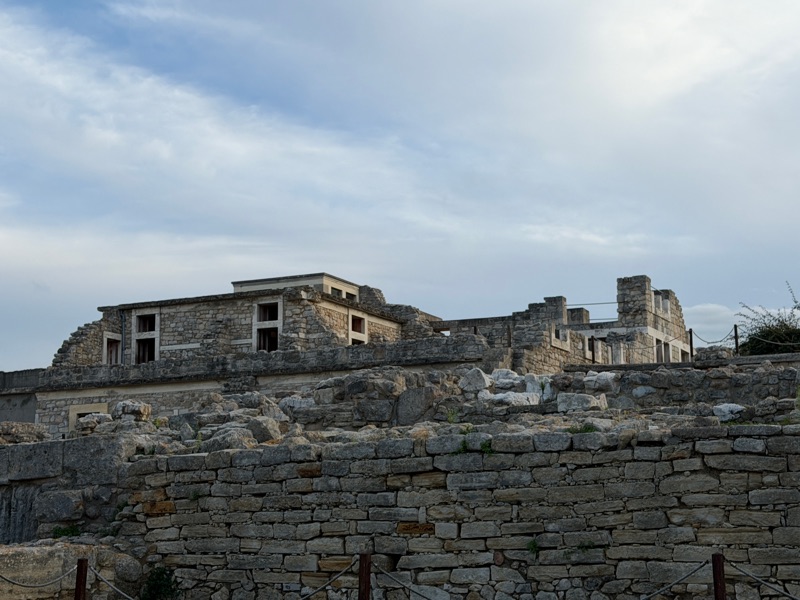
Example of the early reconstruction of the palace in the back and original Minoan walls in the foreground.
We spent two hours at the site, and covered a lot of ground - both physically and historically. Panos did a great job of explaining the rise of the Minoan culture, especially in the context of other cultures like Egyptian, and Akroteri (in Santorini) that were thriving at the time.
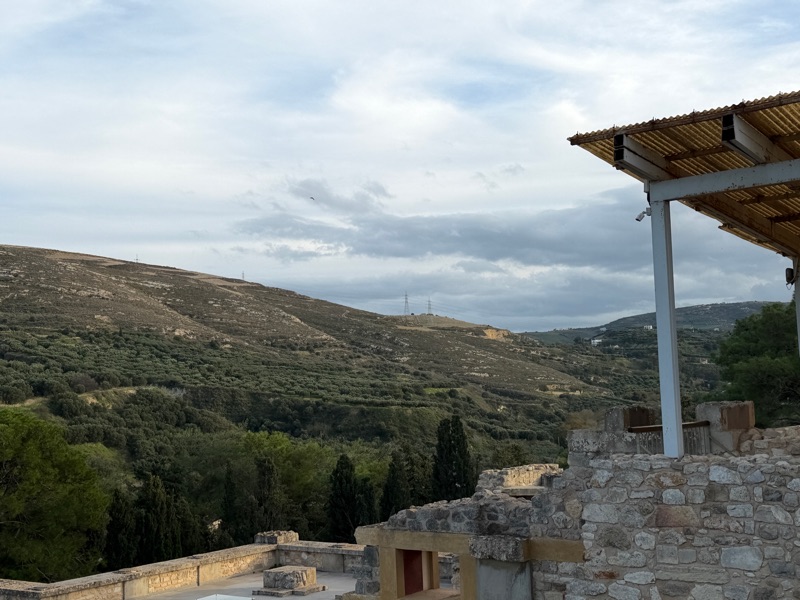
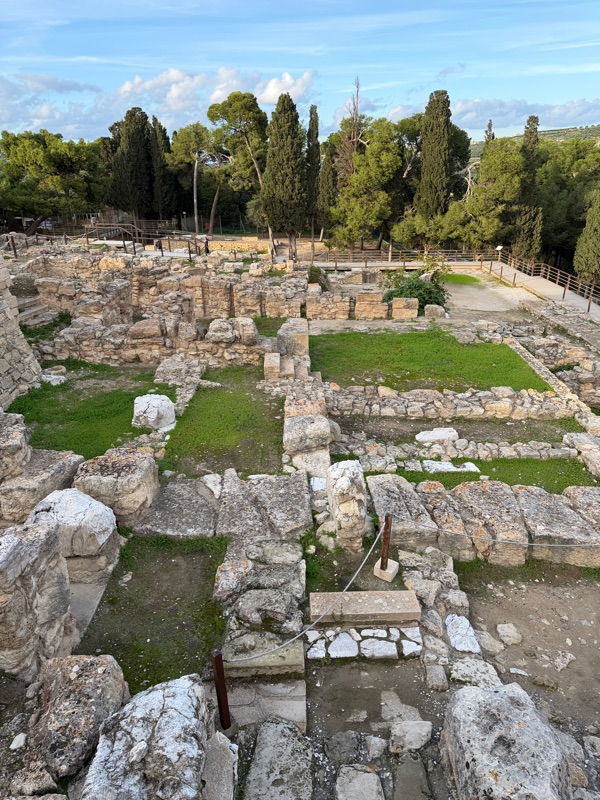
reconstructed walls outside the palace.
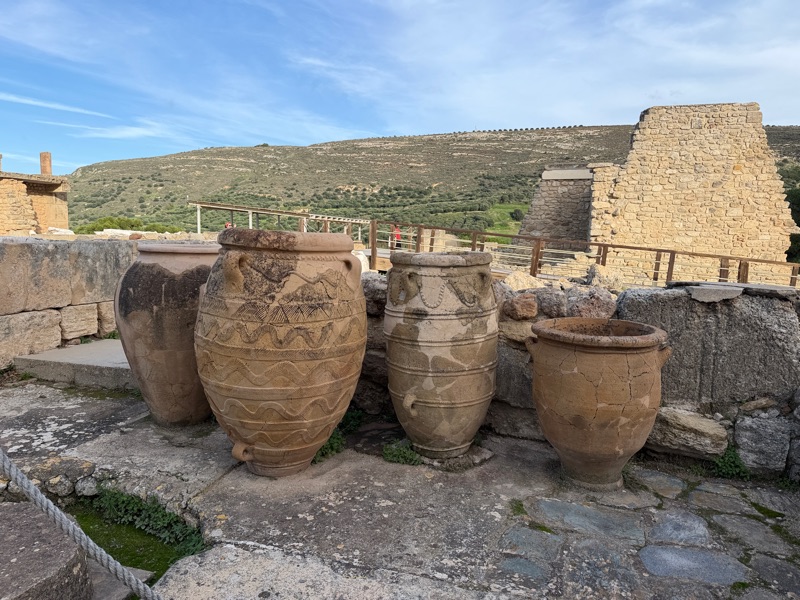
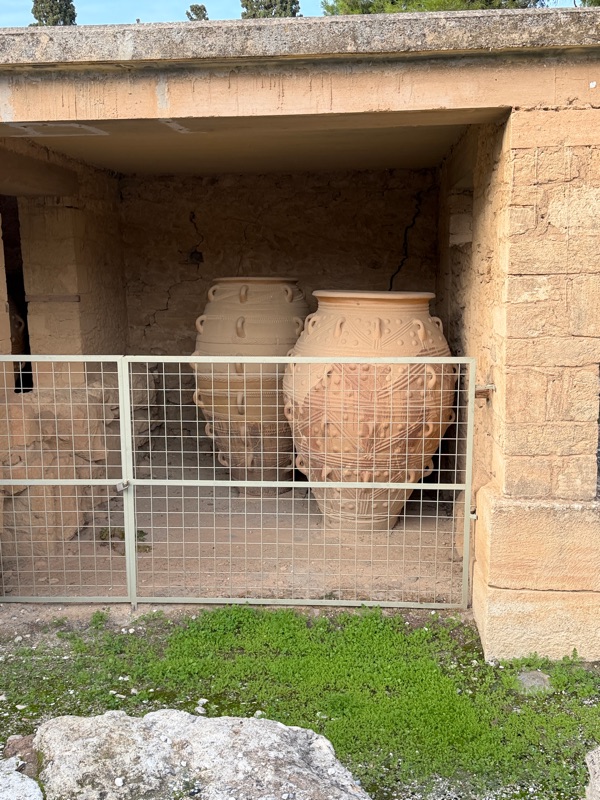
Large clay jars for transporting oil and grain.
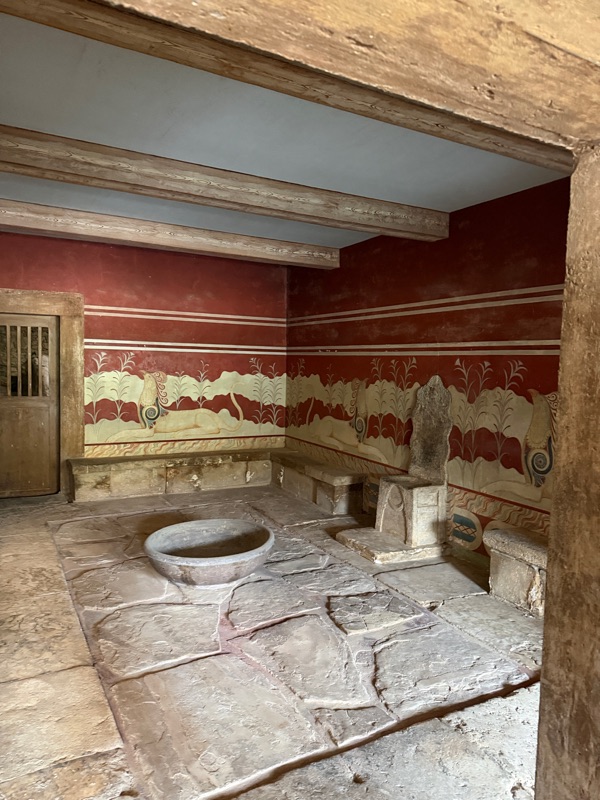
Reconstructed “throne room," there is no evidence to support that usage, but it was probably a ceremonial room of some sort because of the basin.
Queens chambers
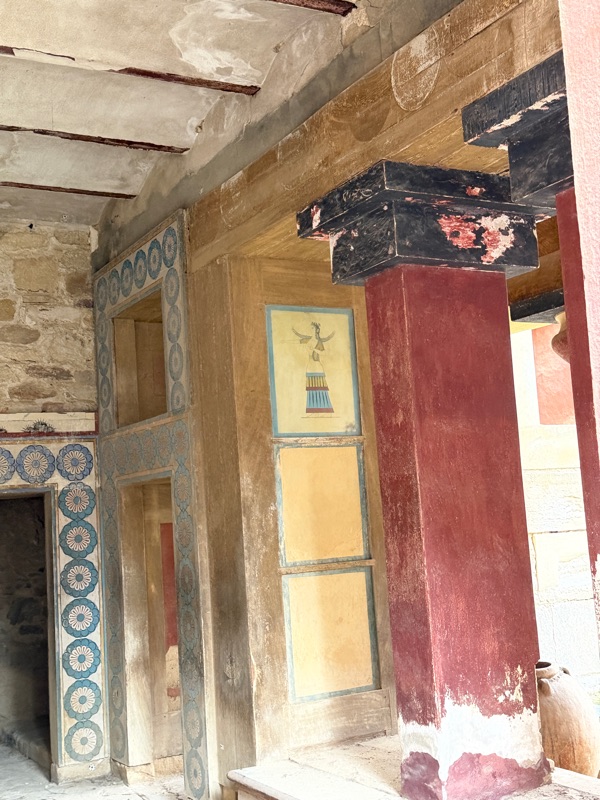
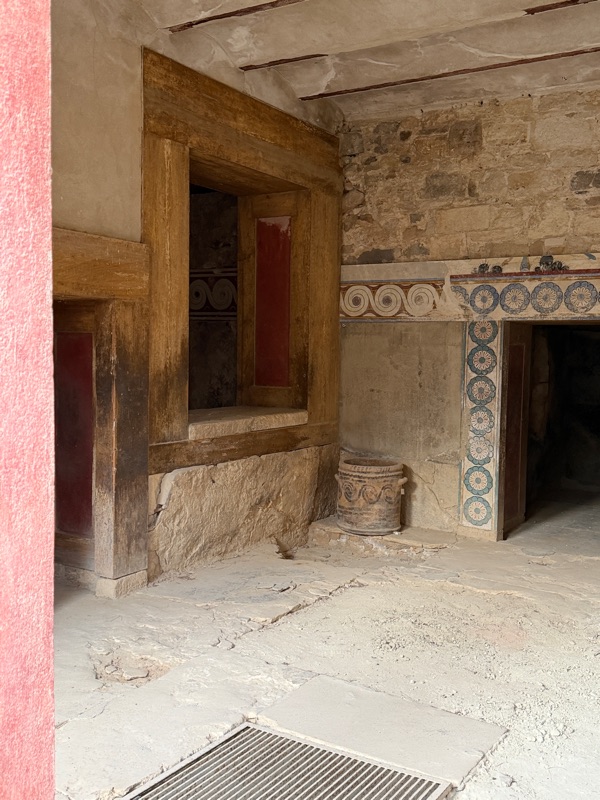
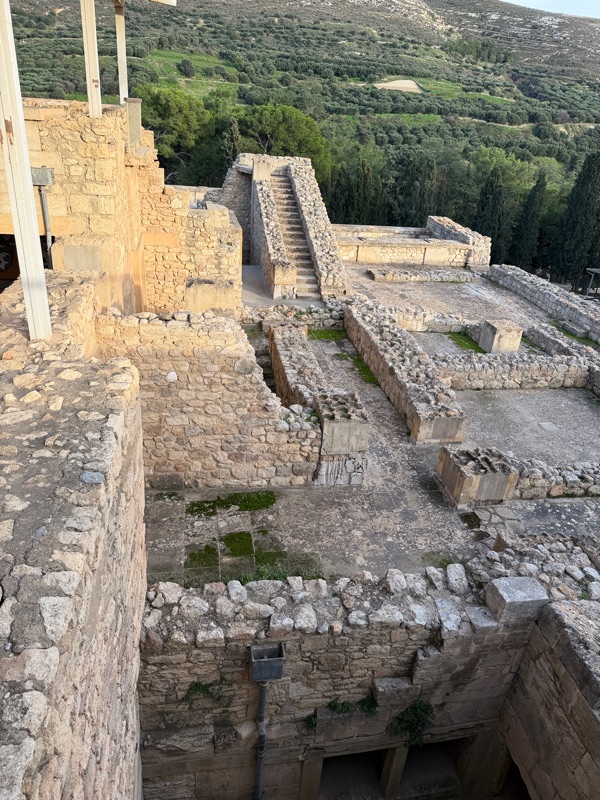
Ceremonial staircase leading to the king’s bedroom.
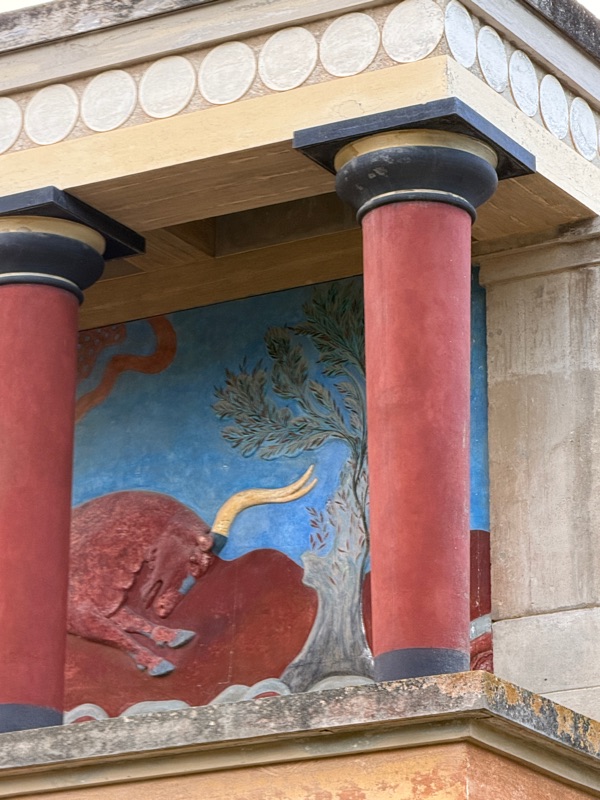
Painted freize or Bull with Olive tree representing Zeus (father of King Minos) and the olive oil that brought them wealth.
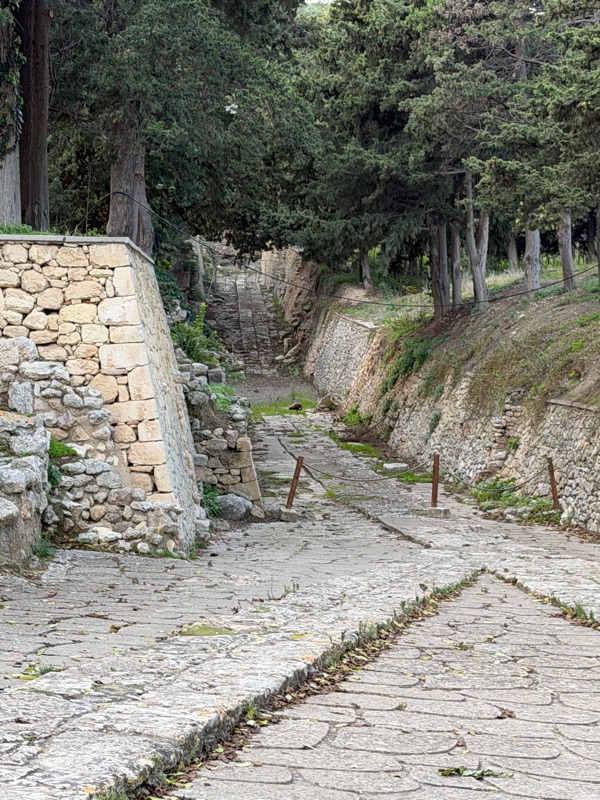
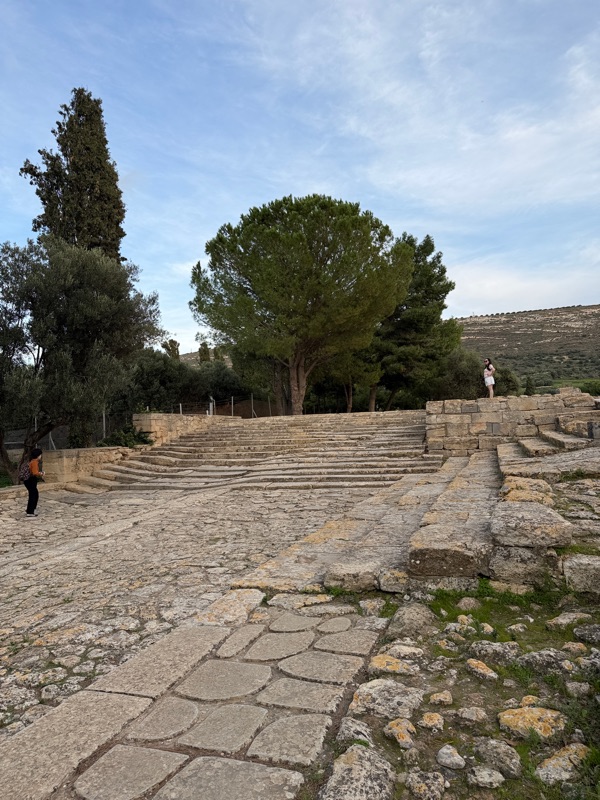
Ceremonial area outside the palace complex at the end of a long passage between the King’s palace and a smaller palace in the town, where performances were probably held.
After a quick tour of the town of Heraklion, Panos took us to our historic hotel - The Megaron, right on the water front and near the city center of Heraklion. We rested for a bit, then headed out for a walk and dinner.
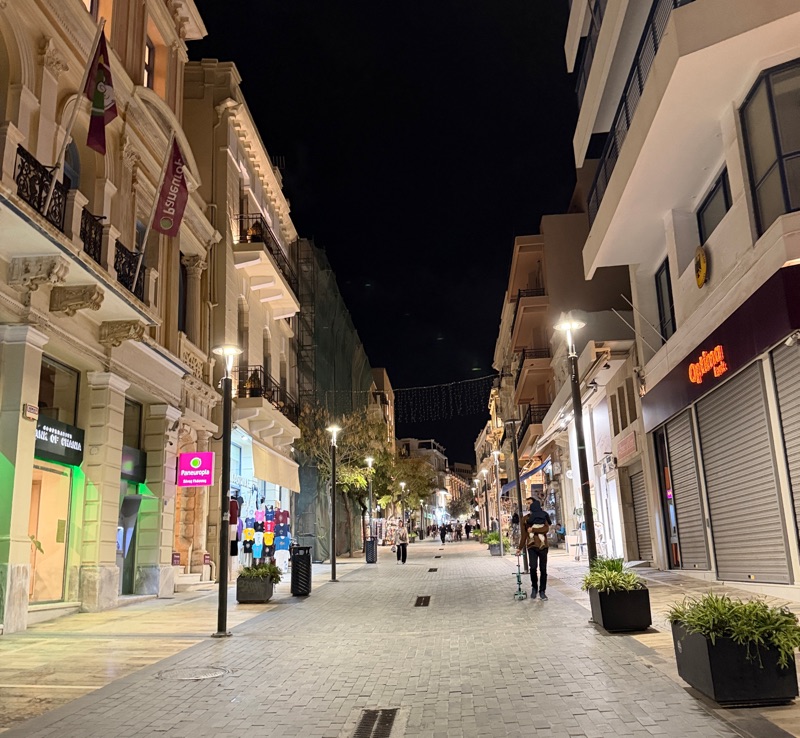
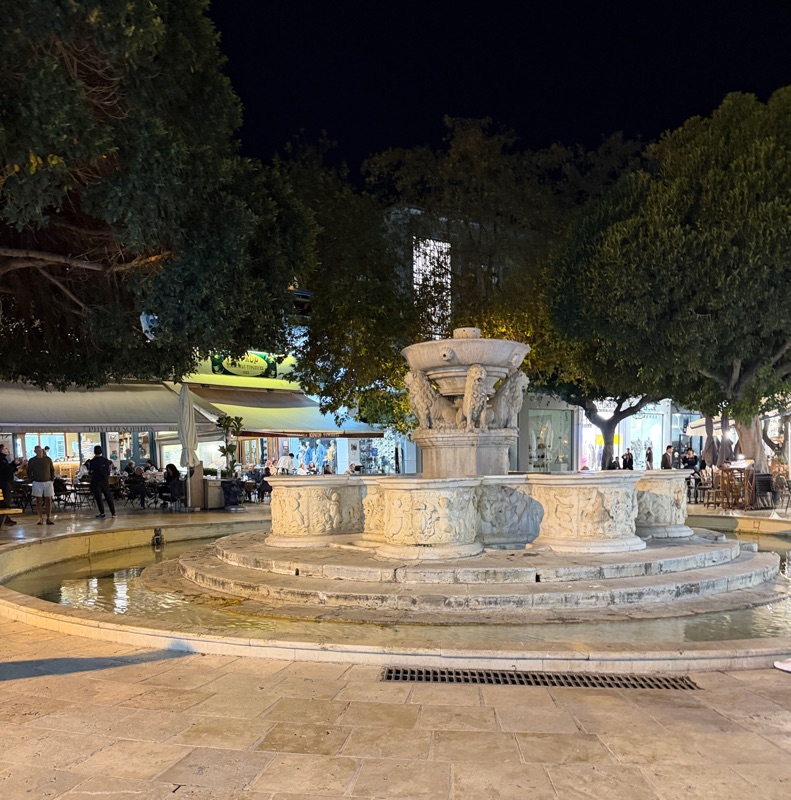
We enjoyed walking along the old Venetian streets (which have been made into a substantial pedestrian area), seeing Venetian loggia, as well as a Greek Orthodox Church of St Titus, where the Apostle’s actual skull can be viewed!
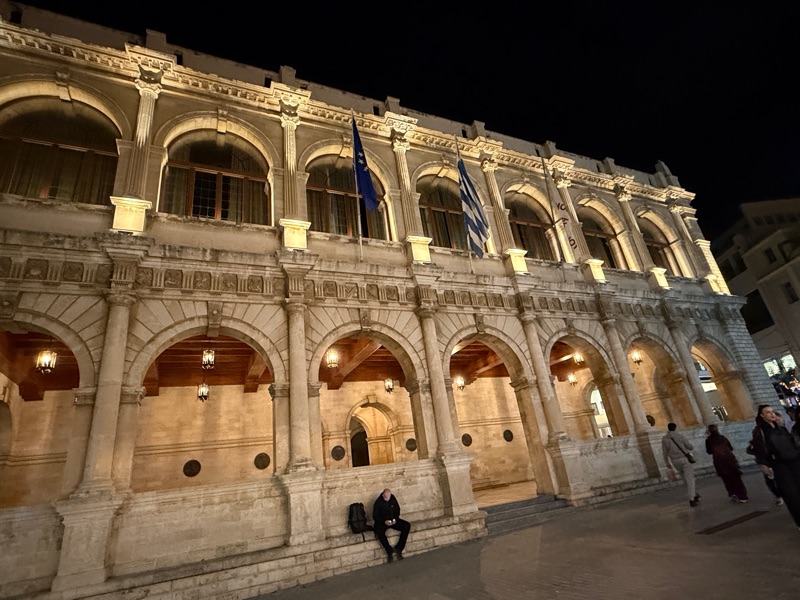
Venetian loggia
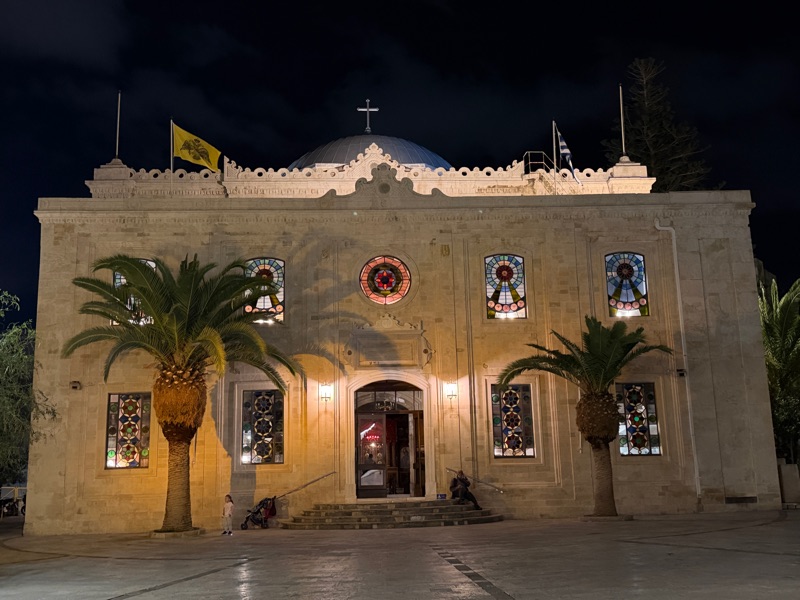
St Titus Church
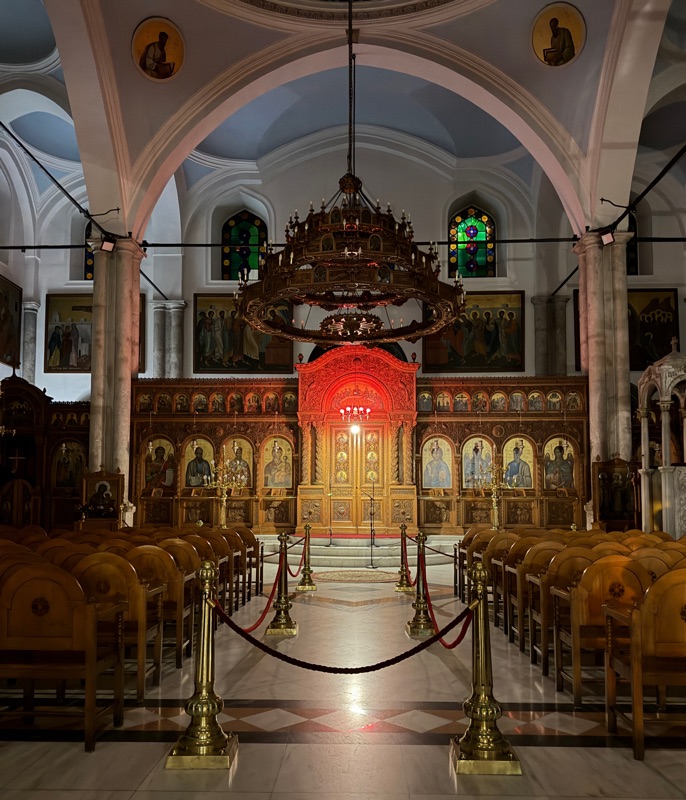
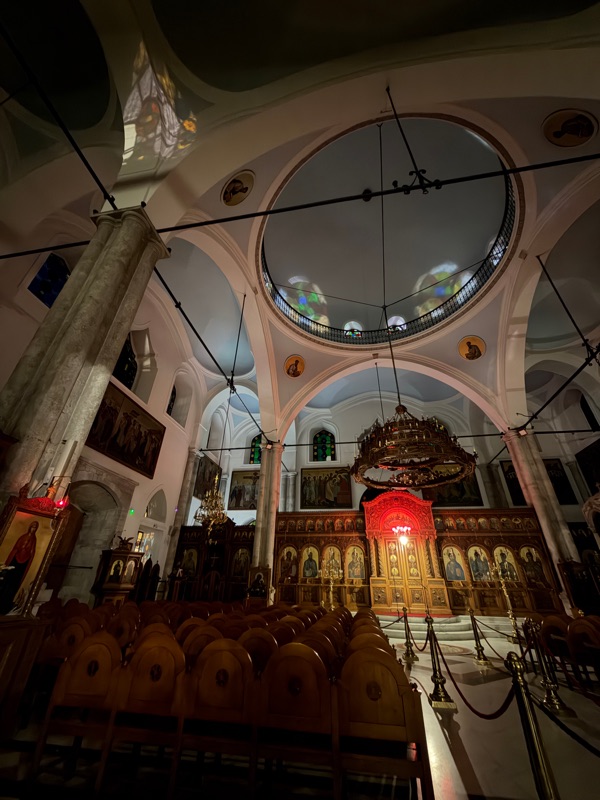
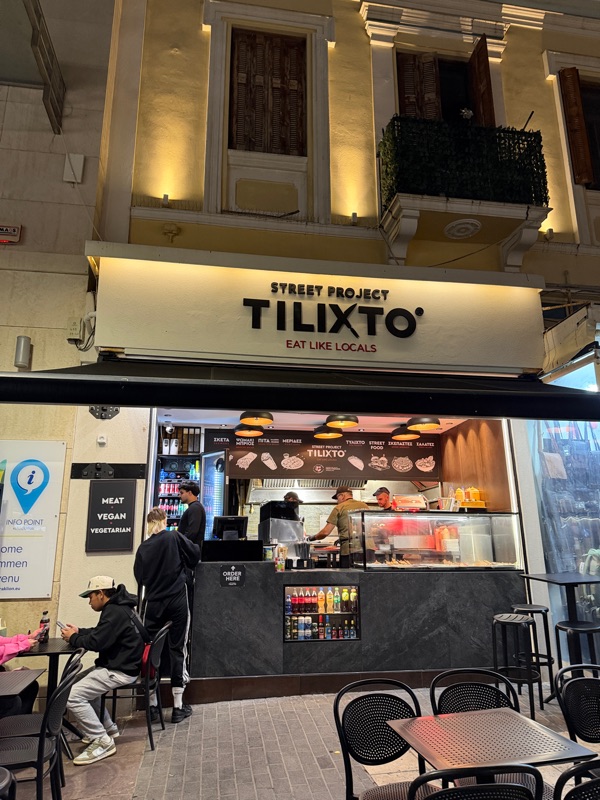
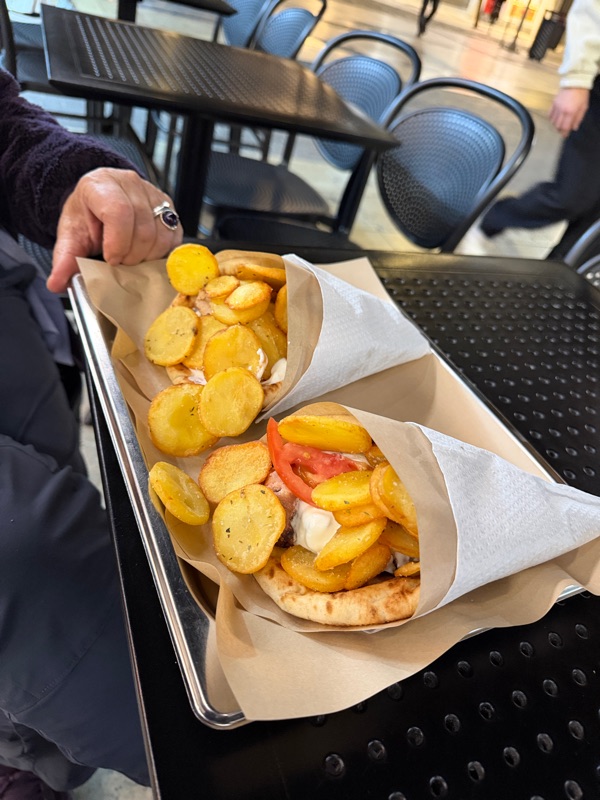
We had delicious “street food” meat sandwiches with pita and tsaziki, and then had a pleasant wander home again.


No comments:
Post a Comment