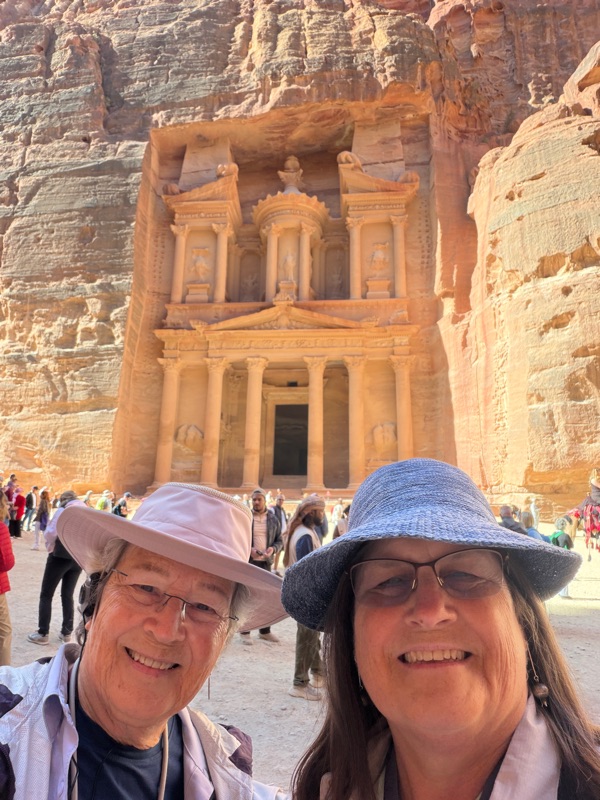
Historical Note:
Petra was most likely occupied periodically by the nomadic Nabataeans before the third century BC. The Nabataeans eventually settled down there permanently. They were great builders and engineers and after they figured out how to control the water so there was a stable source and no flood damage, Petra became a thriving and wealthy city, based largely on its location at the crossroads of several major trade routes. The peak of their civilization was in the first century BC. In 106 AD, the Roman’s annexed the city and their presence influenced the architecture and public spaces. Their presence also eventually influenced trade routes on which Petra’s wealth and importance was premised. A major earthquake in 363AD largely disabled the water controls, destroyed buildings and caravan routes and led to abandonment by most of the population. After that the area was sporadically occupied by Bedouin tribes until 1985 when the site achieved UNESCO World Heritage status.
Now - Continuing from yesterday’s blog:
The Street of Facades and the Royal Tombs
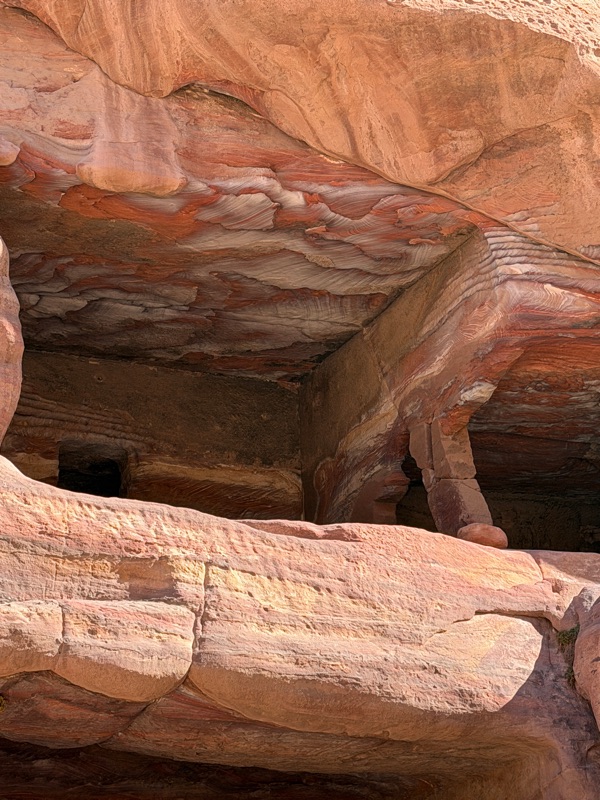
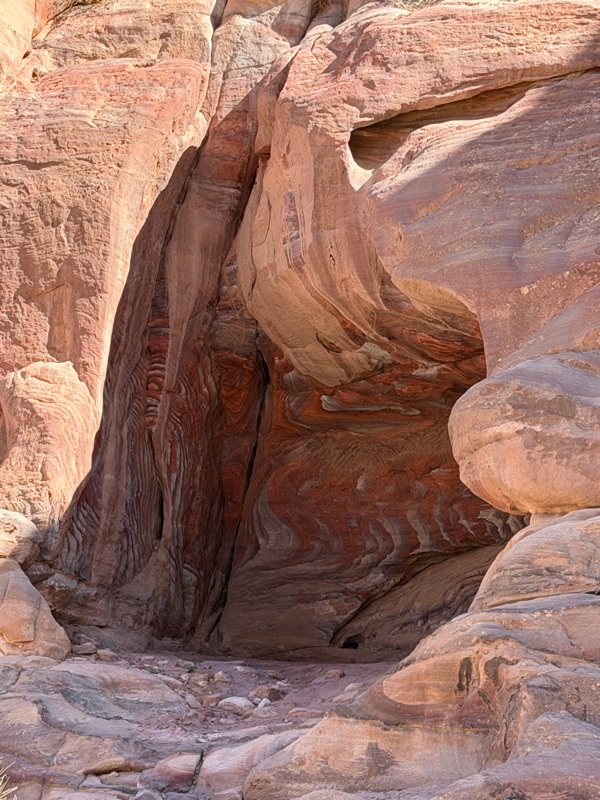
After the narrow passage through the Siq that ends at The Treasury facade, the road widens significantly as it winds through the section where the Nabataeans buried their dead. Known as the Street of Facades, the high sandstone walls on both sides of the road, are covered with large facades of tombs of the wealthy people who lived there. The multi-colored rock was a beautiful complement to the lovely rose sandstone mountains. The magnificence of these carved facades is a testimony to the significance of Petra as an important trading center. It was a major crossroads of the network of trading routes that linked the Middle East with Egypt and the Mediterranean. It was not hard to imagine the three wise men passing through Petra on the way to Bethlehem .
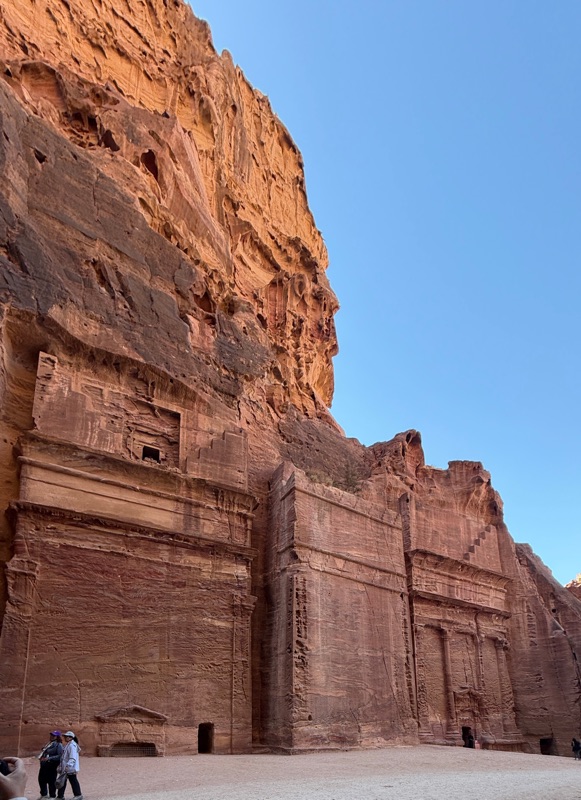
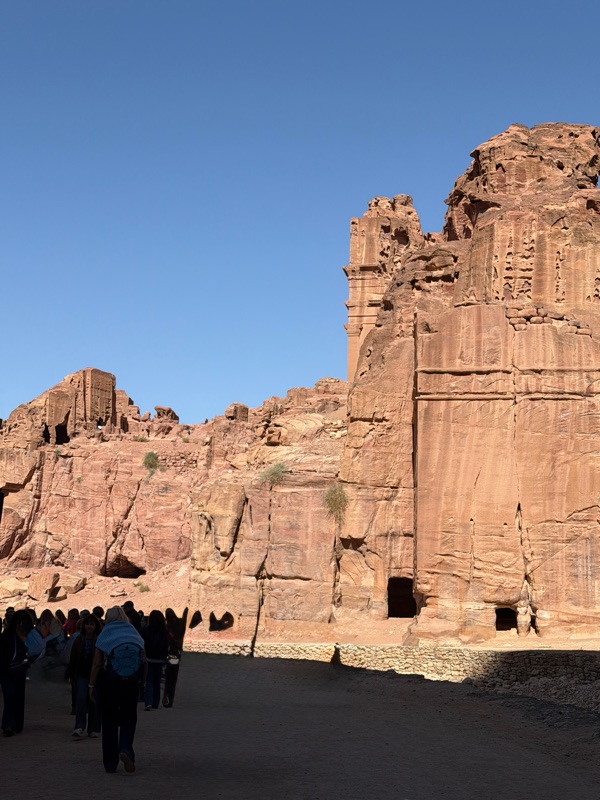
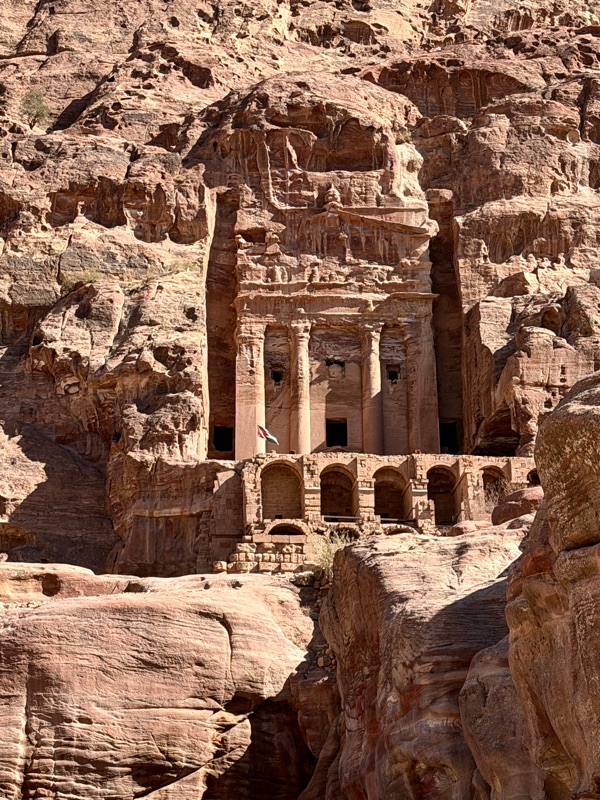
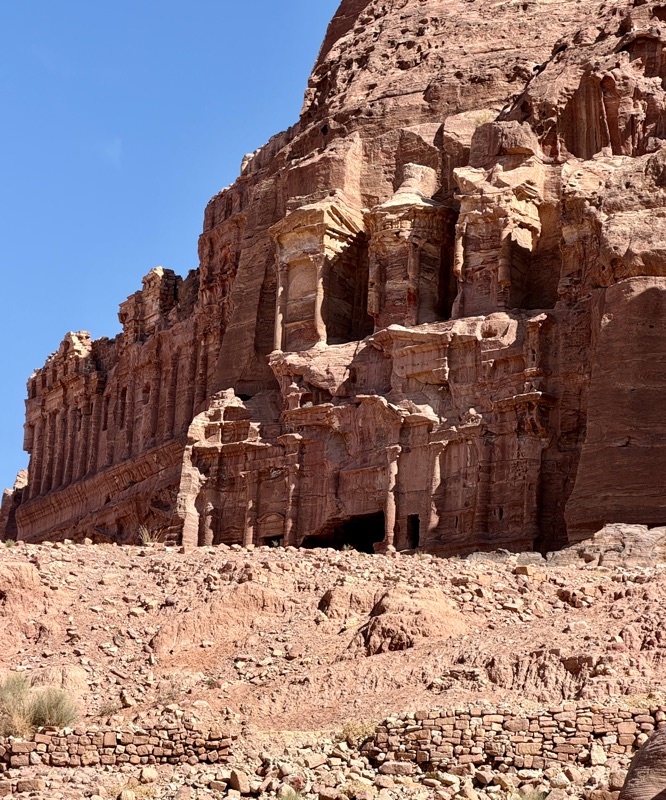
Above the Street, there is an upper level of even grander tombs carved into the rock. These are known as the Royal Tombs, although it is likely the tombs were for powerful community leaders rather than royalty.
The city of Petra
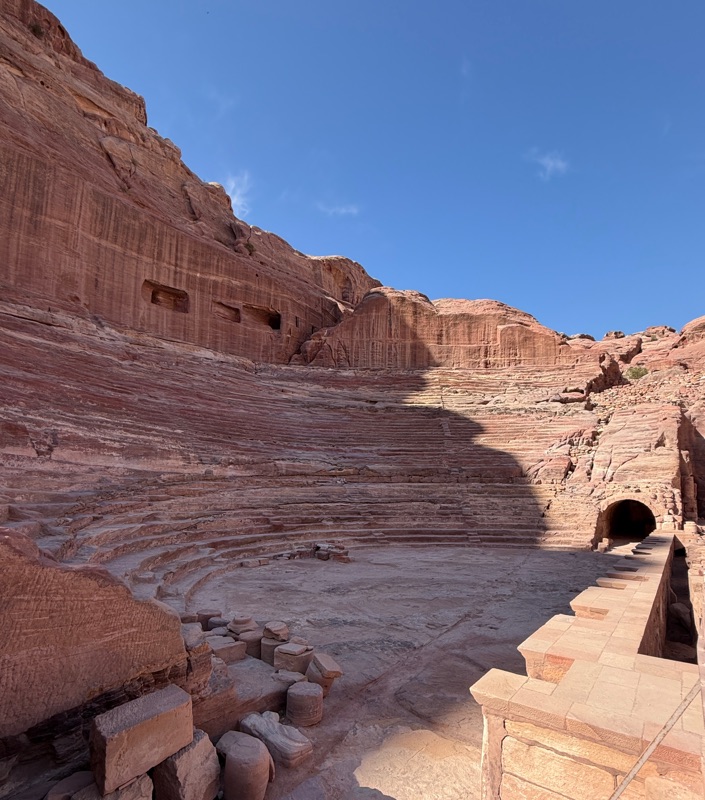
Further down the road there is Nymphaeum (public water fountain) and a small amphitheater.
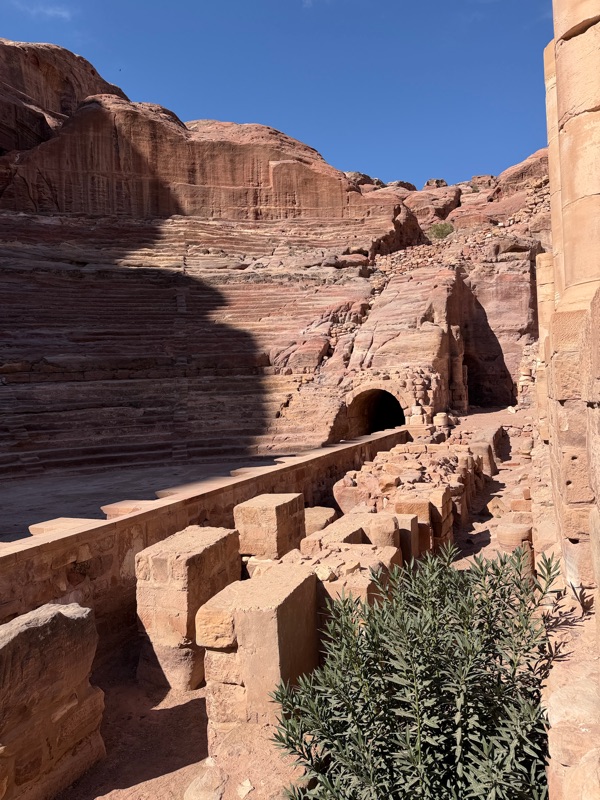
Only the steps of the fountain remain.
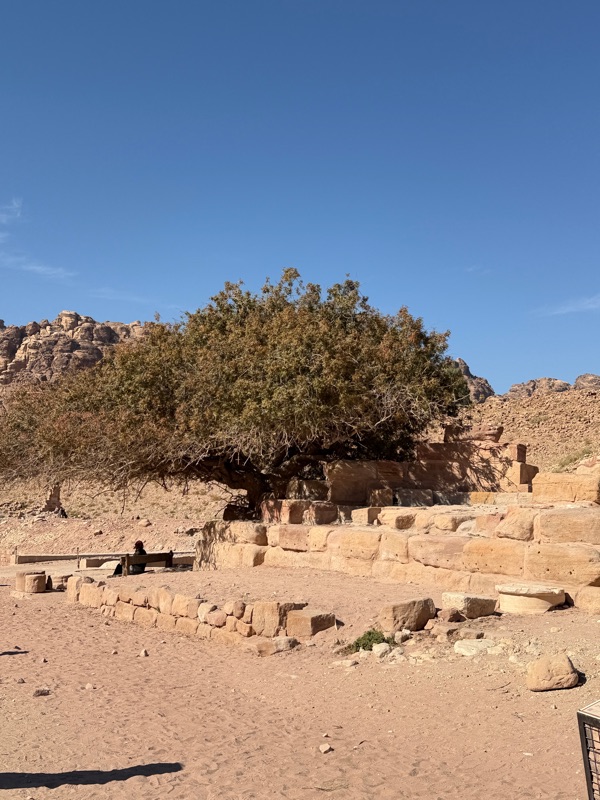
Then there is a long paved street (known as the Colonnaded Street) that leads down to where the civic center of the ancient city was. It has columns on both sides, some of which are still in sections at the side of the road.
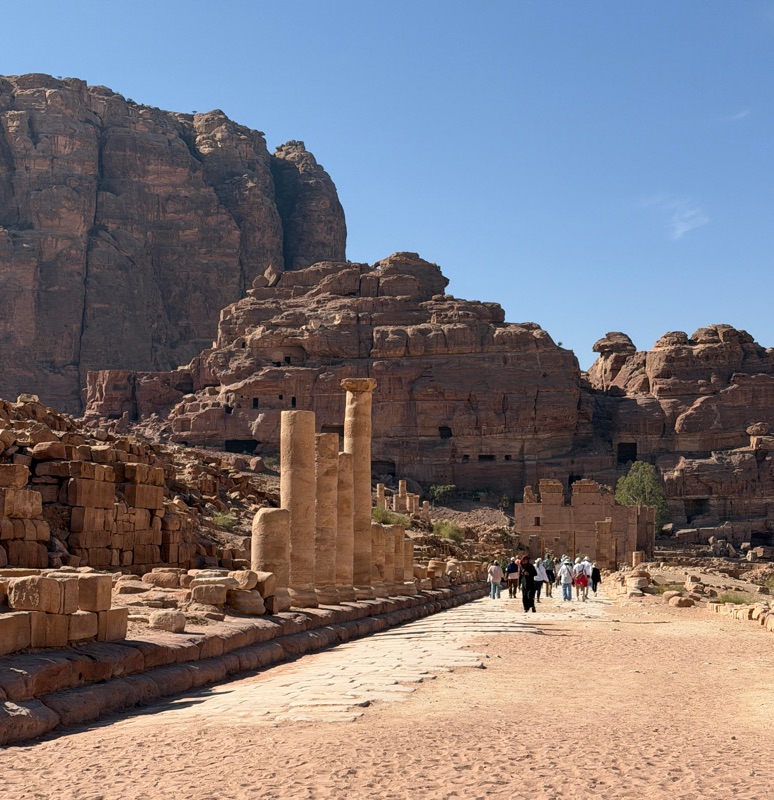
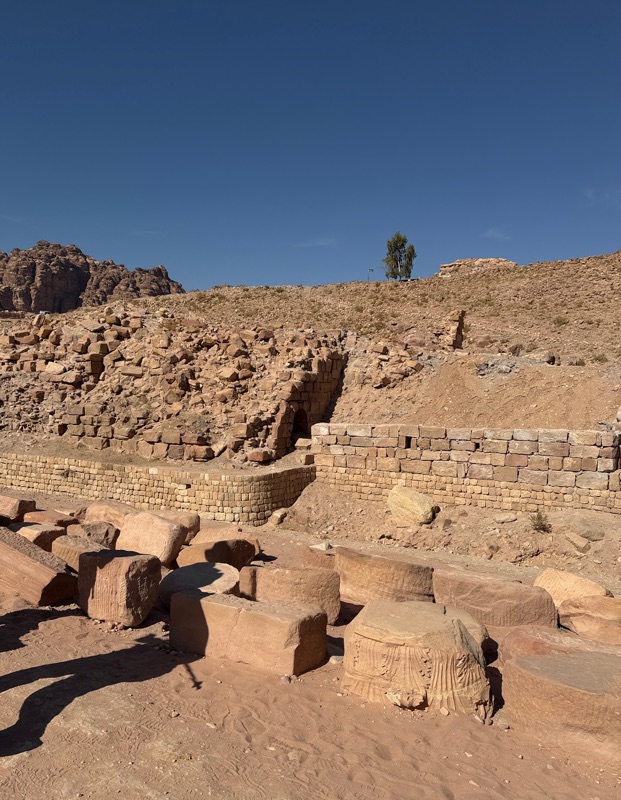
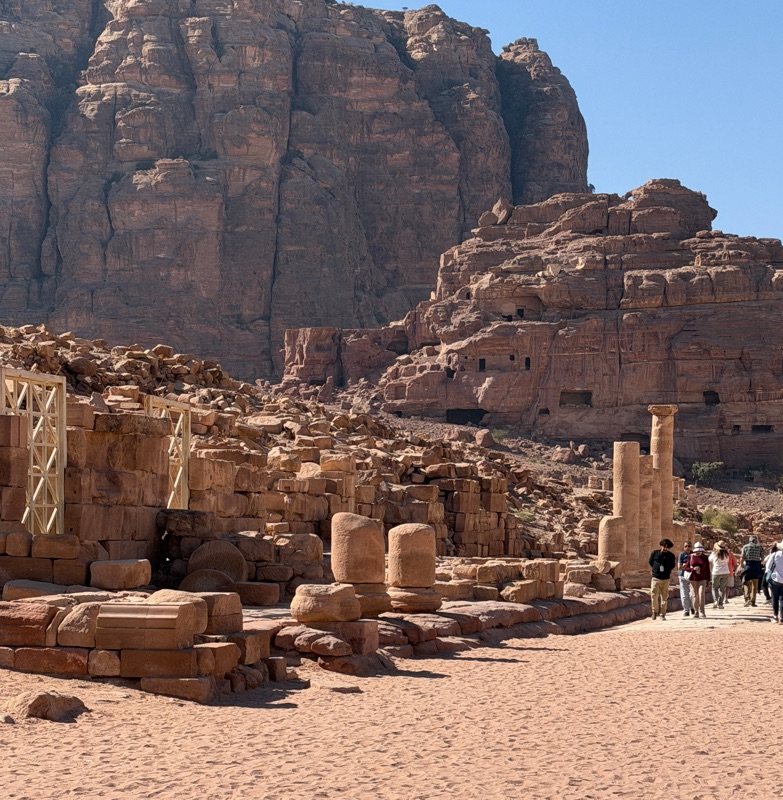
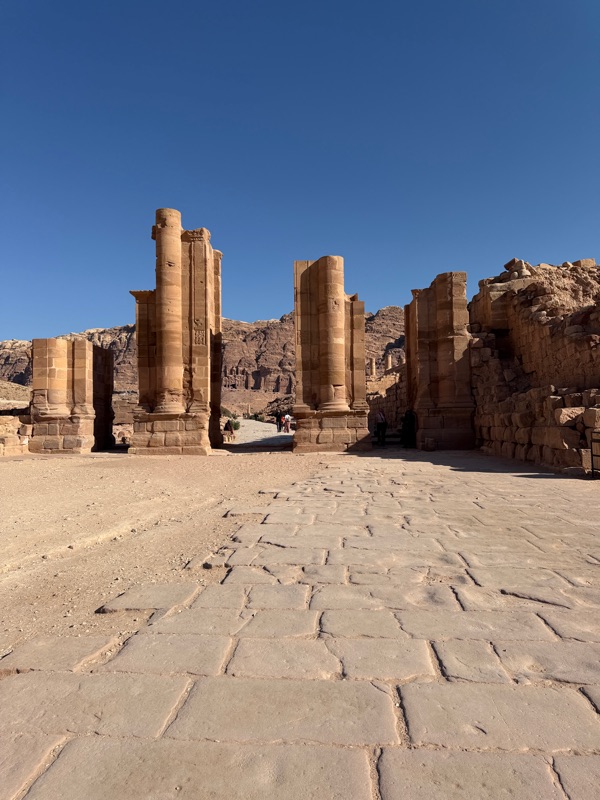
City gates on the original road.
As noted above, very little of the city of Petra has been excavated yet. As you walk down that ancient colonnaded road, with low lying barren hills on either side, you can use your imagination to think about what might be discovered when and if more of the ancient city is uncovered.
Temples
There are a number of large temples as the road reaches the far wall of the valley. The number, size and variety of these temples makes archaeologists believe that Petra was a major religious center as well as a trading hub.
The Great Temple of Petra is a huge complex built up the side of a big hill on the south side of the road. The temple is dedicated to Dhu-Shara. There are three or four levels, wide open, paved terraces accessed by stairs, many columns and even a small theater. Next to the temple are Roman baths and a variety of other buildings.
This temple was discovered in 1993, and excavated and restored over the next 10 years - so it wasn’t there at all when Cheryl visited in 1992. We enjoyed climbing all the way to the top where it stops at the mountain wall. From there we were at eye level with the Royal Tombs across the valley.
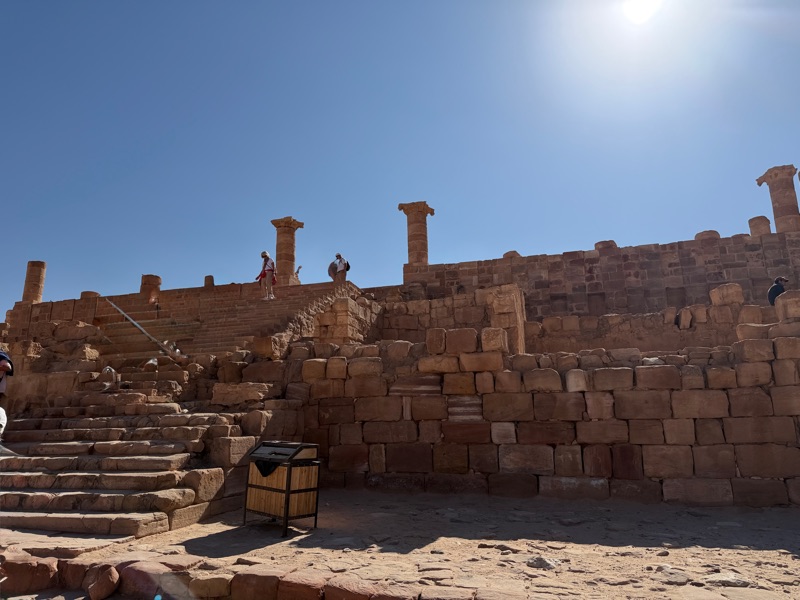
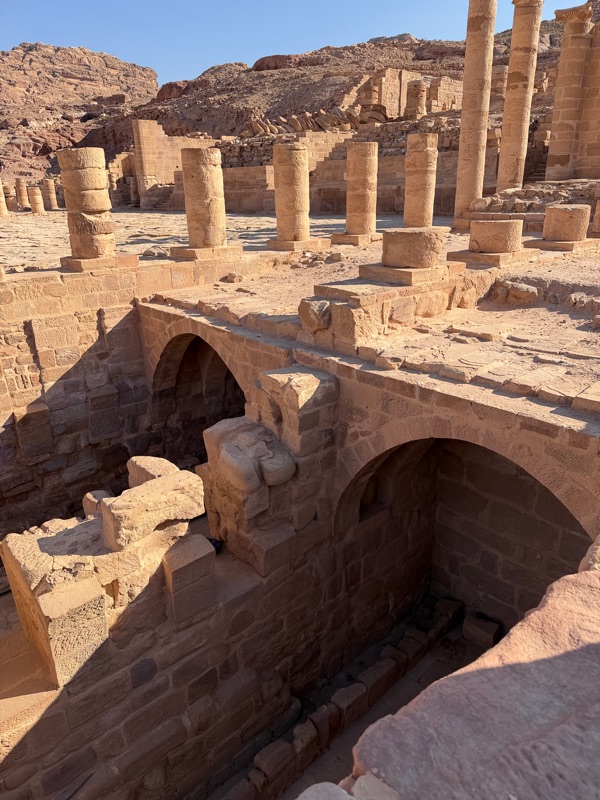
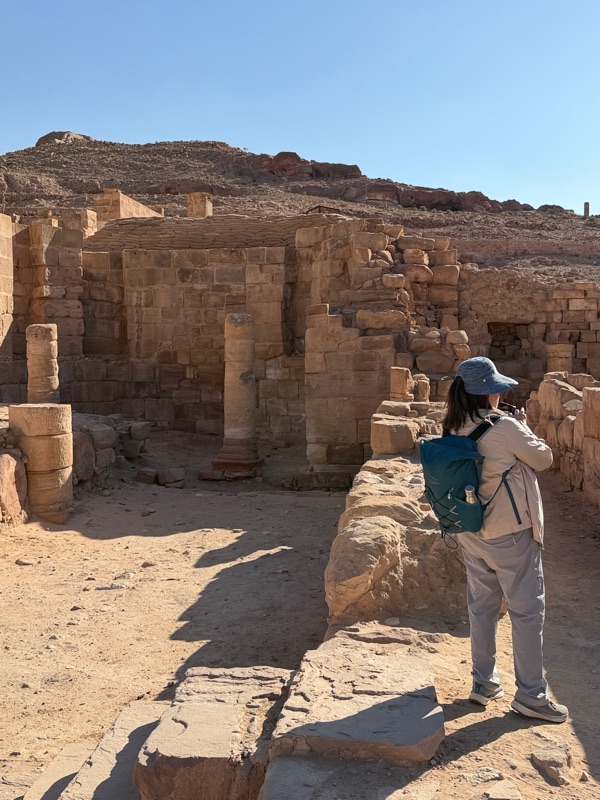
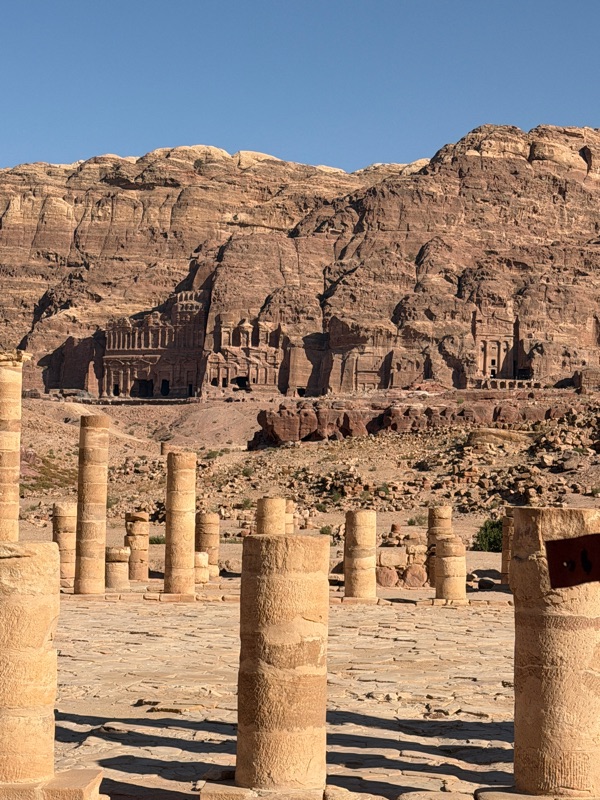
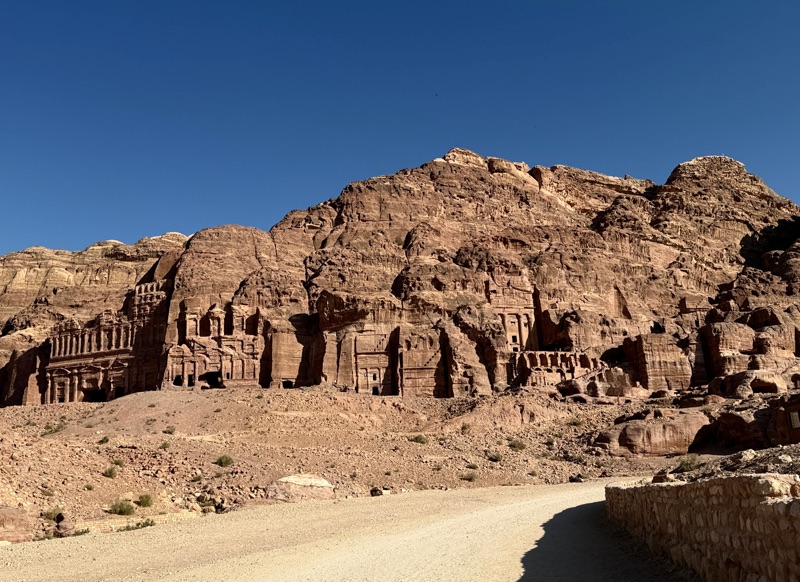
View of royal tombs across the valley.
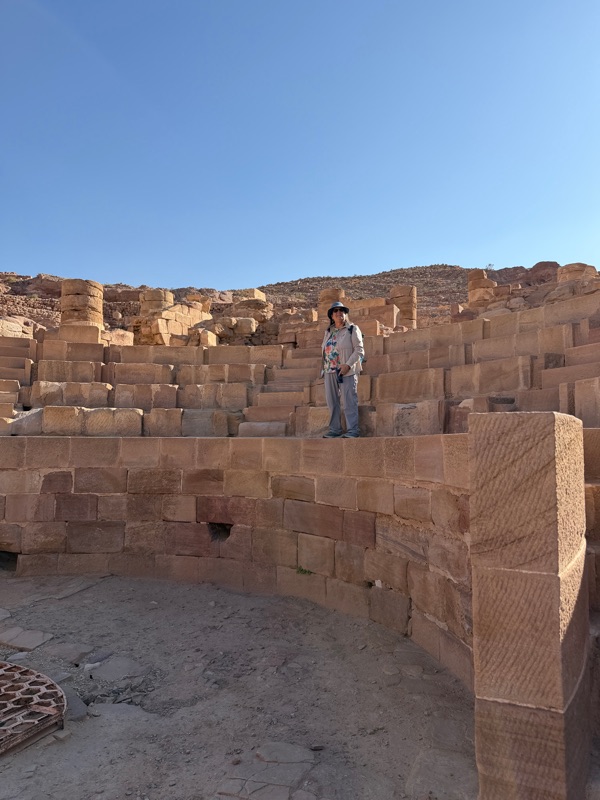
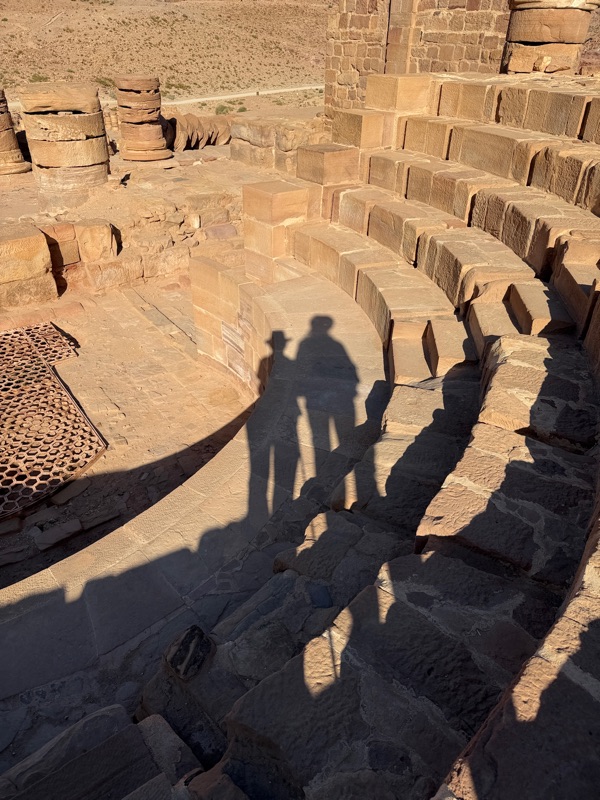
Amphitheater
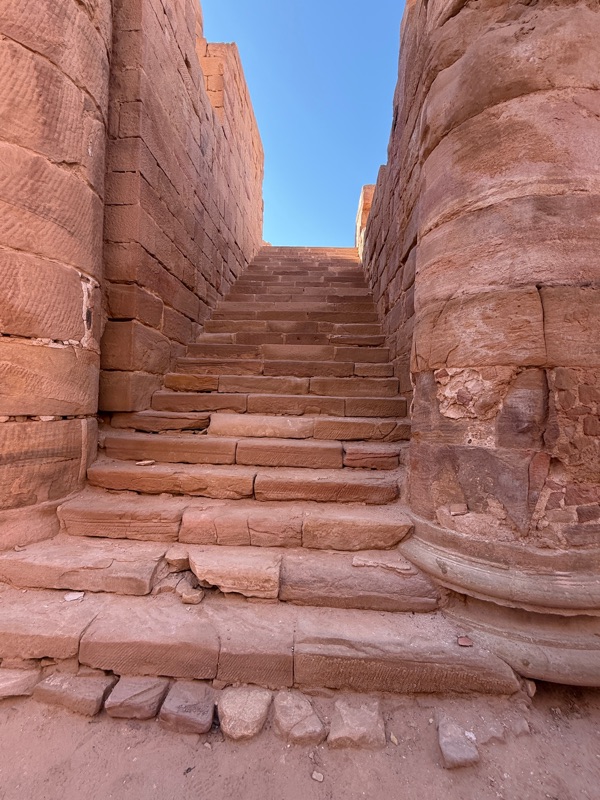
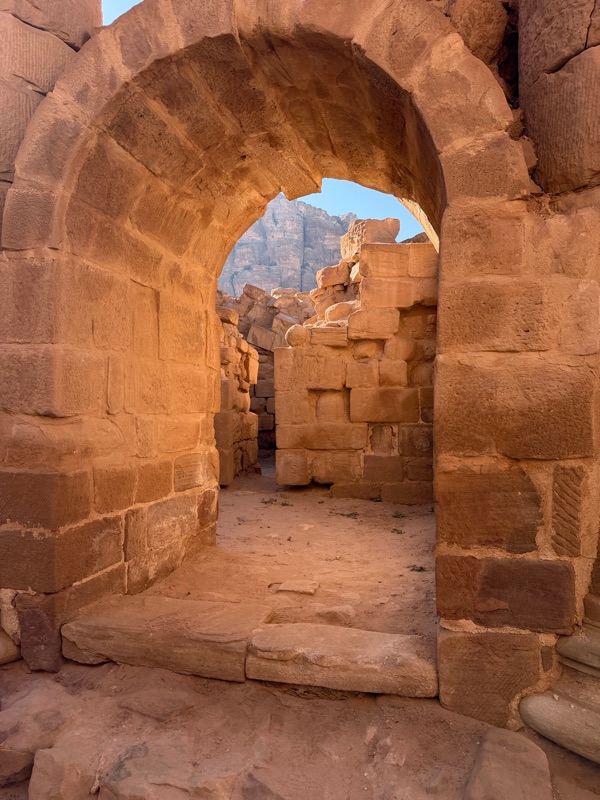
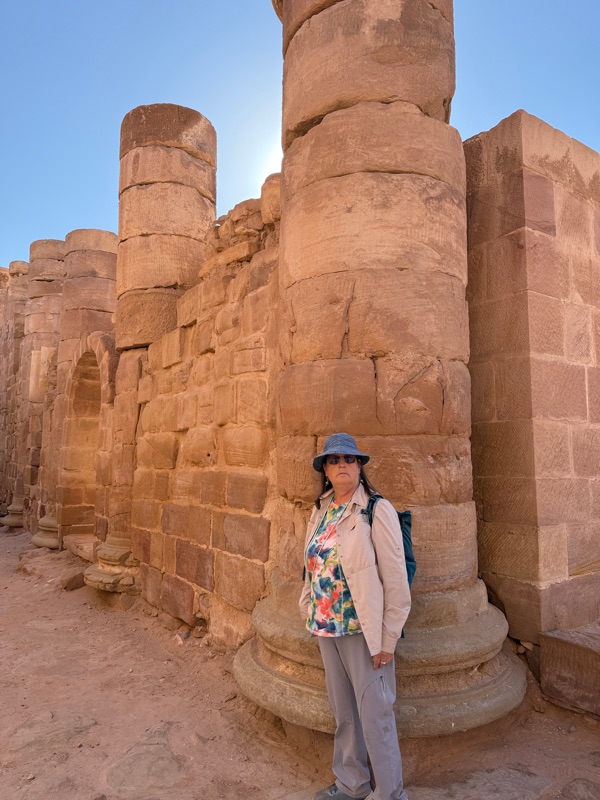
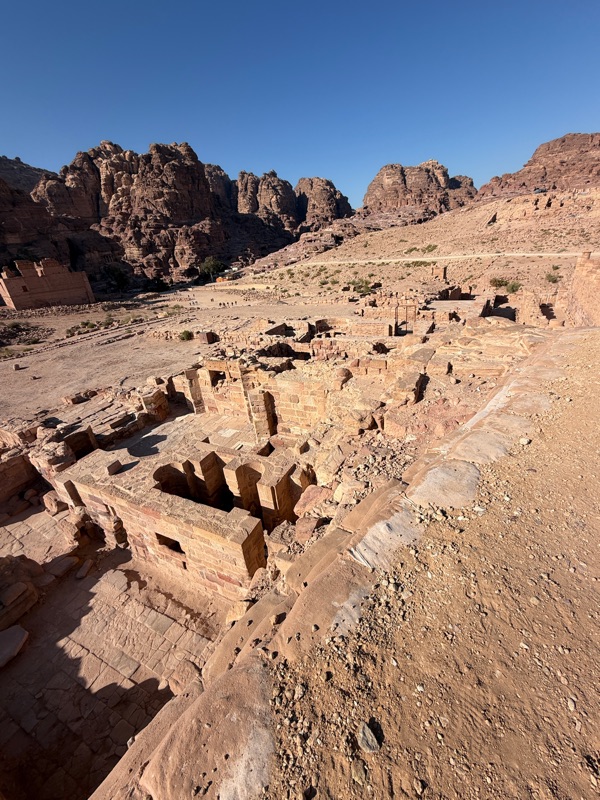
Roman baths
Further down the road, close to where the mountains rise up again. Is the Temple of Dhu-Shara, a free standing square building, the only one built of blocks. The building was closed off for visitors - our guide said when he was trained 40 years ago, his professor said the arches could collapse at any minute.
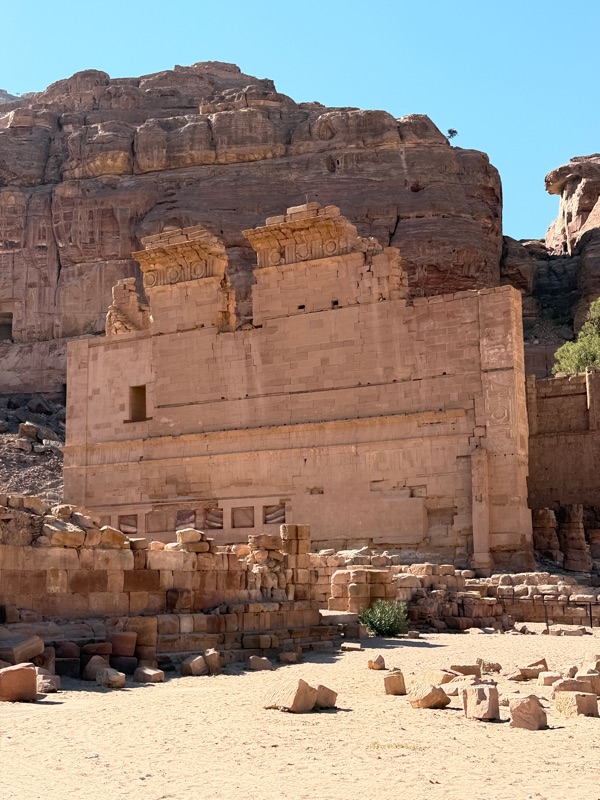
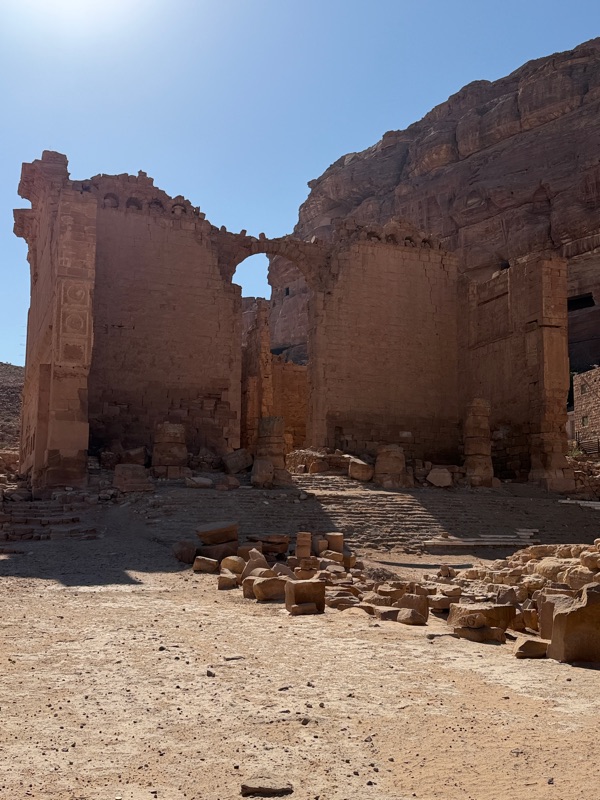
Across the road from the Great Temple was another temple, the Temple of the winged lion, but we didn’t explore that one as it was getting late and we had a long uphill walk to get back to the hotel.
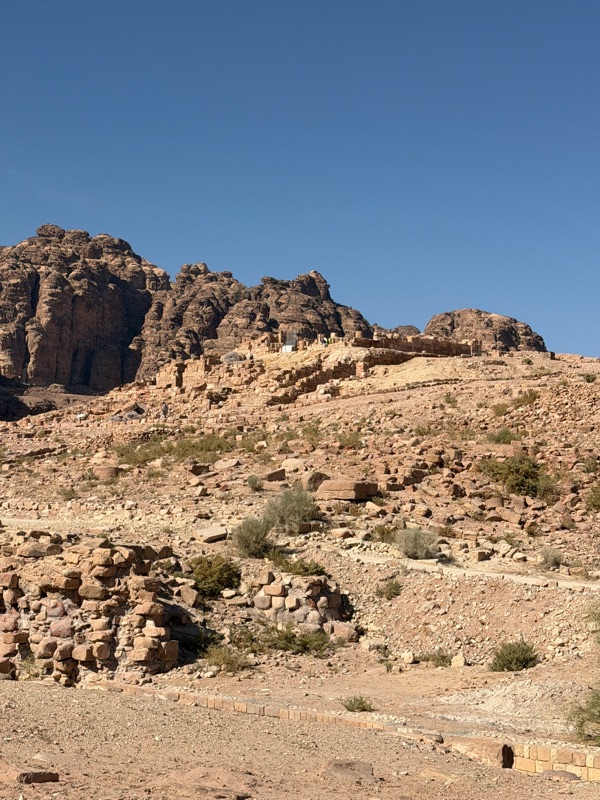
The walk back in golden light.
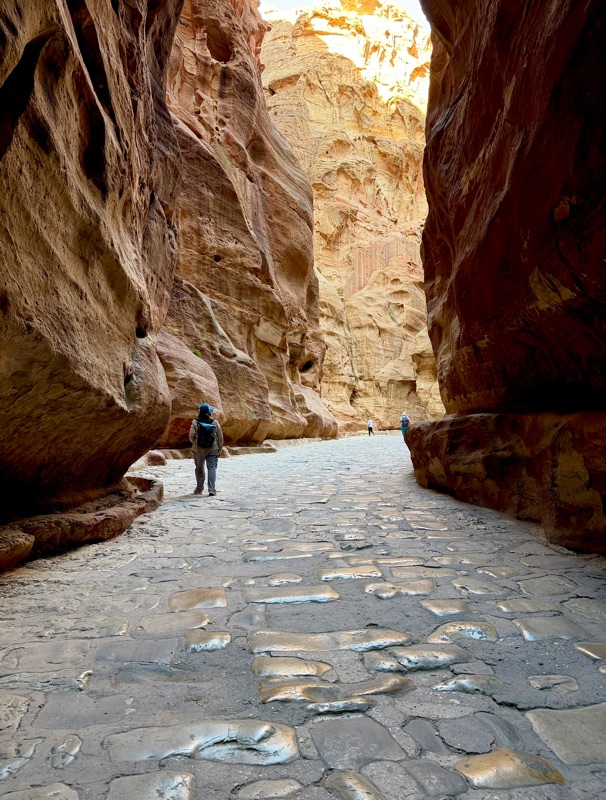
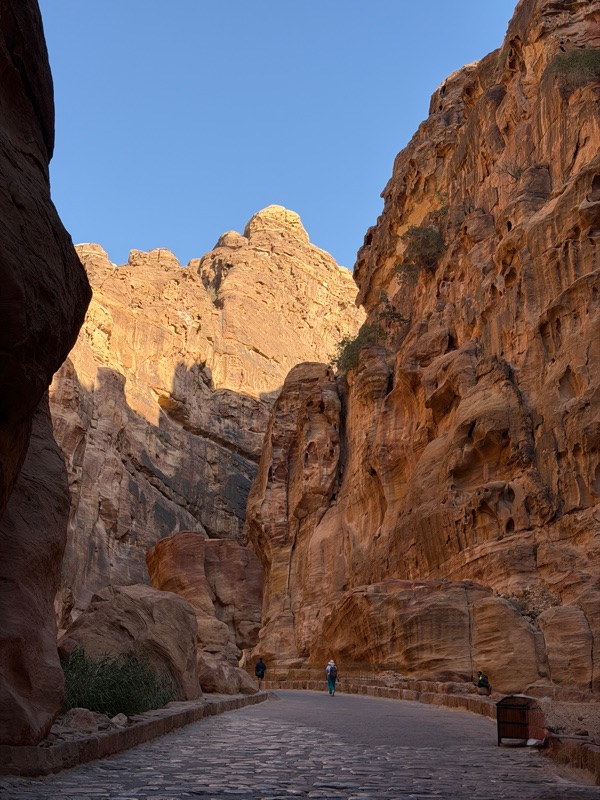
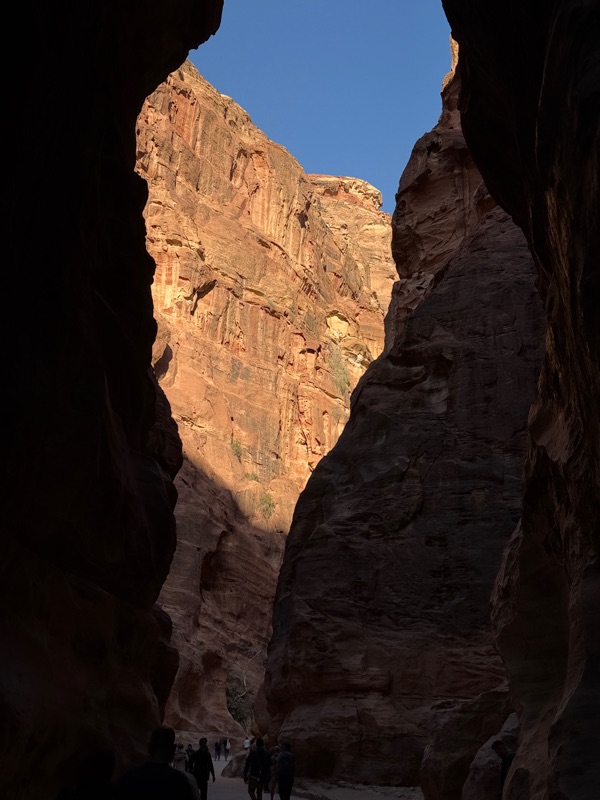
We could have taken a donkey, a horse or a motorized cart most of the way back, but we wanted to enjoy the walk through the valley and especially the Siq in the golden light of the late afternoon. We were not thinking about the fact that it was all uphill!! We walked well over six miles in the course of the day.
The Petra museum
We stopped in the Museum and learned a few things about the Nabatean Empire.
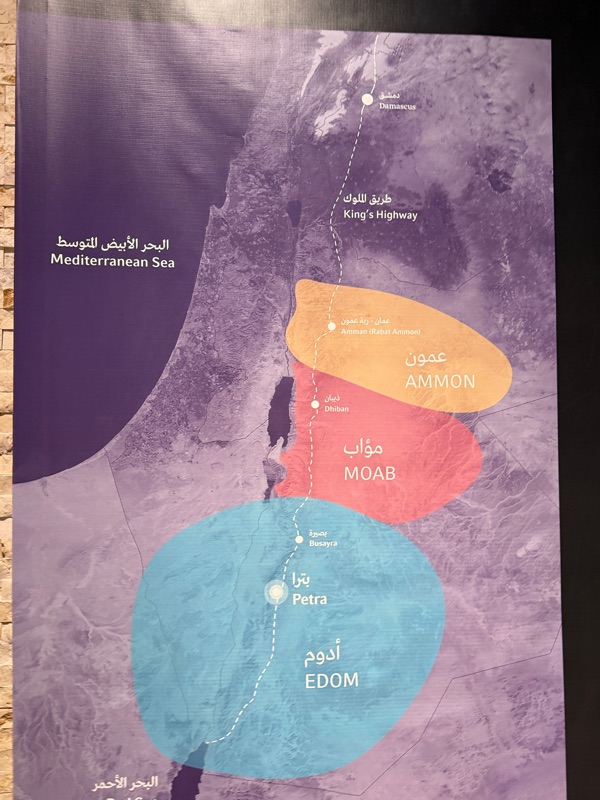
We learned how to spell Dhu-Shara and saw a couple depictions of this protector god of Petra.
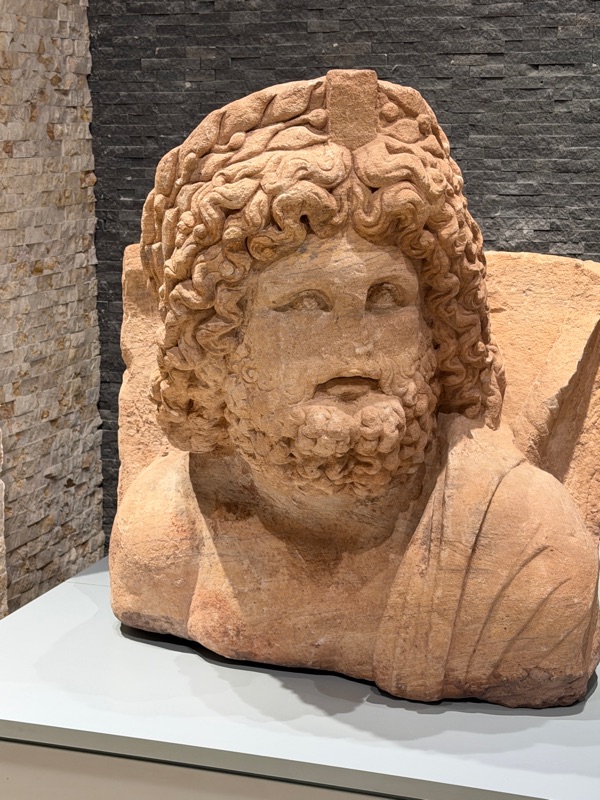
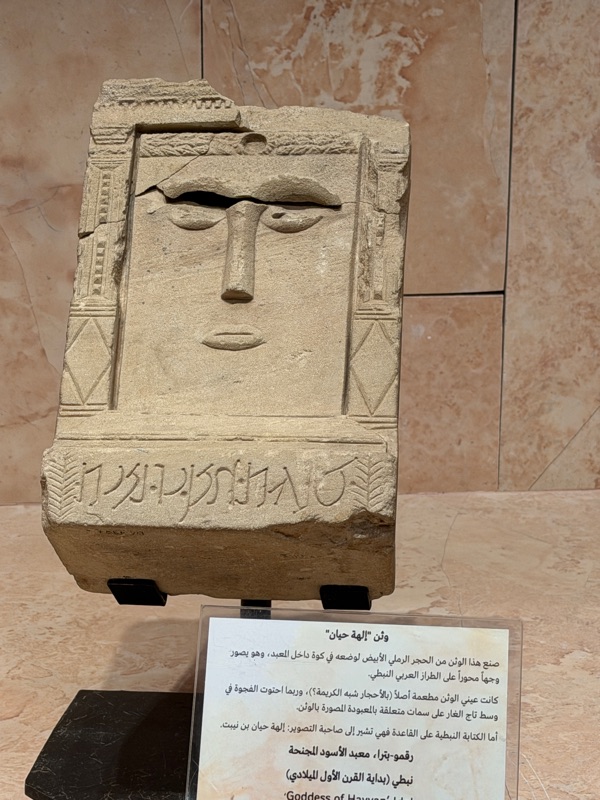
We also saw some of the artifacts from the Winged Lion temple.
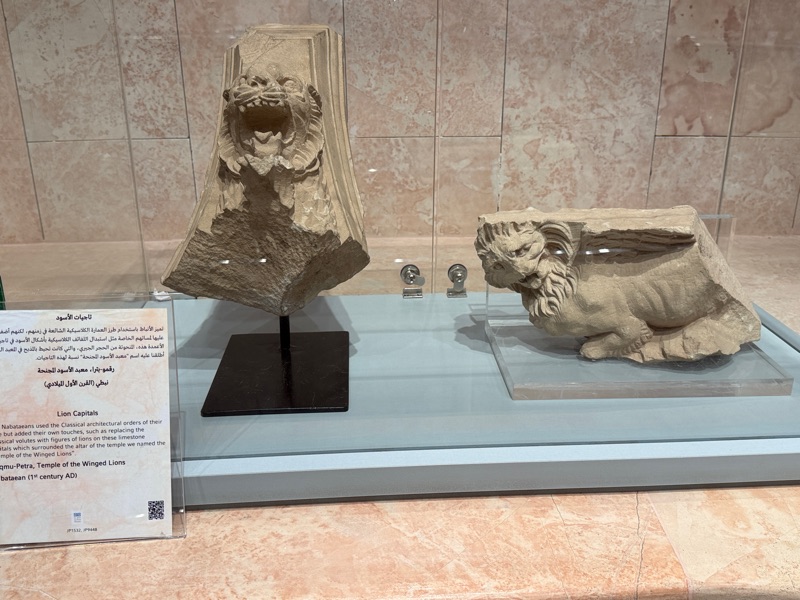
Then we went back to the hotel to rest.


No comments:
Post a Comment