We woke up early to watch the sunrise over our Sahara camp. Then we packed up, loaded up the Land Cruiser one last time and headed for the bus. Along the way we saw many children going to school, many large and imposing sand dunes, and some pretty impressive driving by Omar as we made our way on a very sandy road.
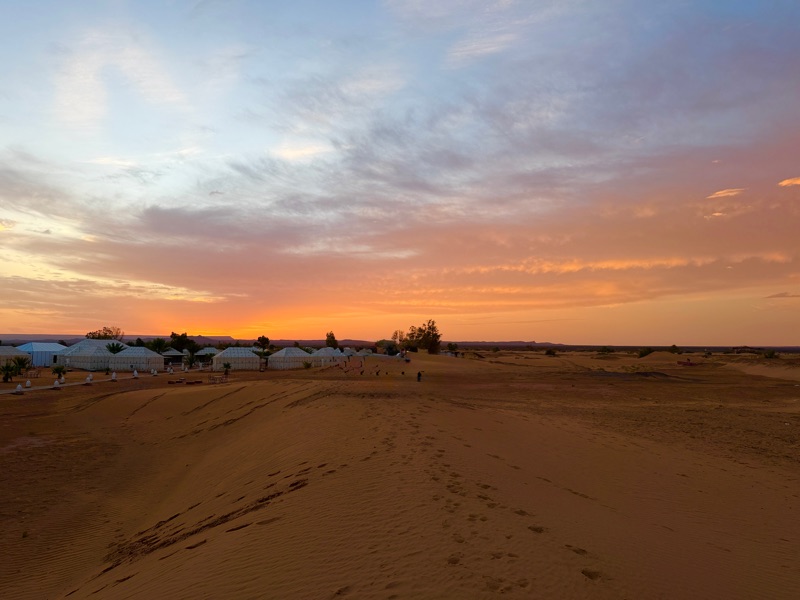
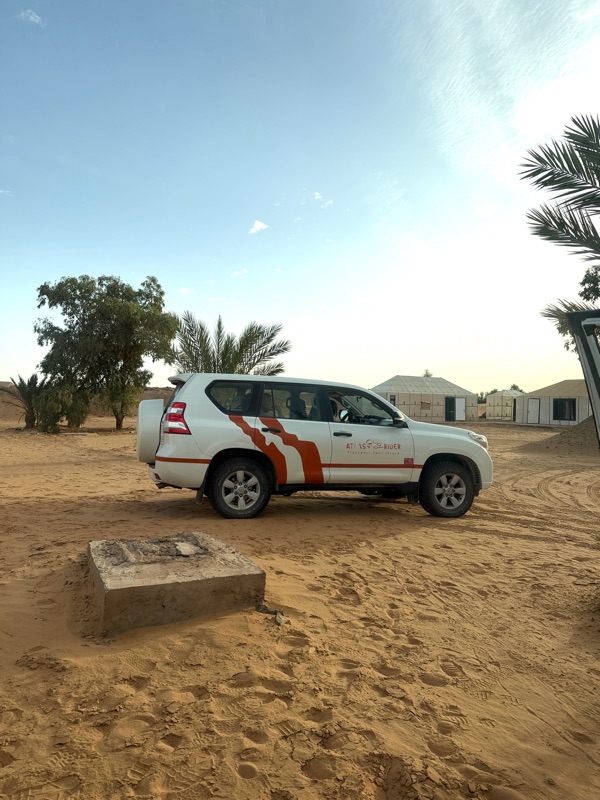
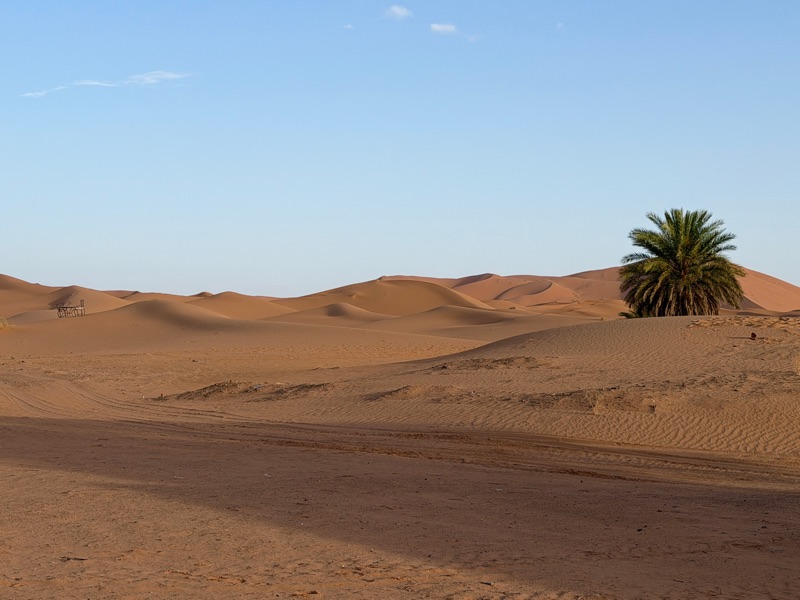
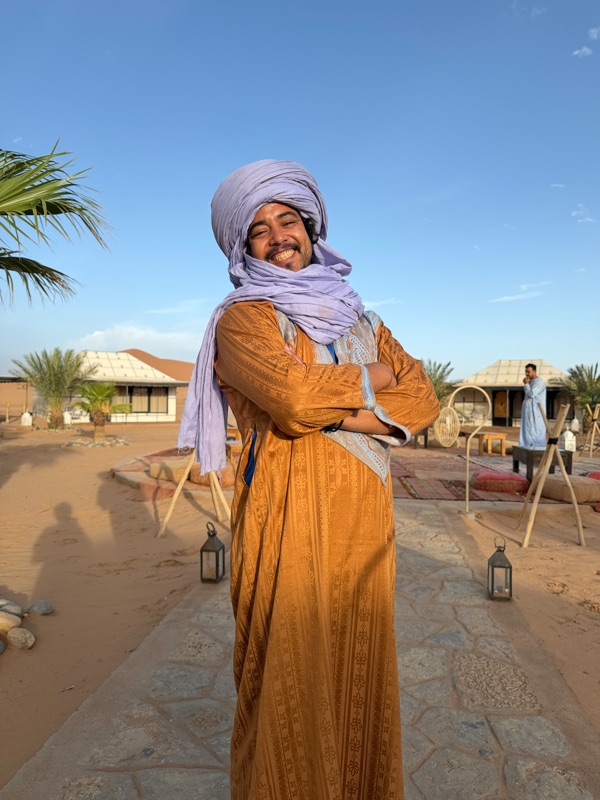 The view
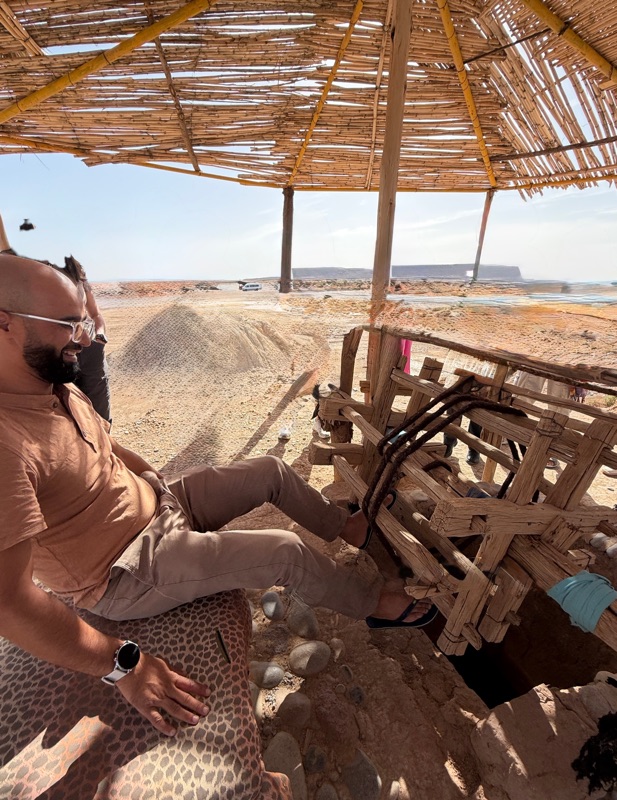
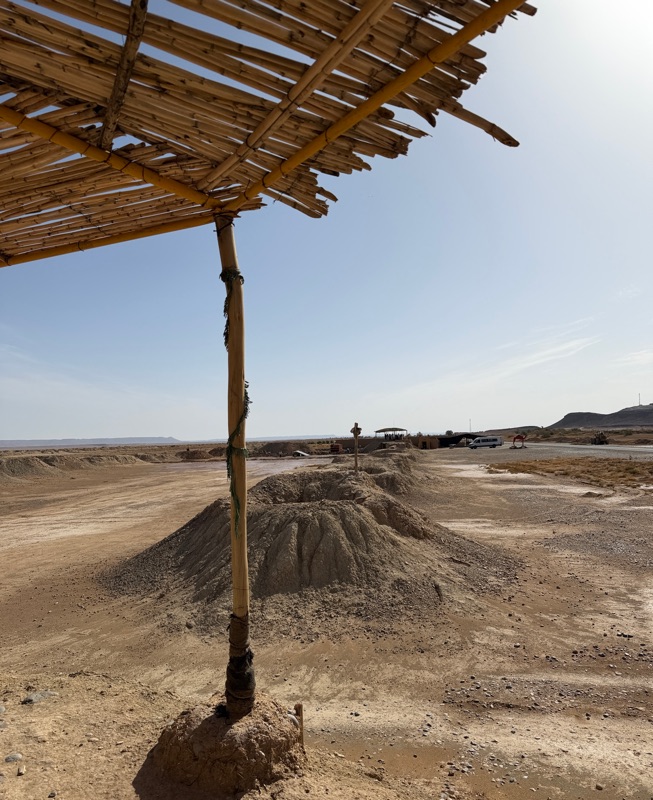
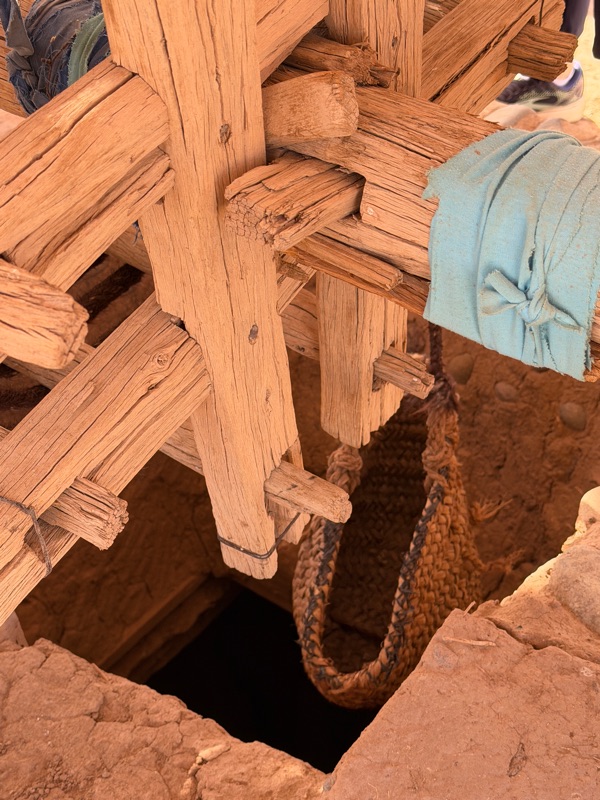
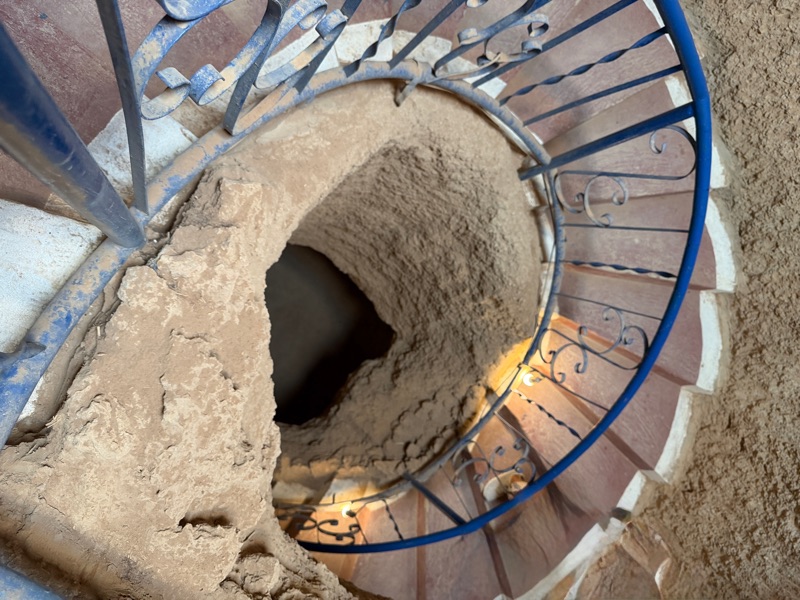
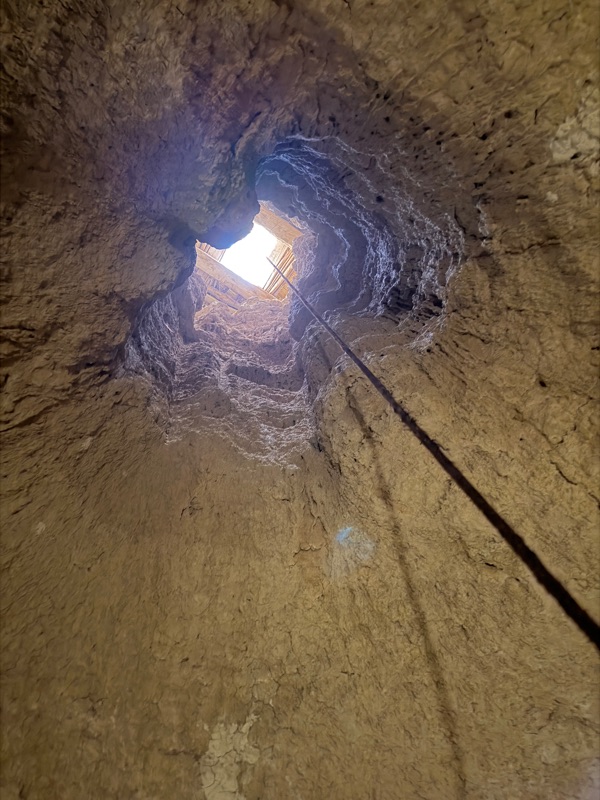
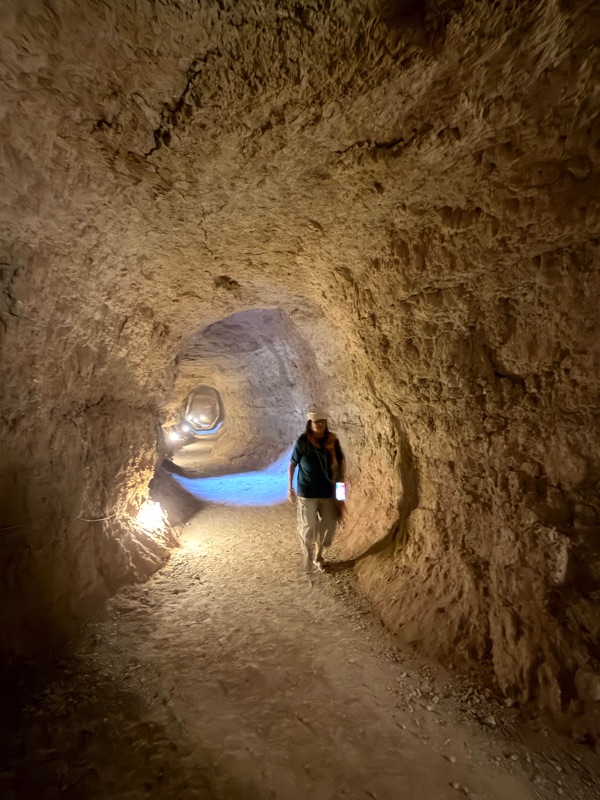
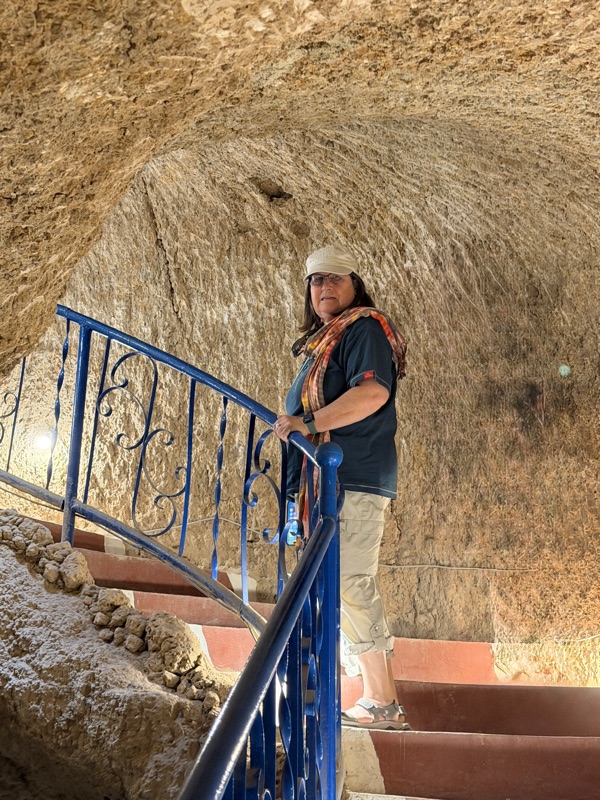
We met up with Abdoul and the bus at the Fossil Center parking lot. And we were off on another long bus trip. Our first stop was to visit an excellent example of the Khattara irrigation system that was designed to bring water to crops with minimum exposure to evaporation from the sun. (https://www.watermuseums.net/heritage/valuing-ancient-water-cultures/moroccan-khettaras/). This incredibly labor intensive system dates from the 11th century, and this specific one date from the 17th century. Once gas powered pumps became available, gravity driven systems were instantly obsolete, so it is incredible that it is still possible to see and visit this place.
Photos: Mohamed pumping the basket up from the tunnel below, the mounds of dirt where the tunnels open to the surface, the basket used to remove debris from the tunnel, opening to the surface from below and staircase down and the tunnel.
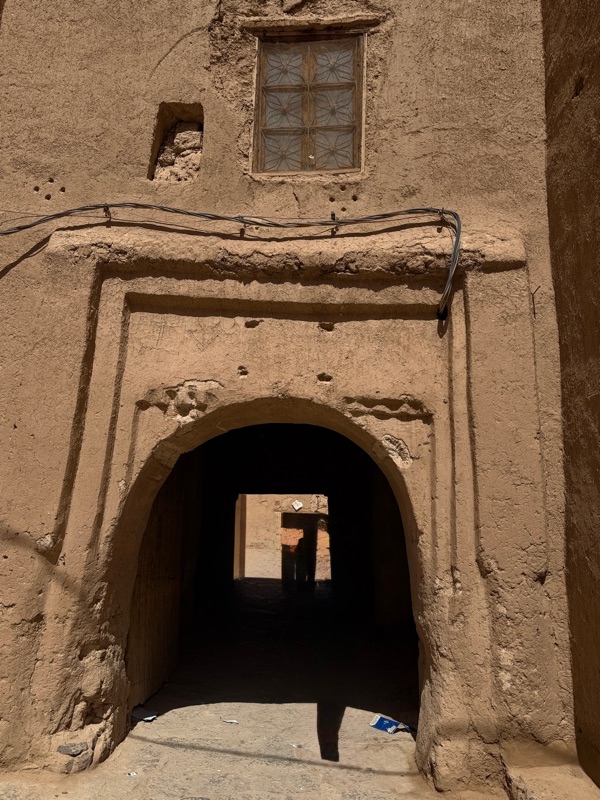
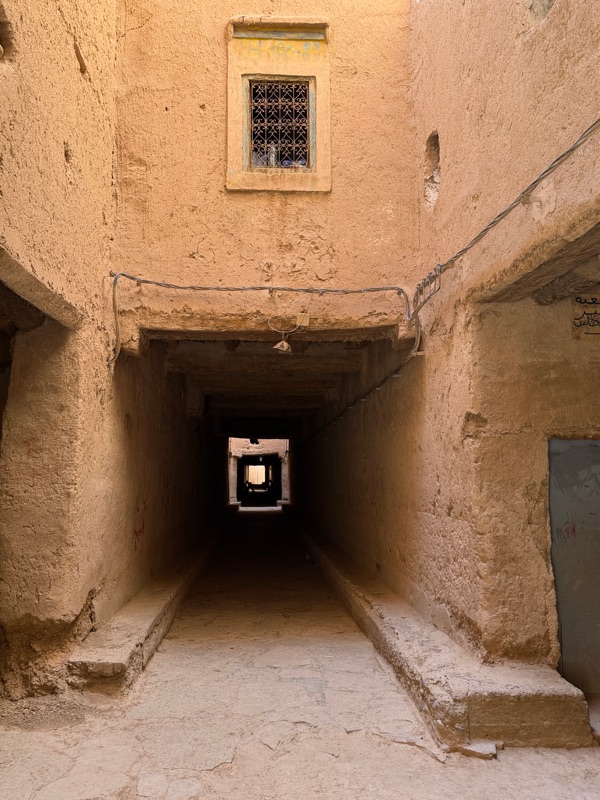
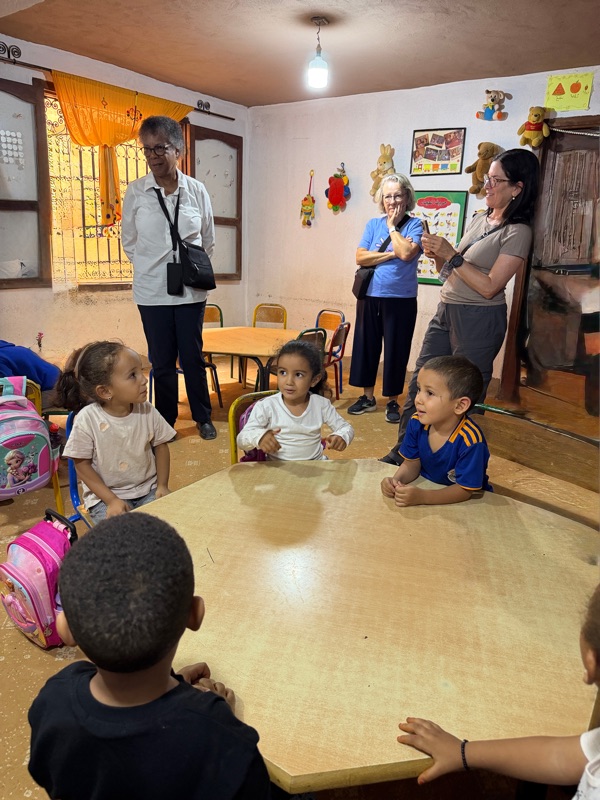
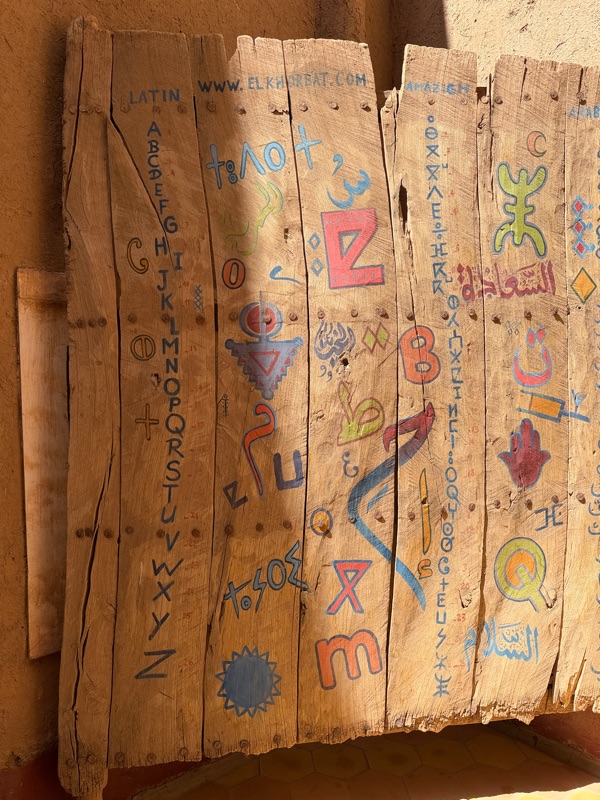
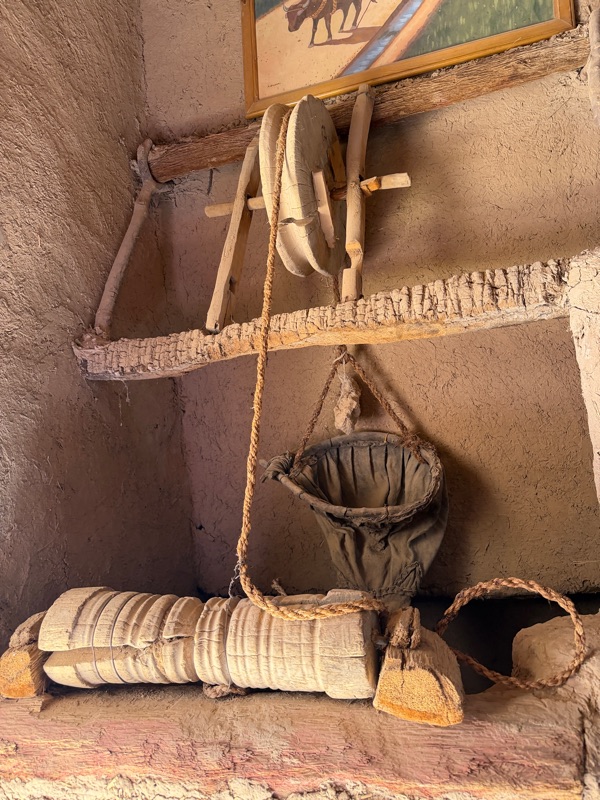
Our next stop was Ksar El Khorbat near the town of Tinejdad. A ksar is a traditional Moroccan fortified village, containing housing, public spaces and some other functions within massive stone or adobe walls. Ksars are different from Casbahs because they are purely residential, with no markets or other businesses inside. We made a brief stop at a small kindergarten within the Ksar, and then visited an excellent museum that focused on Berber/Amazigh life, tribes, dress, agriculture, etc. It was especially fun to walk around up on the roof.
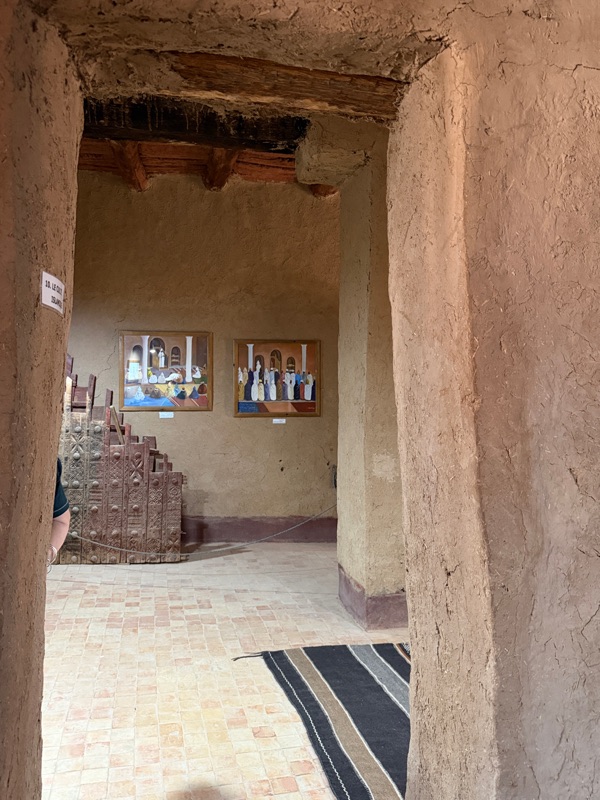
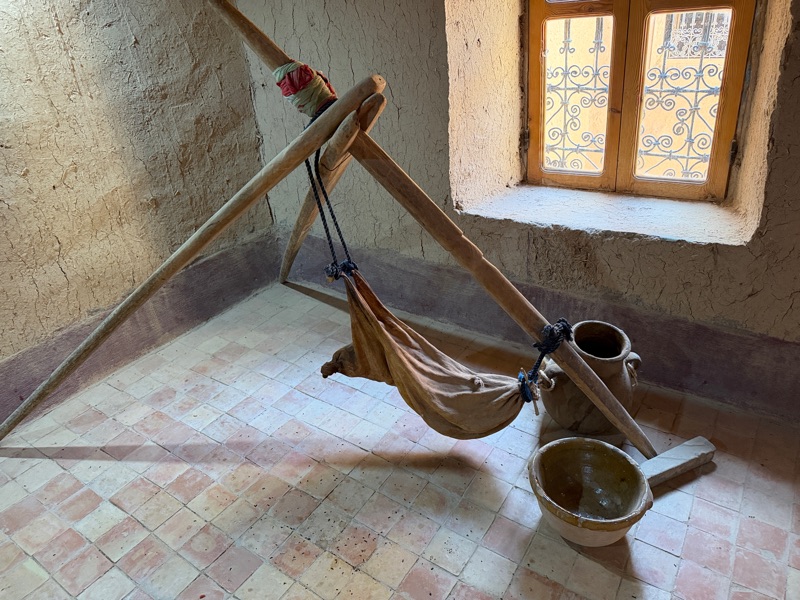
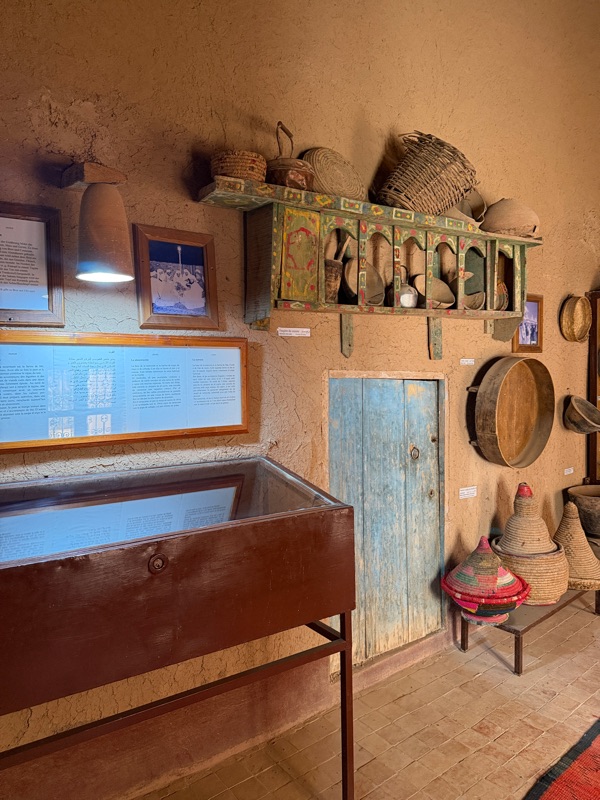
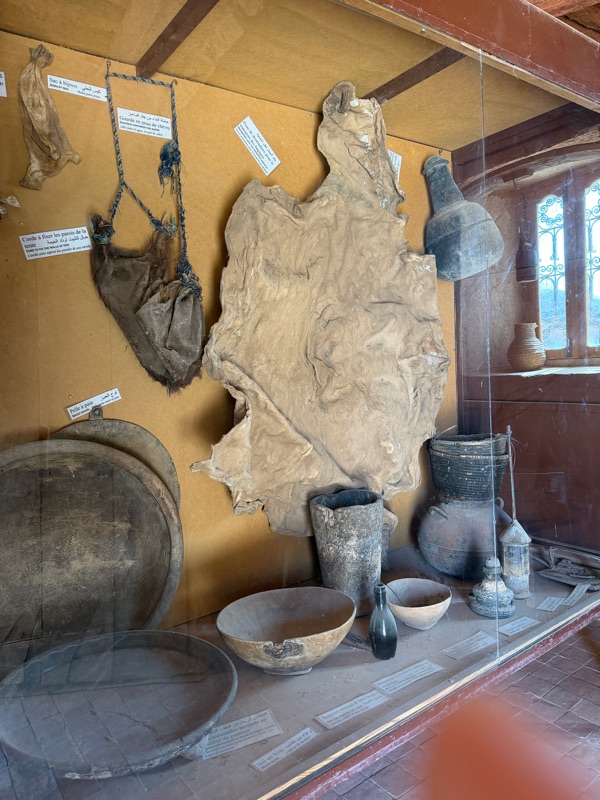
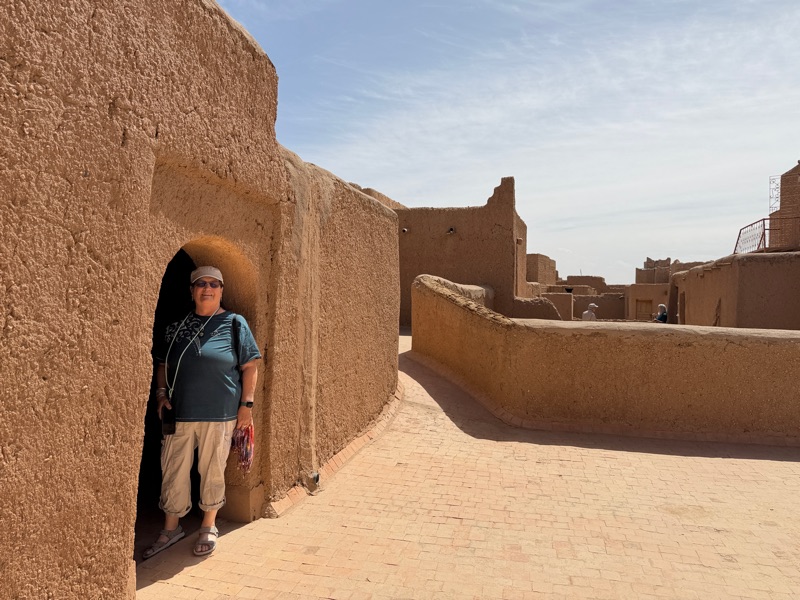
We had lunch next door to the museum, enjoying some delicious goat and lamb tagine. And then continued on our journey over miles of dry mostly flat land. There was a large area that was greatly affected by years of drought. The wide river dried up completely and the people lost their date palm orchards, their primary livelihood.
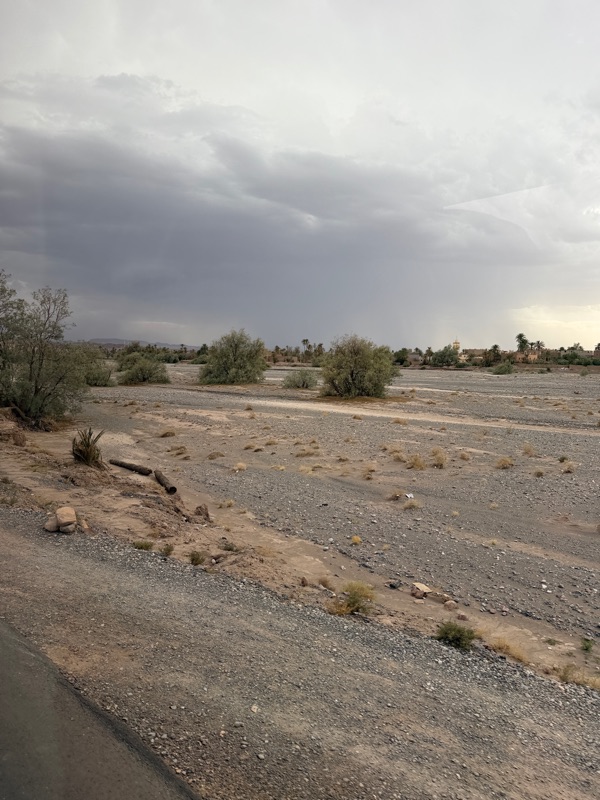
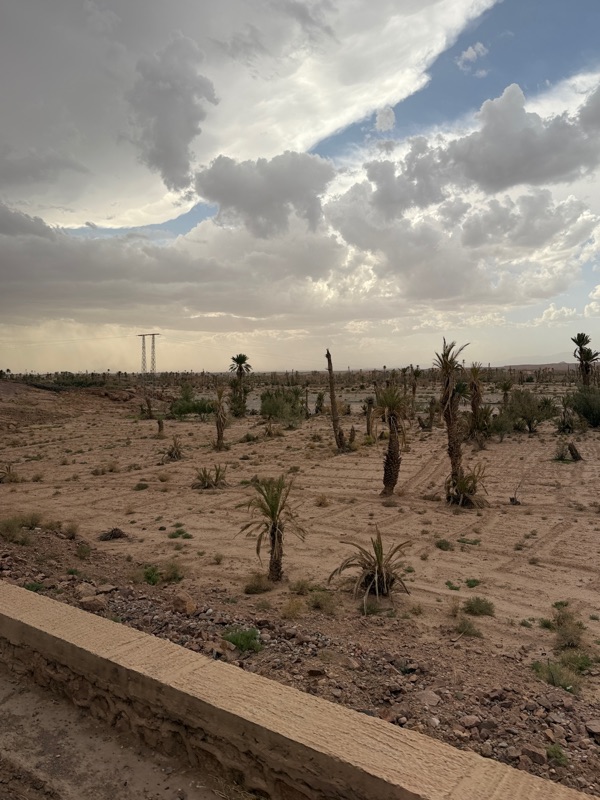
The sand track roads were not the only vehicular traveling challenge. In addition to fairly frequent police stops, a good number of roads were under construction or should have been. We navigated around several piles of dirt blocking one lane, many potholes, and in one case a hole in the road over a bridge that went entirely through.
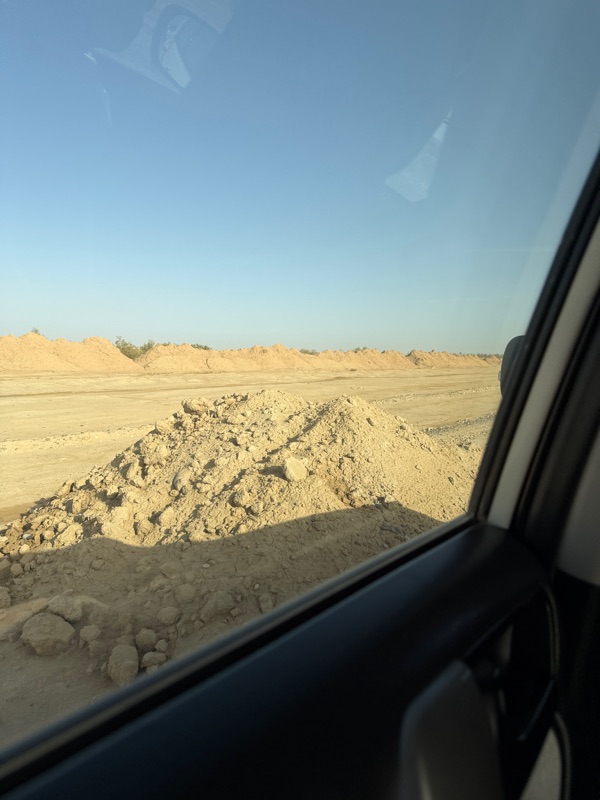
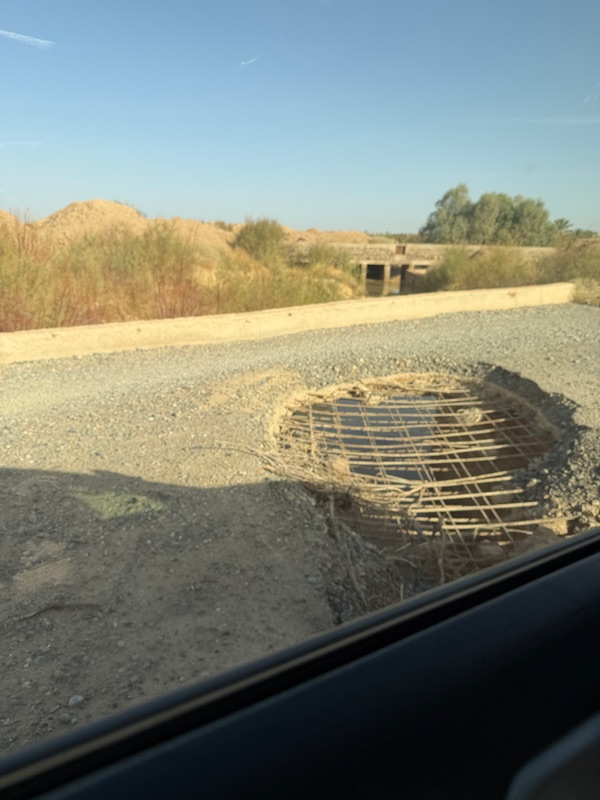
Just as we were getting worried that it was getting too hot on the bus, we approached the foothills of the mountains and rain clouds moved in - we are not in the Sahara anymore!
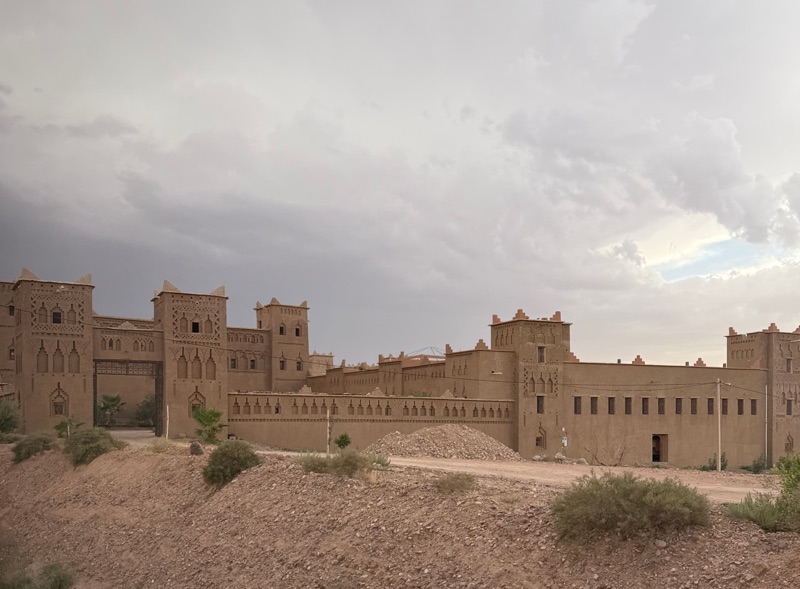
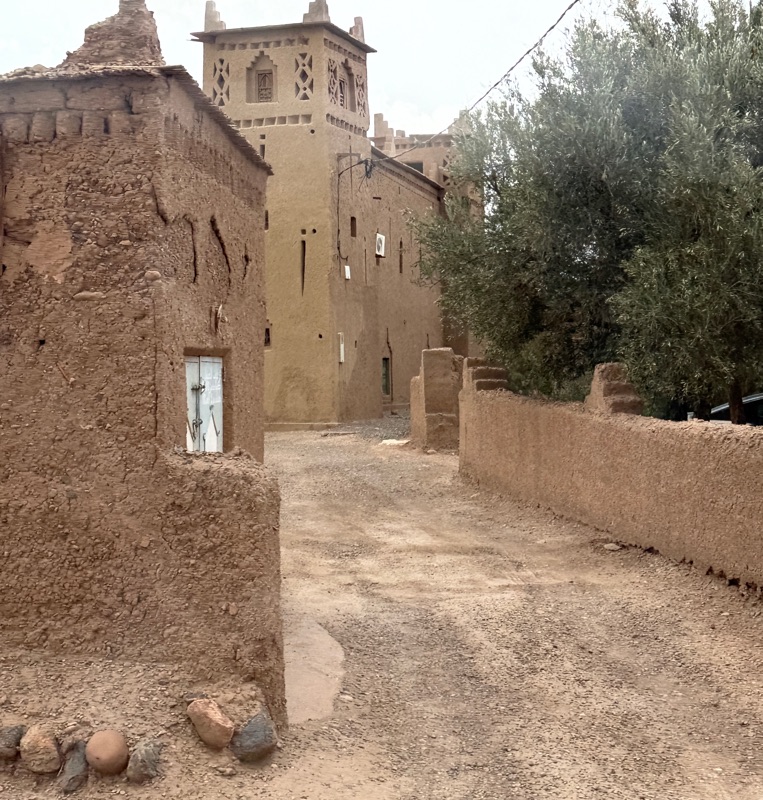
We passed the town of Dades, located on the Dades River, and then started driving down the Road of 1000 Casbahs. As we drove along the river, lined with lots of fields of date palms, we passed many old and crumbling mud brick buildings. The ones that had four watch towers on the corners were the casbahs - and many had been restored to create hotels and restaurants. Traditionally they had been fortified country homes and storage houses, and sizes varied. We played “spot the casbah” for the rest of the afternoon until we arrived in Ouarzazate.
We checked in to the Berbere Palace in Ouarzazate, our spectacular hotel, where we were welcomed to our rooms with bowls of fresh fruit, and time to relax a bit before dinner. Evidently the town is known as the Hollywood of Morocco because many movies have been filmed here. It may be a coincidence, but the hotel is full of huge Egyptian statues and gladiator replicas.



I may lose weight there. Lol
ReplyDeleteThe architecture is stunning! What is the hottest temperature you experienced in the Sahara Desert?
ReplyDelete