Today we saw some exceptional wildlife, and also learned a lot about how the park works.
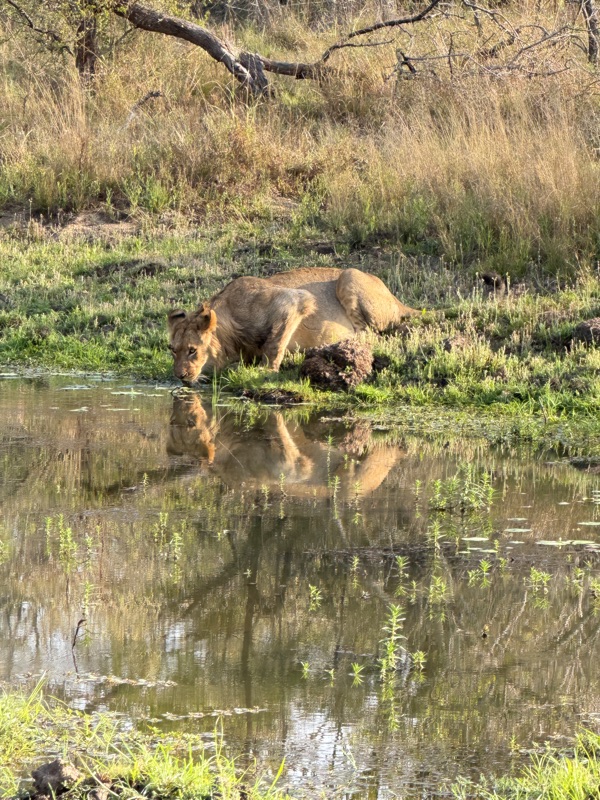
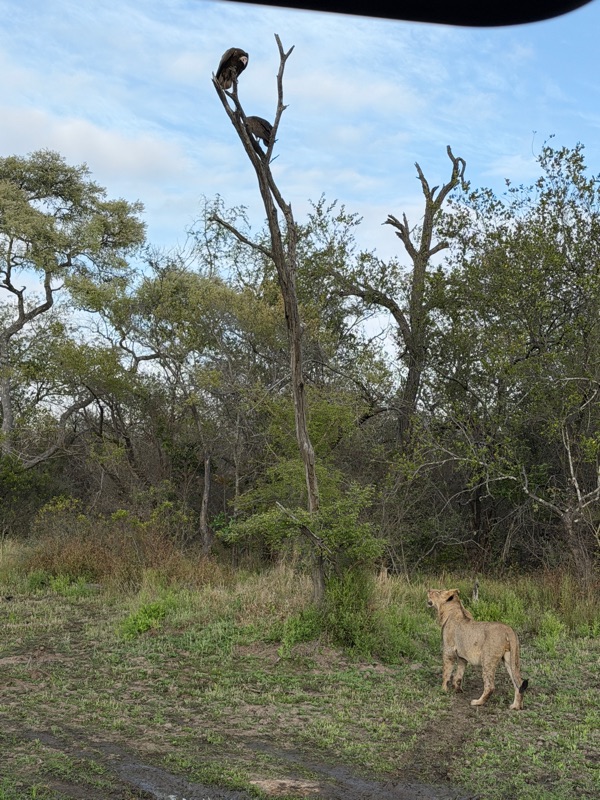
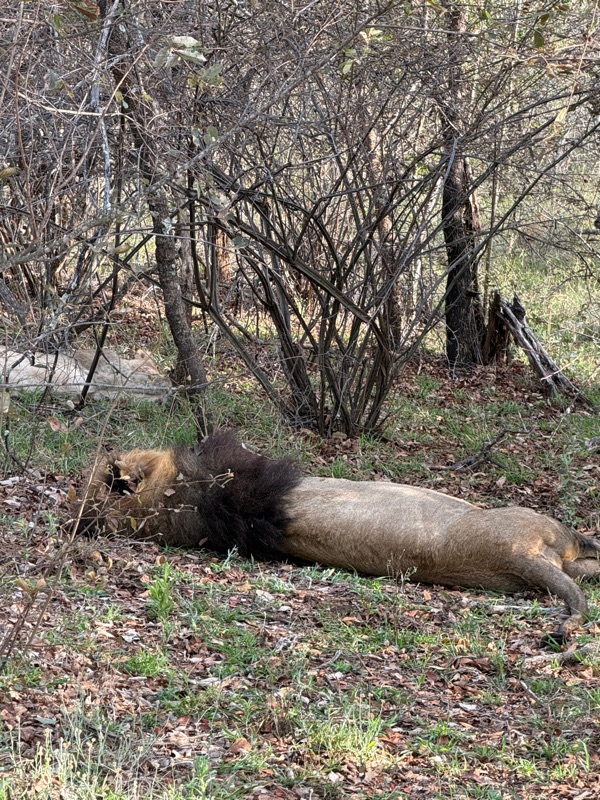
Our morning drive took us to a destination on the other side of the reserve where lions had made a kill the night before. When we got there, the dominant male lion in the park was still there - looking very bloated - as well two younger males and a younger female lion. The female lion in the photos below chased the vultures which had been on the ground and they escaped, she sat a while then took a drink.
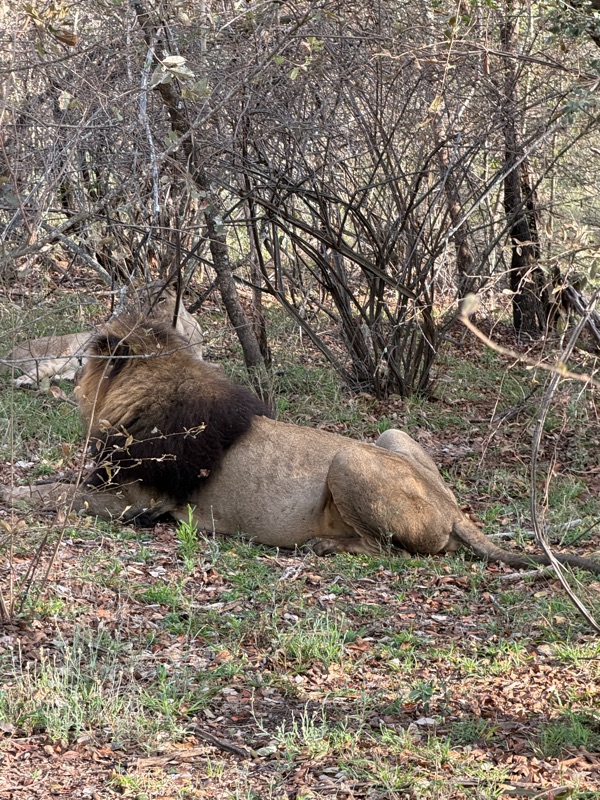
The dominant lion is very unusual because he is 15 years old, but has no battle scars in his body. Since he is in this preserve, there is no competition for the dominant role, except for from his own children, which so far he has been able to put down easily. Our guide said that eventually the younger lions will kill him, and the the population will need to be supported with lions from outside to expand the gene pool. It helped us to understand how the park manages the wildlife over time.
Most of the morning drive was in a part of the park we hadn’t seen before. We saw more hippos, a big weaver community, a communal spider colony and some beautiful scenery.
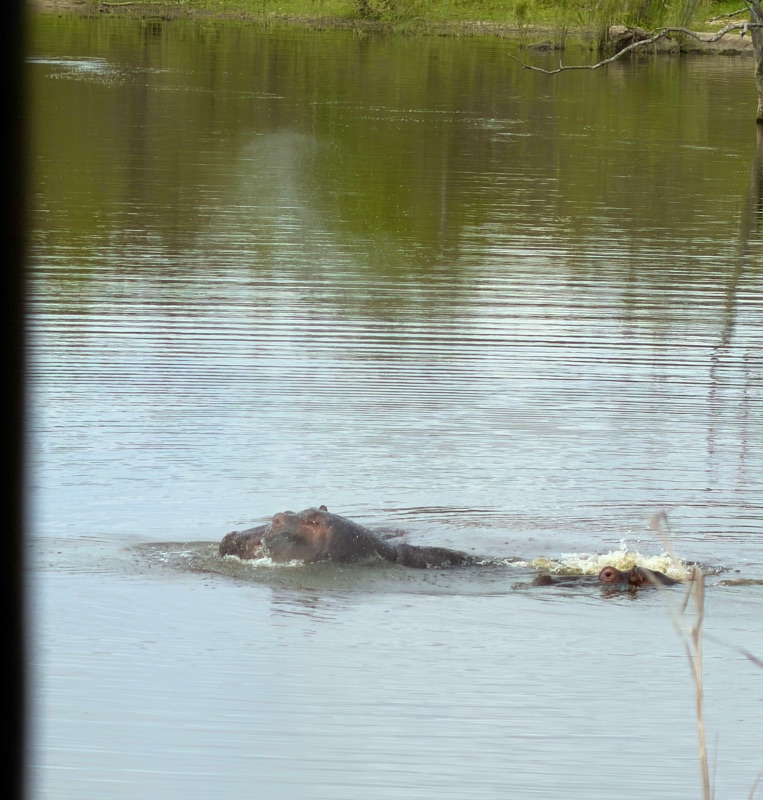
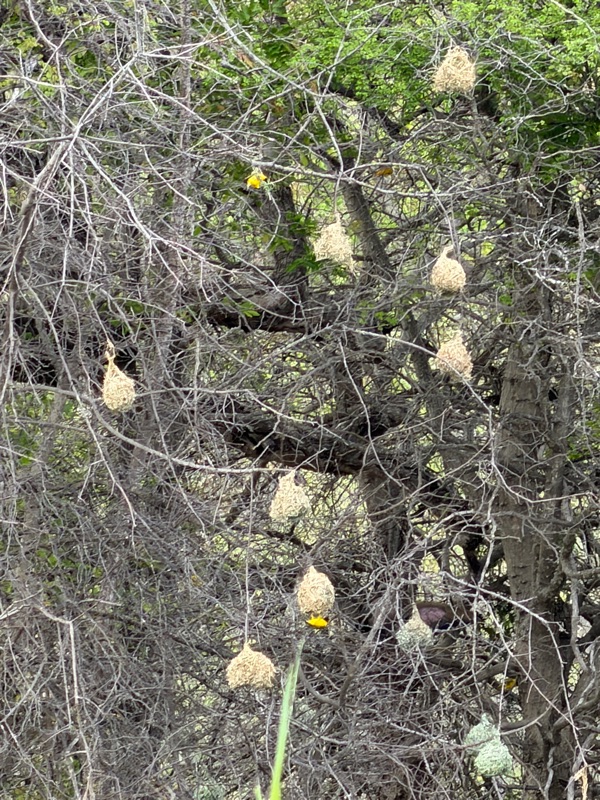
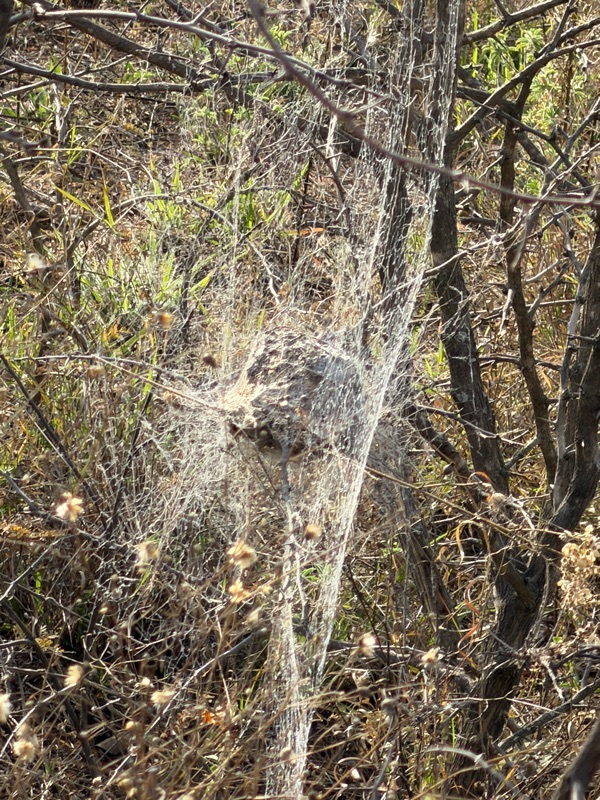
Top: masked weavers in their huge colony; next, hippos, then the spider nest.
After breakfast, we had a lecture on the formation of the preserve and how the animals are managed. The preserve was created by a group of cattle farmers who realized that an animal preserve on the outskirts of the Kruger National Park would be more profitable than cattle farming. It was interesting to learn about the relationship with Kruger and the local communities. We also liked hearing more about how each of the different animal species is managed to enhance the gene pool and maintain a balanced ecosystem.
The animals in the Preserve are wild, but are carefully acclimated to the presence of the safari vehicles, with the result that safari drivers can safely give visitors the unique experience of getting very close to the animals. However, visitors are repeatedly warned about not making a lot of noise, standing up or getting out of the vehicles because the animals will attack individuals or vehicles that are behaving in an unfamiliar way.
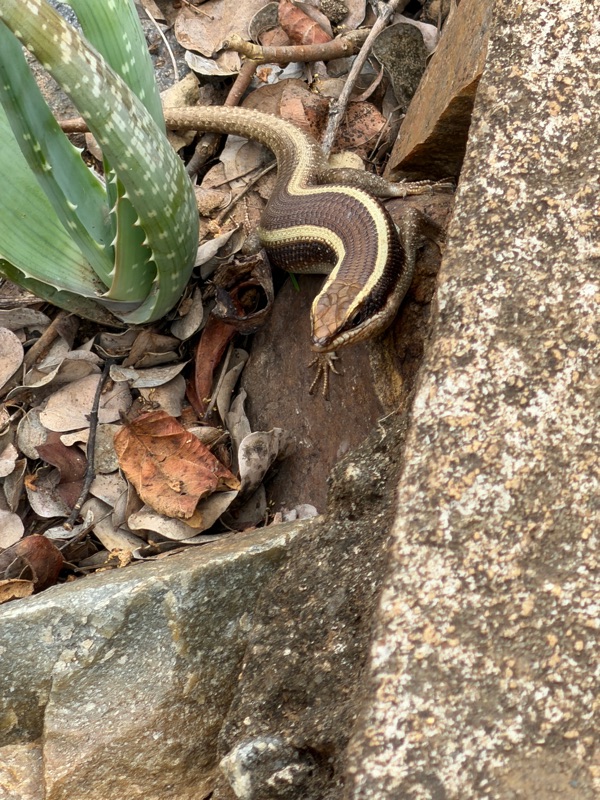
After lunch we took a walk to the other lodge to enjoy the view. We saw several elephants, in addition to the animals we saw yesterday - crocodiles, monitor lizards, vervet monkeys, including some mother with nursing babies.
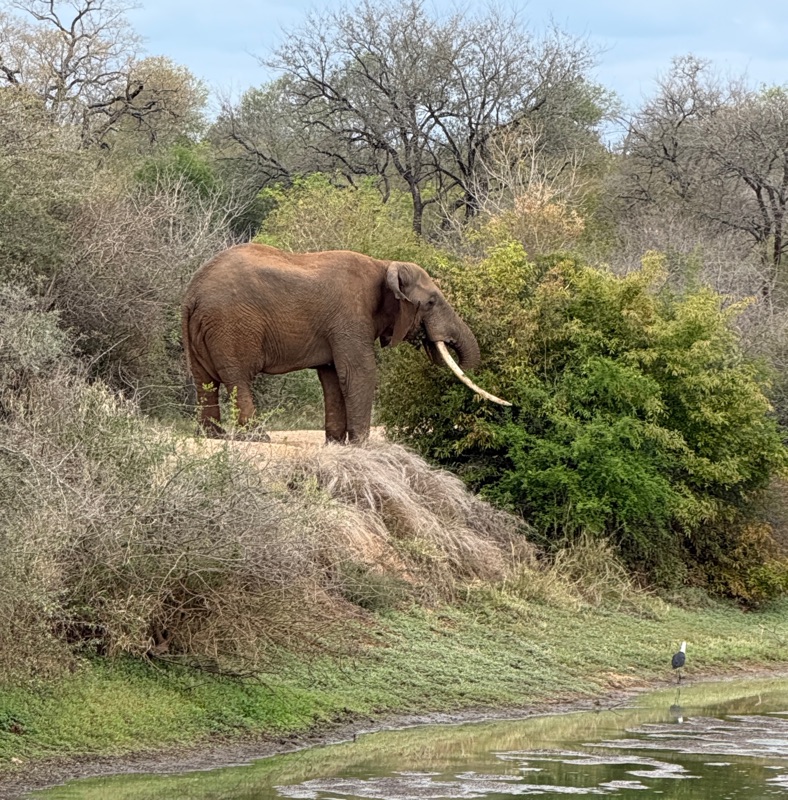
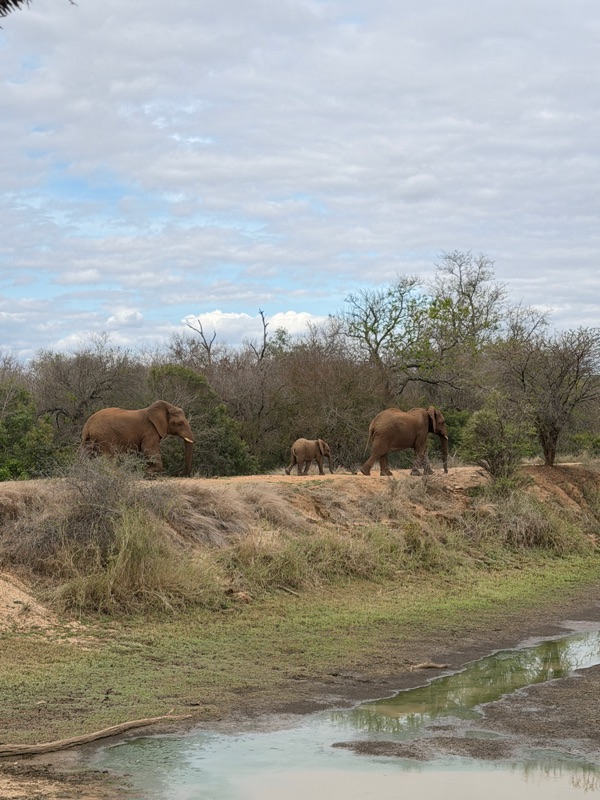
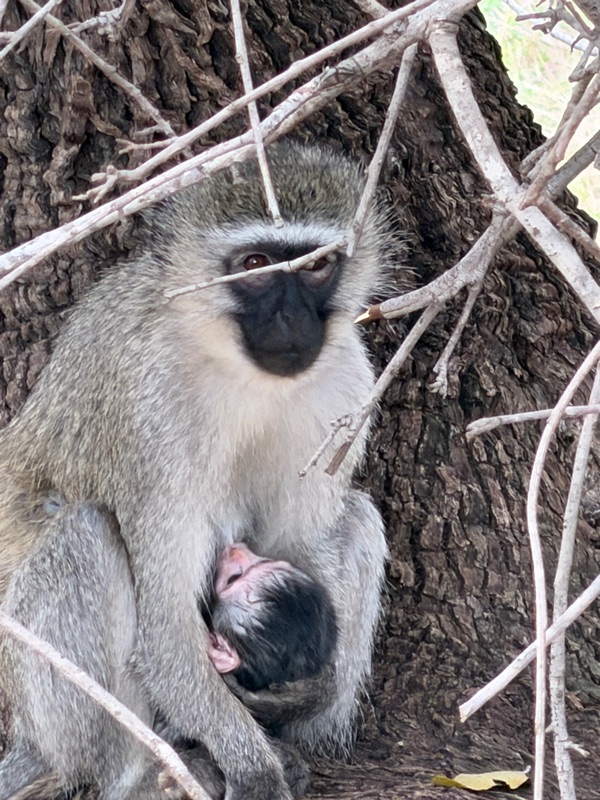
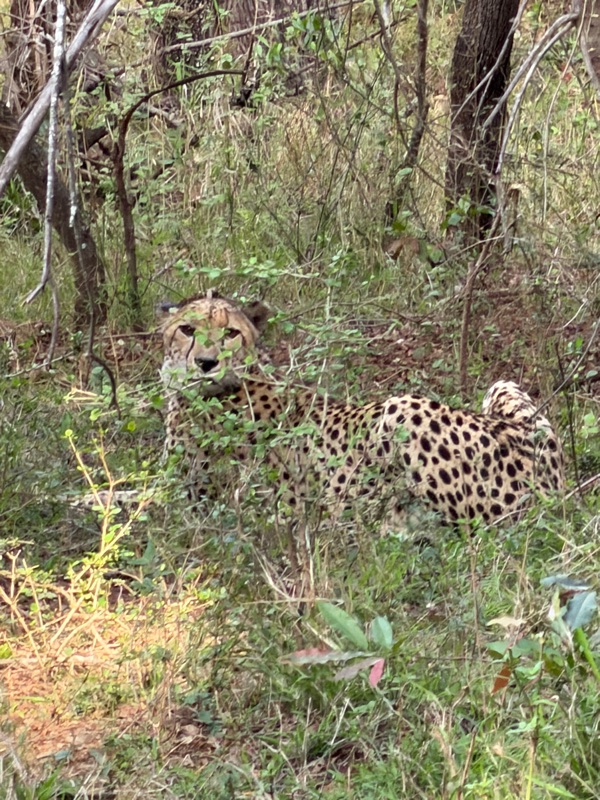
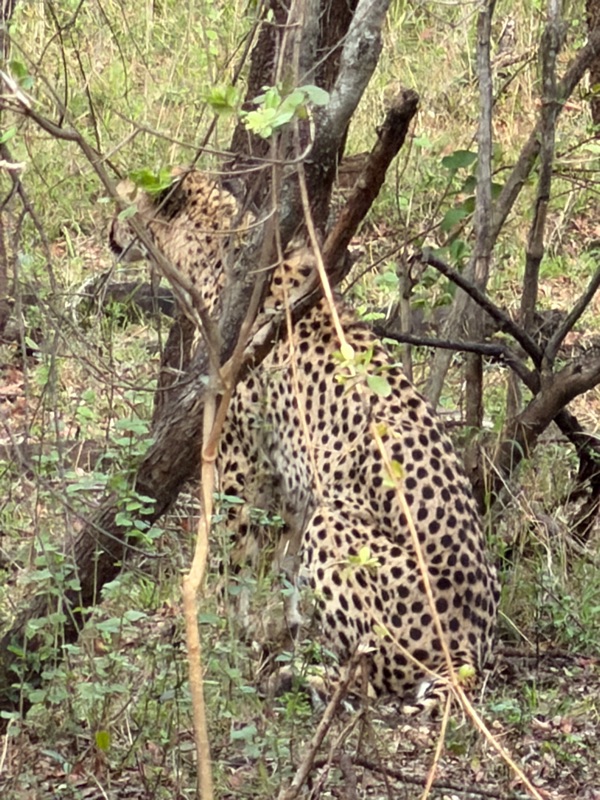
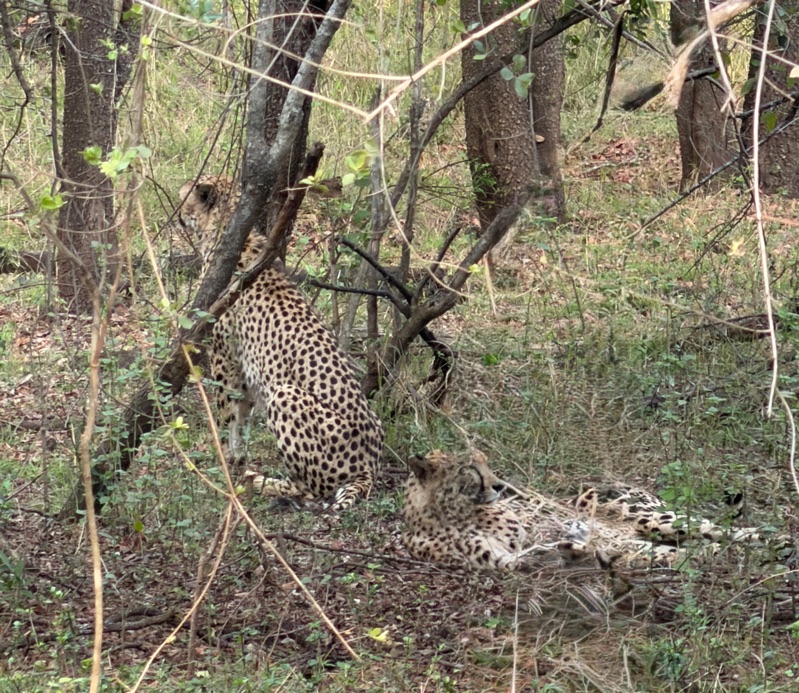
On our afternoon drive our target was cheetahs. We found two young male cheetahs and watched them for a while. We also learned about how the guides manage viewings so that usually there are only two vehicles at a time seeing a specific animal ( especially the big five).
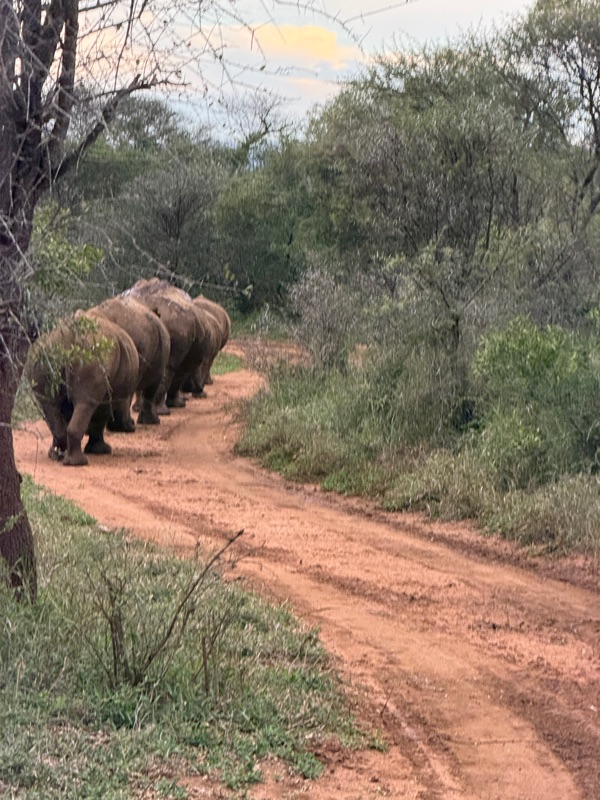
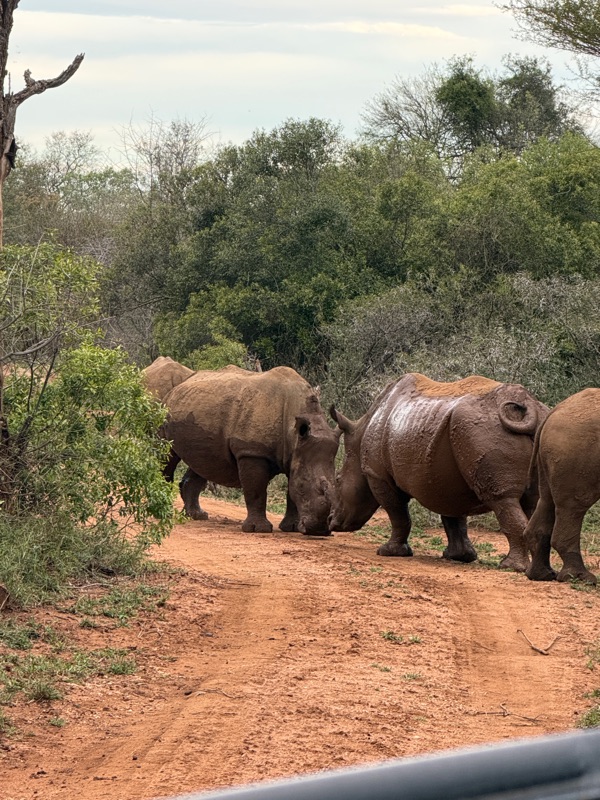
After the cheetahs, we were “number 1 on standby” for the next big animal, and had to make our way quickly through tough roads and beautiful scenery to see a crash of rhinos. It was cool to see them, and also see how the park makes sure that we are not swarmed with tons of vehicles.
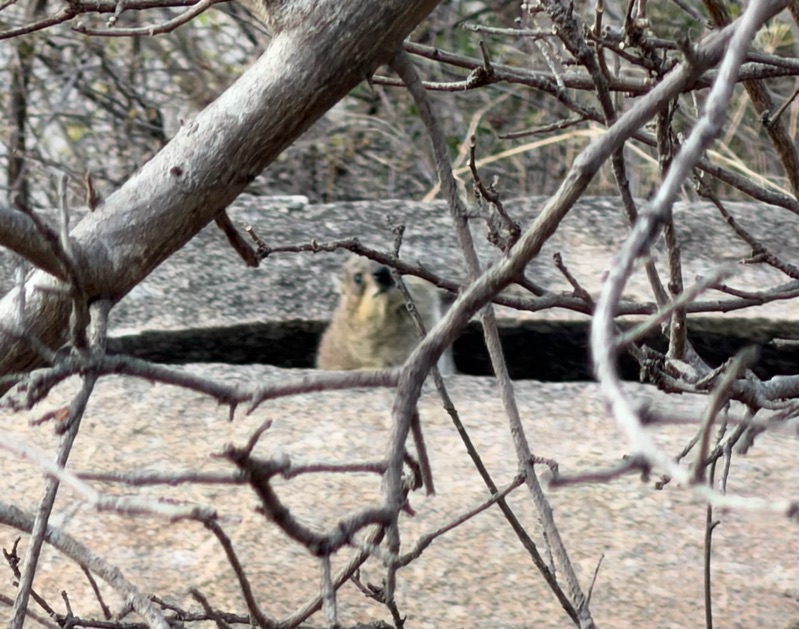
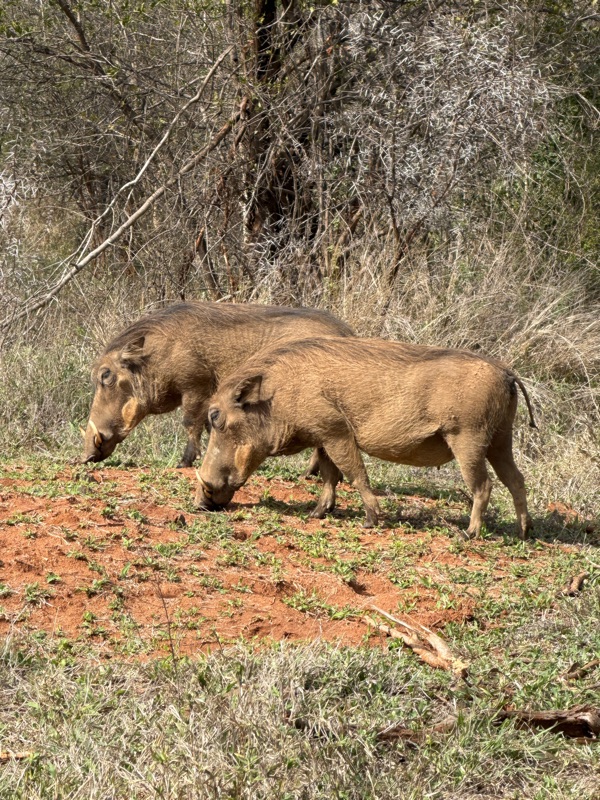
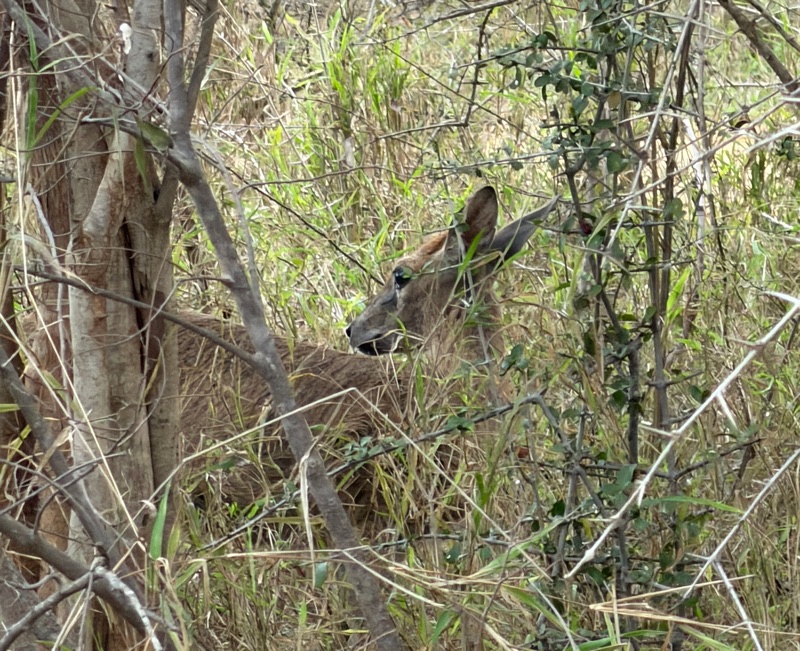
Throughout the day we saw a number of smaller animals like steenbuck, gray duiker, rock hyrax, slender and banded mongoose - all small and well hidden in the undergrowth.
(Hyrax photo is above near the lions)
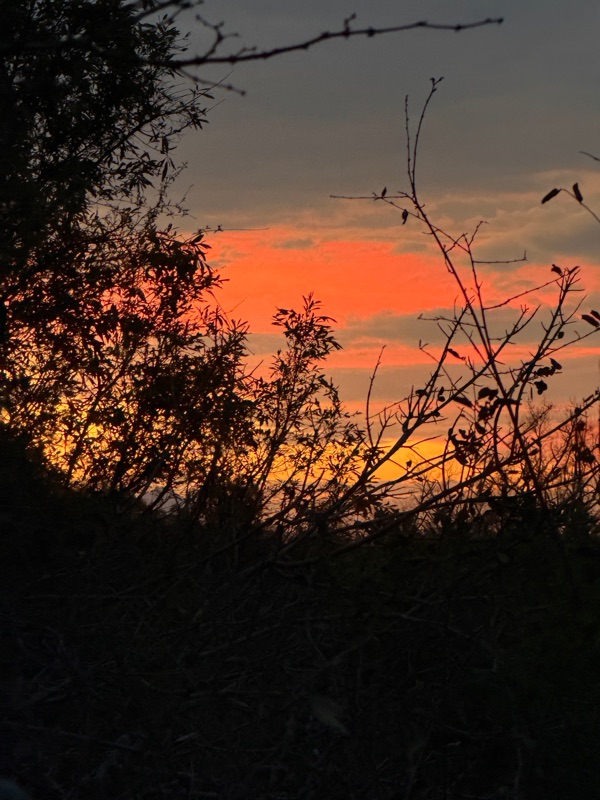
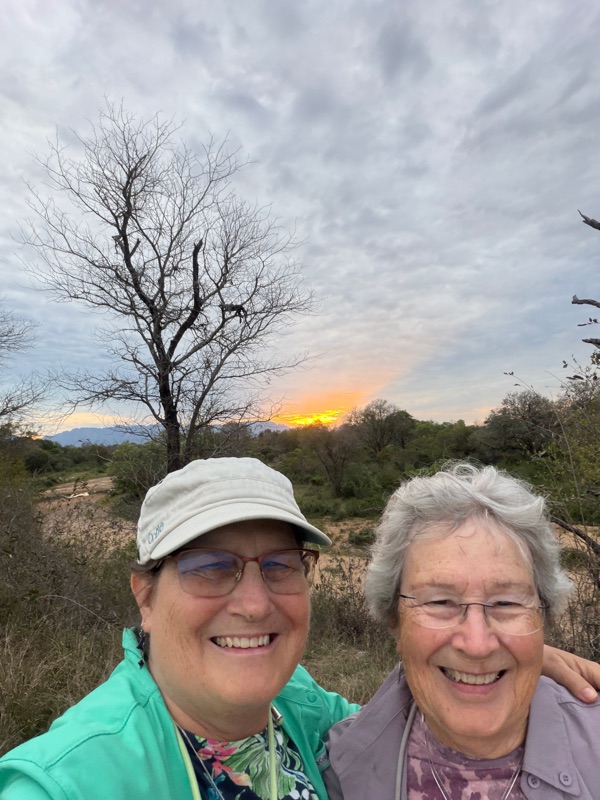
We had a lovely sunset, and then returned to the lodge for impala stew for dinner.


Awesome pictures❤️❤️😊
ReplyDelete