Today we had a very relaxing day on the river. It has been a delightful experience on the dahabiya cruising along the river, passing lush date palm and banana farms, small villages, green fields with cattle grazing and sandstone mountains. With the tug boat out in front pulling the dahabiya, there is almost no engine noise or vibration on the boat. The world floats by. “Summertime and the living is easy”
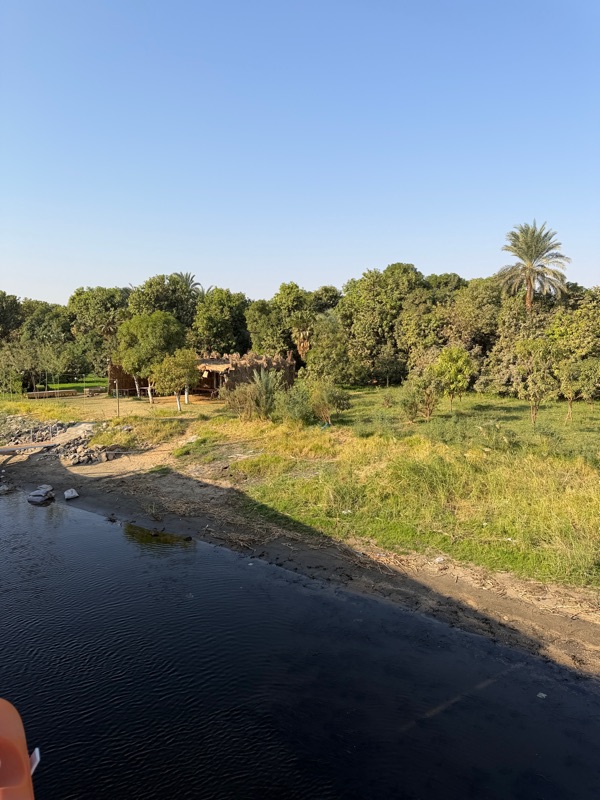
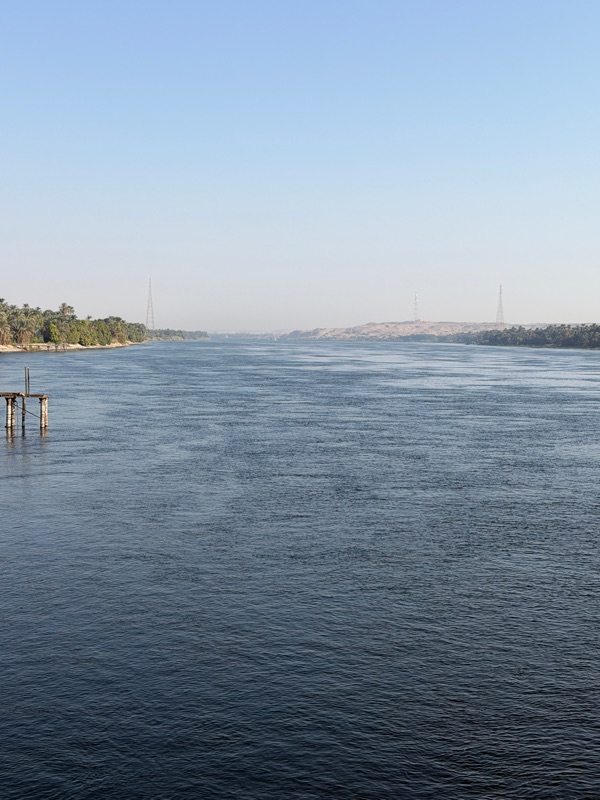
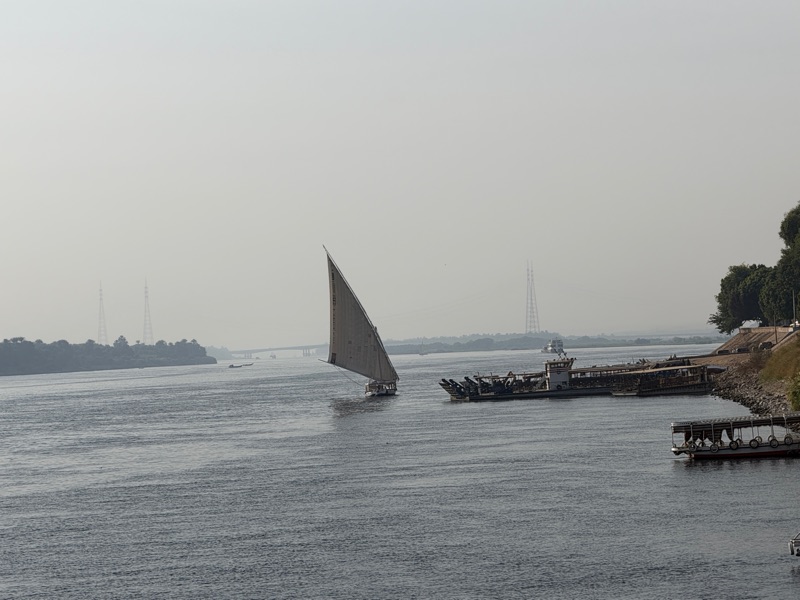
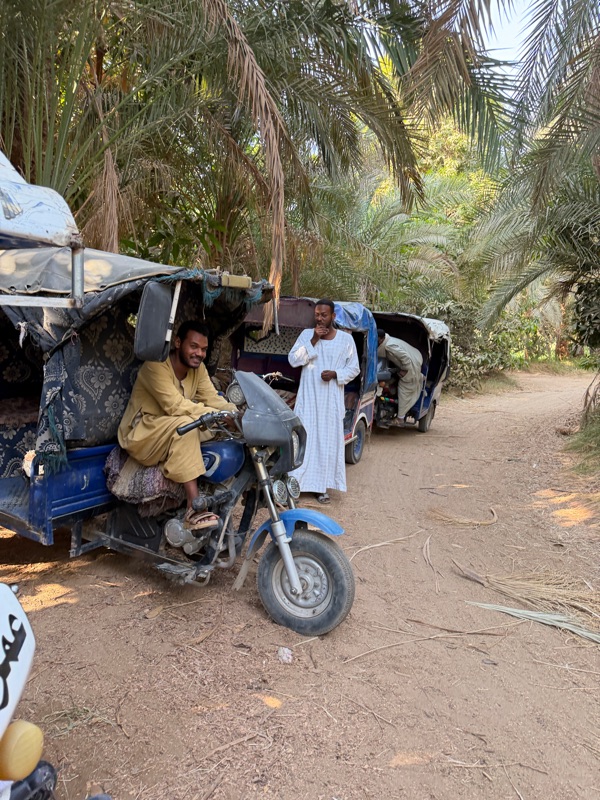
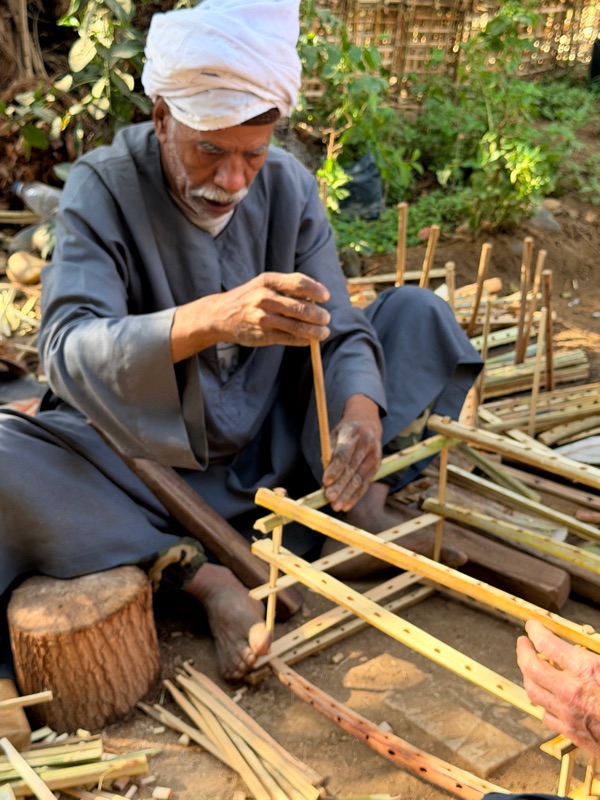
Our morning activity was to visit a nearby village where there was a man who makes crates from palm fronds. After a short walk, we got in tuk-tuks, and puttered our way through the irrigated orchards of date palms on the edge of the village of Fares. We rode around for about 20 minutes before stopping at our destination.
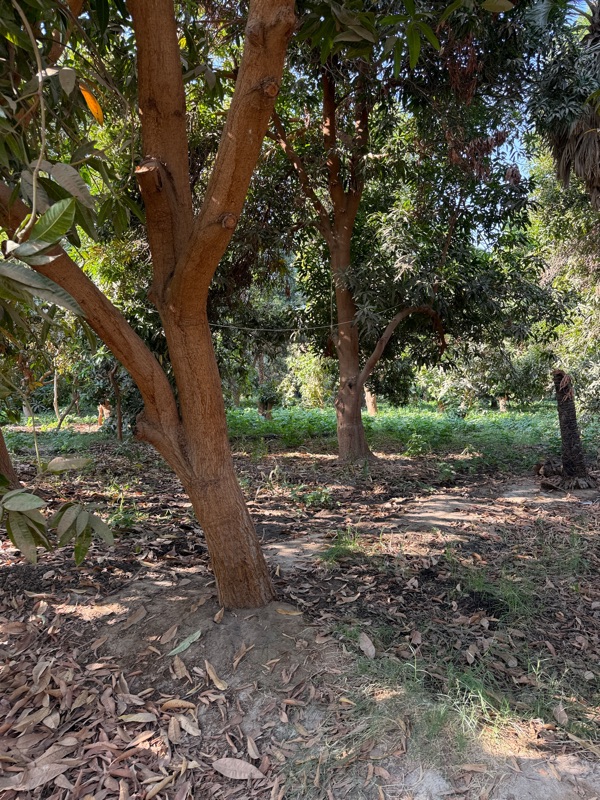
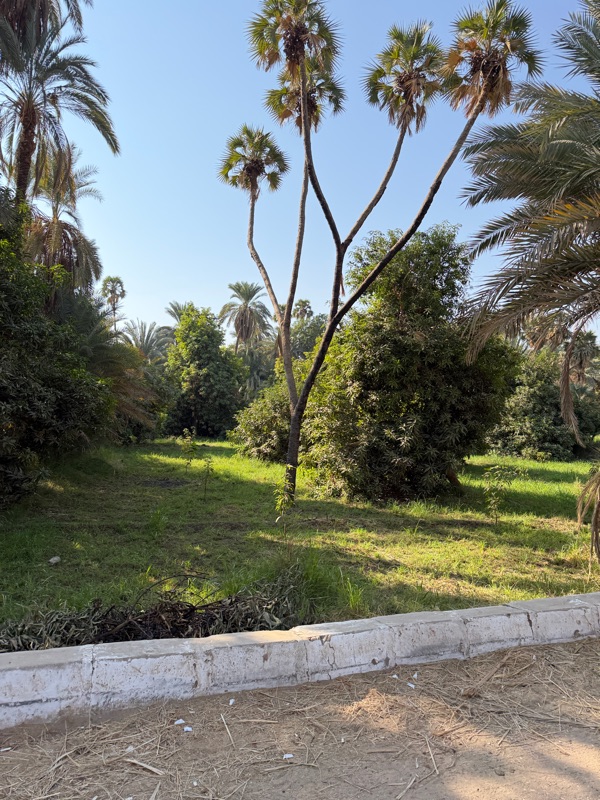
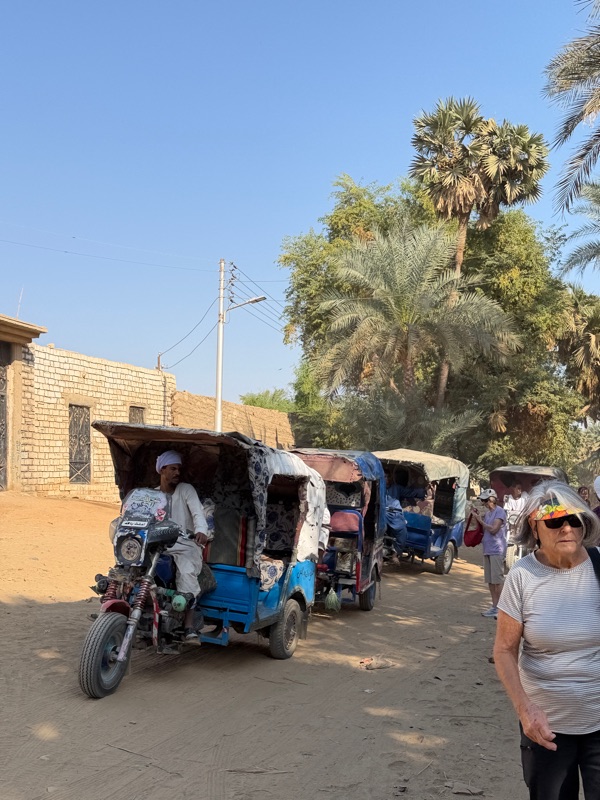
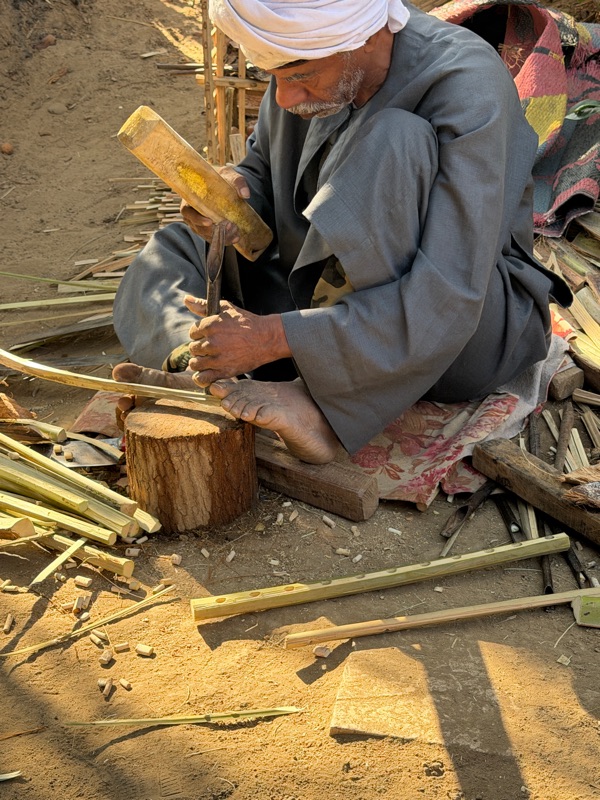
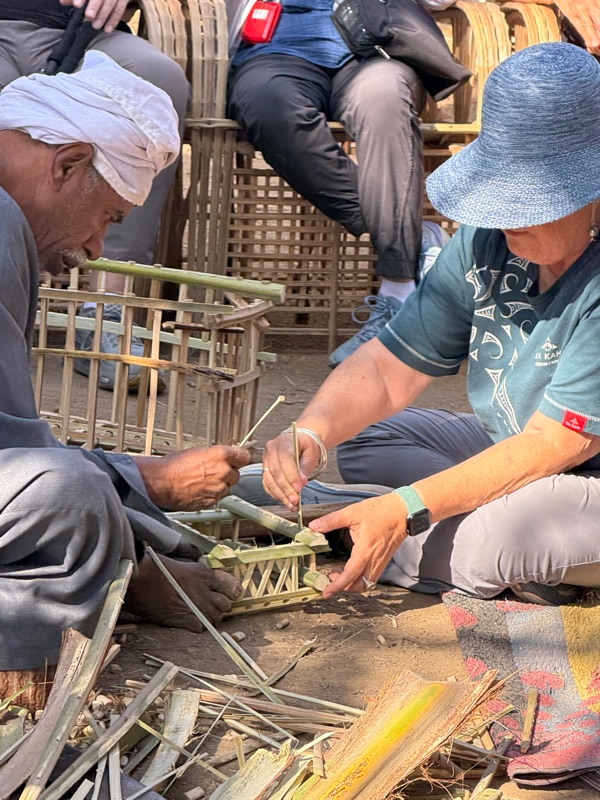
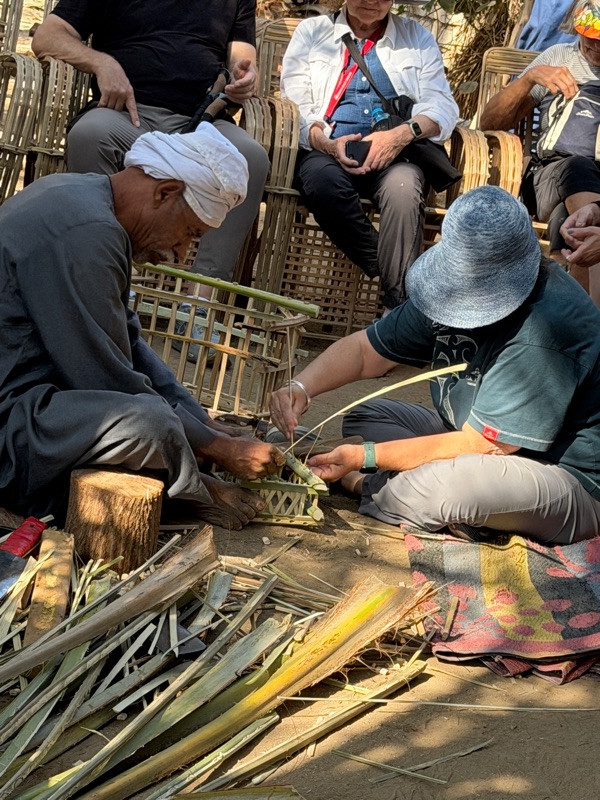
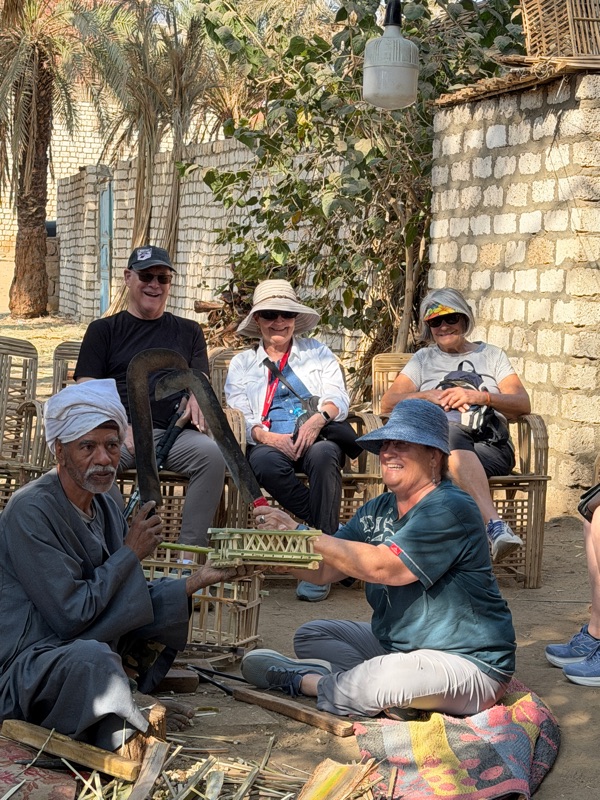
Mohamed had been making fruit packing boxes from palm fronds for over 50 years. The speed and precision with which he trims and cuts the thick stalks of the palm fronds into sticks shows he has a LOT of experience with very sharp knives. We watched him at his trade, amazed at how adept he was at using a variety of knives and awls, often holding pieces with his feet. Some of us even helped to make a few big boxes and one small box.
Back on the boat, Cheryl had a massage while Ruth learned how to read hieroglyphics. Later Ruth had a massage, while Cheryl watched the original film “Death on the Nile”, recognizing many of the locations we have visited recently.
In the afternoon, we visited Kom Ombo temple, which is unusual because it honors two gods - Horus, the god of peace, and Sobek, the crocodile god. The temple has two complete temples side by side in the same building. The temple was at a wide bend in the river, so before the dam, there were a lot of crocs there, hence the the temple dedicated to Sobek. It was also known as a healing center.
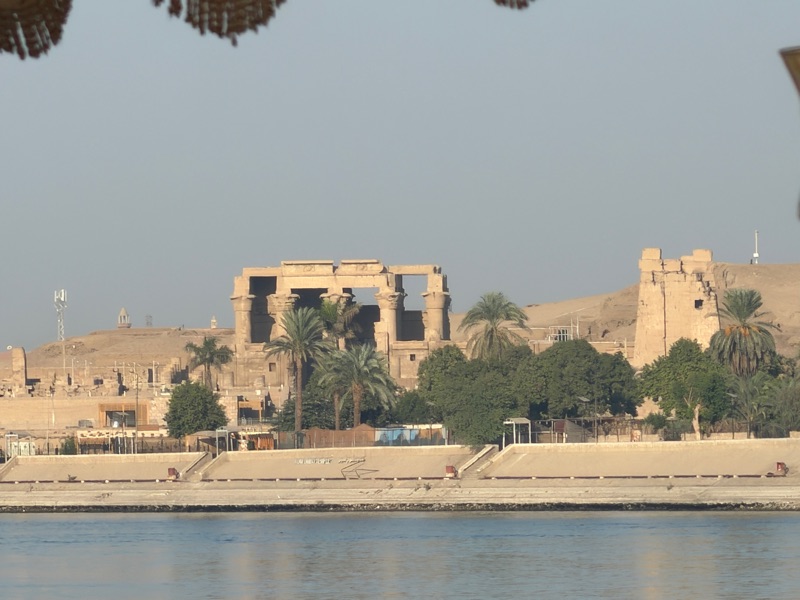 |
| Kom Ombo is the only temple we have seen that you can still see from the river. It was set on a high cliff, so the dam did not affect its position., |
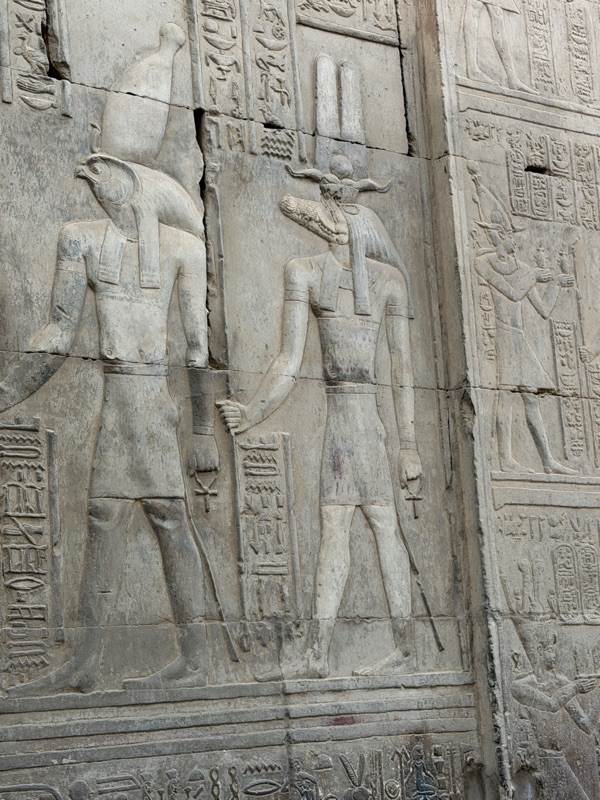 |
| Horus and Sobek |
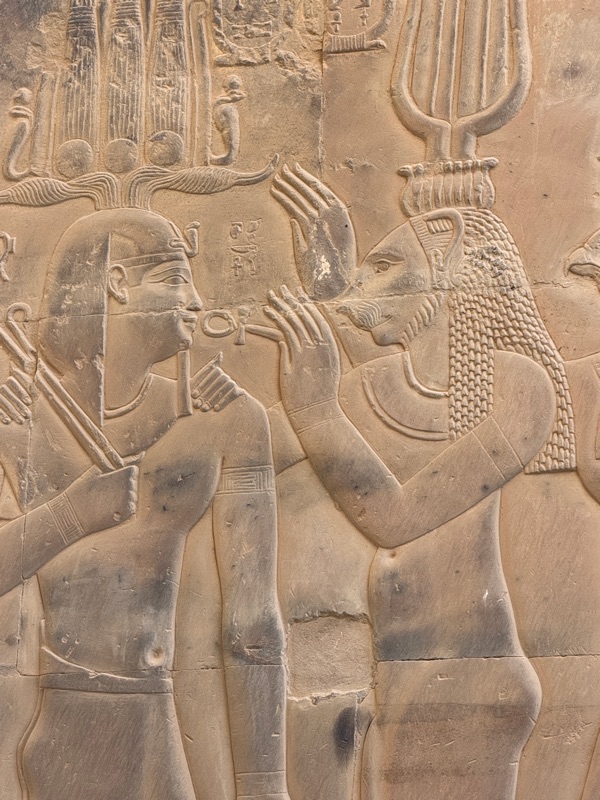 |
| The goddess of war giving the key of life (ankh) to the king |
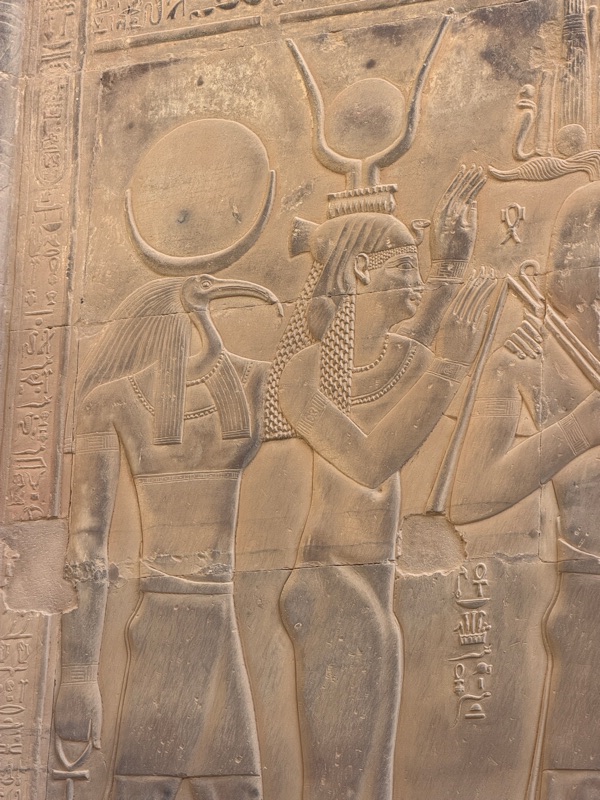 |
| Other gods - the back wall of the temple has some beautifully preserved carvings. This area was the “hospital” as well as where people left offerings for the gods, since only the wealthy and priests could enter the front. |
There were two particularly interesting sets of carvings in this temple. One was a calendar that set forth the months and days along with the offerings that should be brought to honor the gods from various cities on different days.
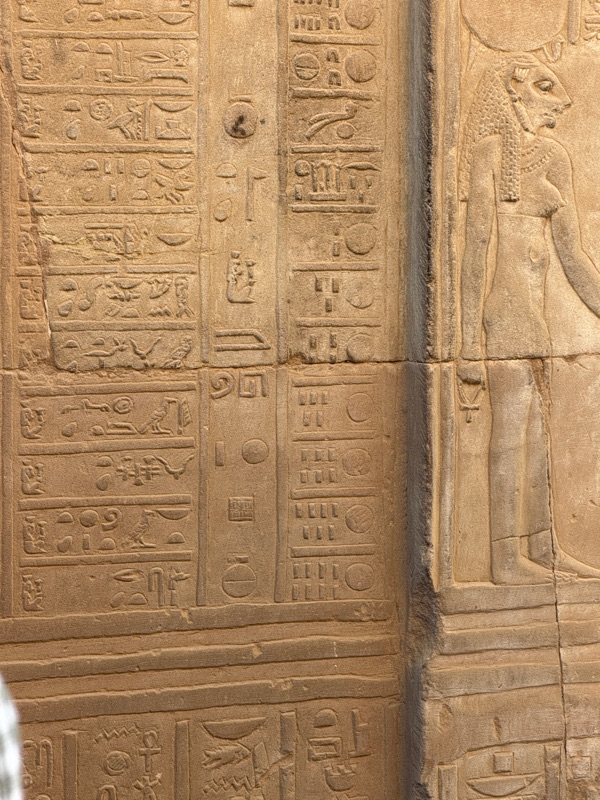
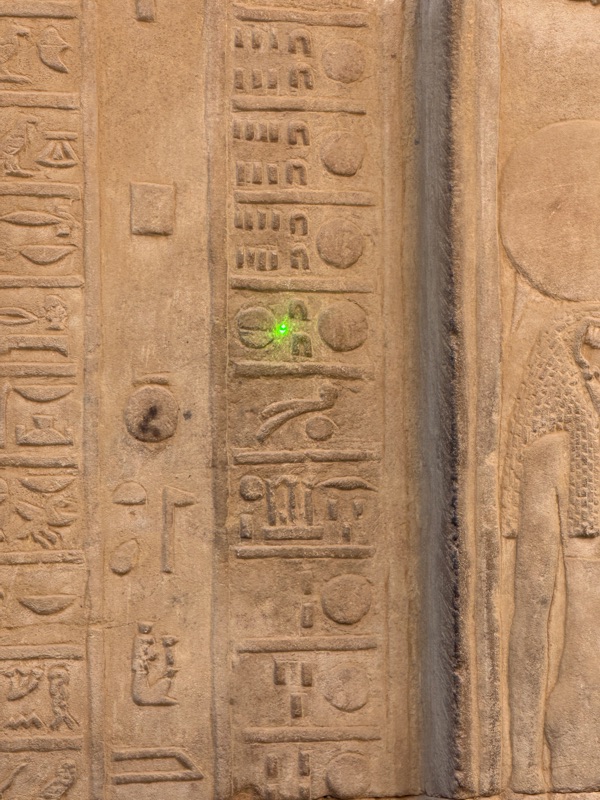
The bottom photo shows the calendar, you can see the numbers; the top one on the left shows the gifts that are to be given on each day.
Another interesting section had information about surgical instruments and medicines that should be used to cure particular ailments. There were also images of a woman sitting on a birthing chair and giving birth.
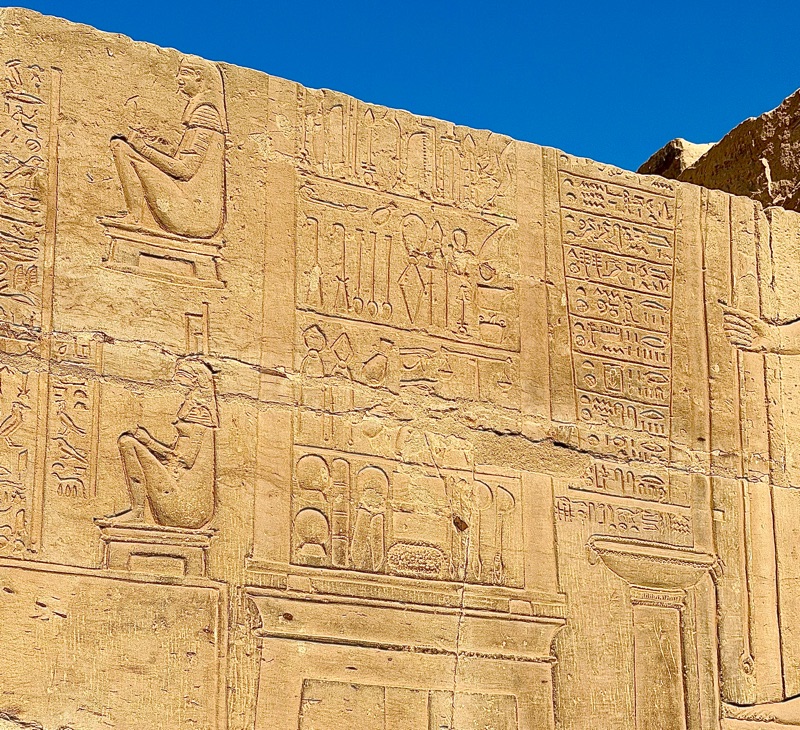
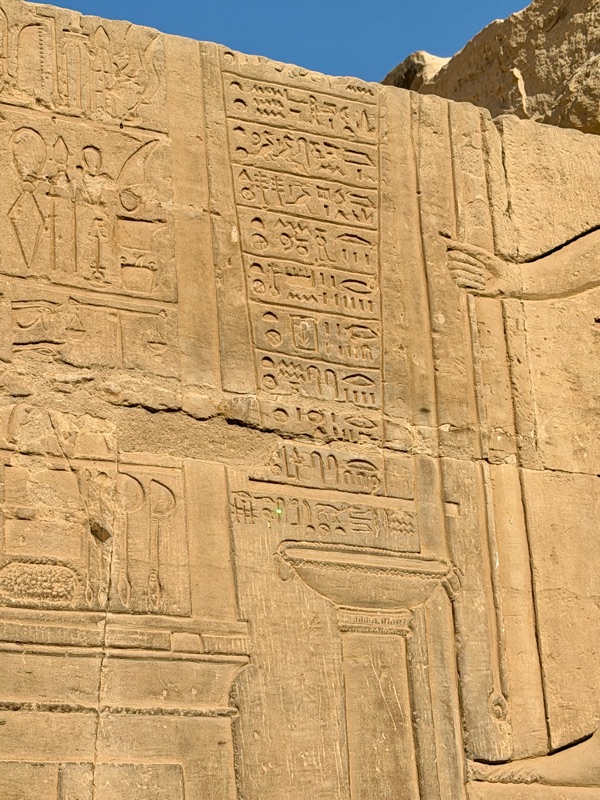
Birthing char on the left, instruments in the middle and prescriptions on the right.
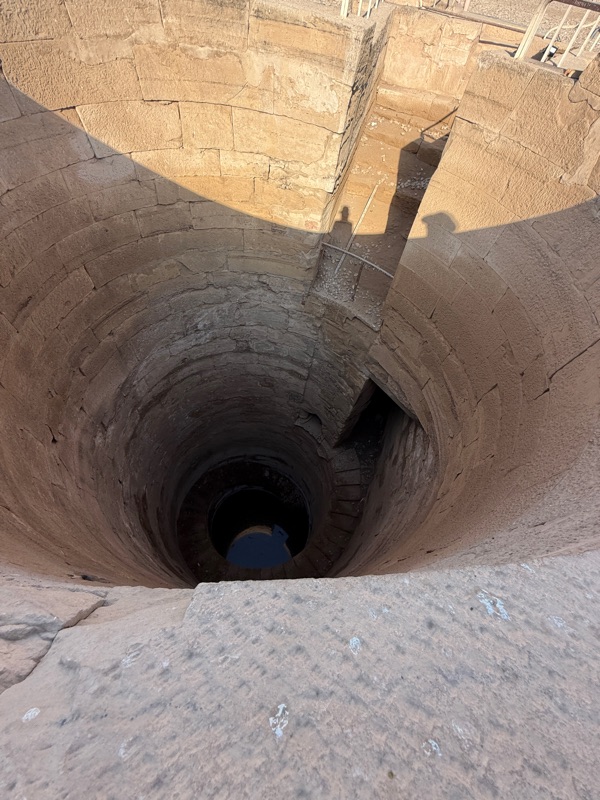
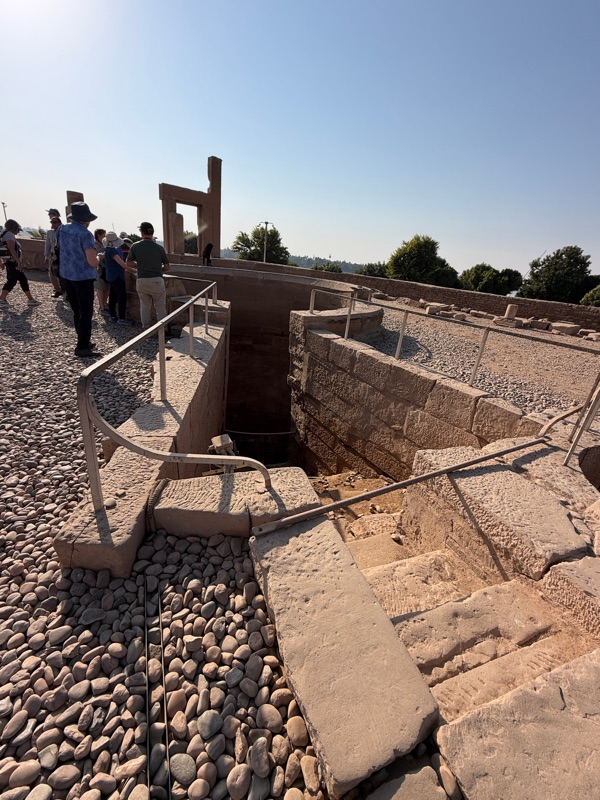
There was also the best preserved Nilometer in Egypt. A nilometer is a large circular hole that was used to measure the depth of the river which was the basis to determine how much taxes each household had to pay. If the water was low, taxes were low. If the water was very high, everything was flooded and there was no harvest at all. In between was the higher tax zone, because a good harvest was expected.
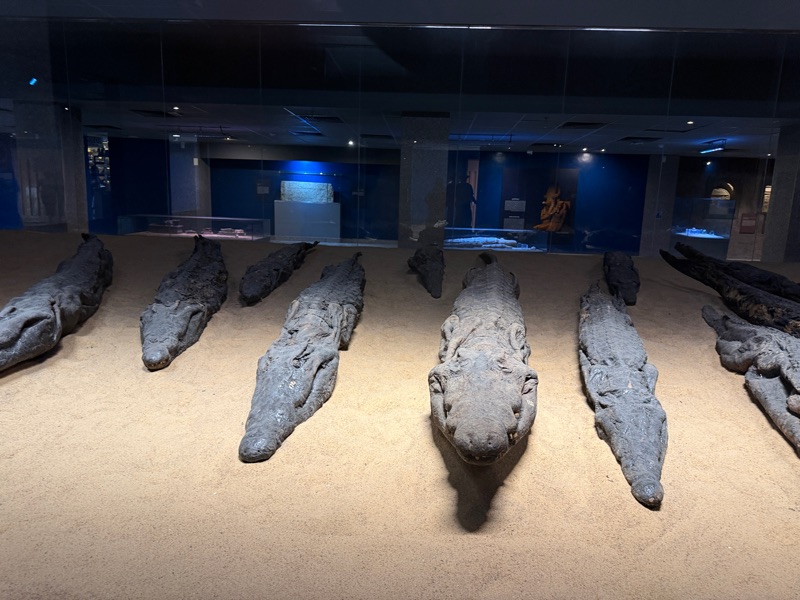
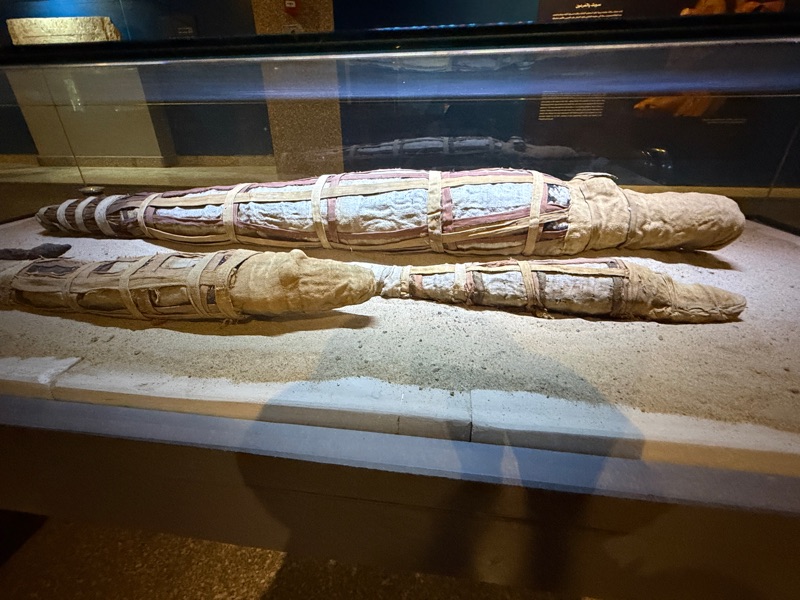
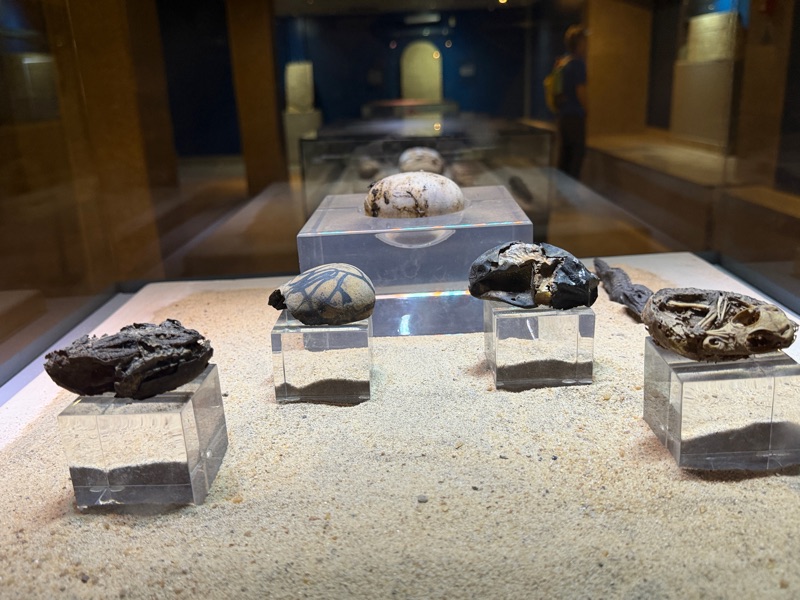
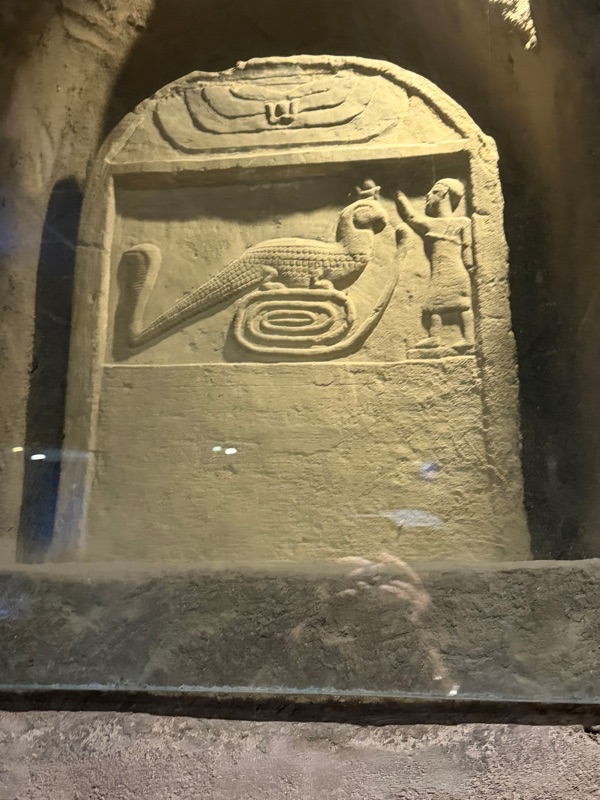
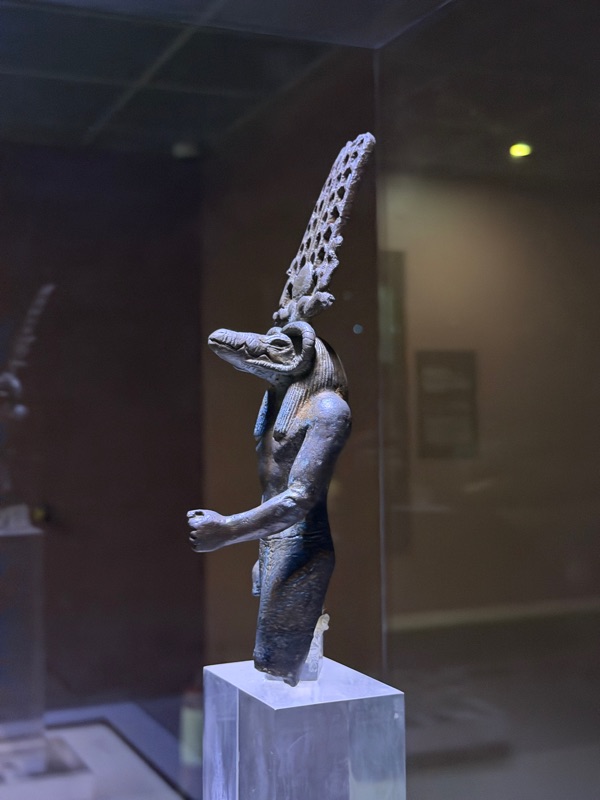
The final attraction at Kom Ombo was the Crocodile museum. Not far from the temple, archaeologist found a place that had more than a dozen mummified crocodiles. So we had fun looking at them.


No comments:
Post a Comment