We started the day with a tour of the highlights of the Heraklion archaeological museum. The museum houses many of the artifacts found at the Palace of Knossos, as well as other excavations in the area. Our guide did a great job of taking us to see the best and most interesting pieces (but we are pretty sure we are going to need to go back to see everything else).
Some of our favorite pieces in the museum
Included
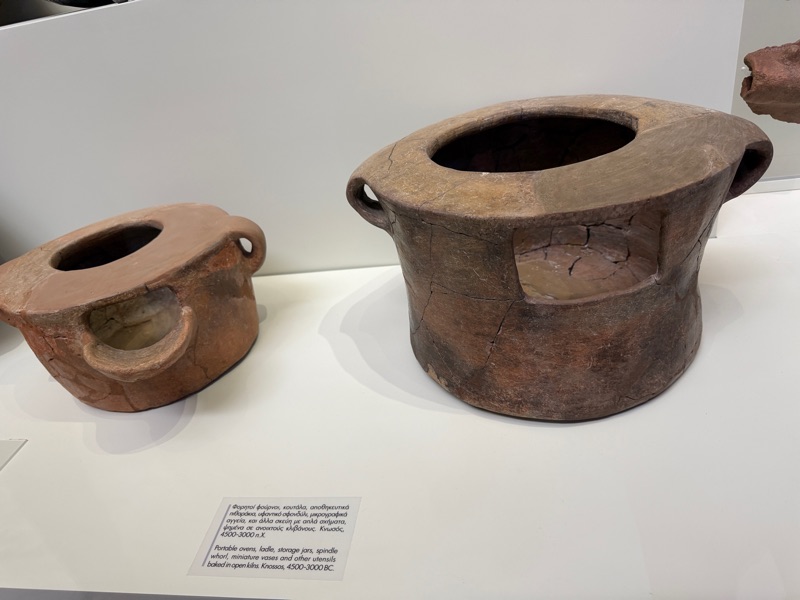
- Ancient pottery cookstove from 4500 BC
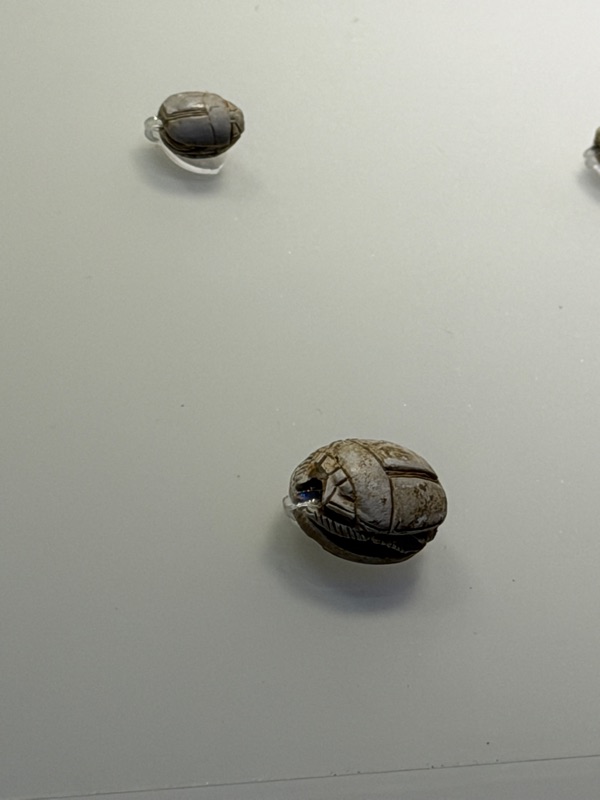
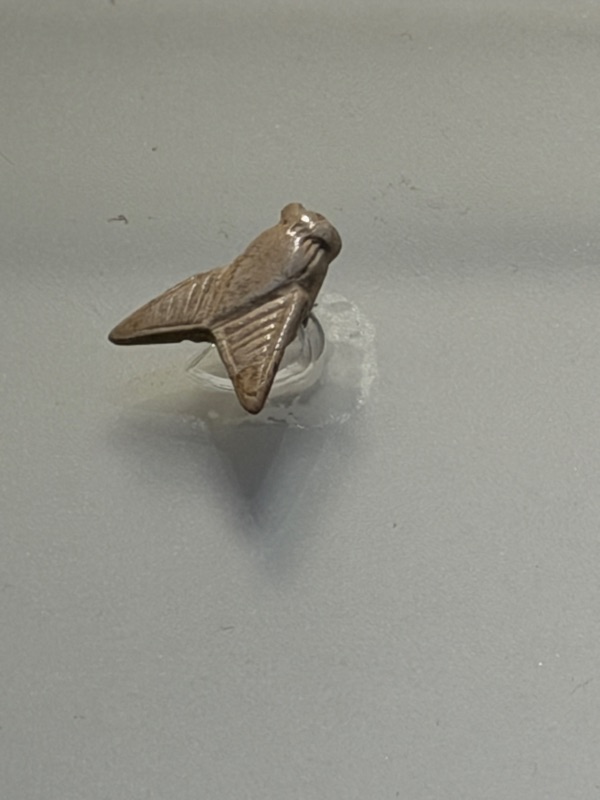
- the tiny little frog and fly charms
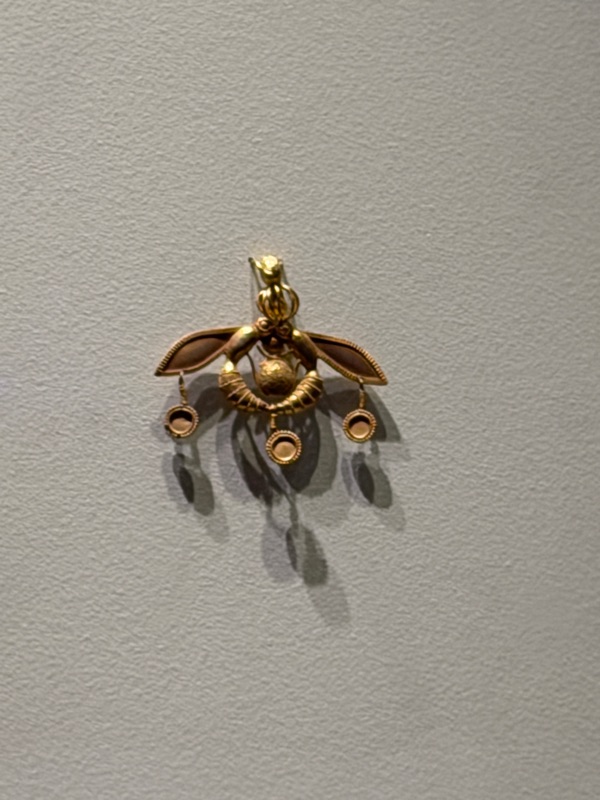
- The two bees pendant
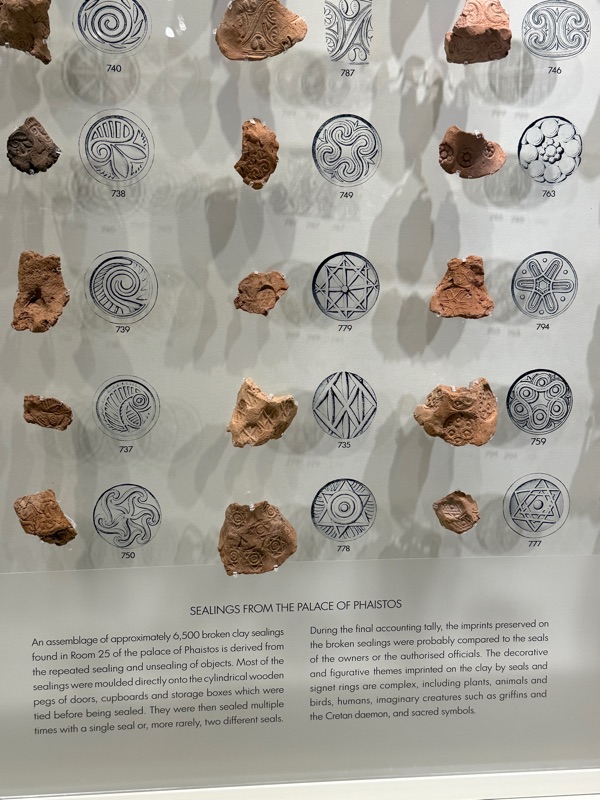
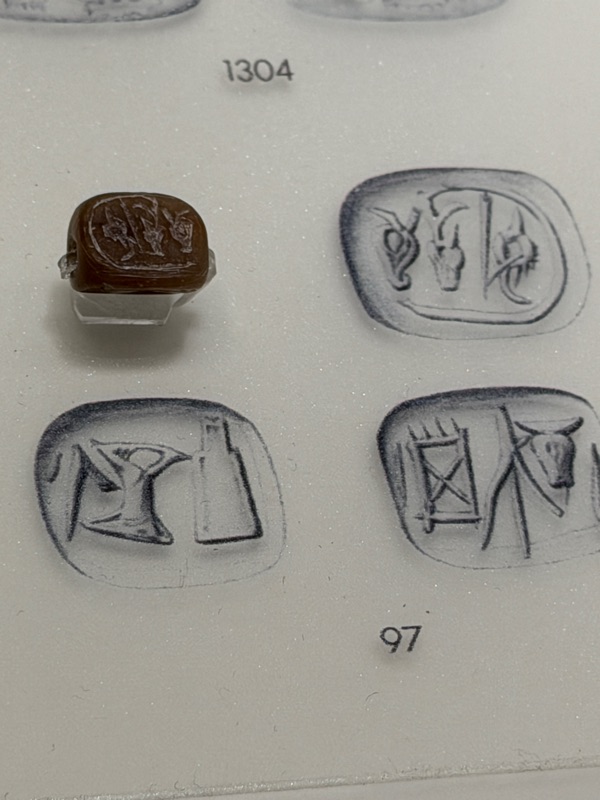
- Lots and lots of tiny stone seals with elaborate carvings
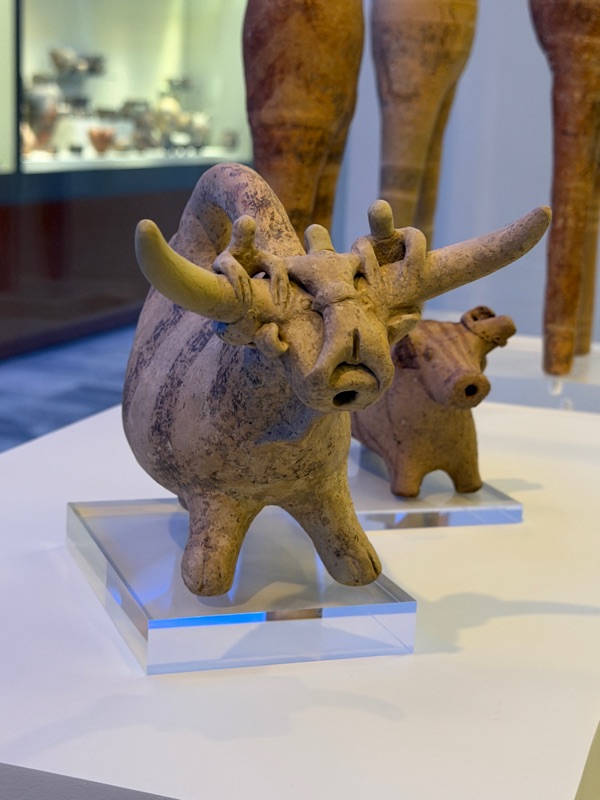
- A bull figurine with three athletes climbing on him.
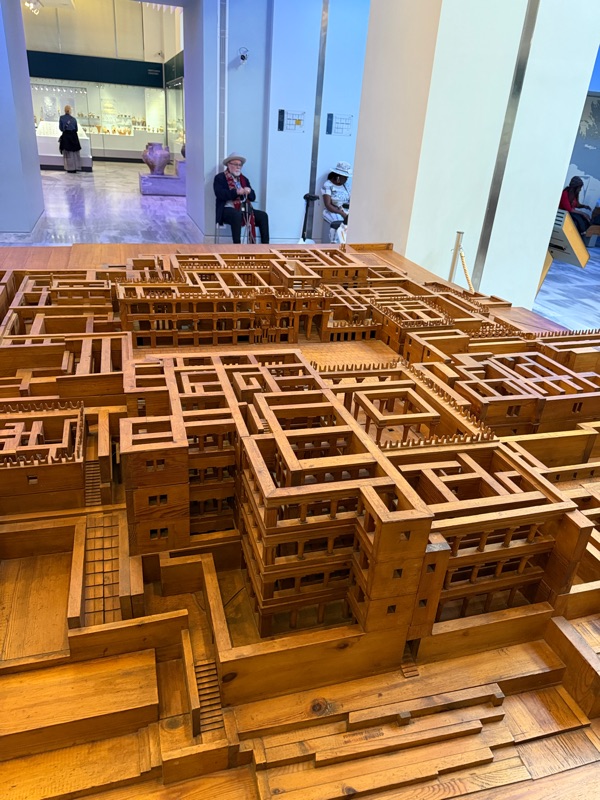
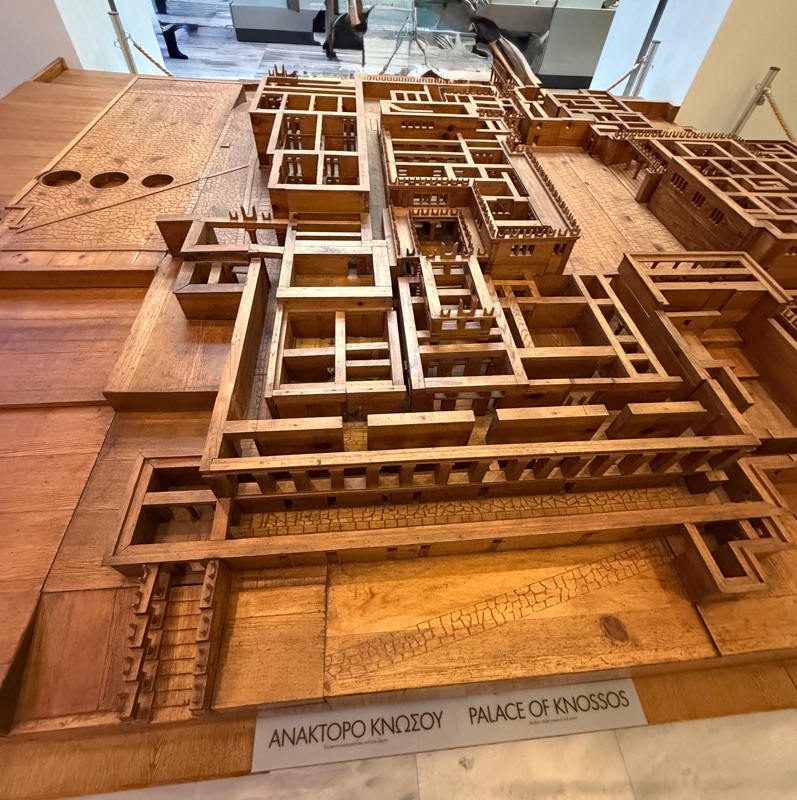
- A wooden representation of the palace at Knossos
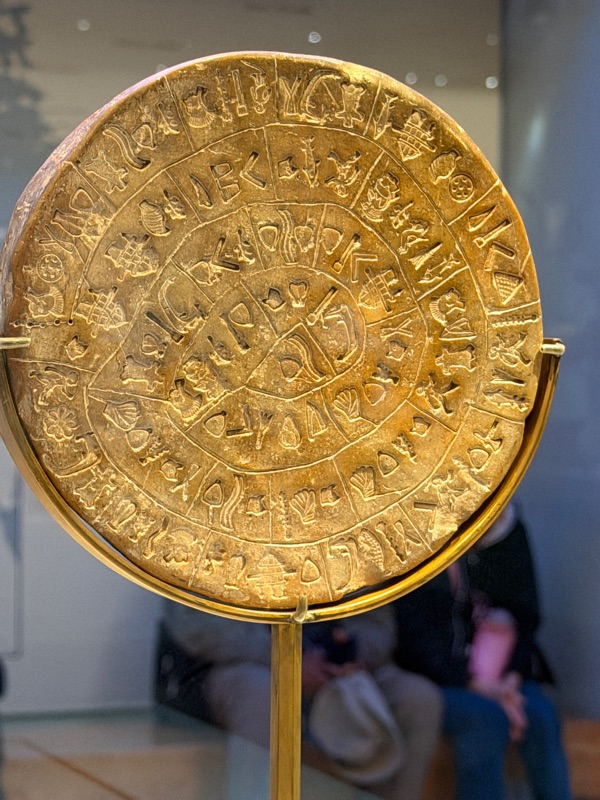
- The Phaistos spiral codex
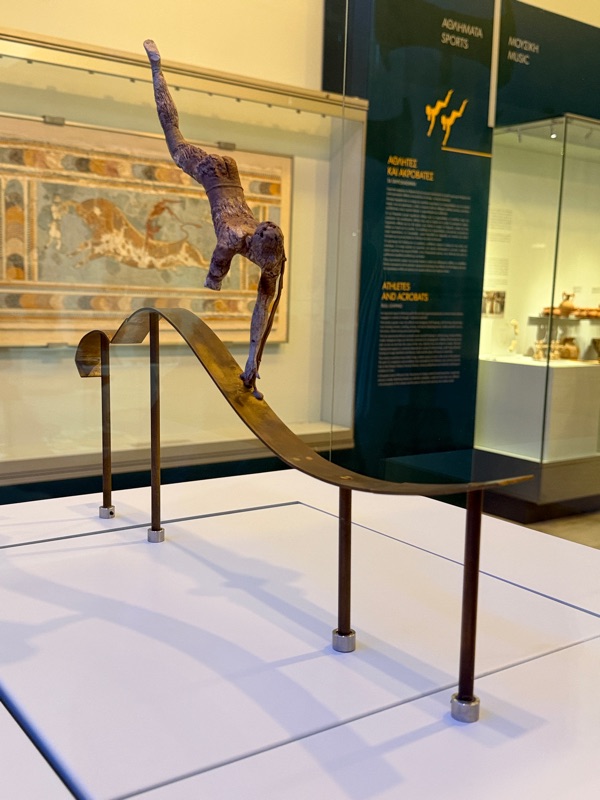
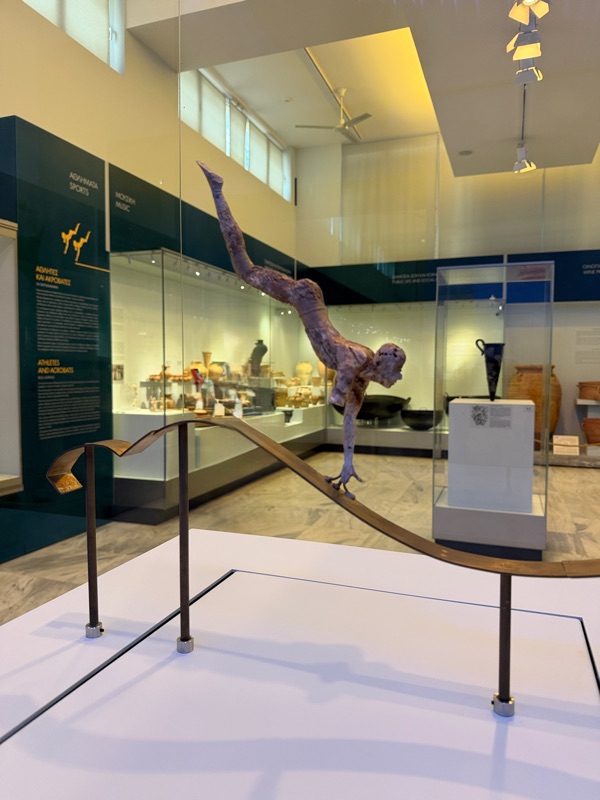
- The statue of an athlete jumping over a bull
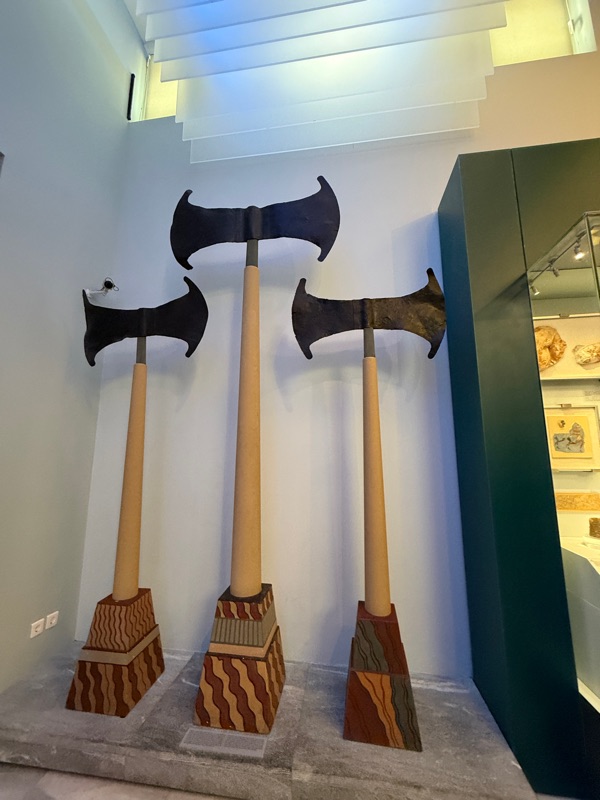
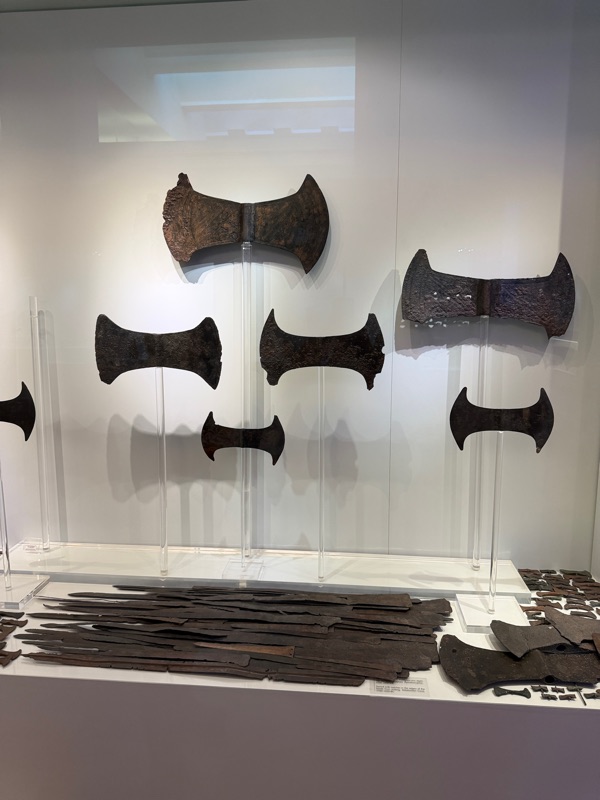
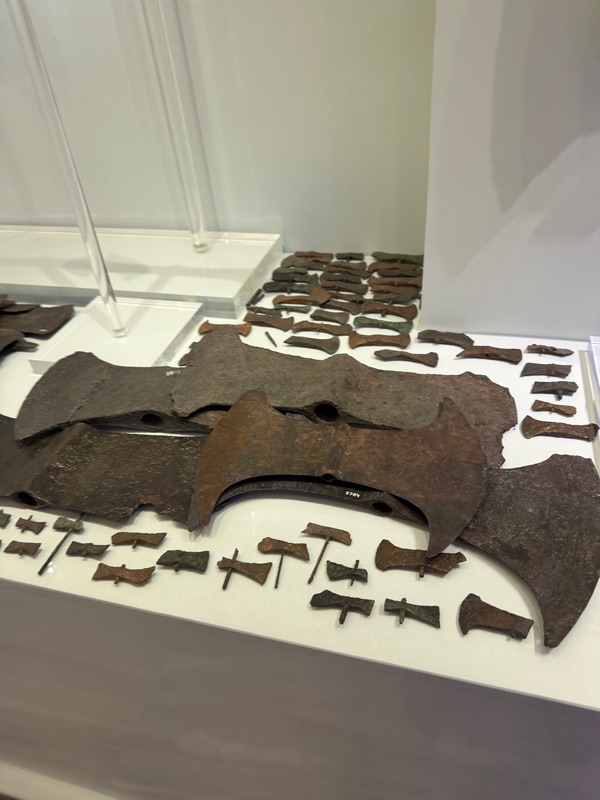
- A room full of double-headed axes
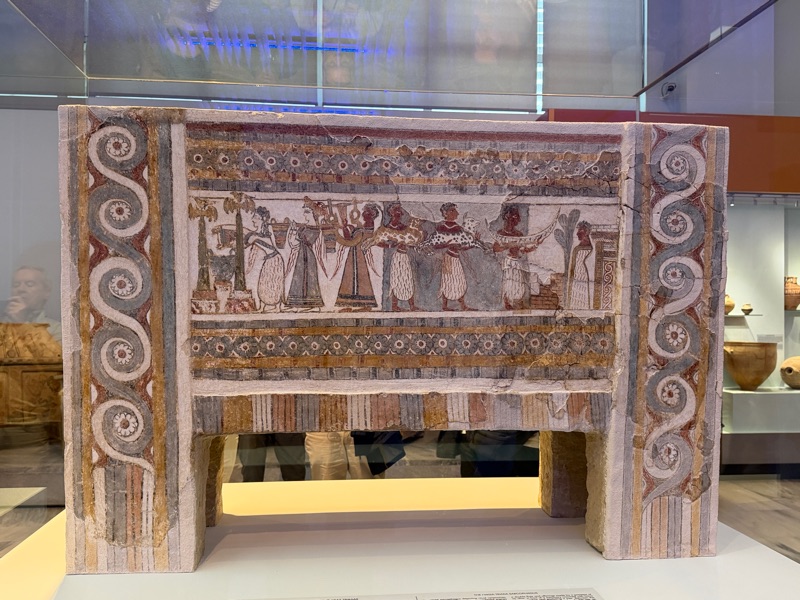
- The stone sarcaphogos
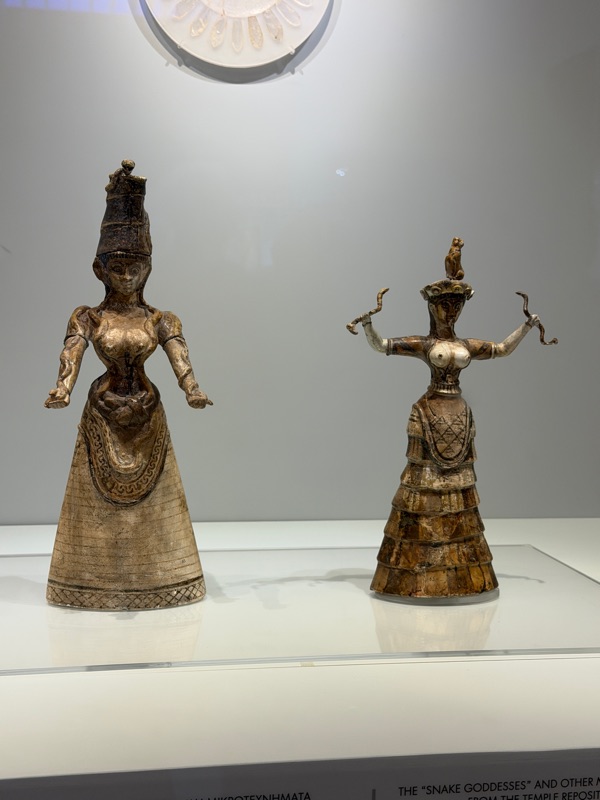
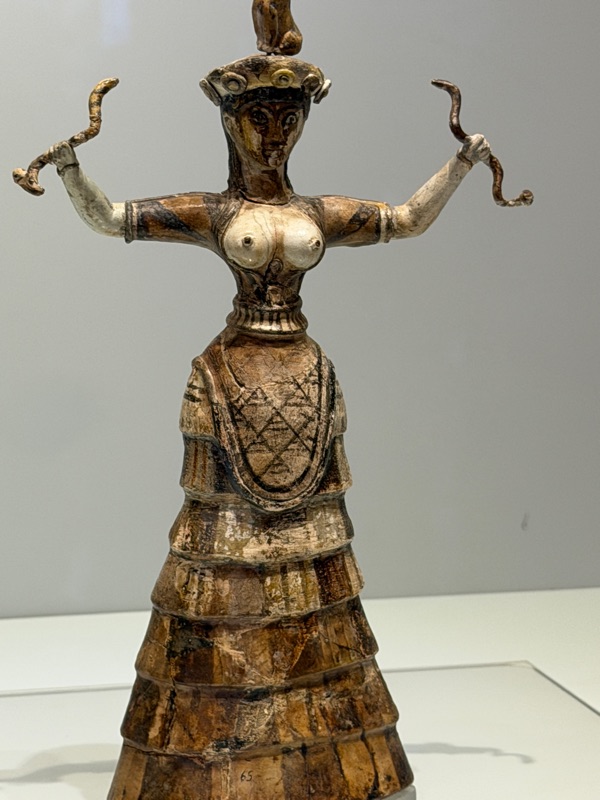
- The snake goddesses
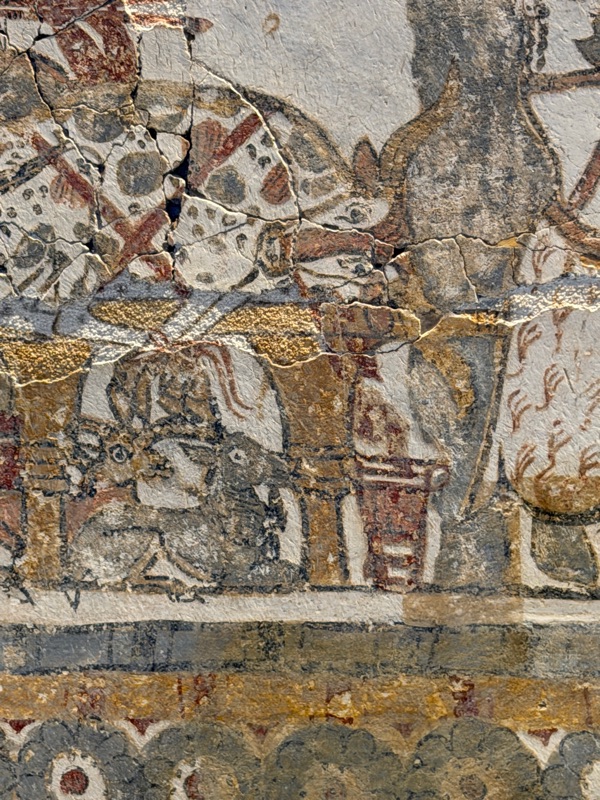
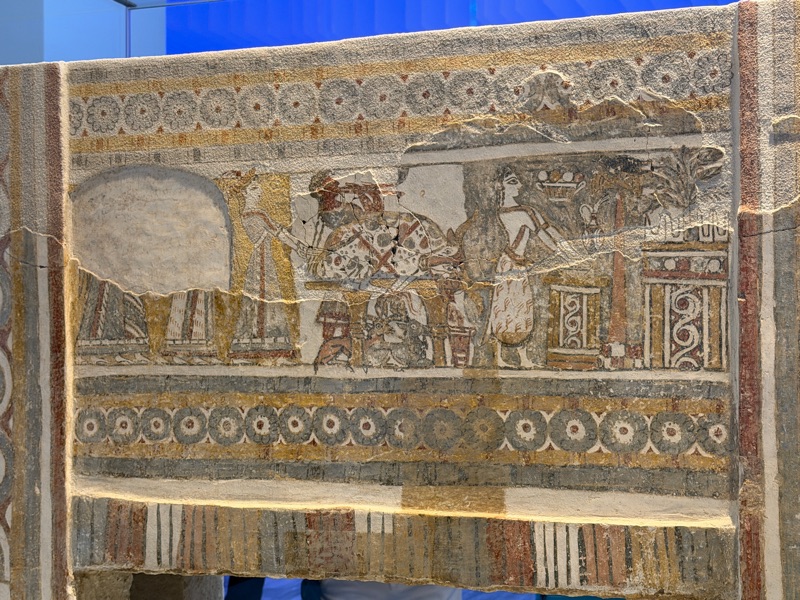
- Frescoes of dolphins and monkeys
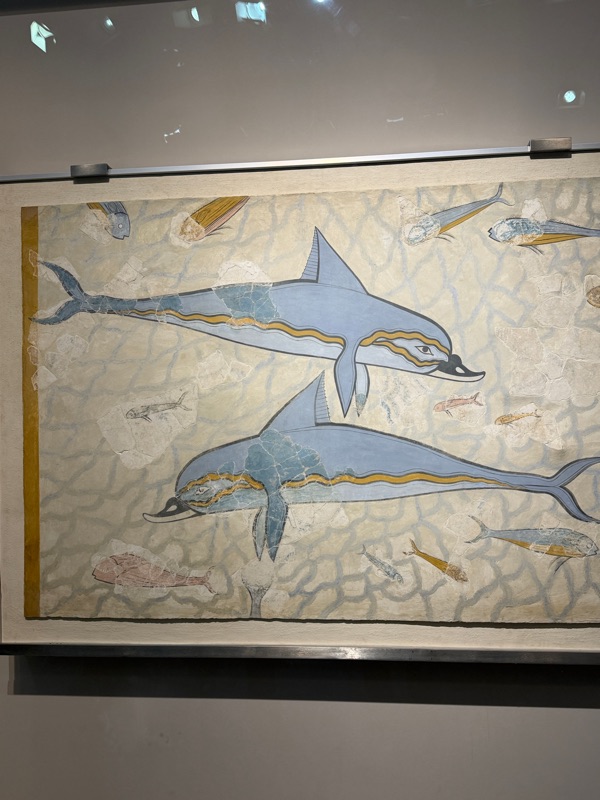
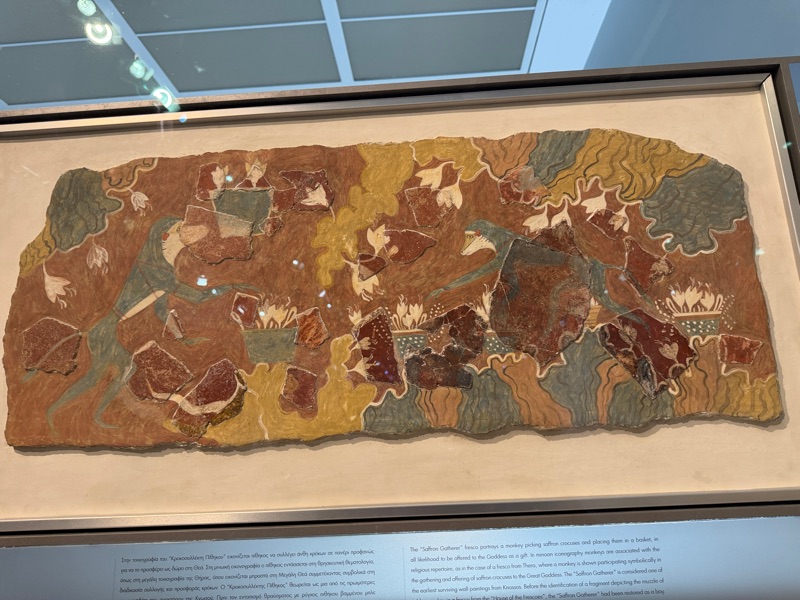
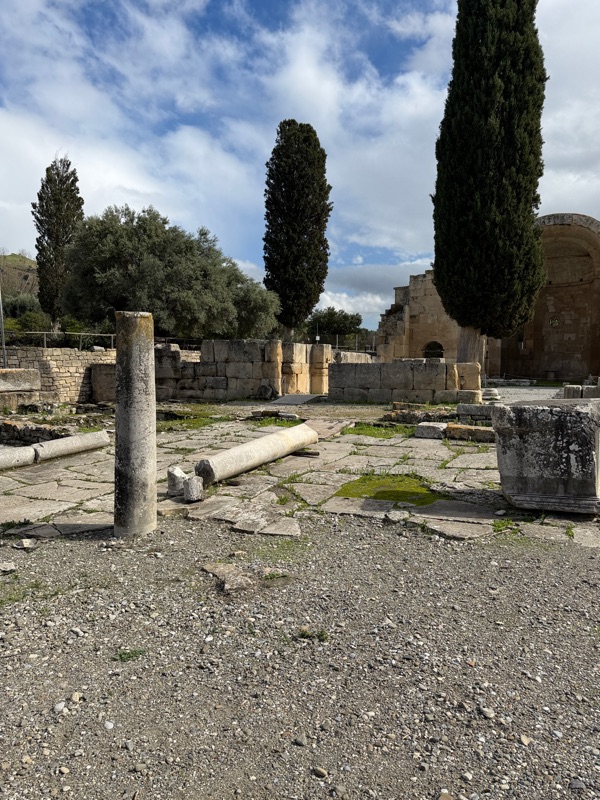
After the museum we headed south to explore sites in Southern Crete. We drove about an hour to arrive at the city of Gortyna. At this location, there had been a Greek city from the classical period, with city walls and an acropolis high on a hill. The site later became the Roman capital for the whole southern Mediterranean (including Libya).
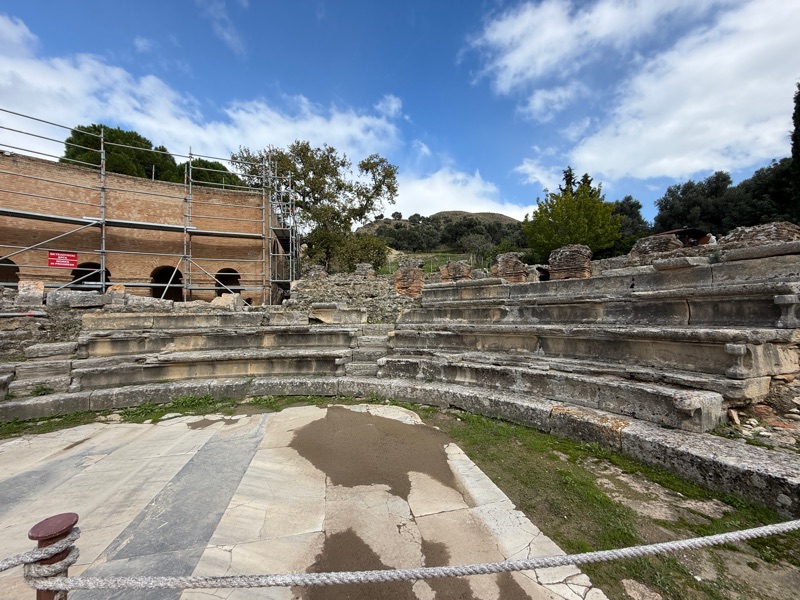
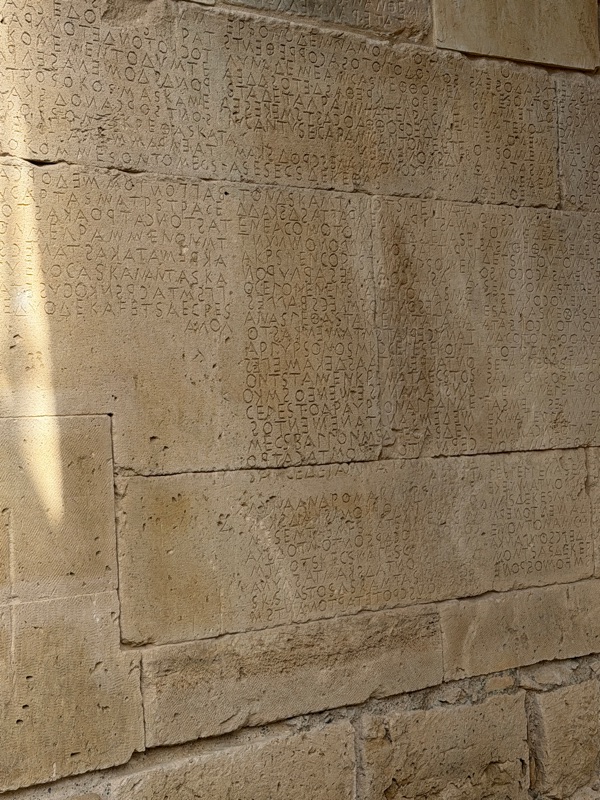
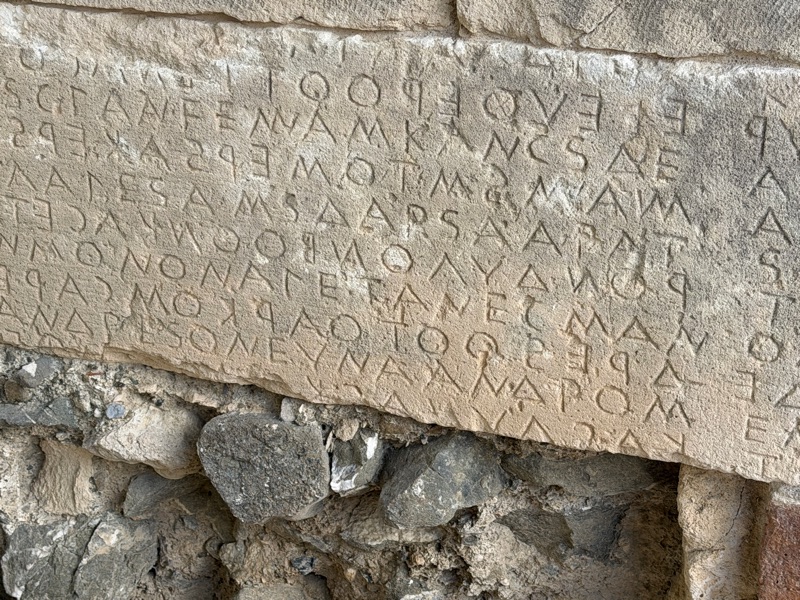
We saw the Greek Odeon and learned about how plays were selected for performance. Behind the Odeon,the Romans, who conquered the Greeks and took over their cities, built a large stoa or market area. Of particular interest was that the stoa was built with a whole series of blocks on which were written in Greek, but in an older form of the language that used a “snake” format because the text ran left to right on on one line and doubled back reading from right to left on the next line.These blocks had formed one of the most complete copies of civic laws of the Greek city. This is the oldest example of a Greek Codex of Law posted in a public place on a building in Greece. This reuse of building materials is a good example of one culture using the materials from an earlier one.
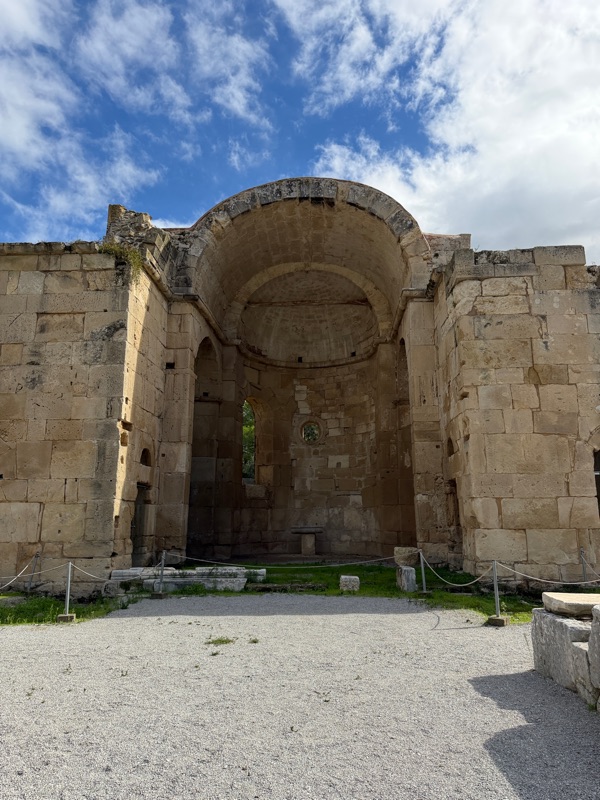
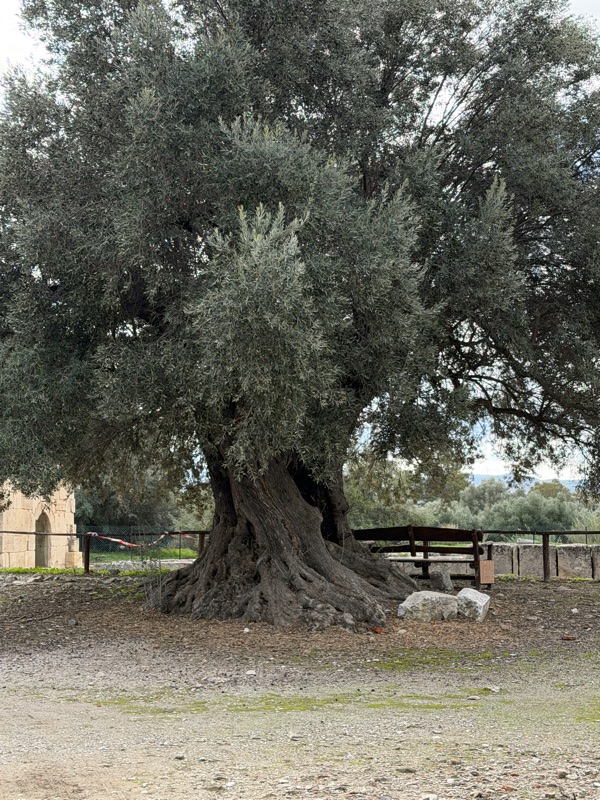
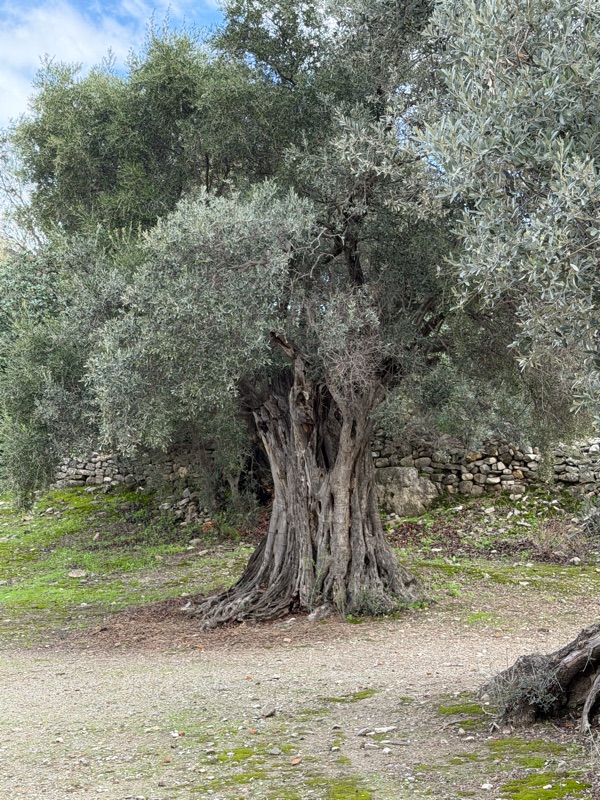
Amongst the thousand year old olive trees, we visited a church dedicated to St. Titus from the 5th century AD - documenting yet another phase of this site's history. The archaeological area is huge - but the portion that is preserved and protected by the government is still relatively small at this point. Archeologists want to claim a larger piece of the land and start excavating the surrounding area - there are literally ancient foundations and partial buildings all around the area for a good distance, but government resources are already strained.
Our last stop was the Minoan palaces of Phaistos. This site had an old palace with a north-south orientation, then a new palace was built on top with an east-west orientation. Having both palaces available to see and study was a huge boon for archaeologists. Panos pointed out how different this site is from Knossos, because it was excavated properly, uncovering layer by layer, instead of choosing one to focus upon and draw attention to it to attract attention, but while destroying the layers above and below.
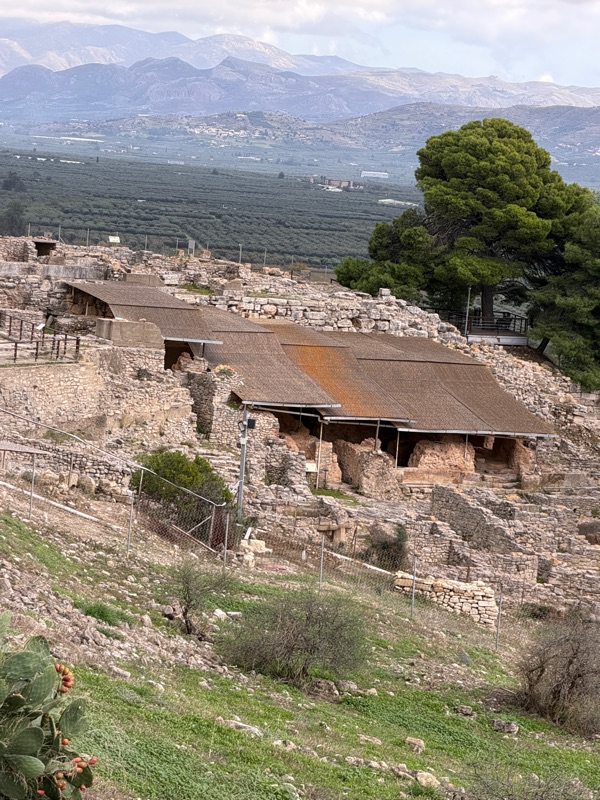
The older palace still under excavation.
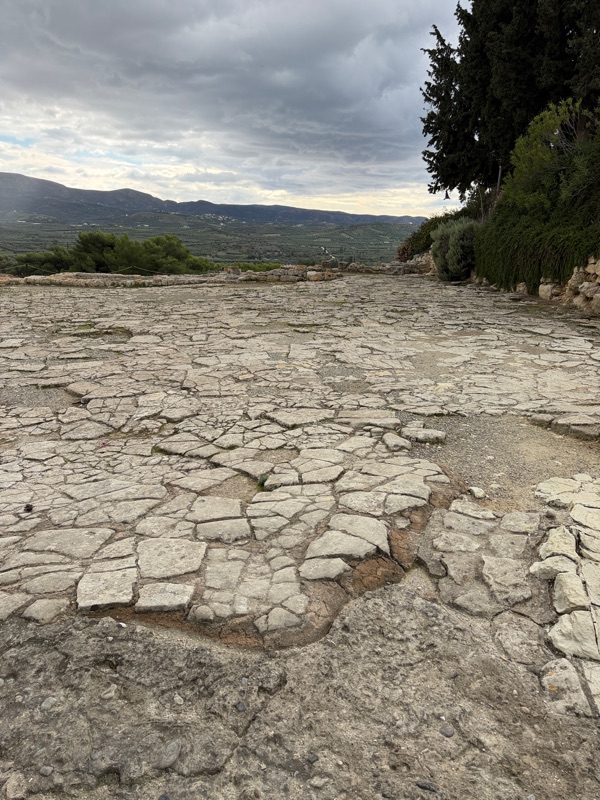
Plaza of the older place.
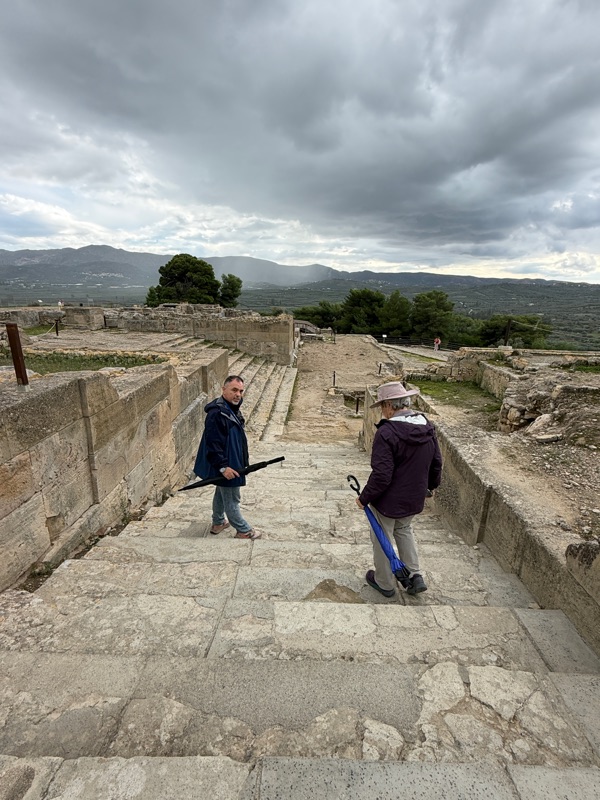
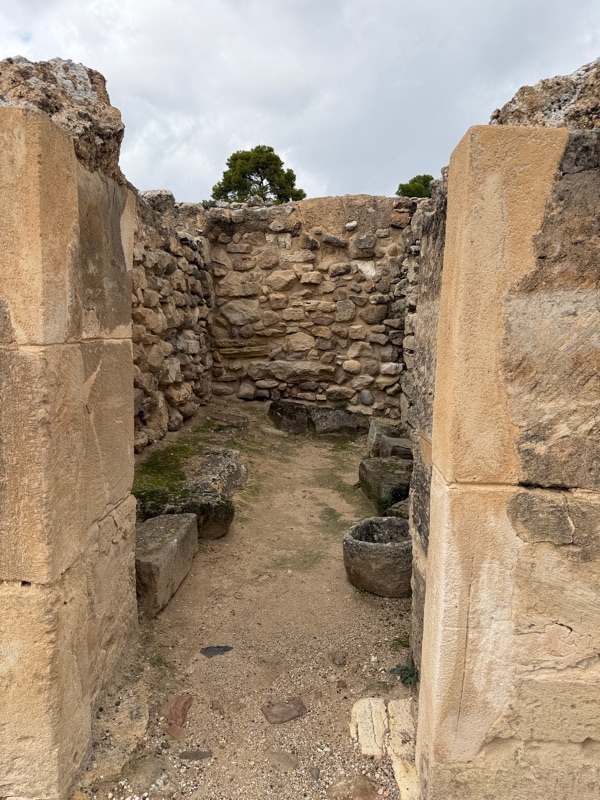
Storage rooms
We enjoyed the royal apartments, as the meaning behind various elements were explained. For example in the area where the workshops were, there were kilns for firing clay and for metals that were saturated a a place where the smoke and toxic fumes from the metal would be blown away from the living quarters by the prevailing winds. We were especially pleased to see the workshops where the codex of Phaistos was discovered. It was also interesting to see the separation of the royal living quarters from the ceremonial and trading spaces.
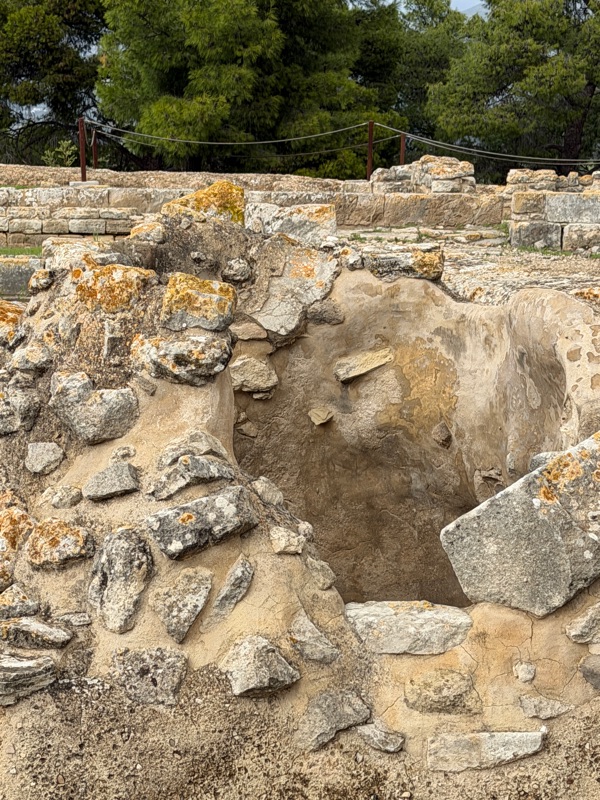
Kiln for firing pottery
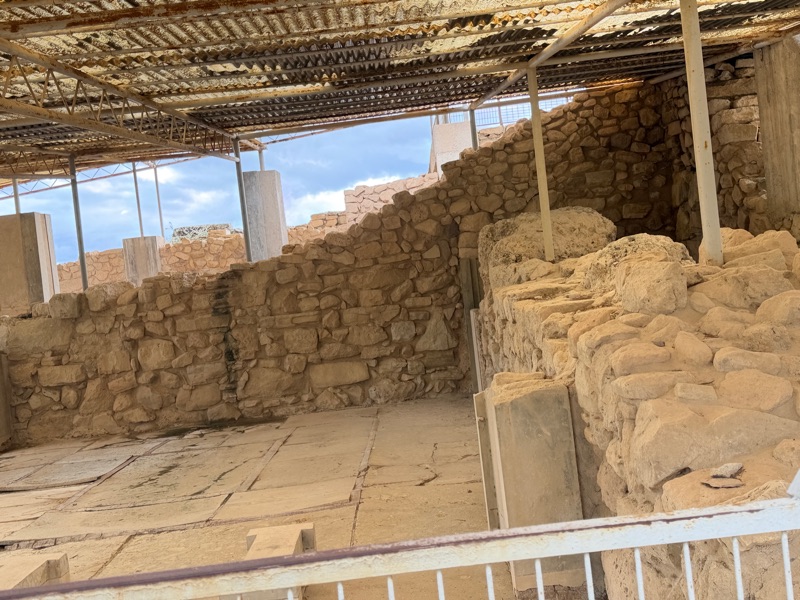
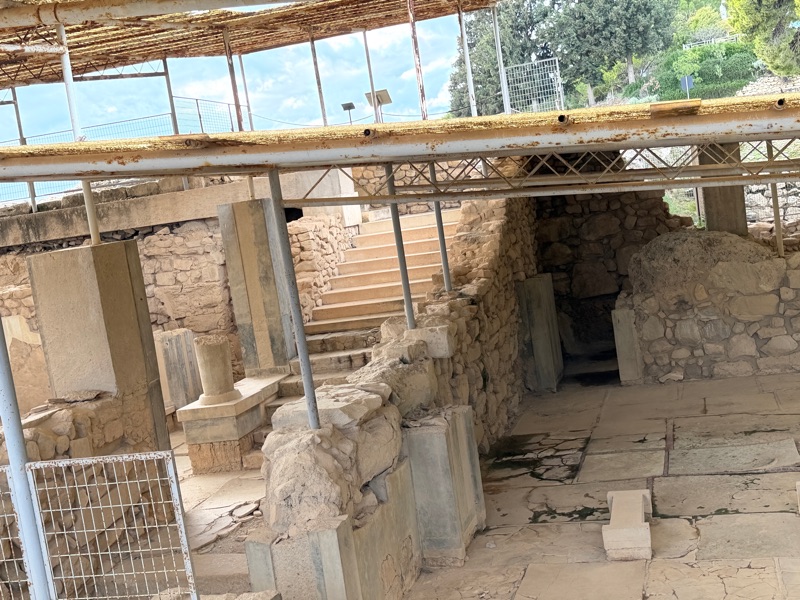
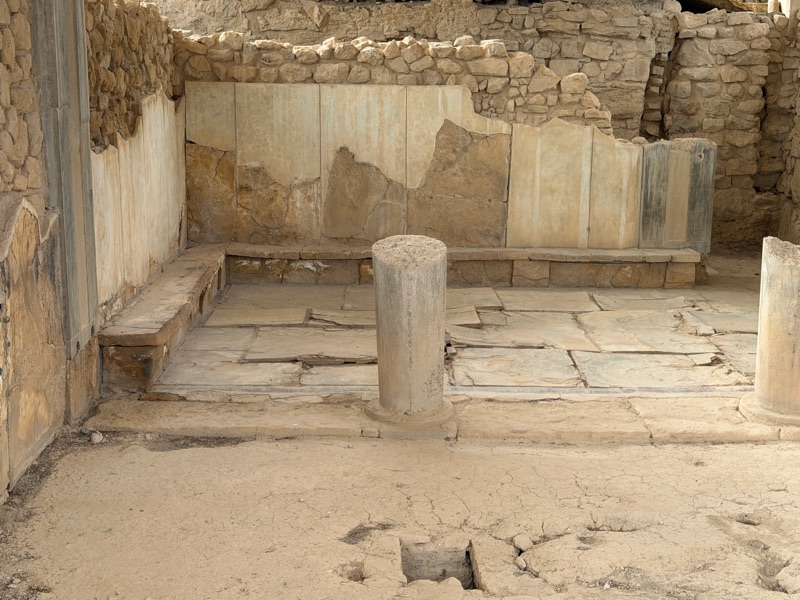
Royal apartments
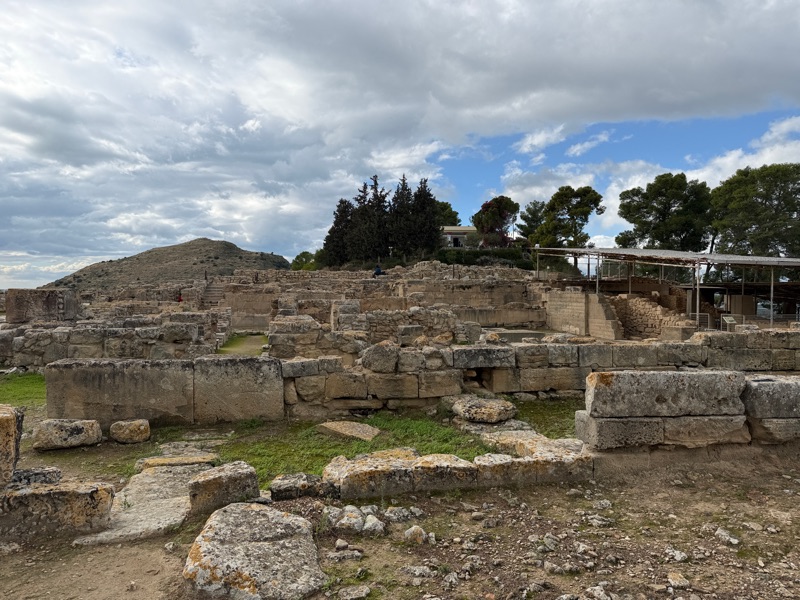
Workshops
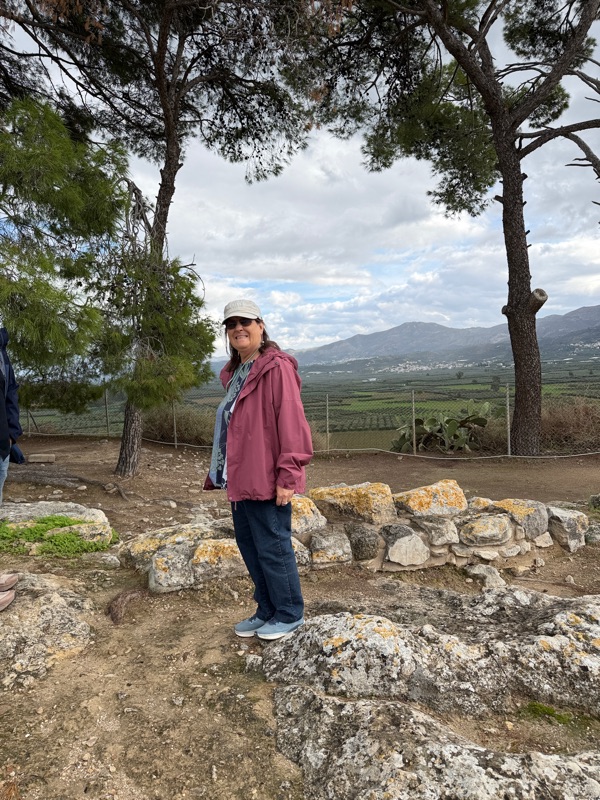
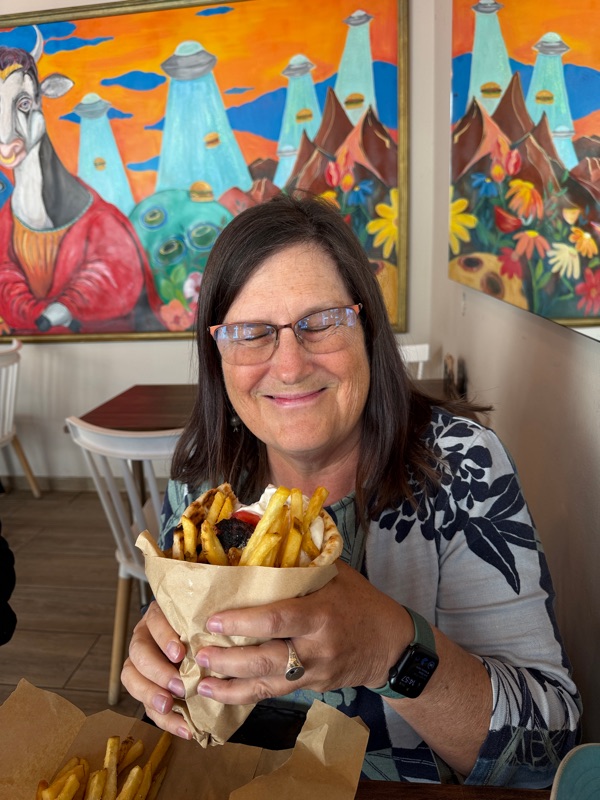
After Phaistos, we stopped in town for a typical Cretan late lunch - meat, bread, yogurt and lots of very delicious French fries.
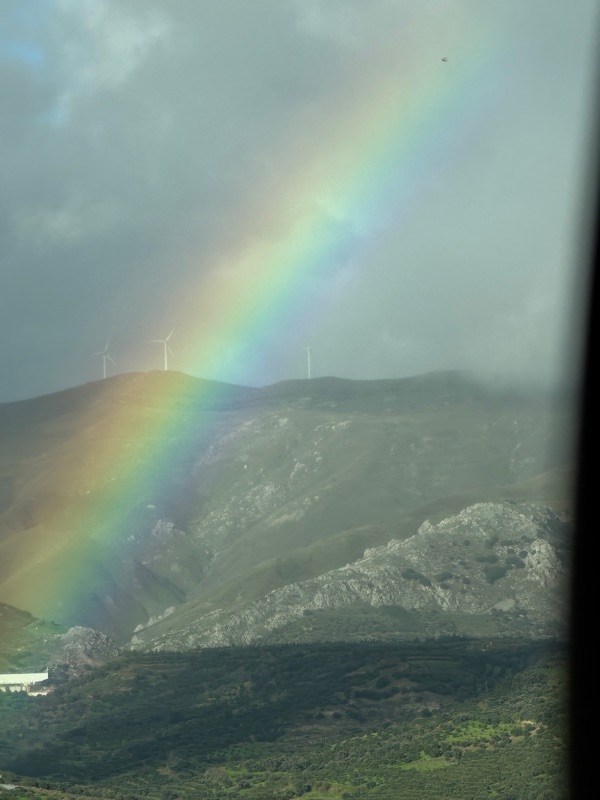
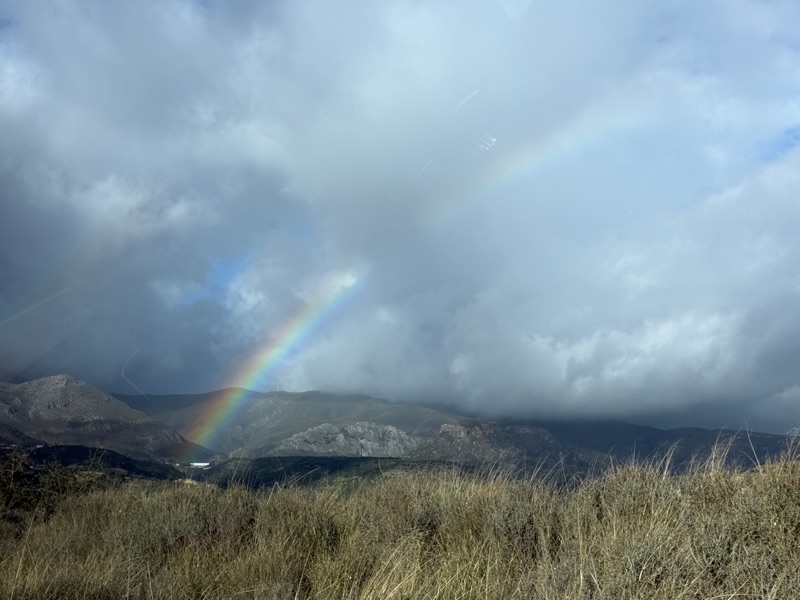
We saw a lovely rainbow on the drive back to Heraklion. We came home as the rain started again, and spent a quiet late afternoon digesting.
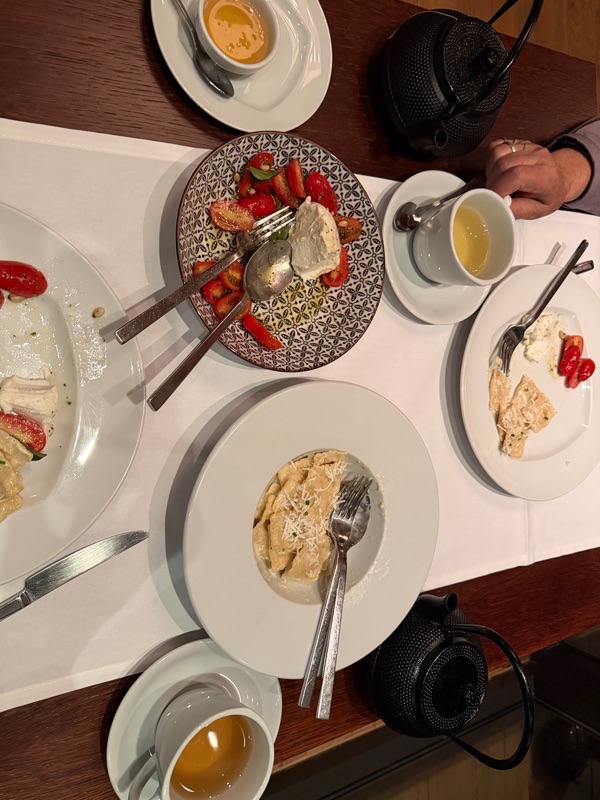
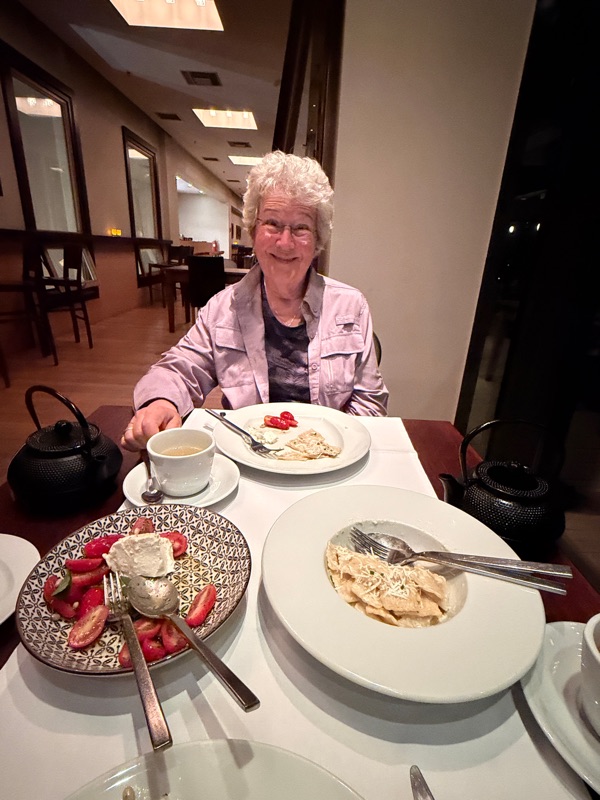
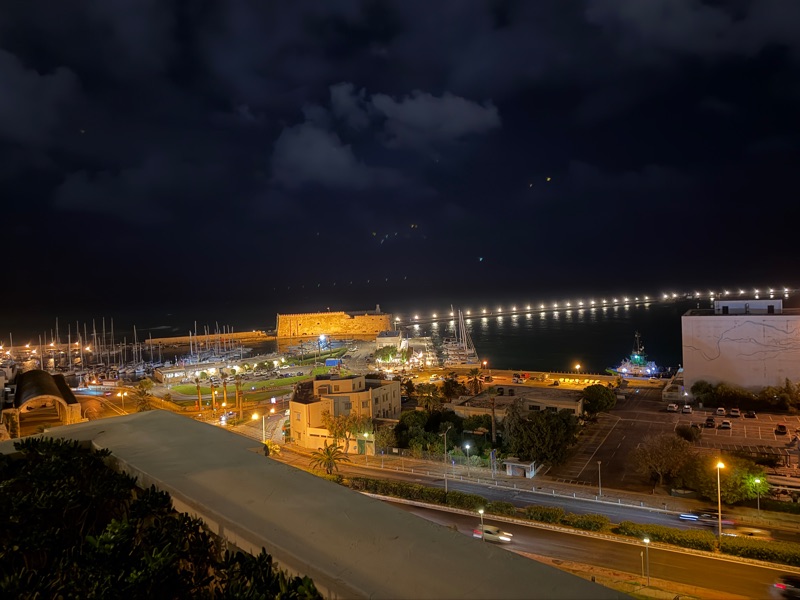
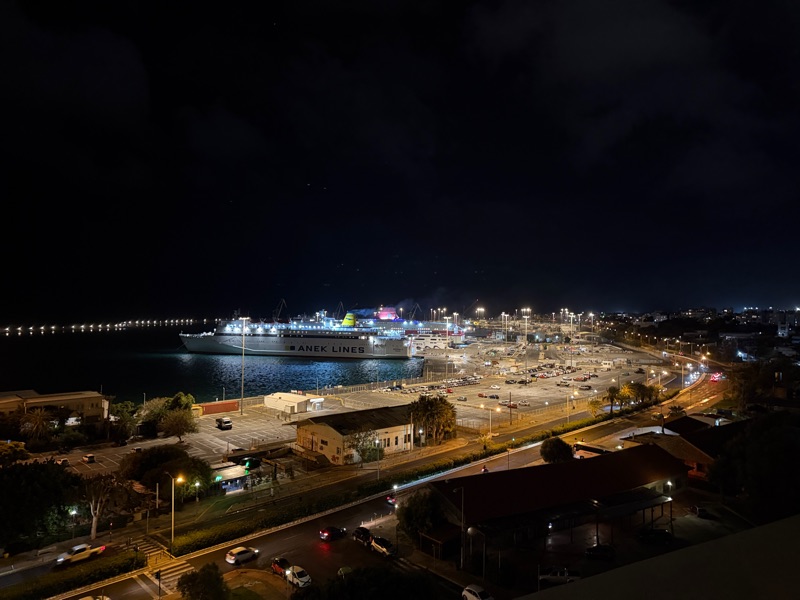
For dinner we had a caprese salad and pasta on the rooftop. We also got to enjoy the view of the Venetian fort and the harbor at night (but it was way to wet and windy to sit outside).

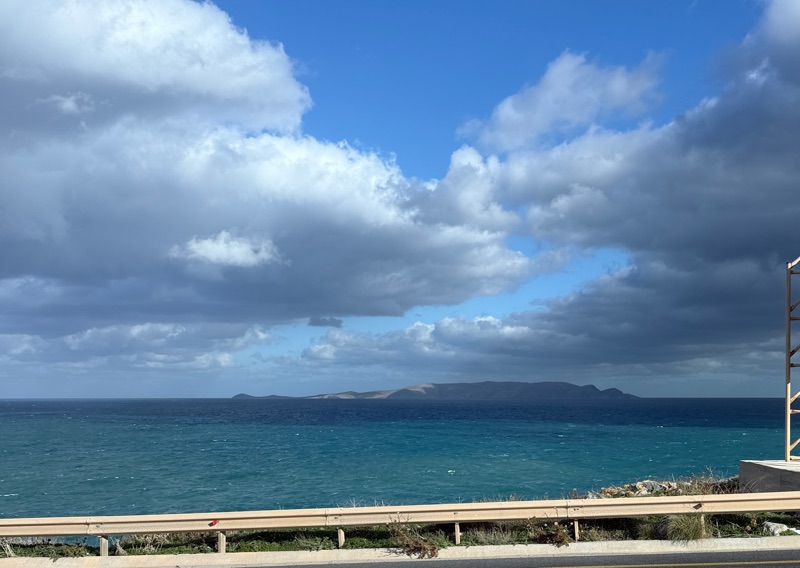


What a vast difference in cultures on each side of the Mediterranean. So much more advanced on the North, not so much in Africa!
ReplyDelete