Our first day in Jordan we spent the morning relaxing and settling in to our hotel. Midday we took an Uber to the Al Hussein Park, which featured a number of different attractions.
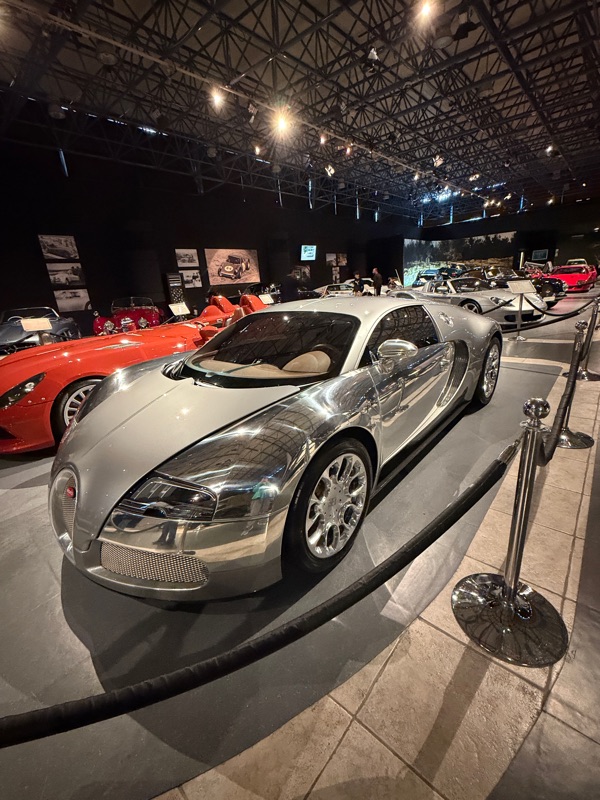
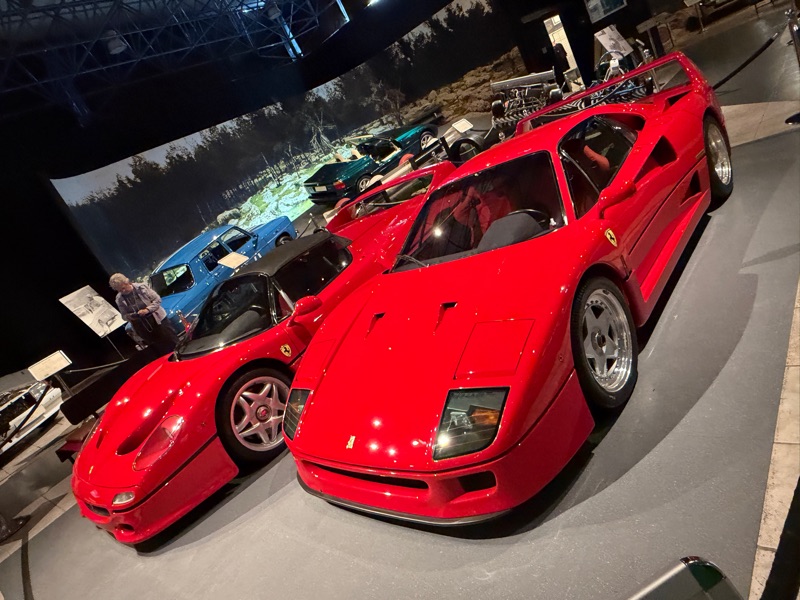
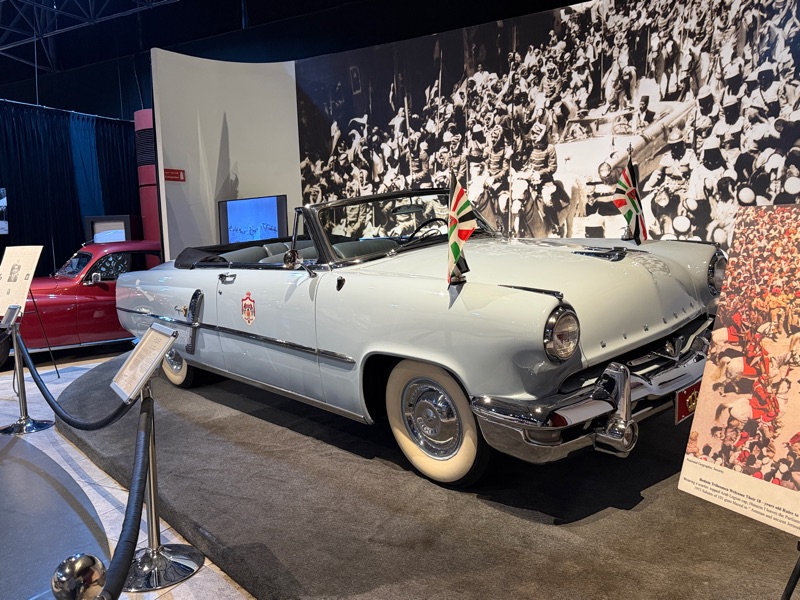
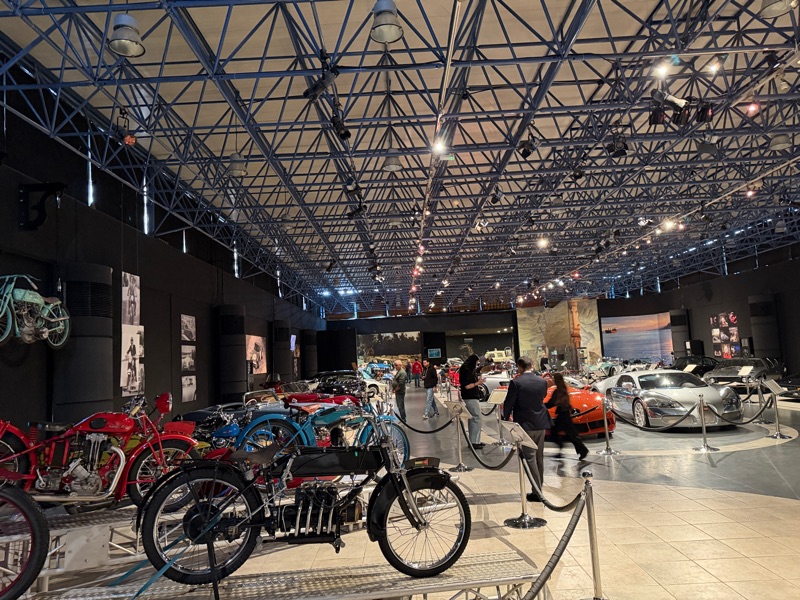
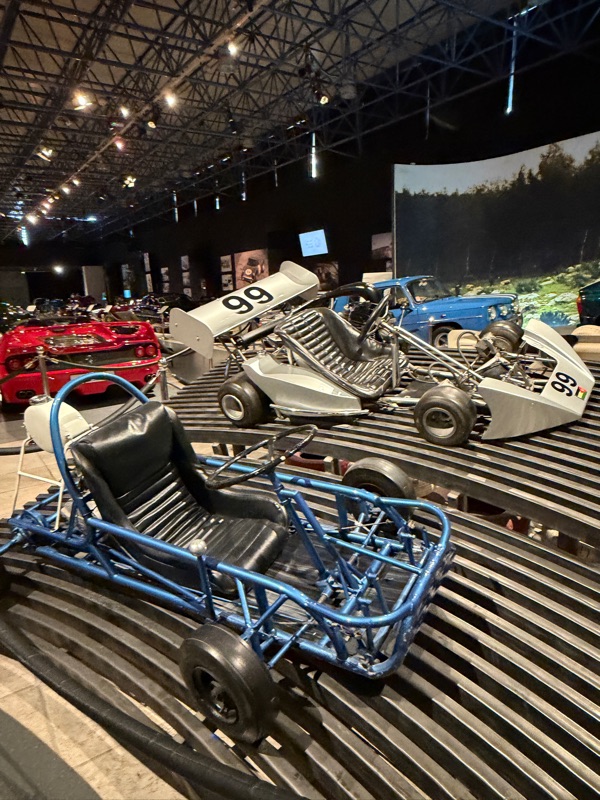
We started out at the Royal Automobile Museum, which contained more than 70 different cars, motorcycles and go-carts from the collection of the late King Hussein II. There were lots of super luxury cars that had been given to the King as gifts from other Middle Eastern kings or princes, as well as armored cars, and limited production custom-made vehicles. Ah … the life of the super rich! For each vehicle, signs shared the history of the car, as well as how much the king used it or at what special events it appeared (the bridal car at a son's wedding, the car the king’s coffin was carried on, the car he used when he went out to visit remote villages in the country, etc). The late King, who died in 1999, was a huge car enthusiast, and he drove most of them and participated in both car and motorcycle races.
Besides the car museum, the main feature of the park was a long walkway that included replicas of artifacts from Jordan’s history from pre-history to the present. Unfortunately, we could only see the very beginning, because the walkway was closed.🙁
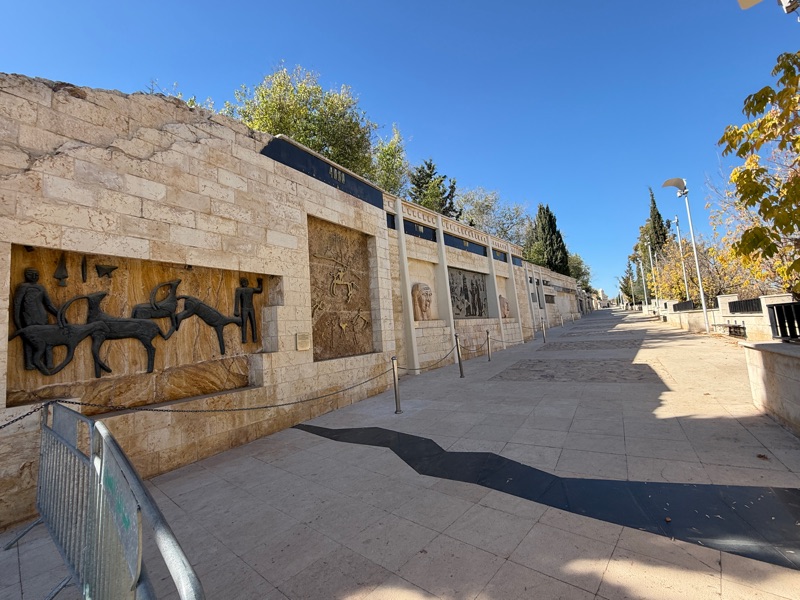
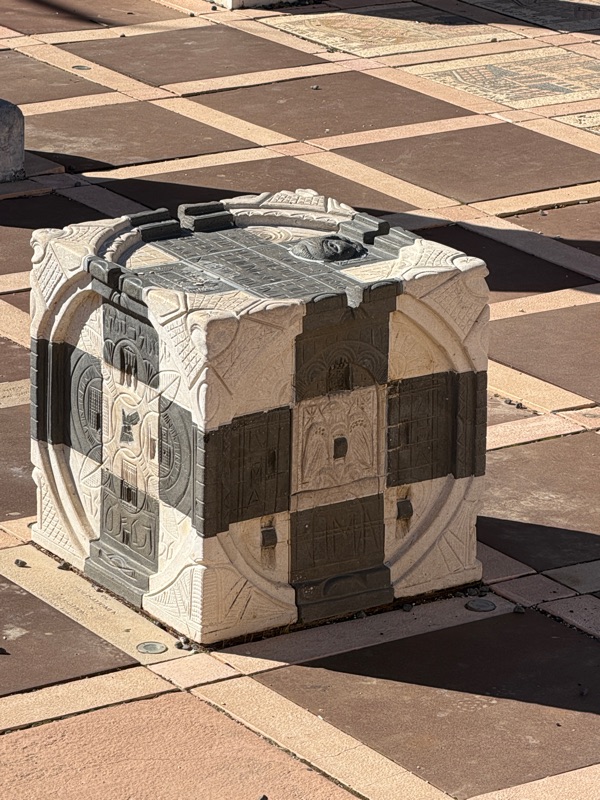
We did enjoy walking around in the park, seeing some of the outdoor sculpture garden and event spaces, and sharing the space with lots of families enjoying the lovely weather outdoors.
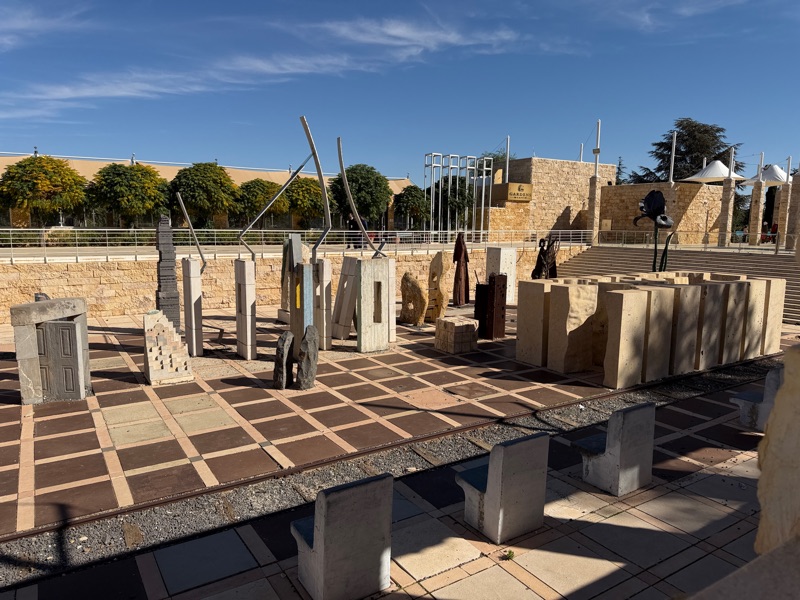
Outdoor art gallery.
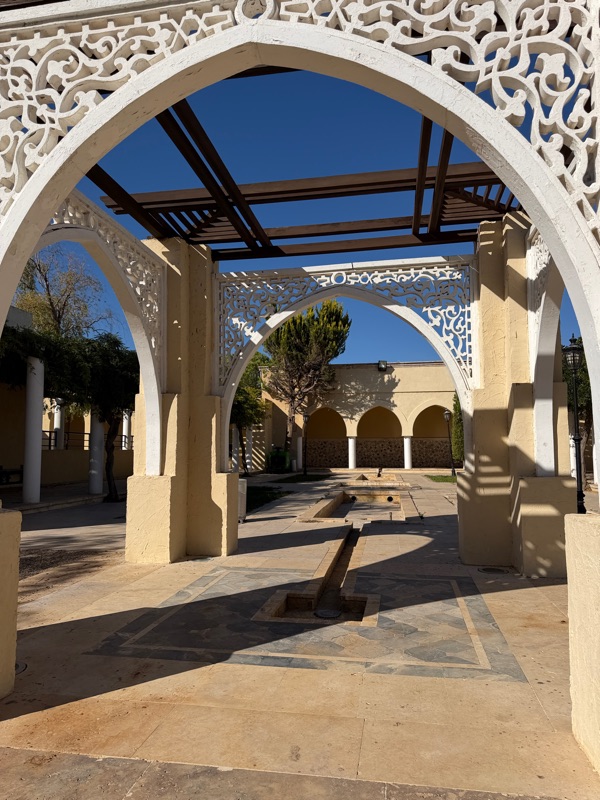
We finished the day back at the hotel we had a delicious dinner of Mediterranean mezzo - tabouli, hummus, etc.
Today, Saturday, we booked an all day tour to see sites around the Dead Sea. Ali, our driver/guide, showed us around and kept us entertained all day.
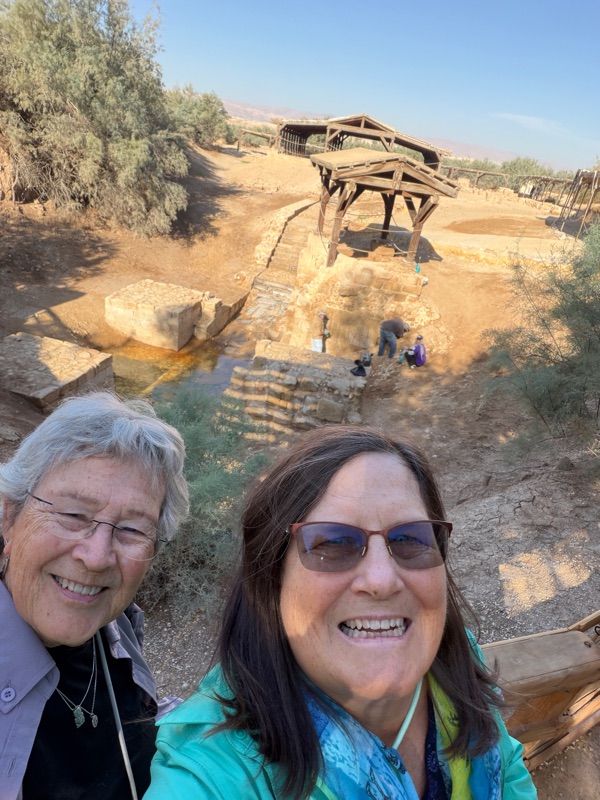
The highlight of the day was the UNESCO Baptism site, the place where John the Baptist baptized Jesus in the Jordan River, which was about an hour's drive from Amman. We saw an old church and monastery on Elijah’s hill, where Elijah was whisked to heaven, near where John the Baptist lived in a cave along with other people who were trying to live a pure life in anticipation of welcoming the foretold savior. The excavation under the roof protected the remains of walls and mosaics from a Byzantine era church. There is evidence that other churches were in the same place much earlier.
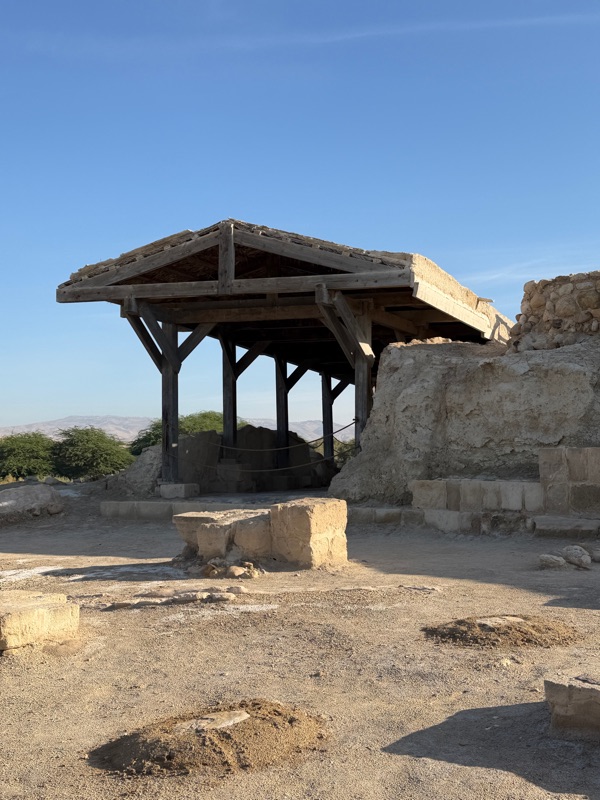
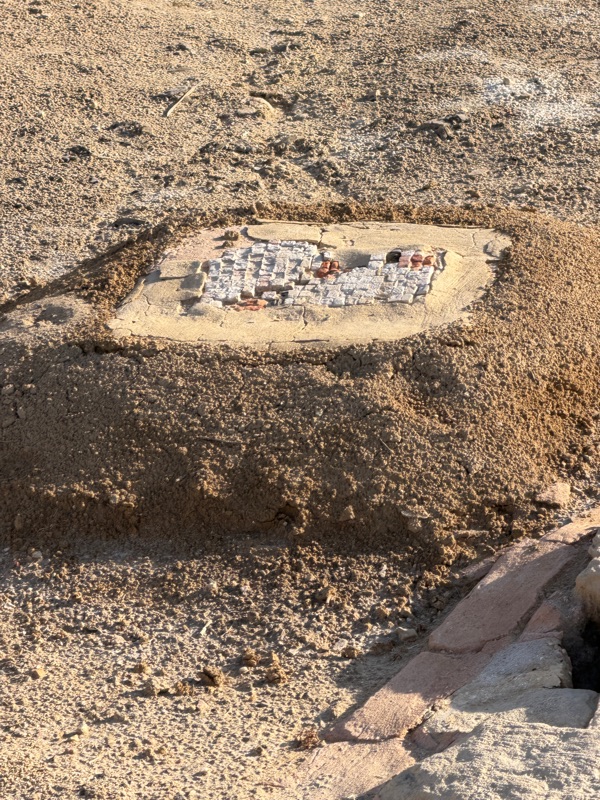
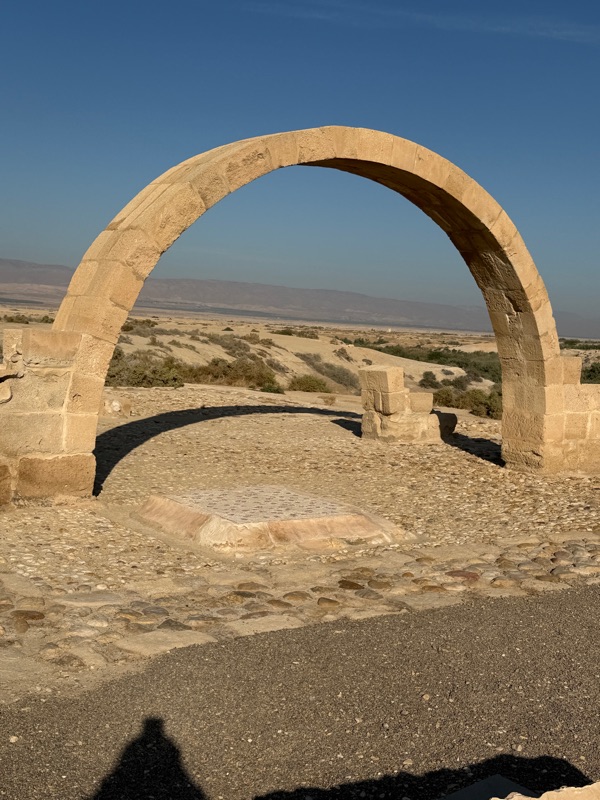
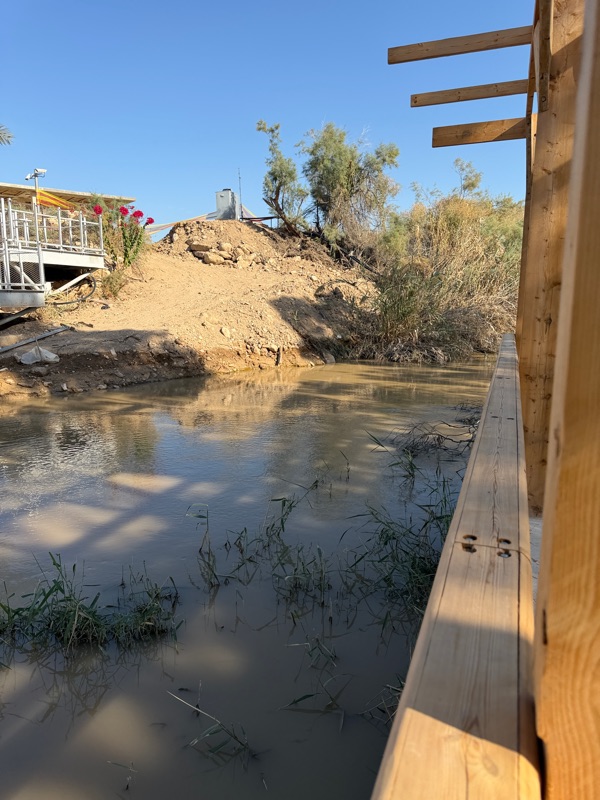
We walked through “the wilderness” along a little stream and ended up at the baptism site. The site had lovely modern mosaics from when John Paul II visited the area 10 years ago. There were also ruins of a number of churches that were built near the baptism spot, starting in the 5th century or earlier. The site was known to have been a popular pilgrimage site since soon after the crucifixion, and Christian churches have occupied the area since the 4th or 5th century.
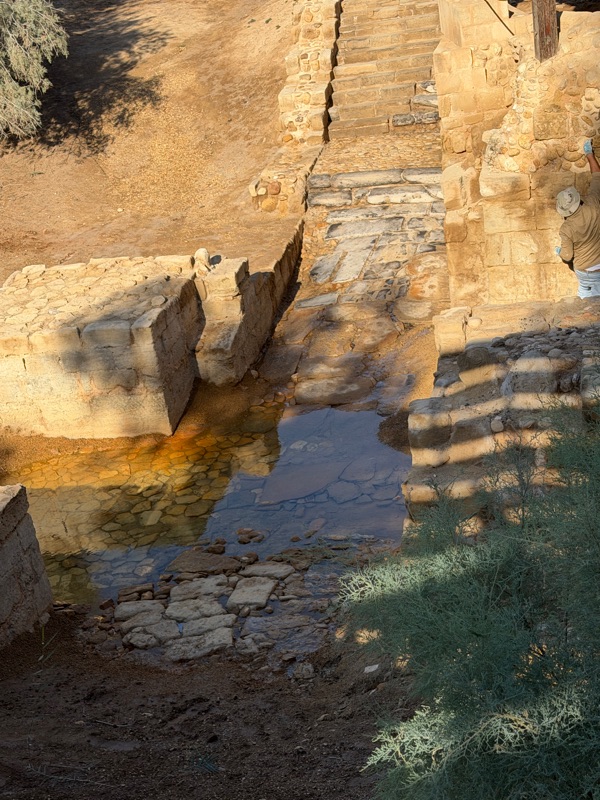
Looking down on the baptism spot and the excavated churches..
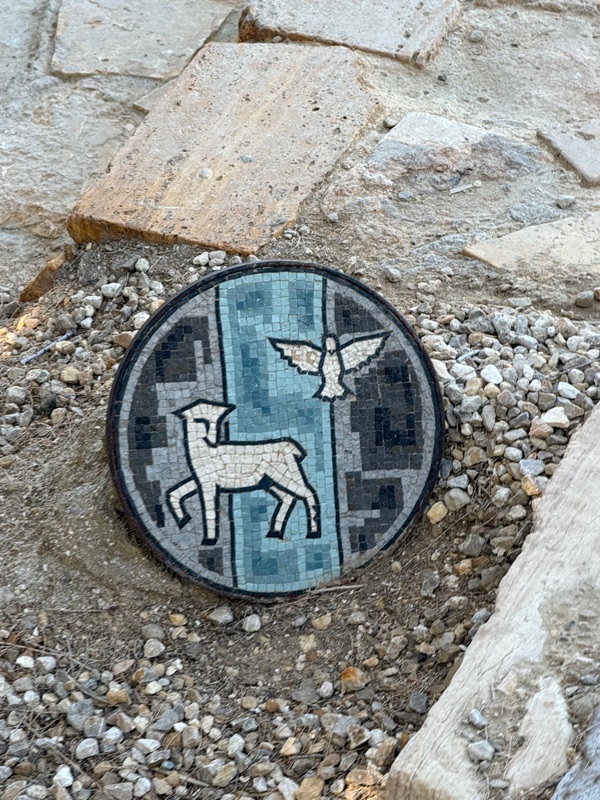
World heritage site marker.
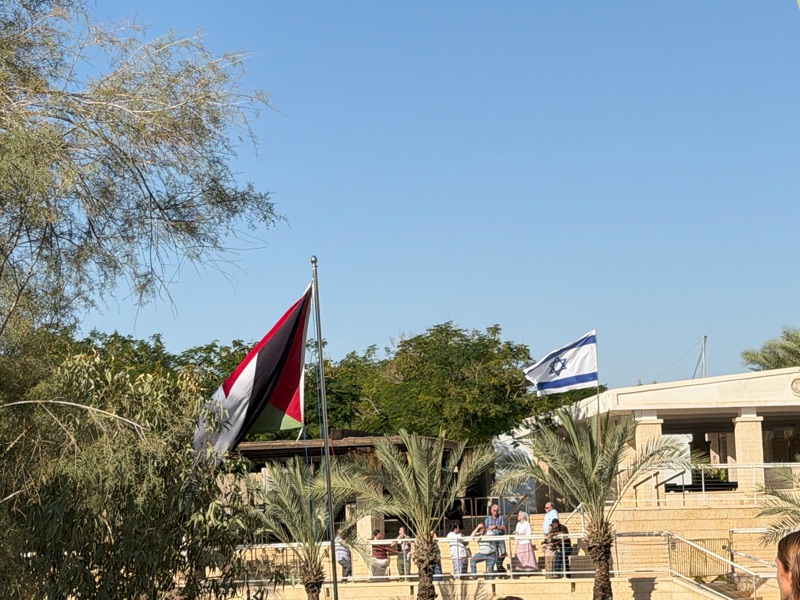
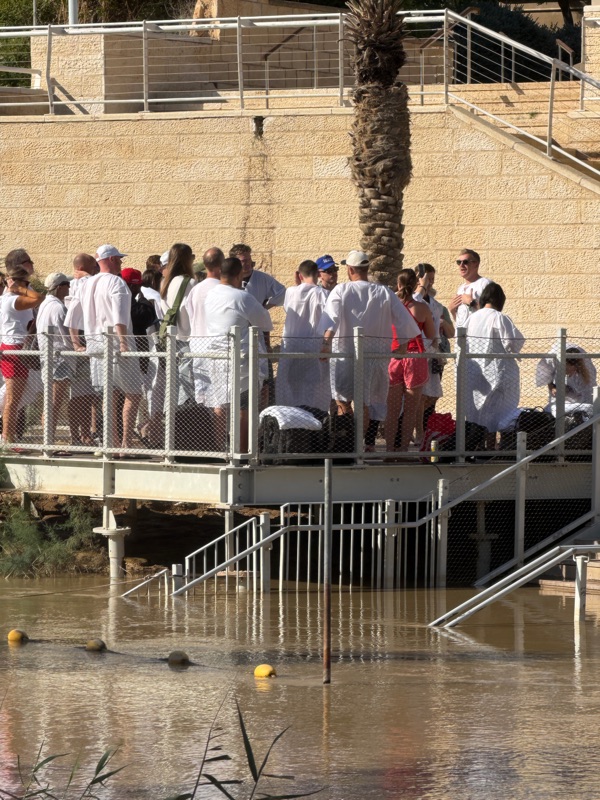
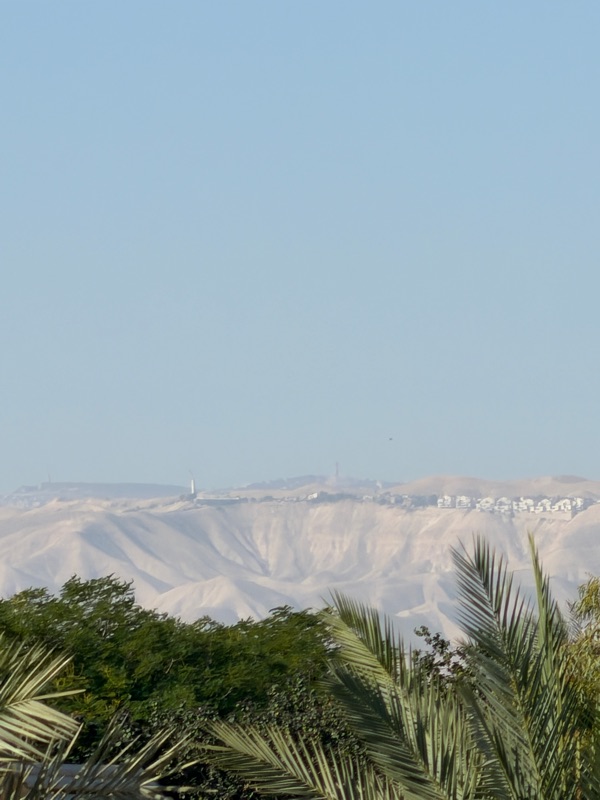
The river has changed course in 2000 years, so the actual baptism site is not at the current river. Also the river is far narrower than it was then because of changes in the local climate and diversion of its water for agricultural purposes in Israel. When we walked down to the bank of the Jordan River, it was surprising to see Israel very close on the opposite bank. On the Israeli side lots of people were on a platform being baptized. Baptisms occur on the Jordan side as well, and there are changing cabins for the purpose. We could also see the biblical city of Jericho across the river and even parts of Jerusalem at the top of the mountains in the far distance.
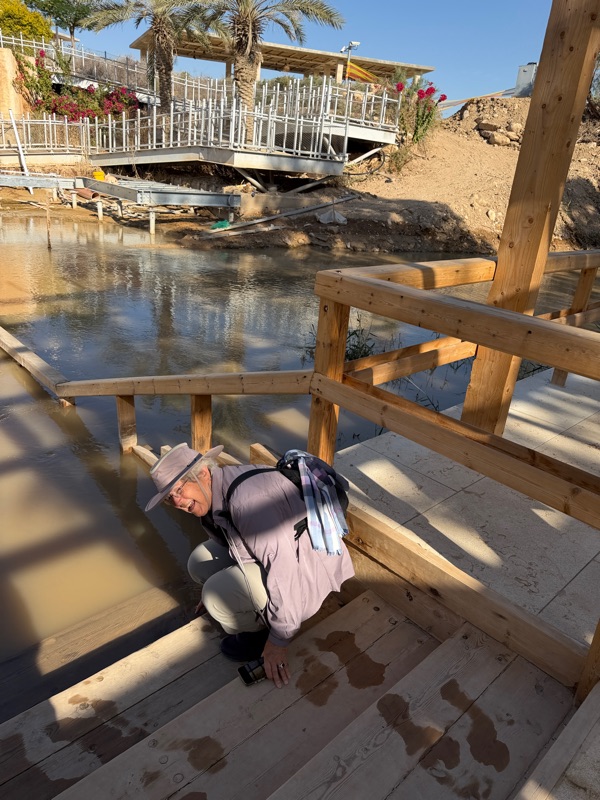
No baptism, but we put out fingers in the water.
Closer to the river, we visited a Greek Orthodox Church - the only one within the World Heritage site, where there was a small museum.
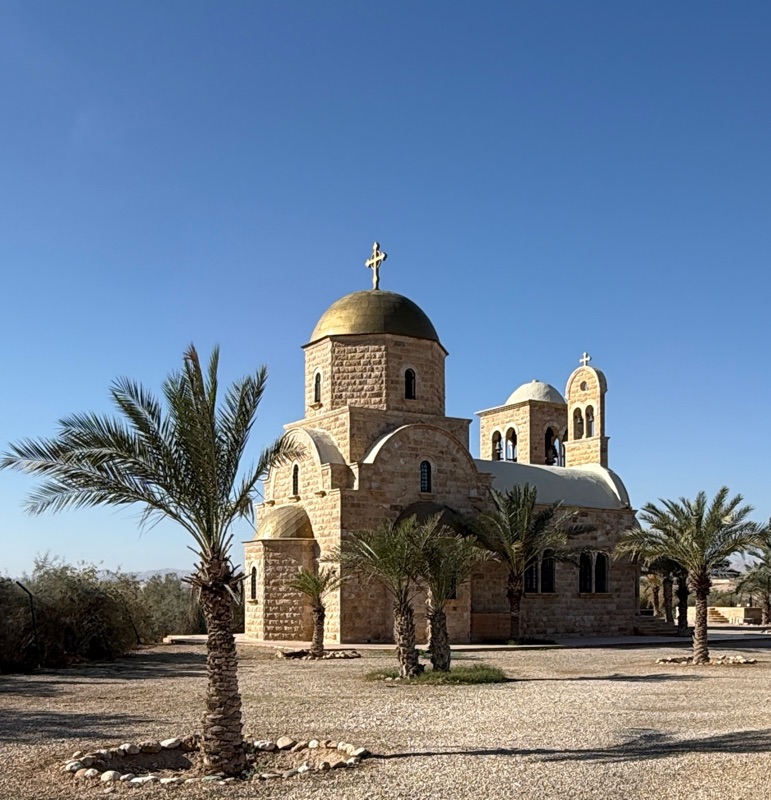
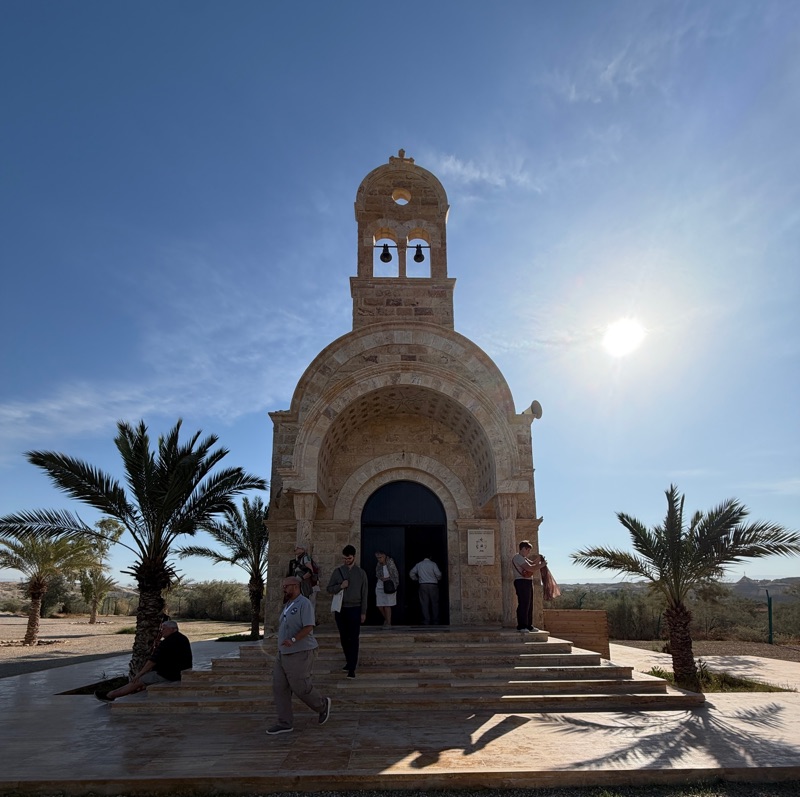
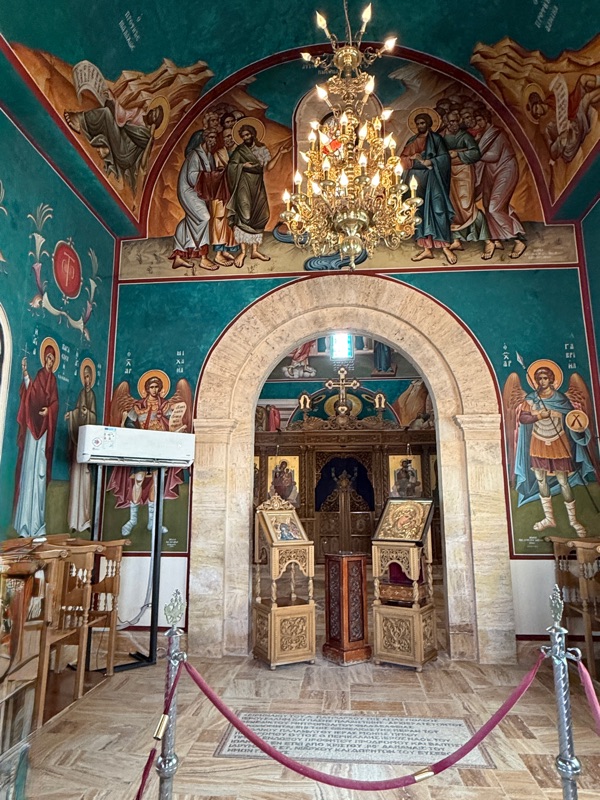
There were churches of the major Christian denominations and a mosque as well in the protected area but not at the actual site. All the churches have been built in the last 30 years and several are not yet finished, as the site was in a restricted military zone until the Peace Treaty of 1994. It is still under military protection because of the proximity to Israel.
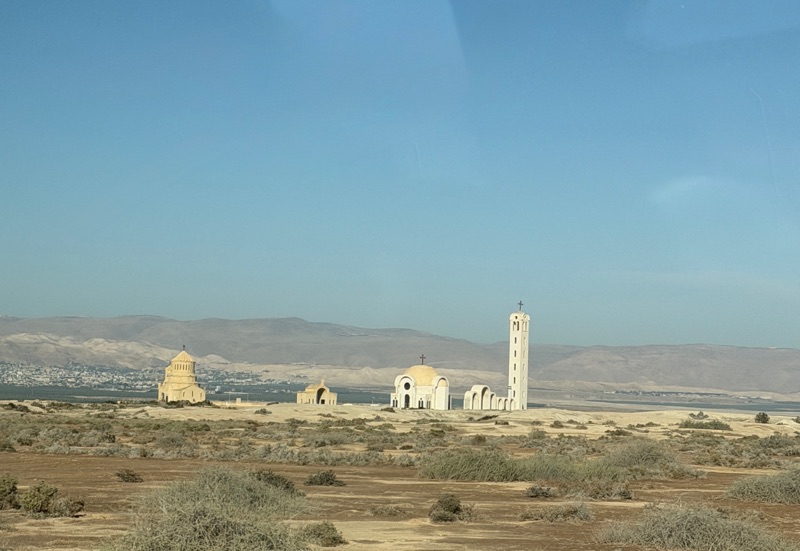
Jericho cross the river - above
Items from the Museum below
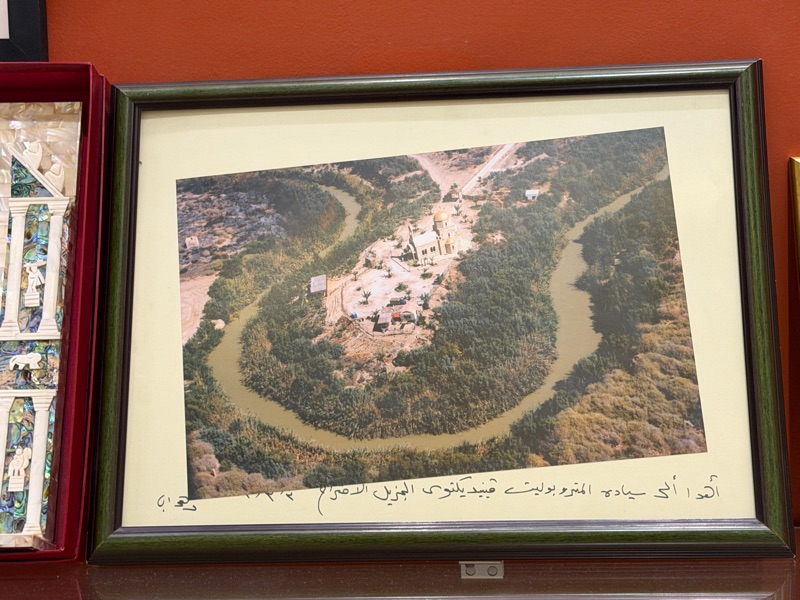
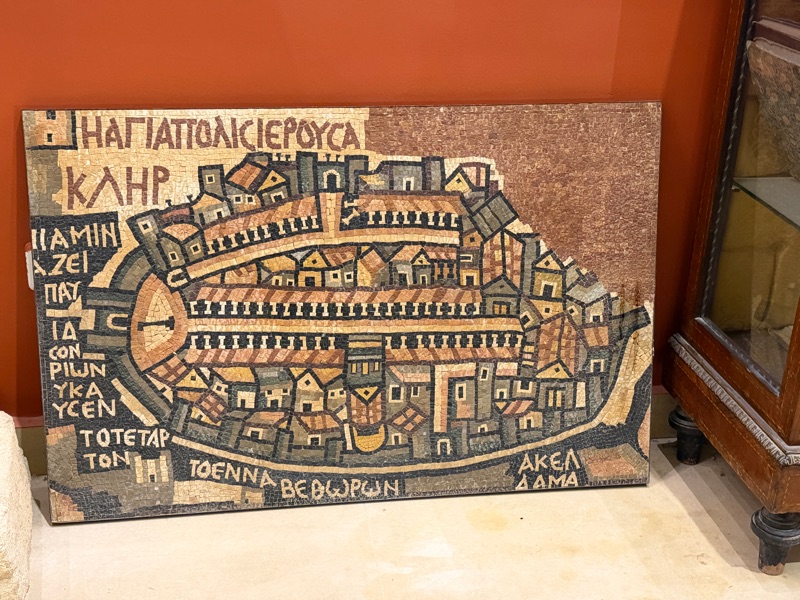
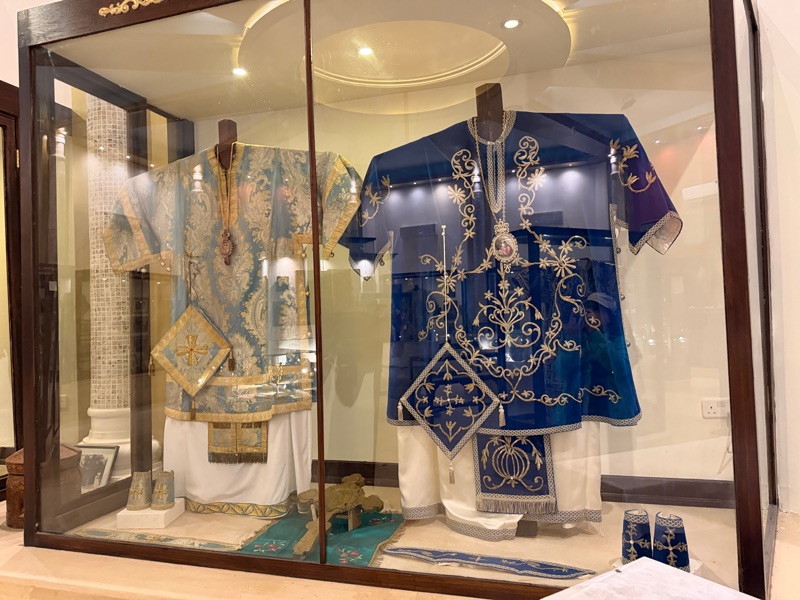
It was a fascinating and sacred site.
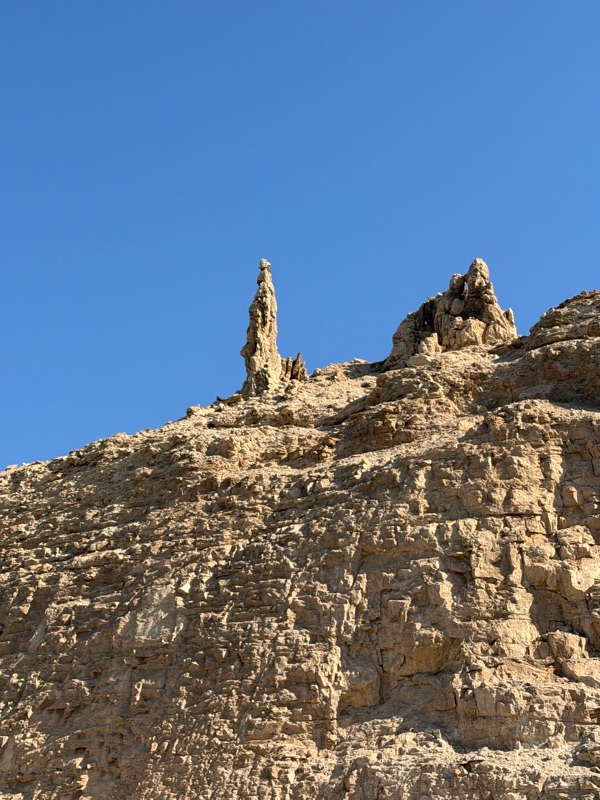
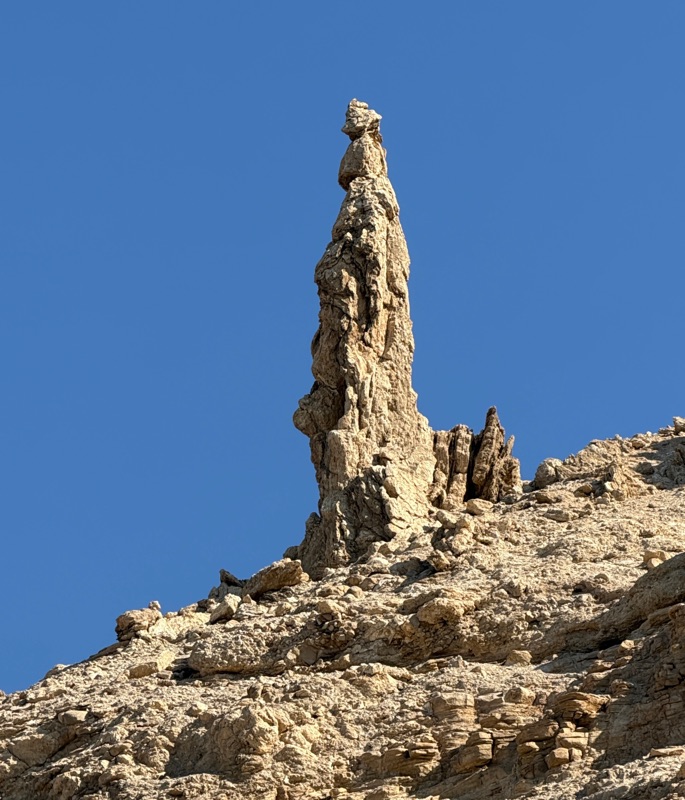
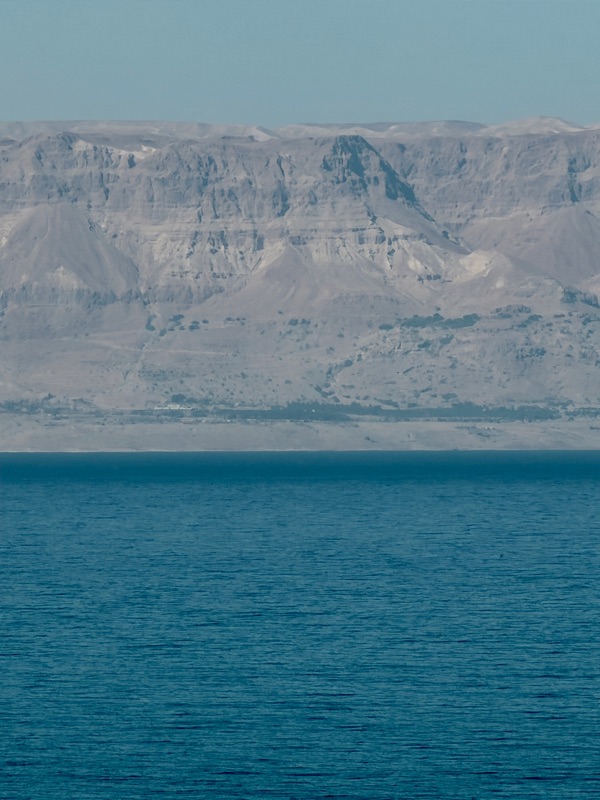
We drove the length of the Dead Sea - it took about an hour, enjoying spectacular views the whole way. The area is mountainous, and the road wound along the coast with views of the mountains in Israel across the water. Along the way we stopped to take a look at “Lot’s Wife”.
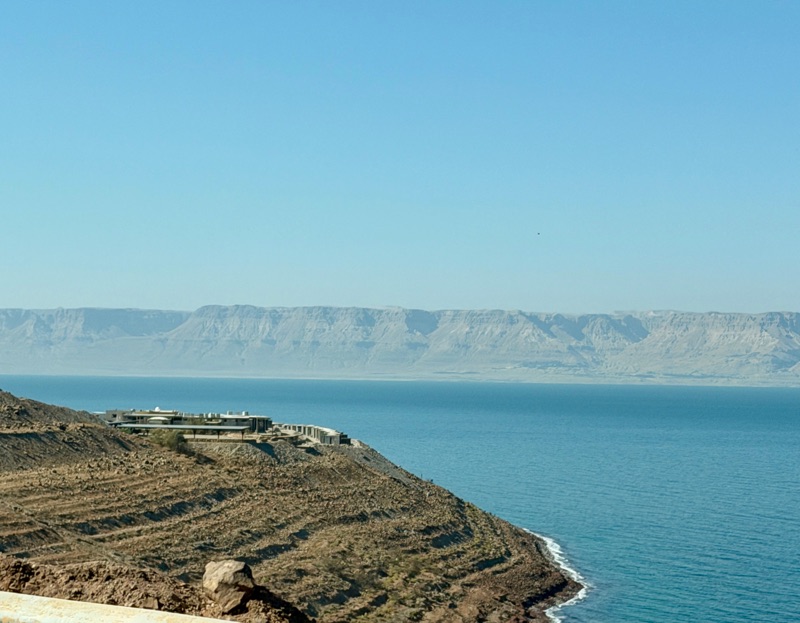
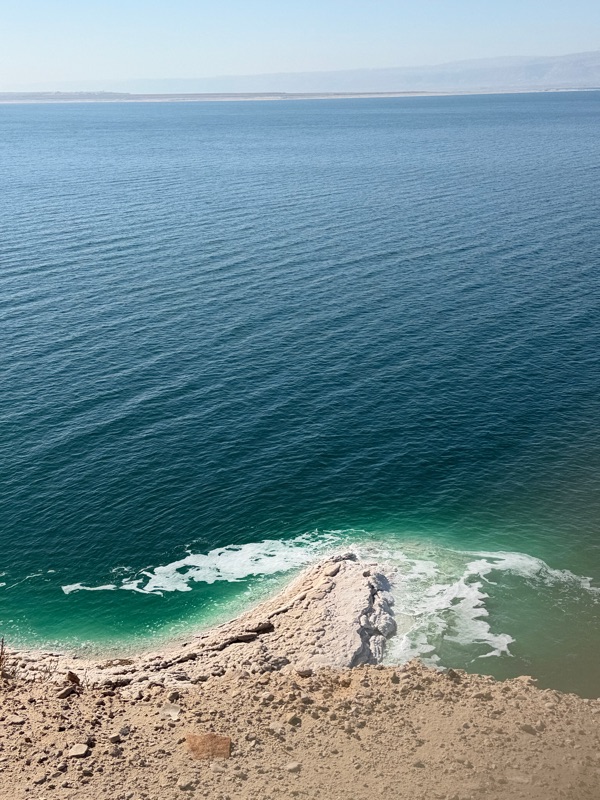
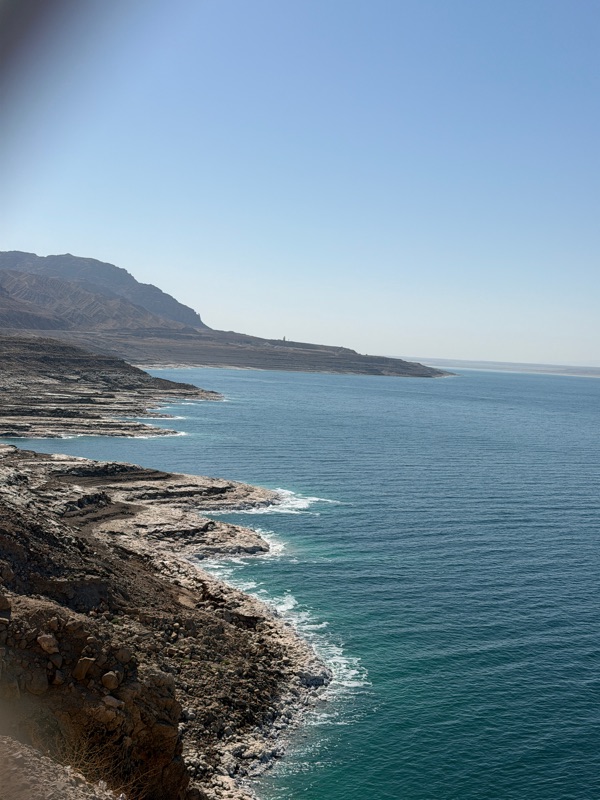
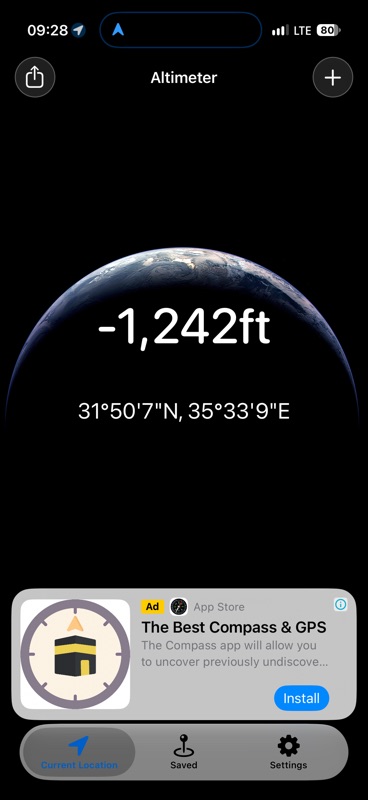
At the southern end, we walked look down to the waters edge - where salt had formed layer after layer of strange and beautiful shapes. Cheryl went down and put her hands in the water - which was very oily because of all the minerals in the water, and brought back a bottle of the water for Ruth who didn’t go all the way down. The Dead Sea is the lowest spot in earth - right now it is about -1440 feet below sea level (but the water level drops a few feet every year.)
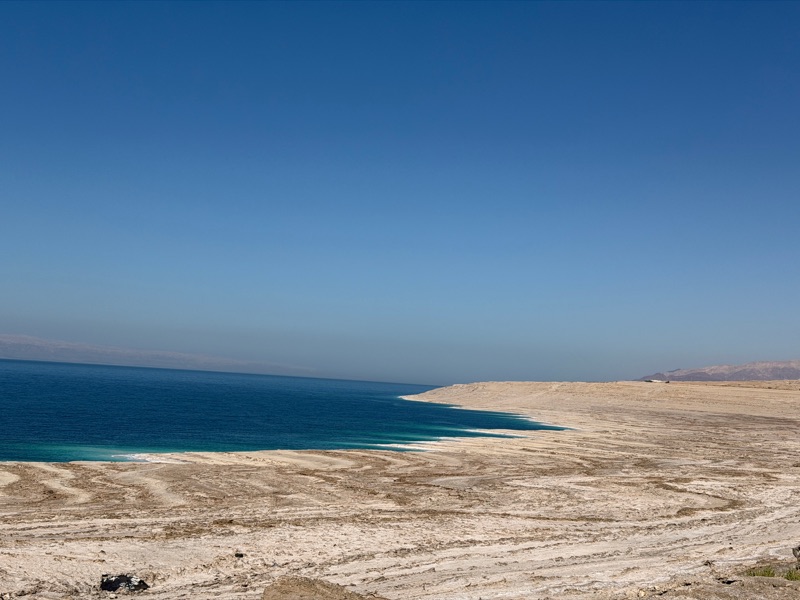
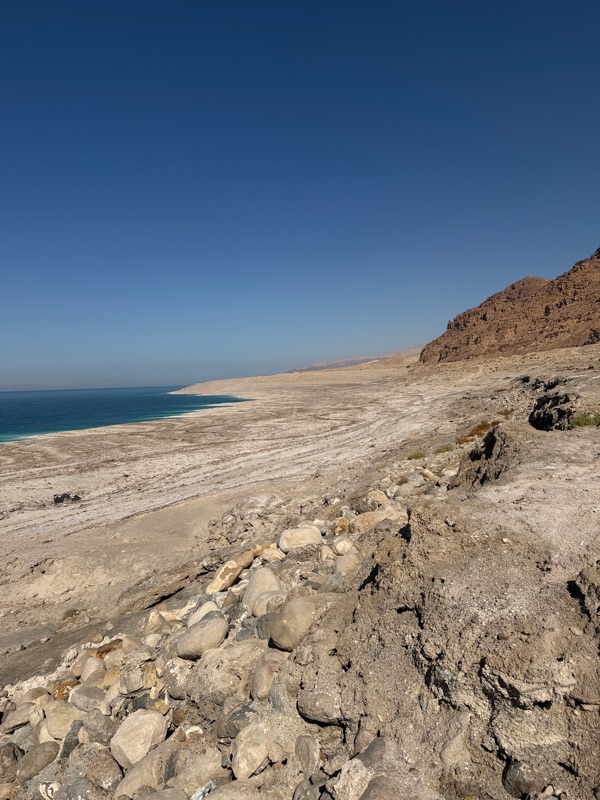
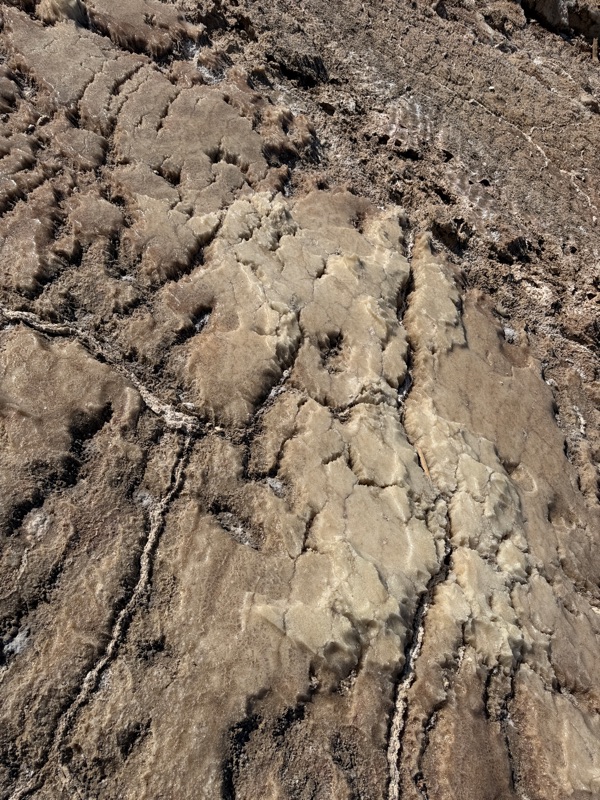
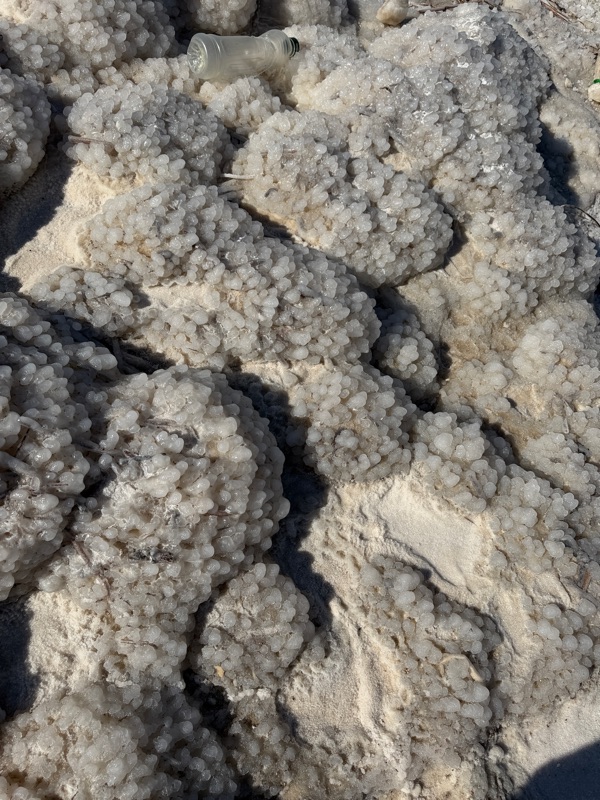
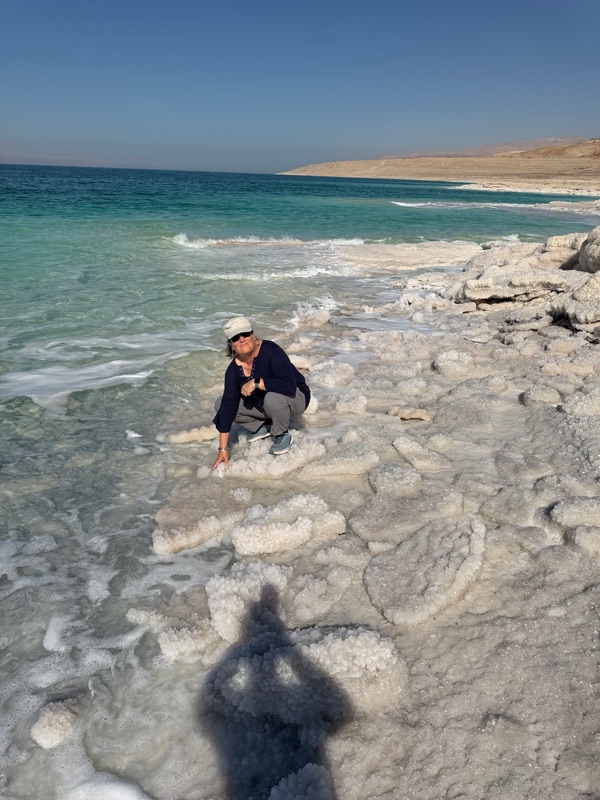
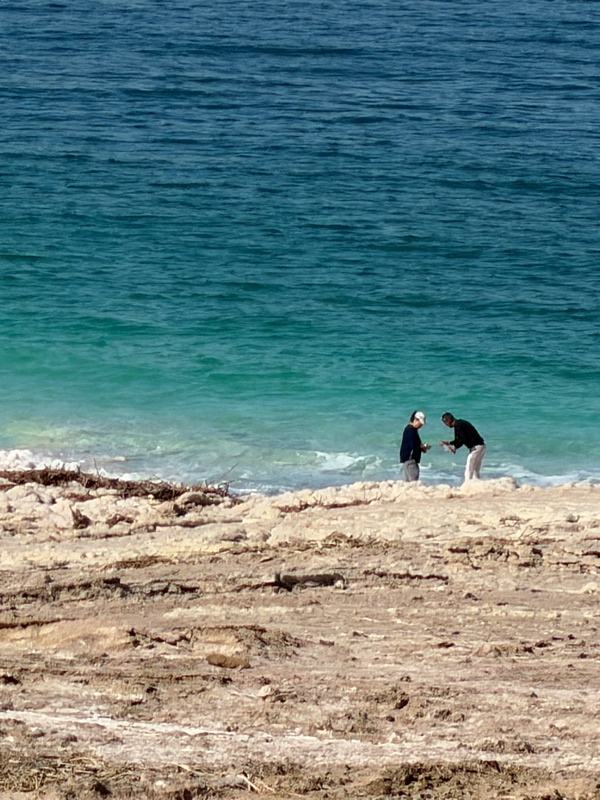
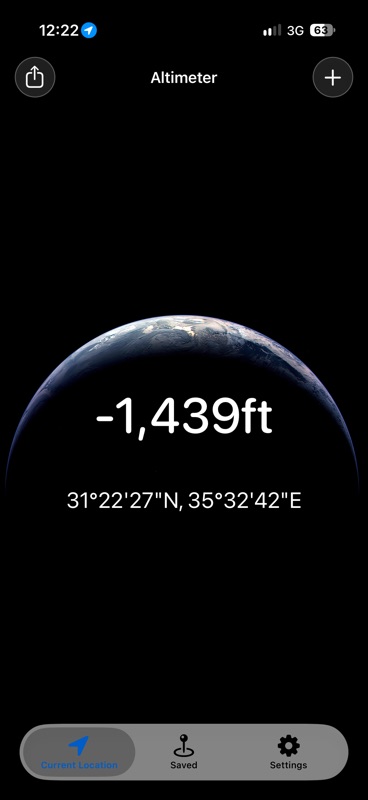
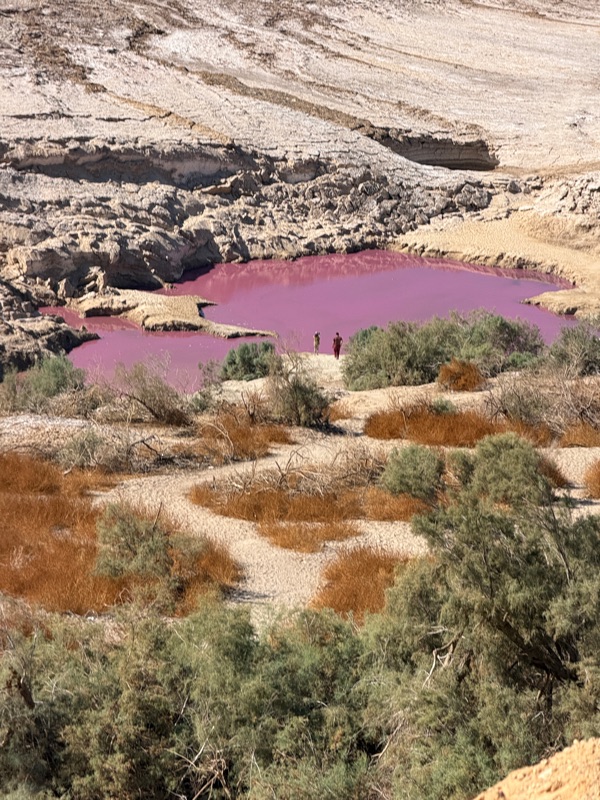
The area had a lot of sinkholes containing water which was different colors depending on the bacteria in them - one was a startling pink.
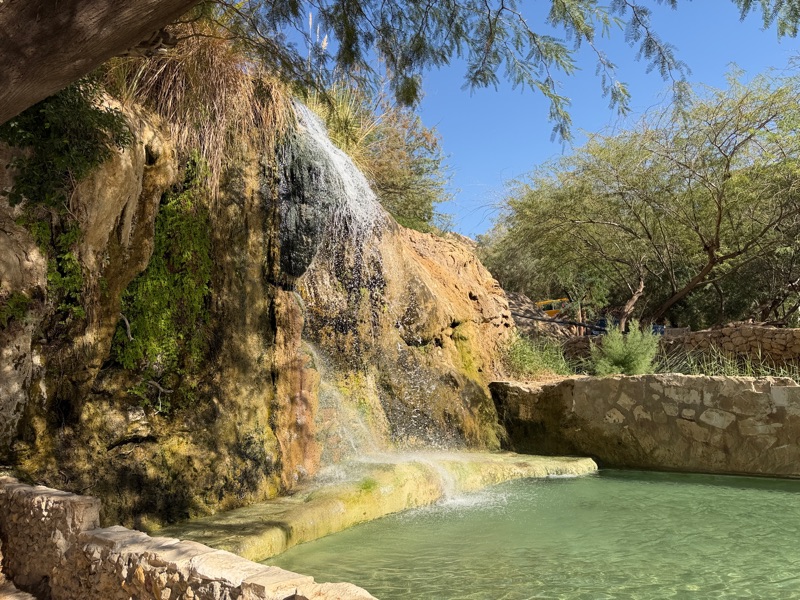
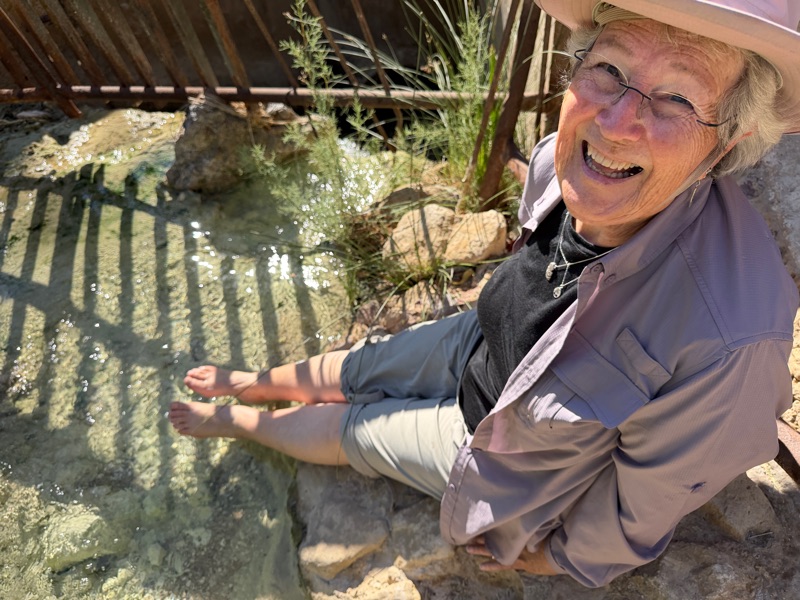
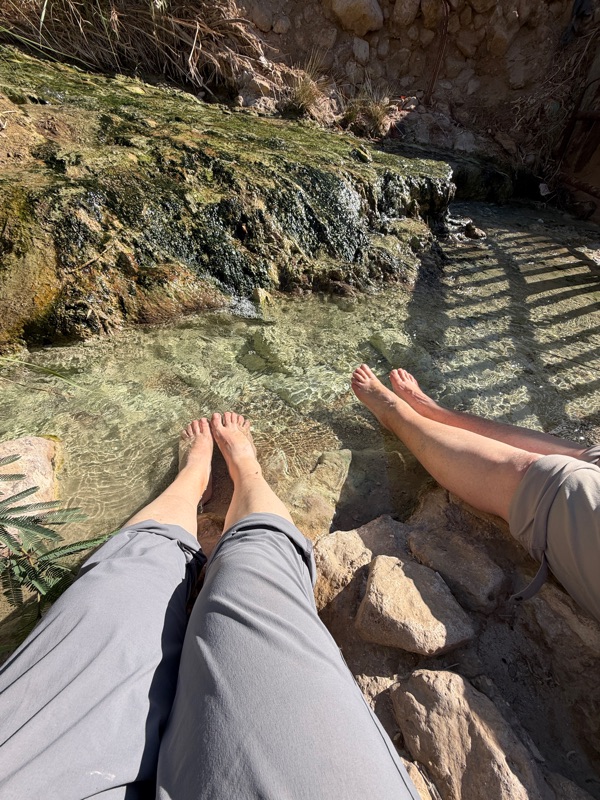
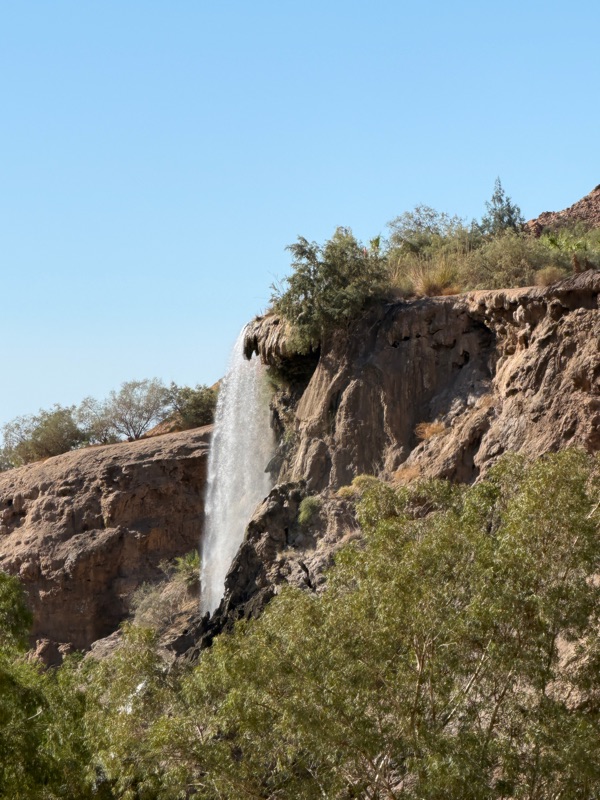
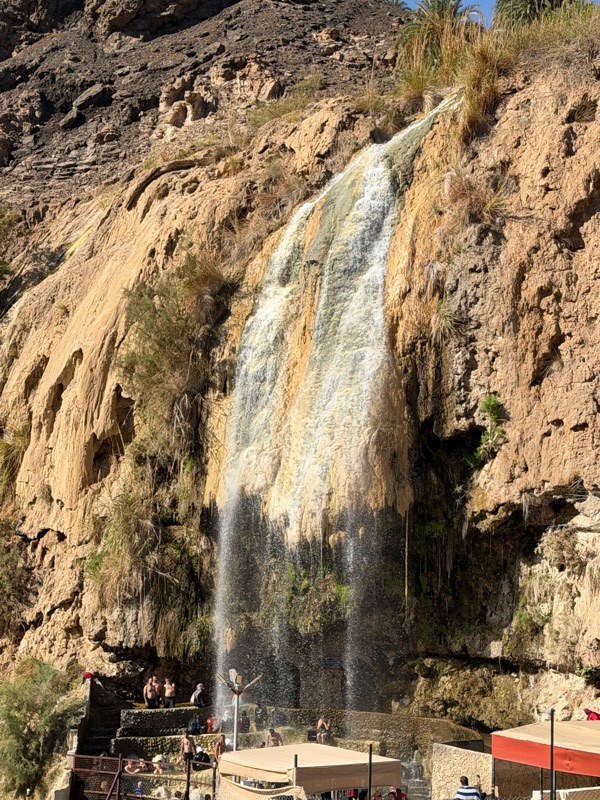
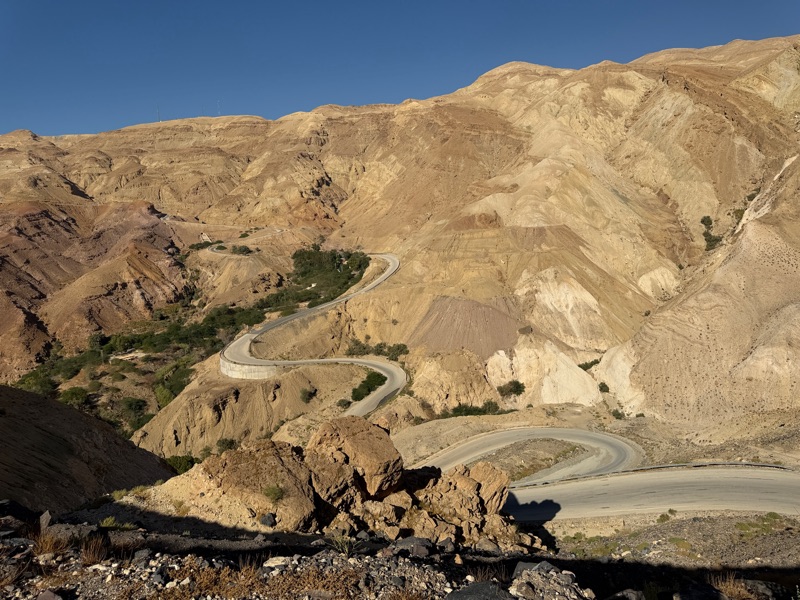
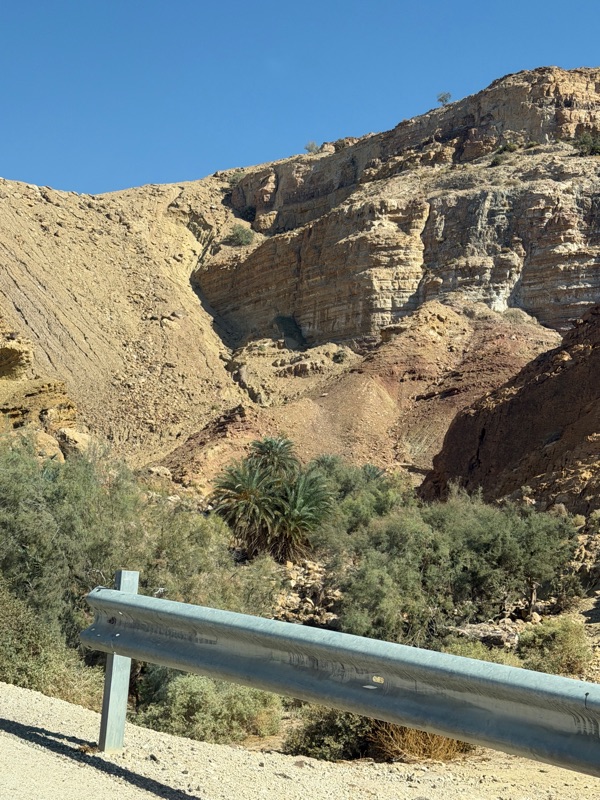
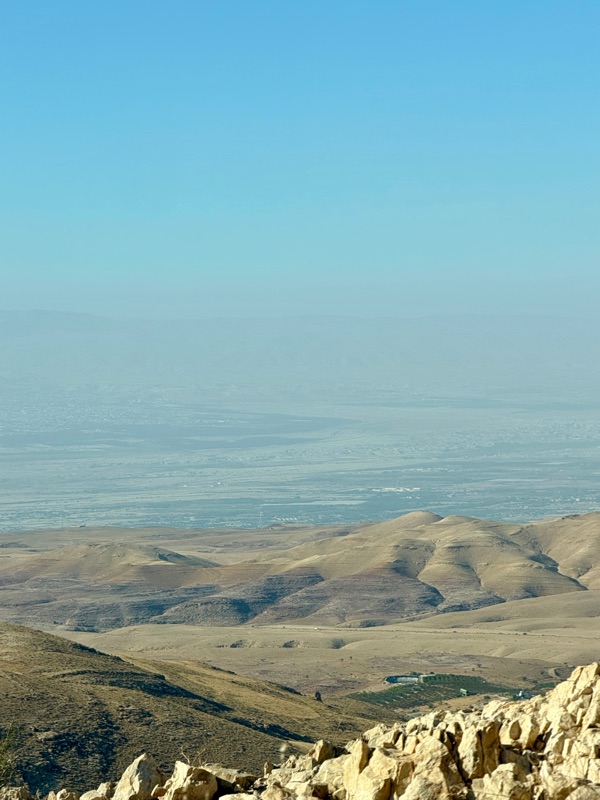
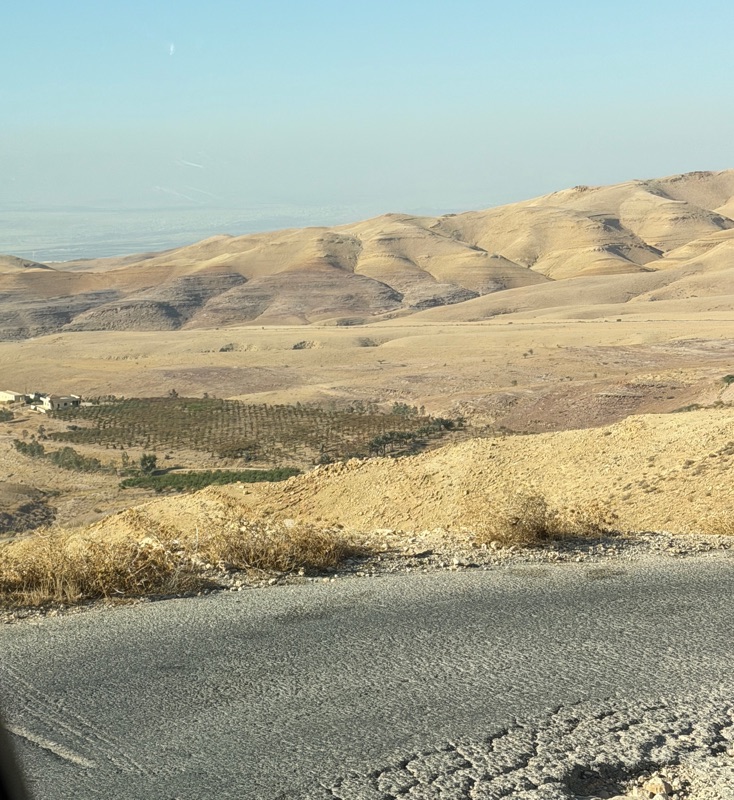
We drove up an insanely steep and winding mountain side with a panoramic view of the area, and then spiraled down to the Ma’in Valley Hot Springs. We enjoyed putting our feet in the 122 F degree water, walking through a couple inches of hot water in our shoes to visit a cave behind one of the waterfalls, and taking pictures of all four of the beautiful waterfalls.
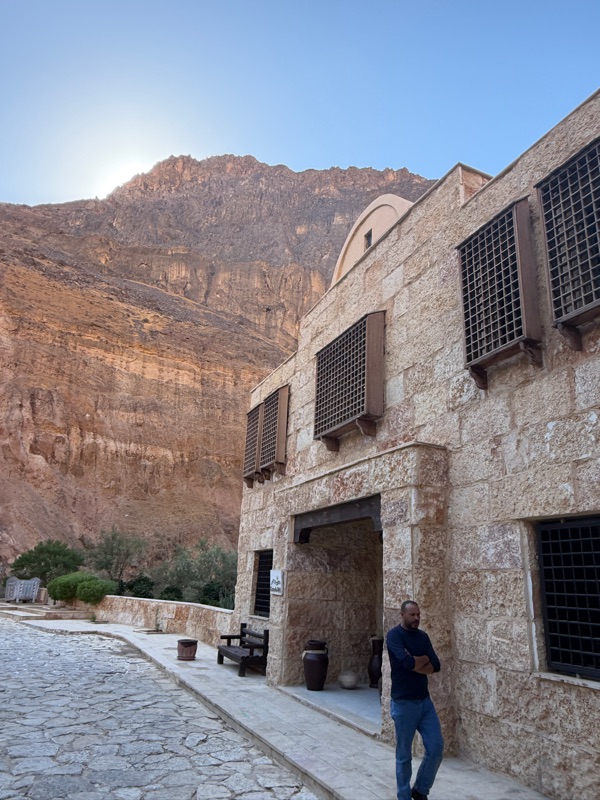
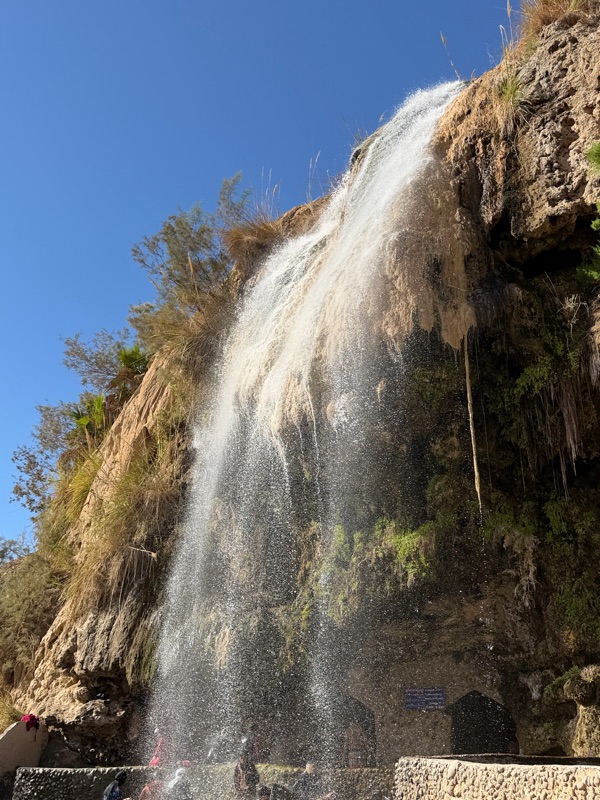
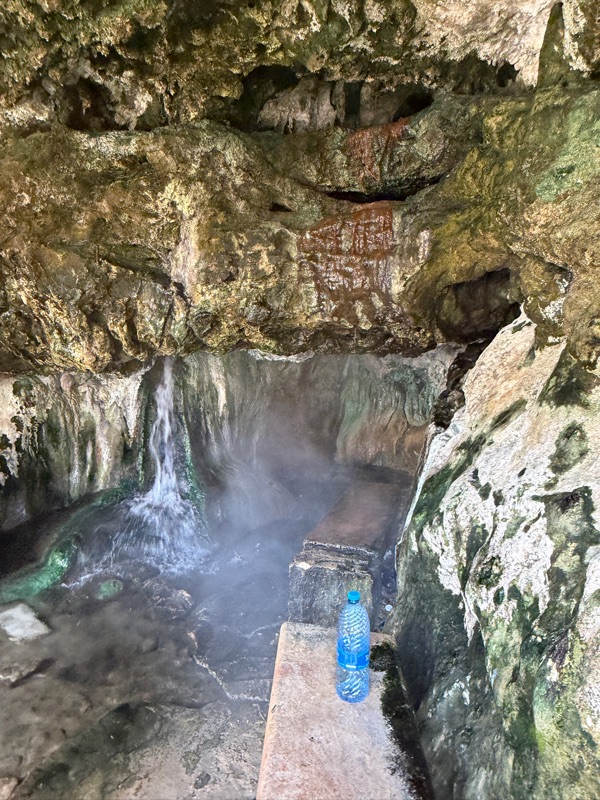
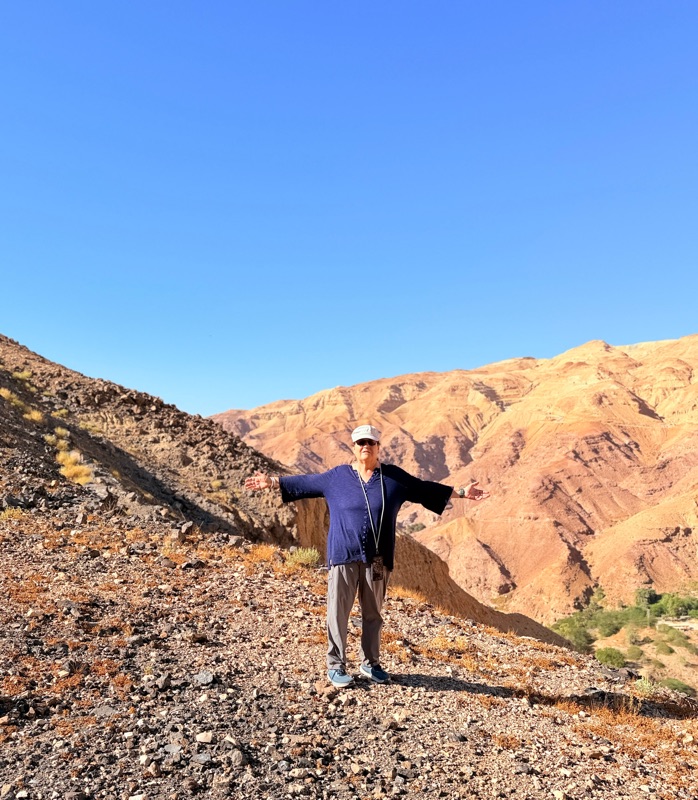
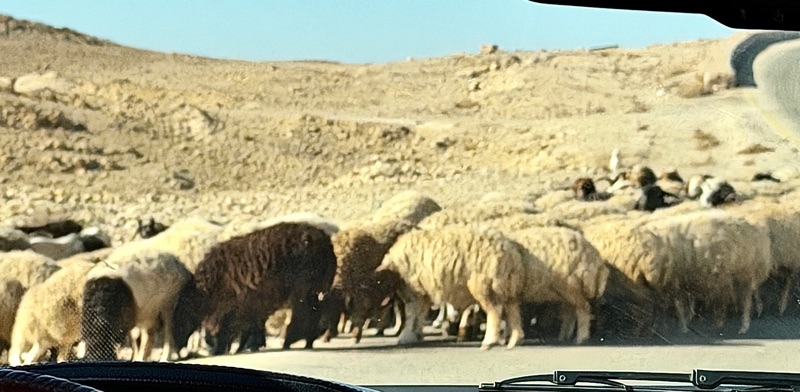
We continued traveling on crazy winding mountain roads going up above 3,000 feet - driving through little mountain villages, herds of sheep, vineyards, and lots and lots of rocks, until we descended back down to the sea.
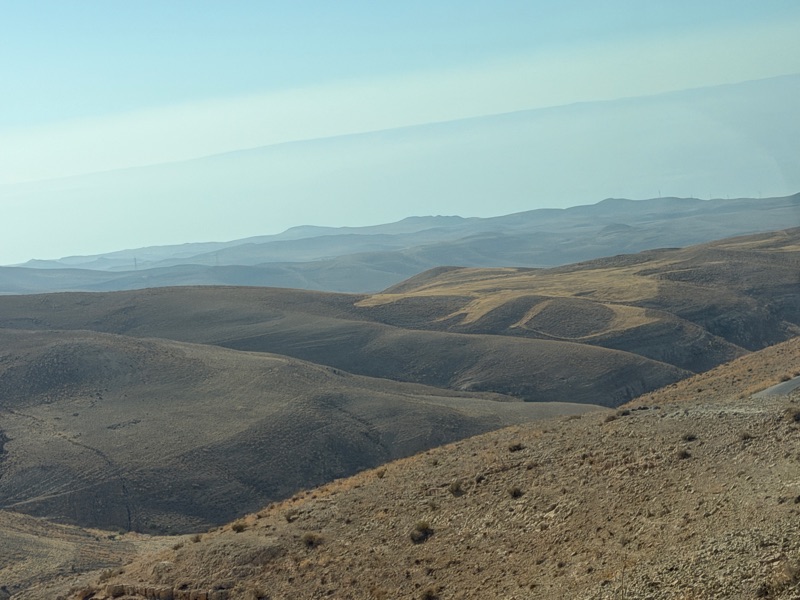
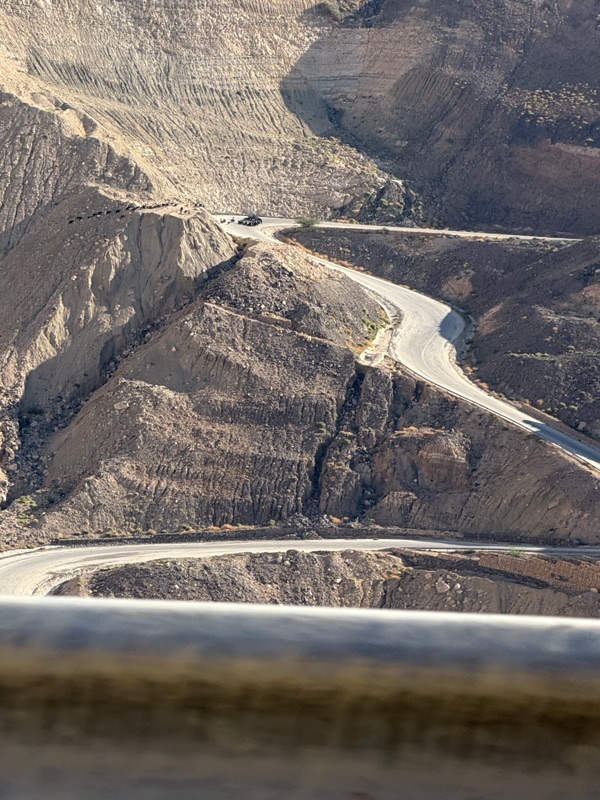
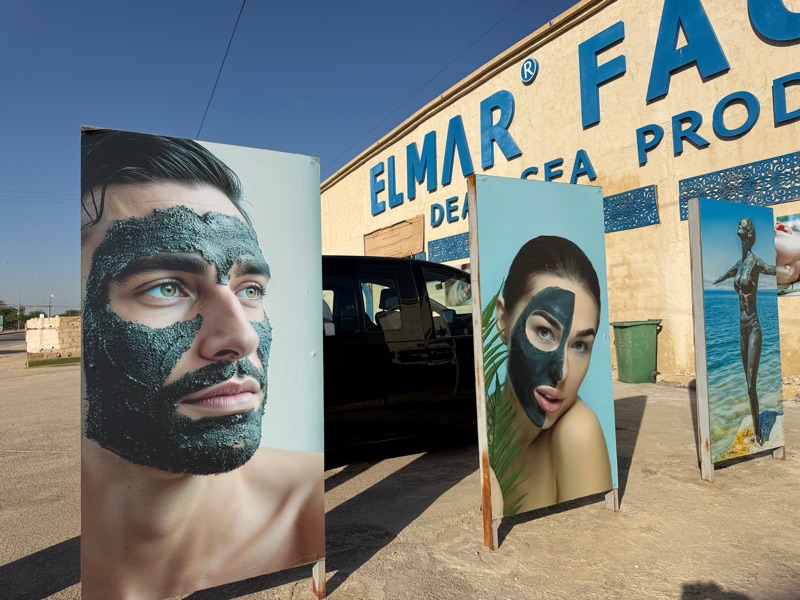
We made a quick stop at a “Dead Sea Products” factory to learn about the healing properties of Dead Sea mud.
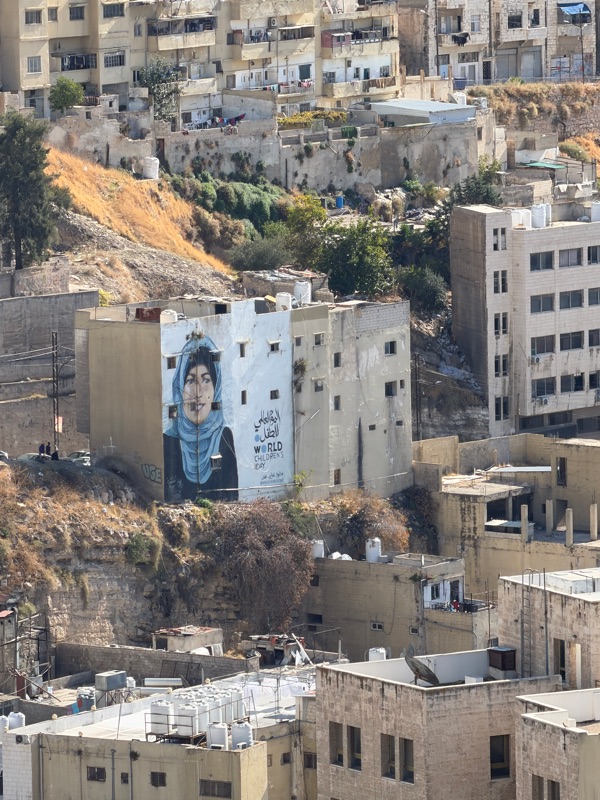
Back in Amman, after a short rest, we met up with four of our group (the other half of the travelers will be delayed a few days because of the airline grounding situation in the US), chatted with our group leader and had dinner together.
Please note: If you comment as Anonymous, we don’t know who you are. We would like to know who you are, especially if you ask a question, so please add your name or initials at the end of your comment. Thanks



Beautiful pictures, so far they are my favorite.❤️
ReplyDeleteI have had tabouli and hummus and enjoyed both.
ReplyDeleteThe Biblical history sites interest me greatly. I will look up the Lot’s wife rock. Wondering if it’s symbolic or an actual pillar of salt. (a convincing illustration to not look back and long for things we need to leave behind!)
Did you buy any of the Dead Sea Mud? I’ve heard such interesting things about the Dead Sea.